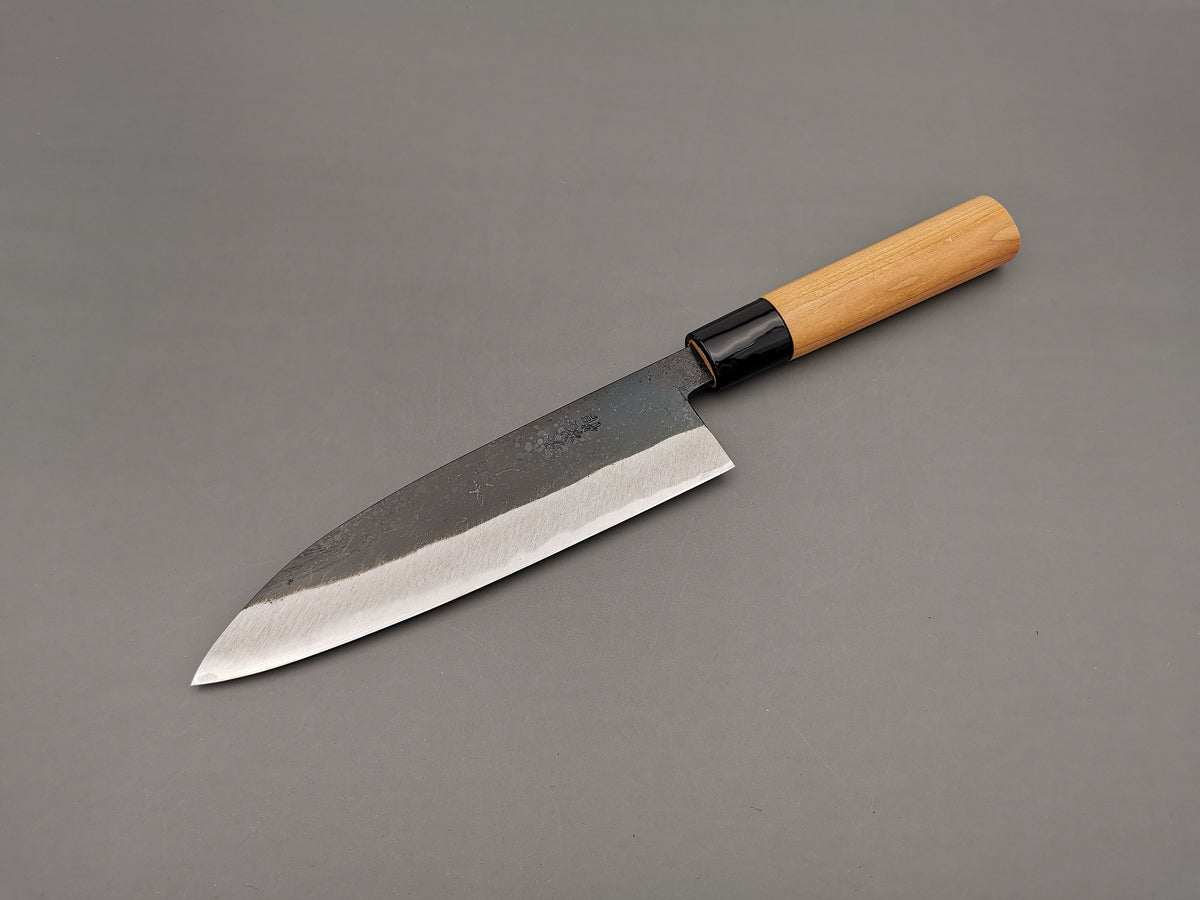

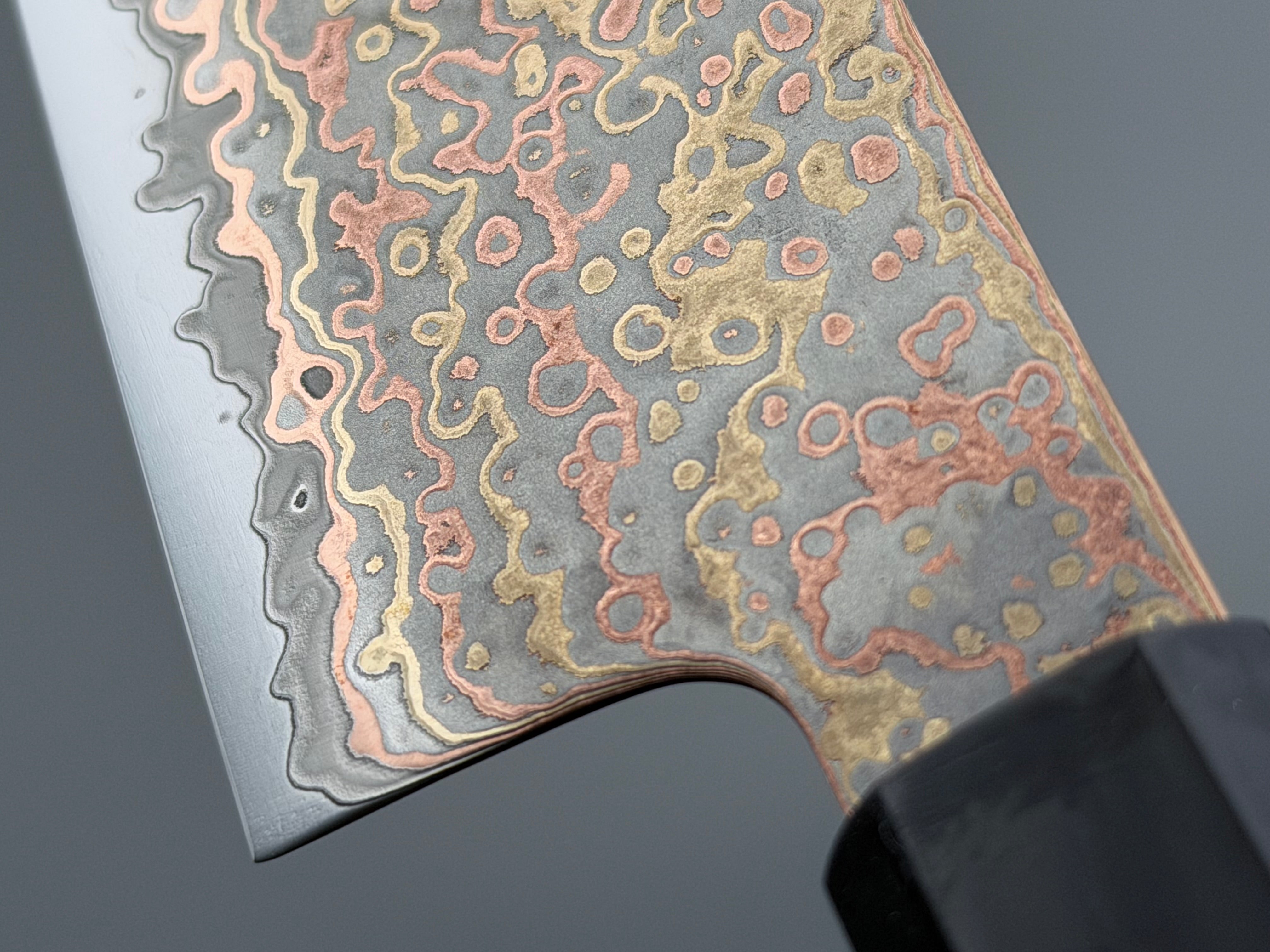

In the world of culinary cutlery, V-Toku2 is prized for its ability to achieve extreme sharpness while remaining slightly more "approachable" for the maker and user than some of its counterparts.
Key Properties
-
High Carbon Content: With a carbon content typically around 1.0% to 1.1%, V-Toku2 can be hardened to an impressive 63–64 HRC. This allows for a very fine, acute edge that holds up well during intensive slicing.
-
Alloy Composition: It contains Tungsten ($W$), Chromium ($Cr$), and Vanadium ($V$). These elements contribute to:
-
Wear Resistance: It stays sharp longer than simple carbon steels.
-
Toughness: It is generally less "chippy" than Blue Super steel, making it slightly more durable during board impact.
-
-
Ease of Sharpening: Despite its hardness, the grain structure remains relatively fine, meaning it responds beautifully to whetstones and can achieve a "scary" level of toothy aggression.
Performance in the Kitchen
| Feature | Performance Note |
| Edge Retention | Excellent; sits comfortably between Blue #2 and Blue Super. |
| Reactivity | High. This is a non-stainless steel. It will develop a patina and can rust if not dried immediately after use. |
| Sharpenability | High; very rewarding for those who enjoy maintenance on stones. |
| Brittleness | Moderate; while tougher than some "super steels," it still requires proper technique to avoid micro-chipping. |
Use Cases
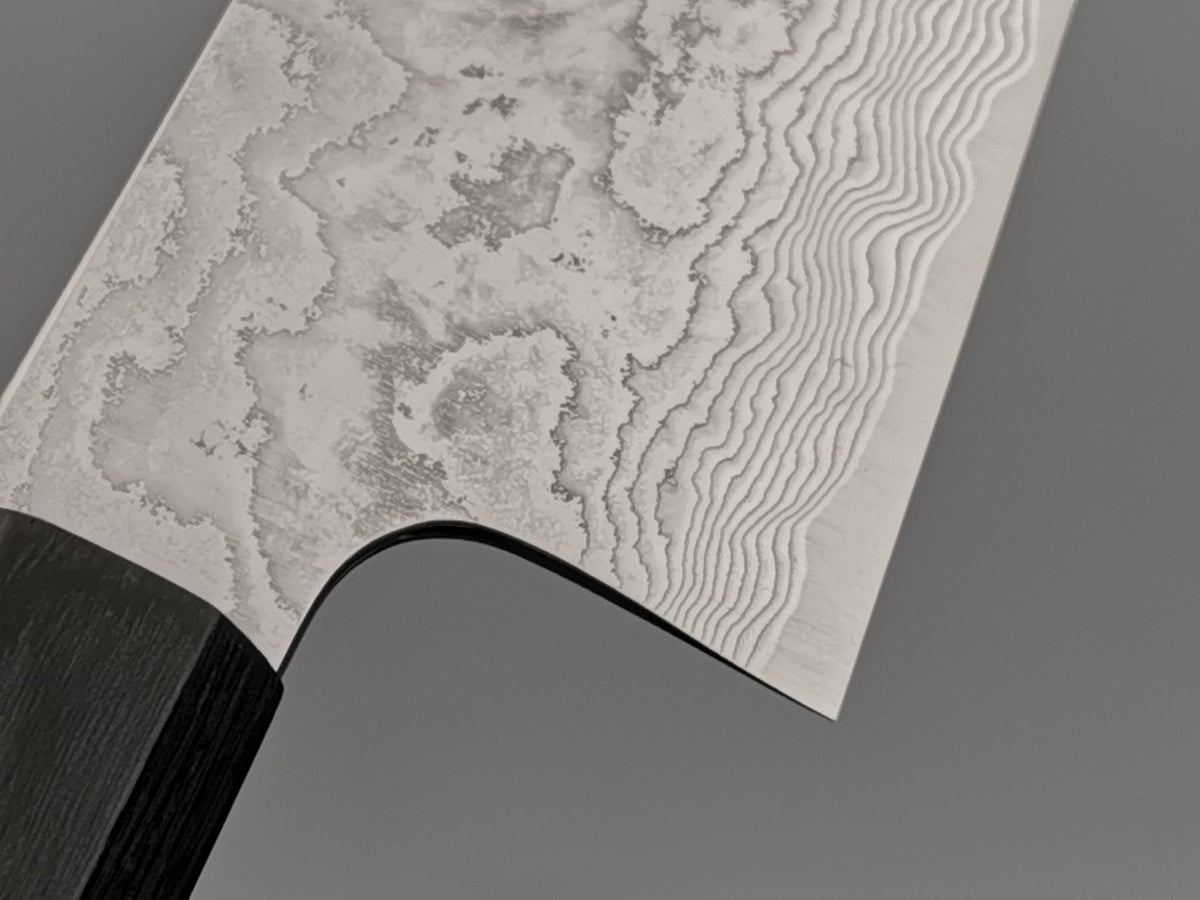
V-Toku2 is most commonly found in San Mai construction (stainless steel cladding over a V-Toku2 core). This gives the user the performance of a high-carbon edge with the ease of maintenance provided by stainless sides. It is an excellent choice for a Gyuto or Petty knife where precision and edge "bite" are the priorities.
Note on Maintenance: Because V-Toku2 contains very little Chromium (~0.5%), it is not stainless. It is essential to wipe the blade dry after cutting acidic foods like lemons or onions to prevent corrosion.