
Who is Shiro Kamo?
Shiro Kamo is one of the most respected blacksmiths working in Japan today. Born into a family of bladesmiths in Takefu, Fukui Prefecture, he started forging knives young and spent decades at it. Kamo-san was a founding member and former president of the Takefu Knife Village cooperative, a group of craftsmen who did a great deal to put the Echizen region on the map for serious knife people.

What makes his knives stand out
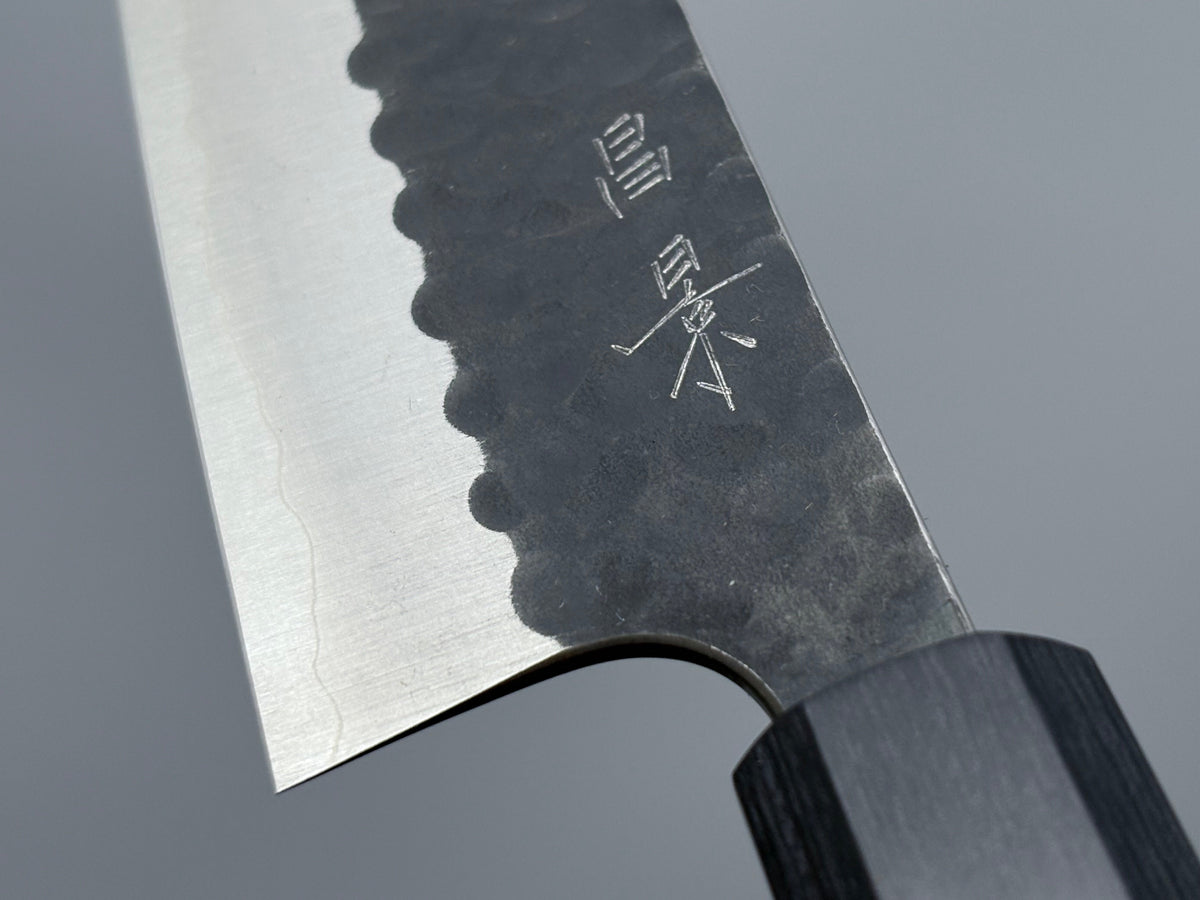
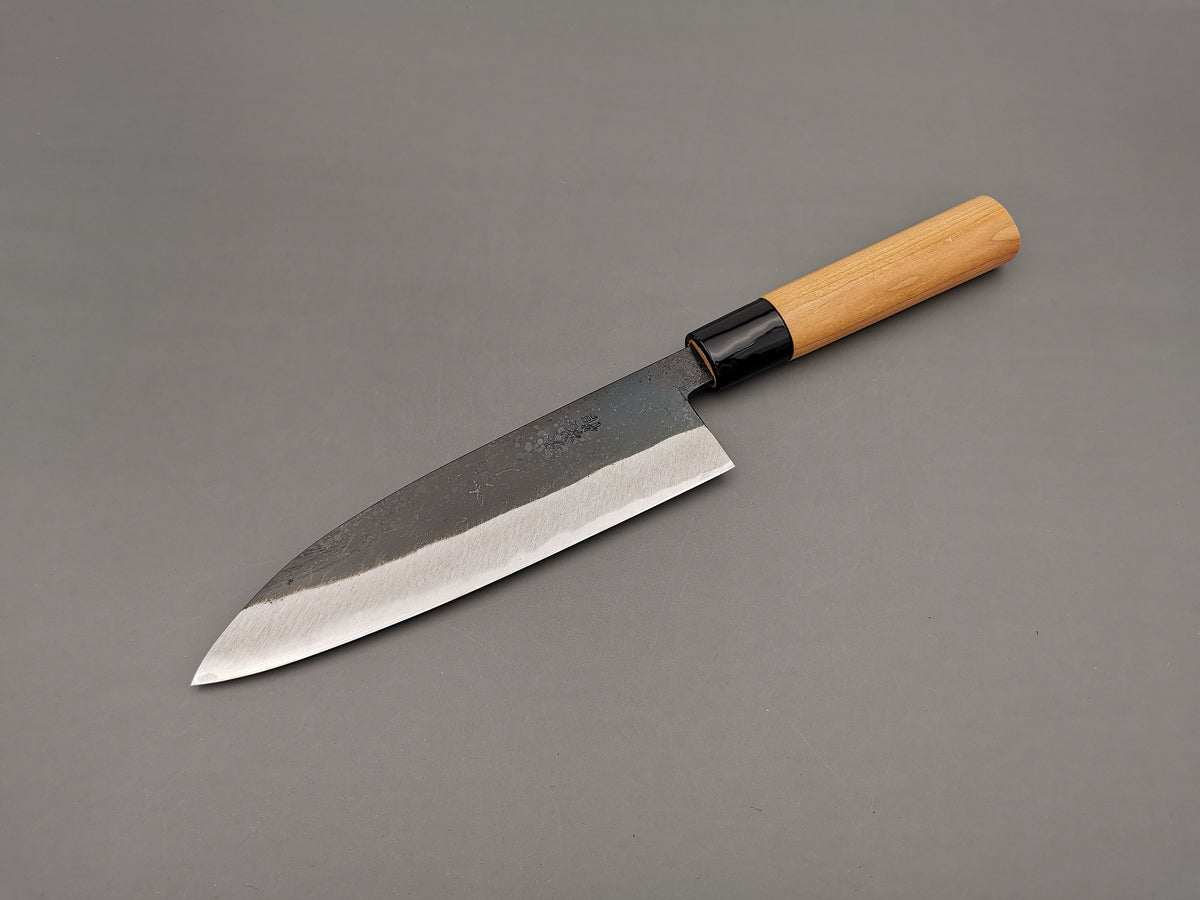
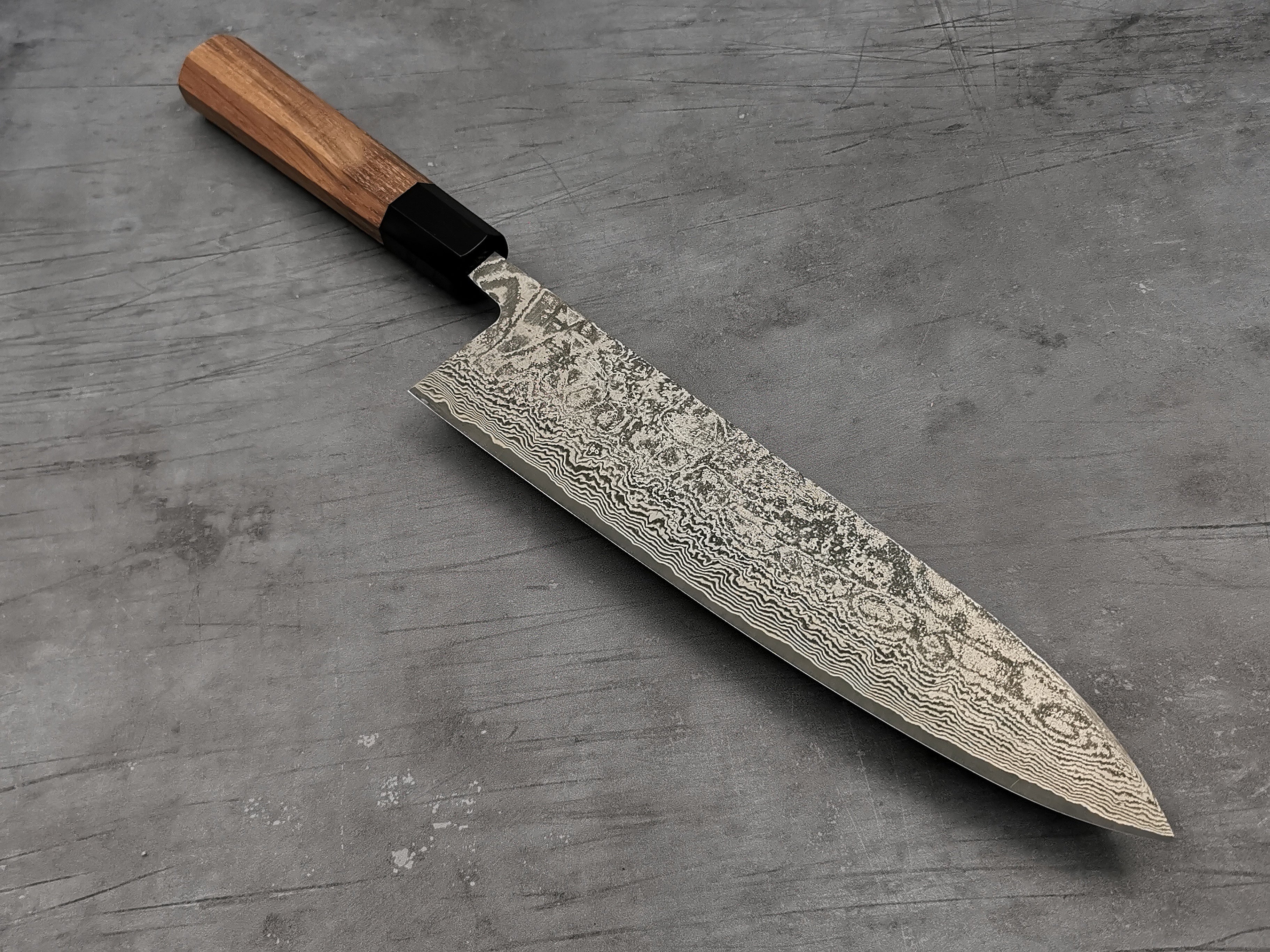
More than anything else, it is the edge geometry. His blades come out of the box genuinely sharp, and they stay that way through regular use. He works across both traditional and modern steels, so the range runs from reactive carbon to high-performance powder steels. Many of the blades carry a kurouchi finish, which gives them a rough, unpretentious look that does not hint at what they are capable of.
That mix of old forging methods and newer steel is probably why his knives attract professional chefs and home cooks in roughly equal numbers. Whether you are breaking down vegetables with a gyuto for general kitchen work or reaching for a compact petty, a Shiro Kamo knife performs consistently.
The steels he uses
Two steels appear across most of his range:
- Aogami Super (AS): a high-carbon steel that takes an extremely fine edge. His Aogami Super Blue steel knives are reactive and need a little more care, but the sharpness you get in return is hard to argue with.
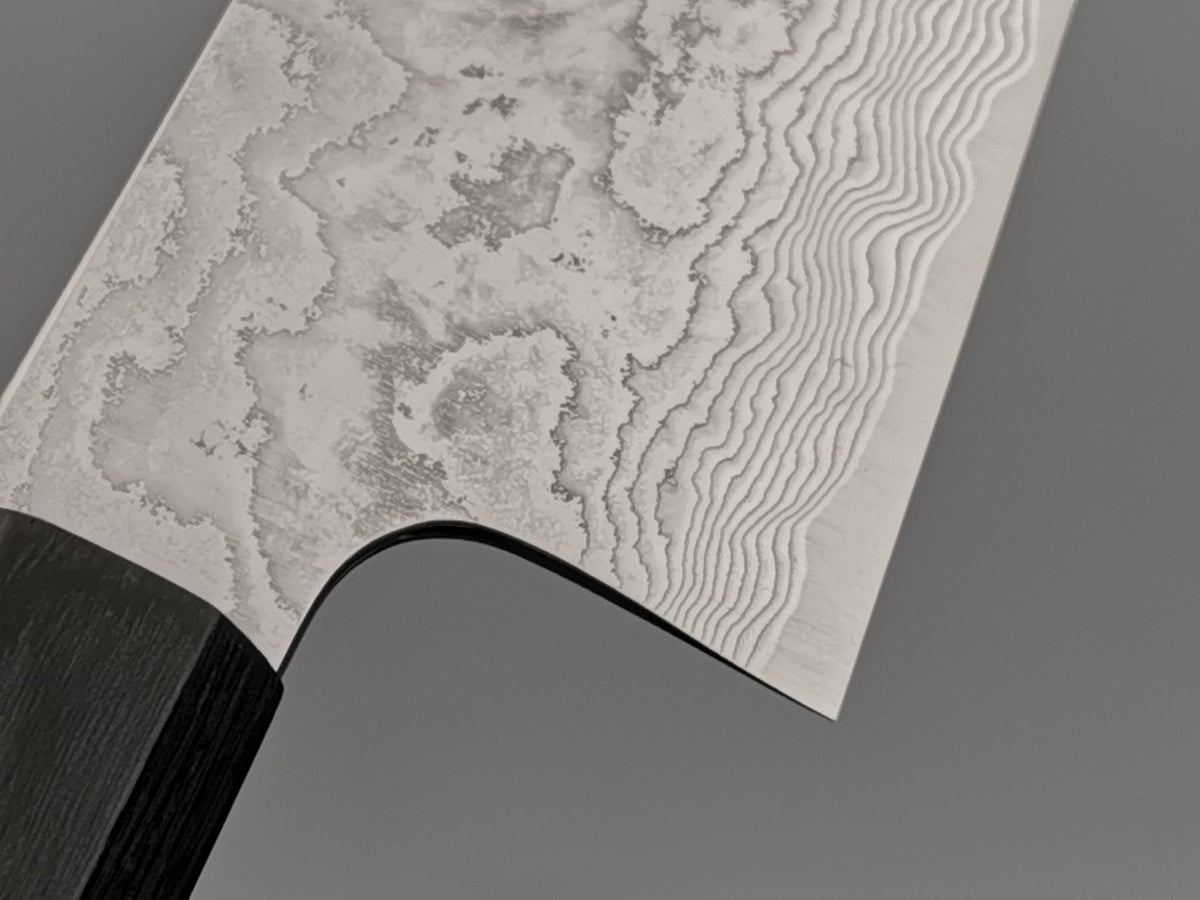
- SG2: a powder stainless steel with excellent edge retention and much less upkeep. If you want the performance without managing a patina, the R2 and SG2 steel knives in his range are worth a look.
Which knife types does he make?
The range covers gyutos in 210mm and 240mm, a nakiri, a santoku, and a 150mm petty. The 210 to 240mm collection has his most popular gyuto lengths, and the 135 to 150mm range includes the petty.
Shop Shiro Kamo knives
Browse the full Japanese knife collection at Cutting Edge Knives for current stock. We have carried Shiro Kamo since the early days of the shop in Holmfirth and rate his work highly. Stock moves quickly, so it is worth checking back for restocks.