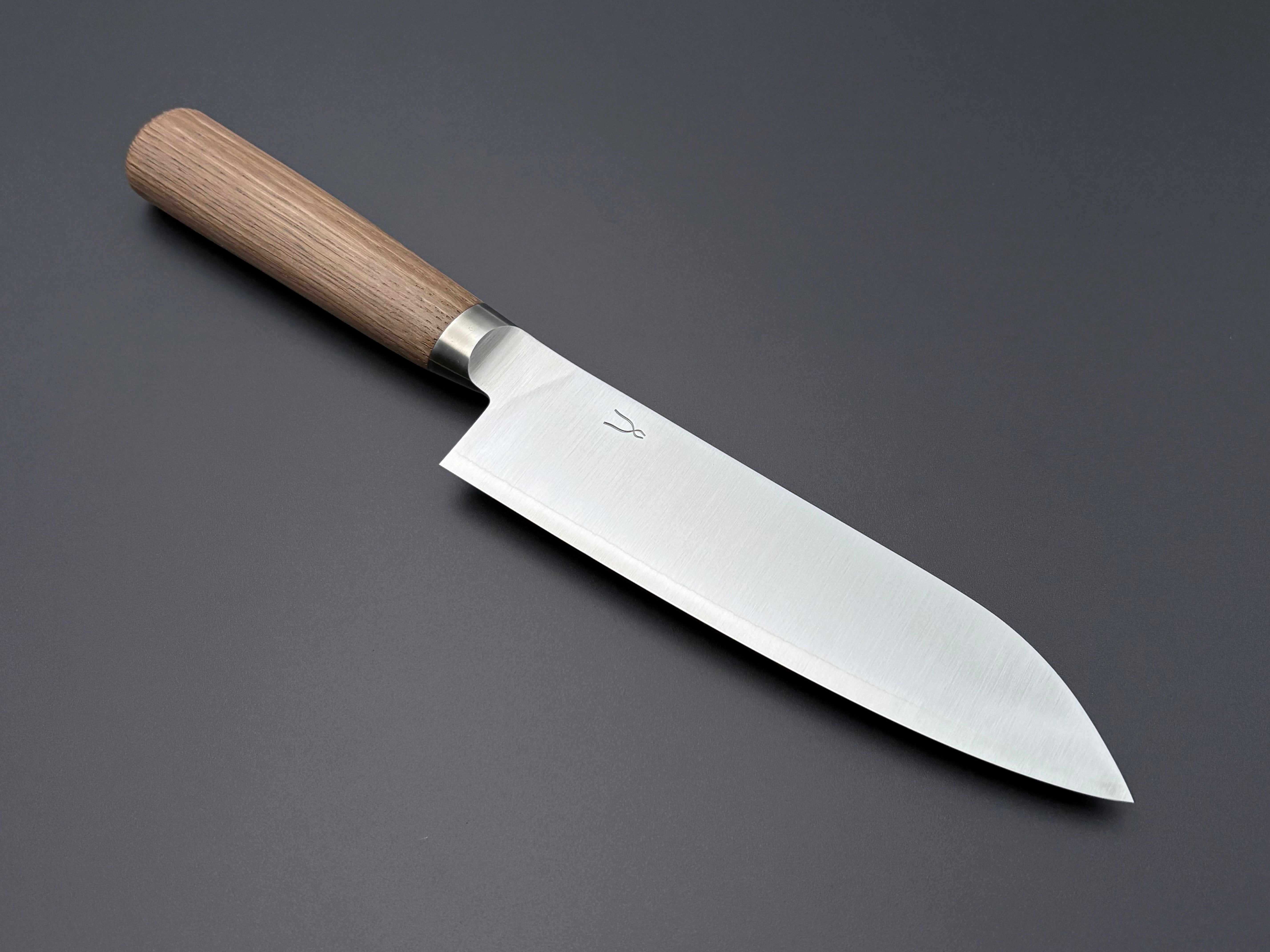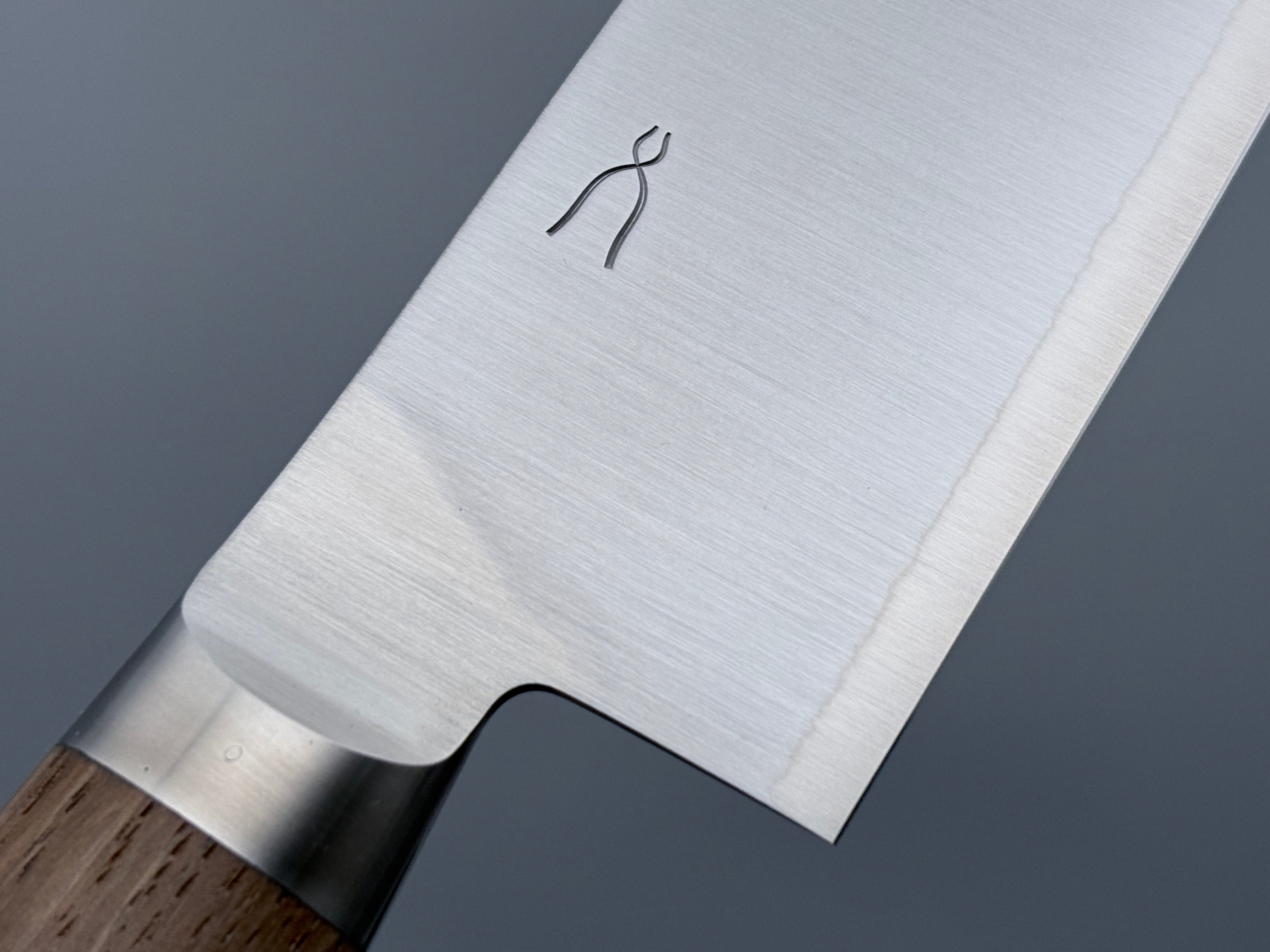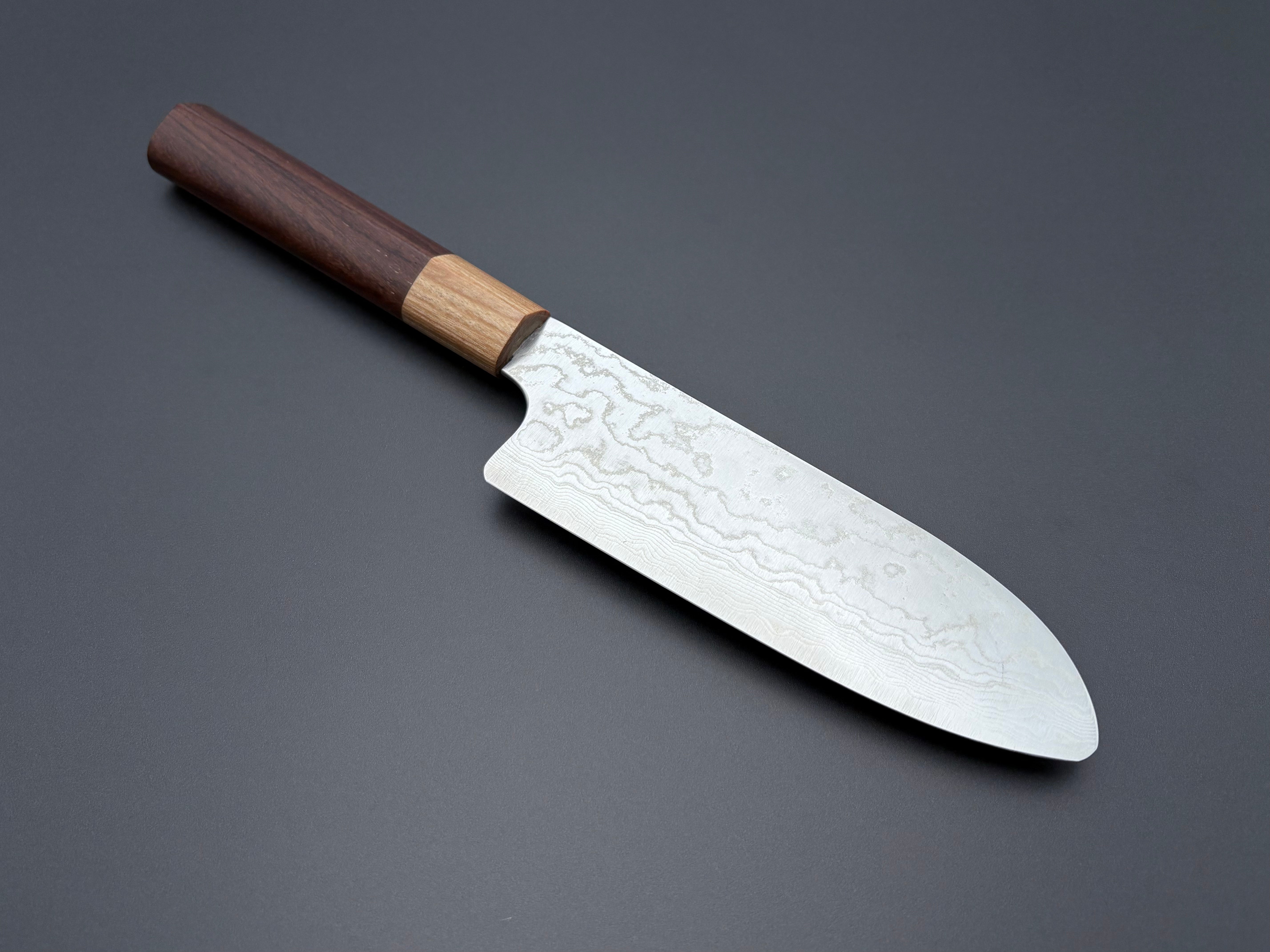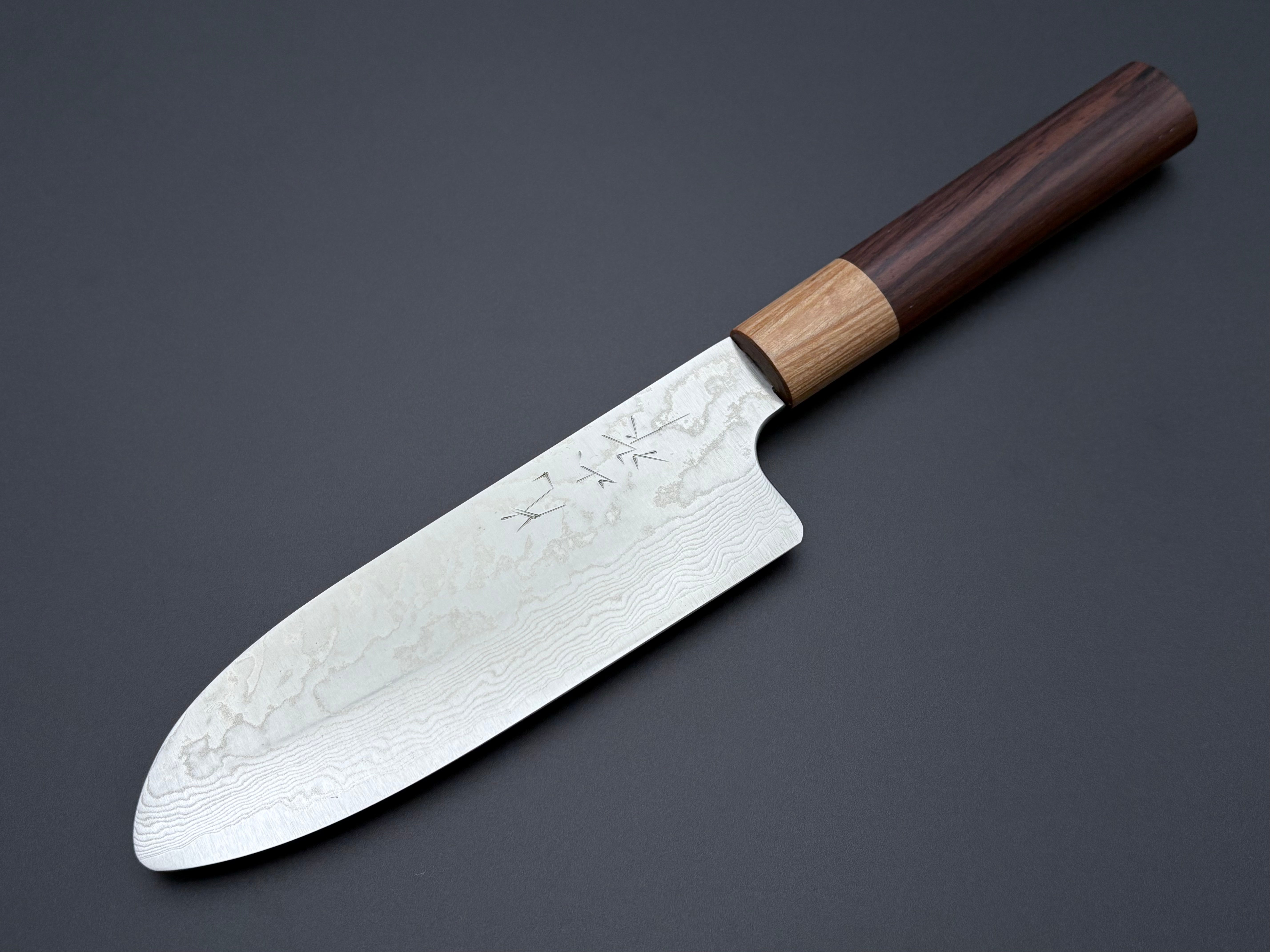

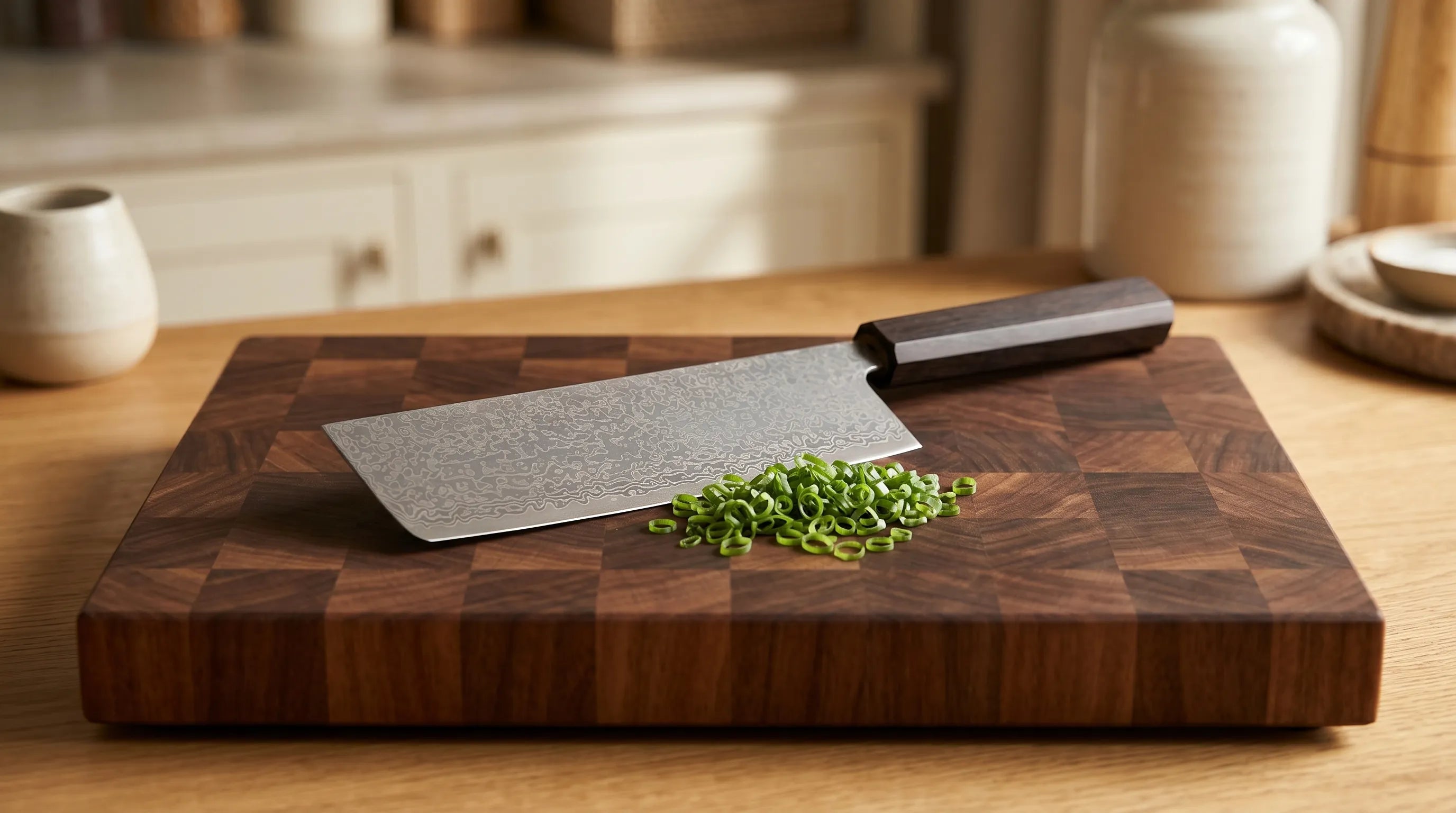
What is a nakiri knife?
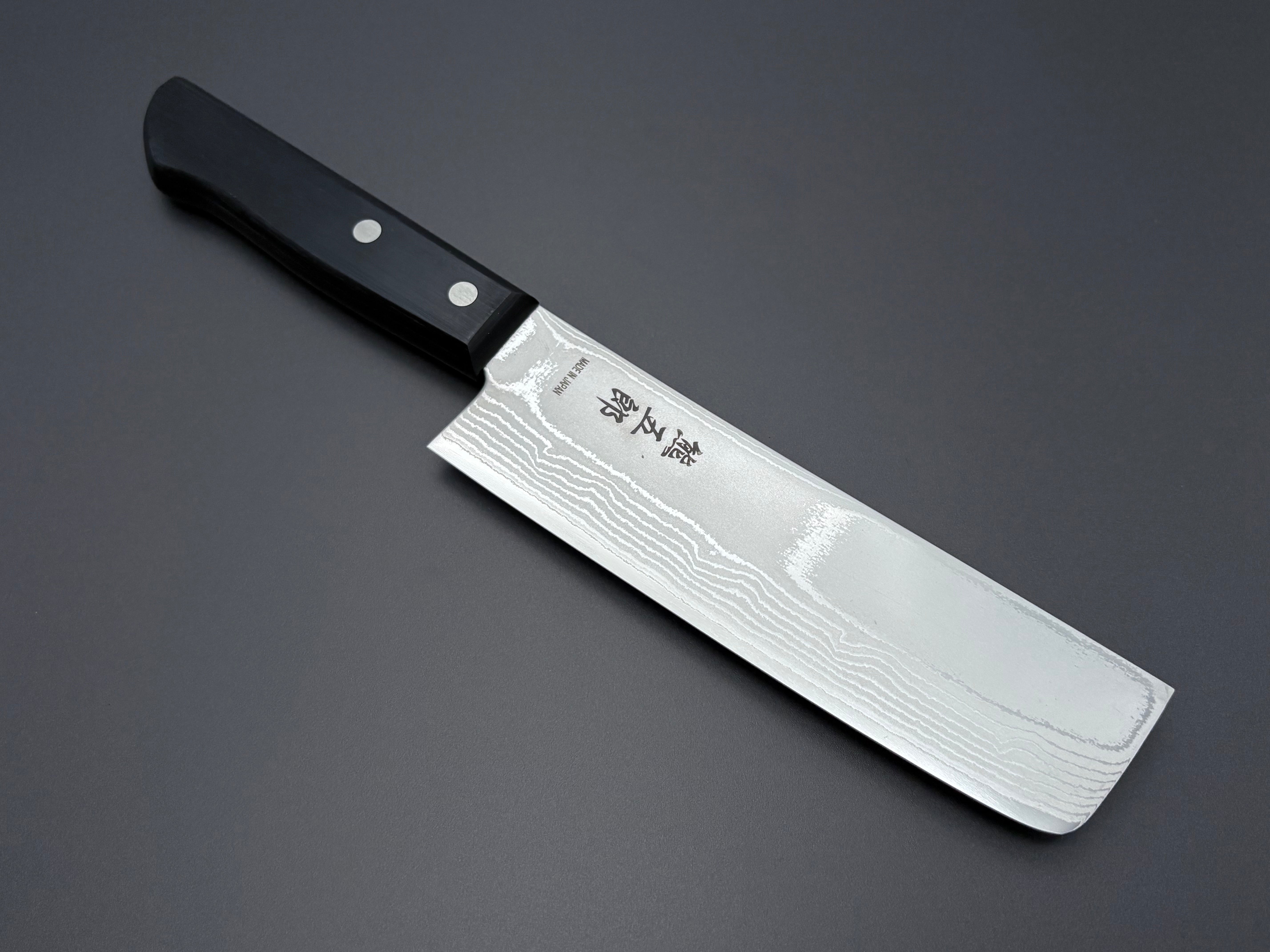
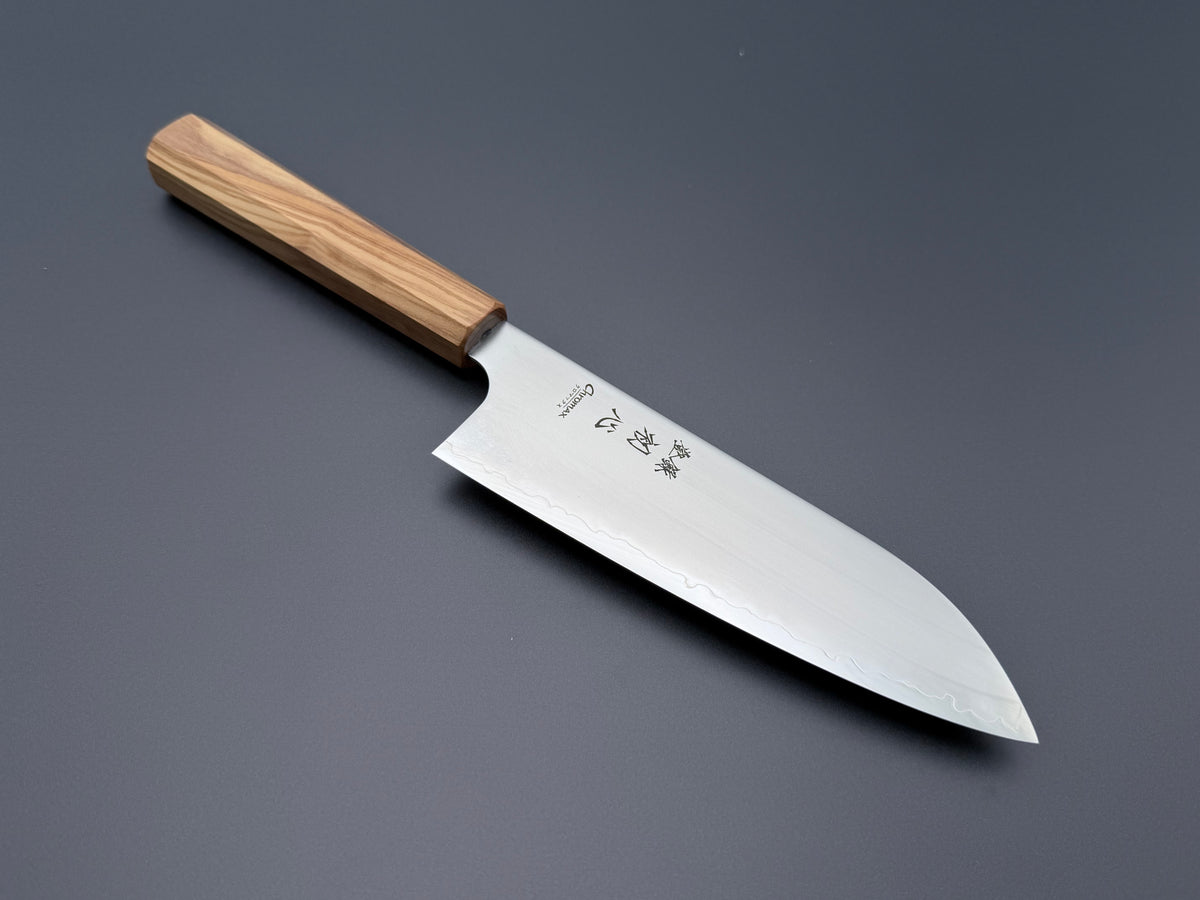
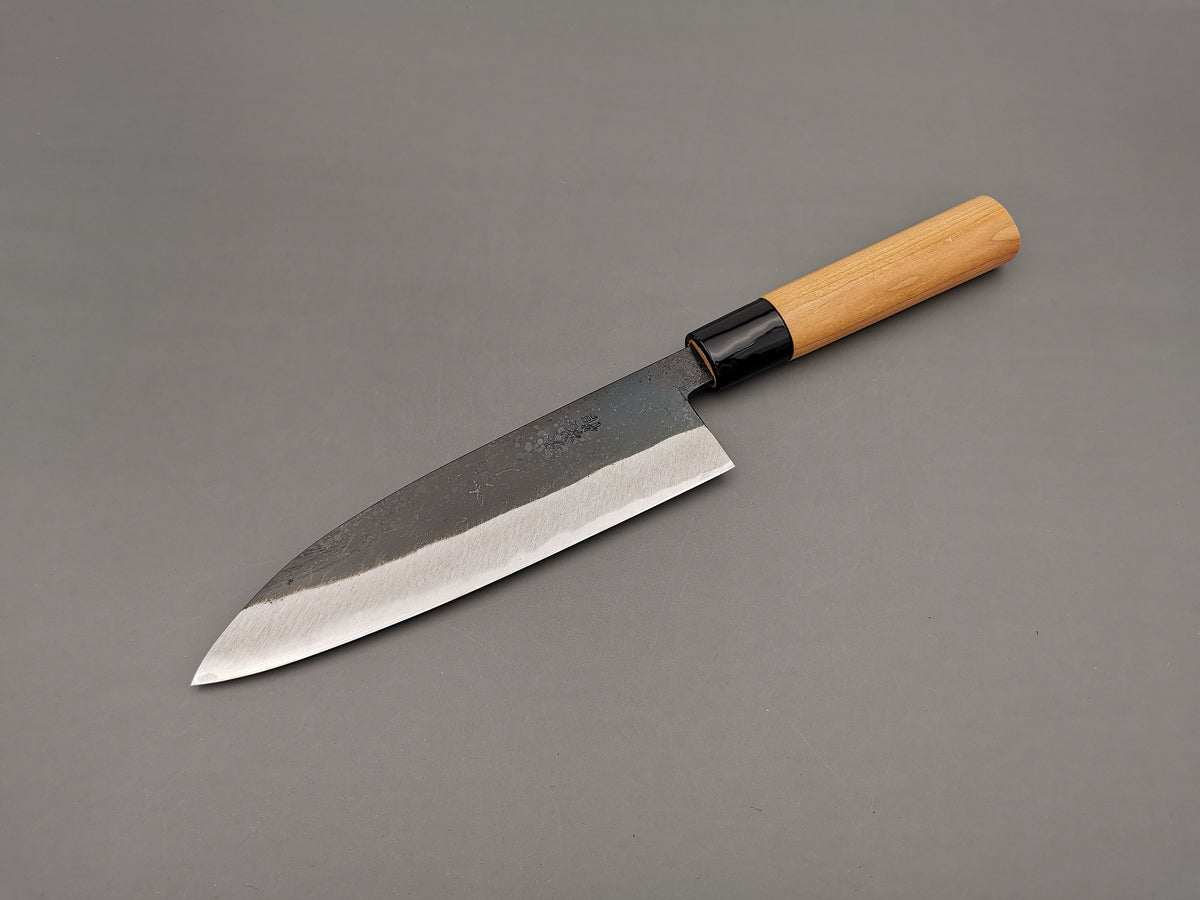
The nakiri is a Japanese knife built for vegetables. The name translates roughly as "for cutting greens," and the blade makes that obvious: a flat edge that runs nearly parallel to the spine, squared off at the tip rather than pointed.

Unlike a gyuto or santoku, the whole edge contacts the board in a single push or pull cut, no rocking required. That makes it very efficient for cabbage, courgette, onions, herbs, anything that needs clean, consistent slices. If you spend a serious amount of time at the board working through vegetables, a nakiri earns its place fast.
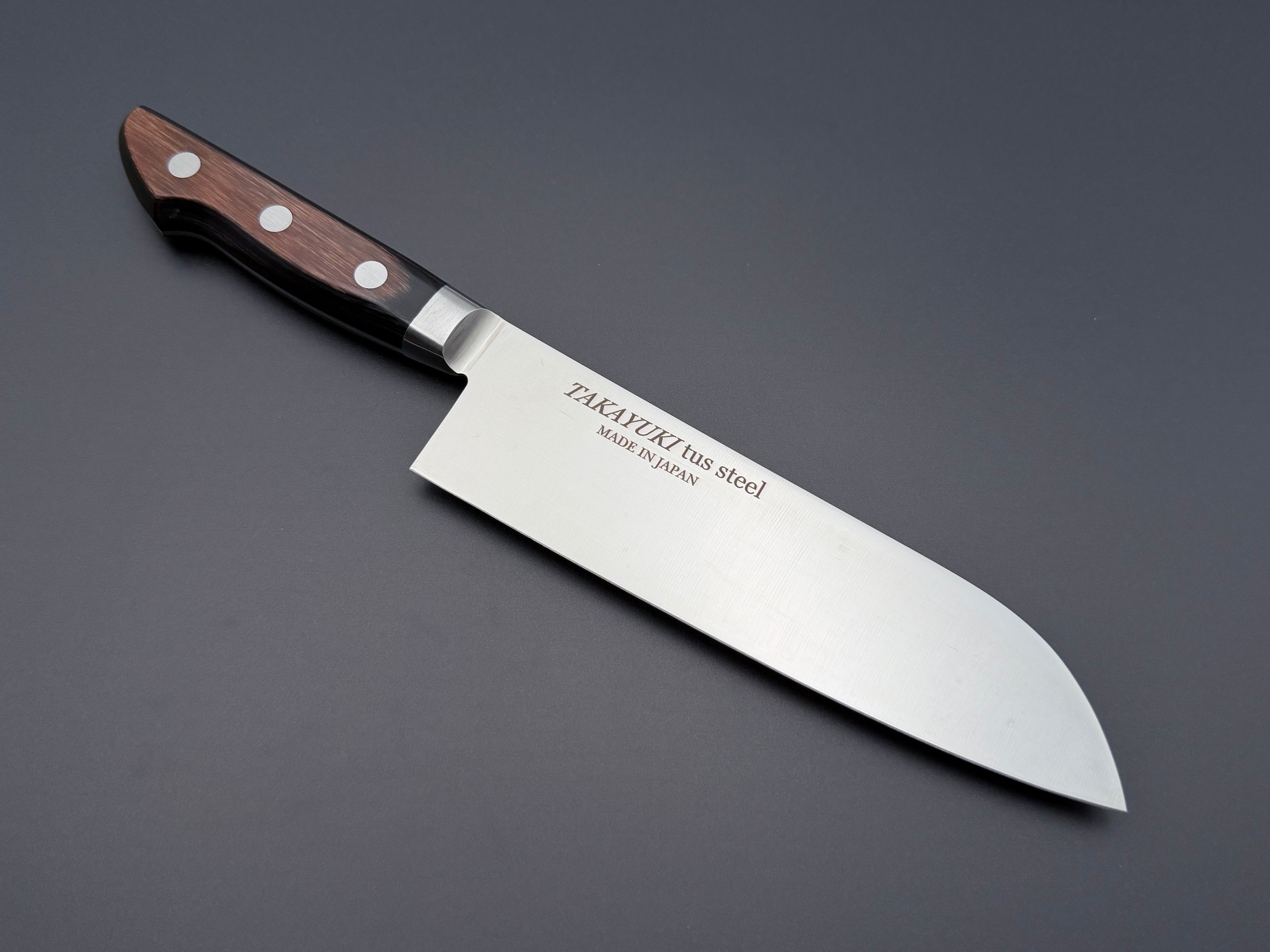
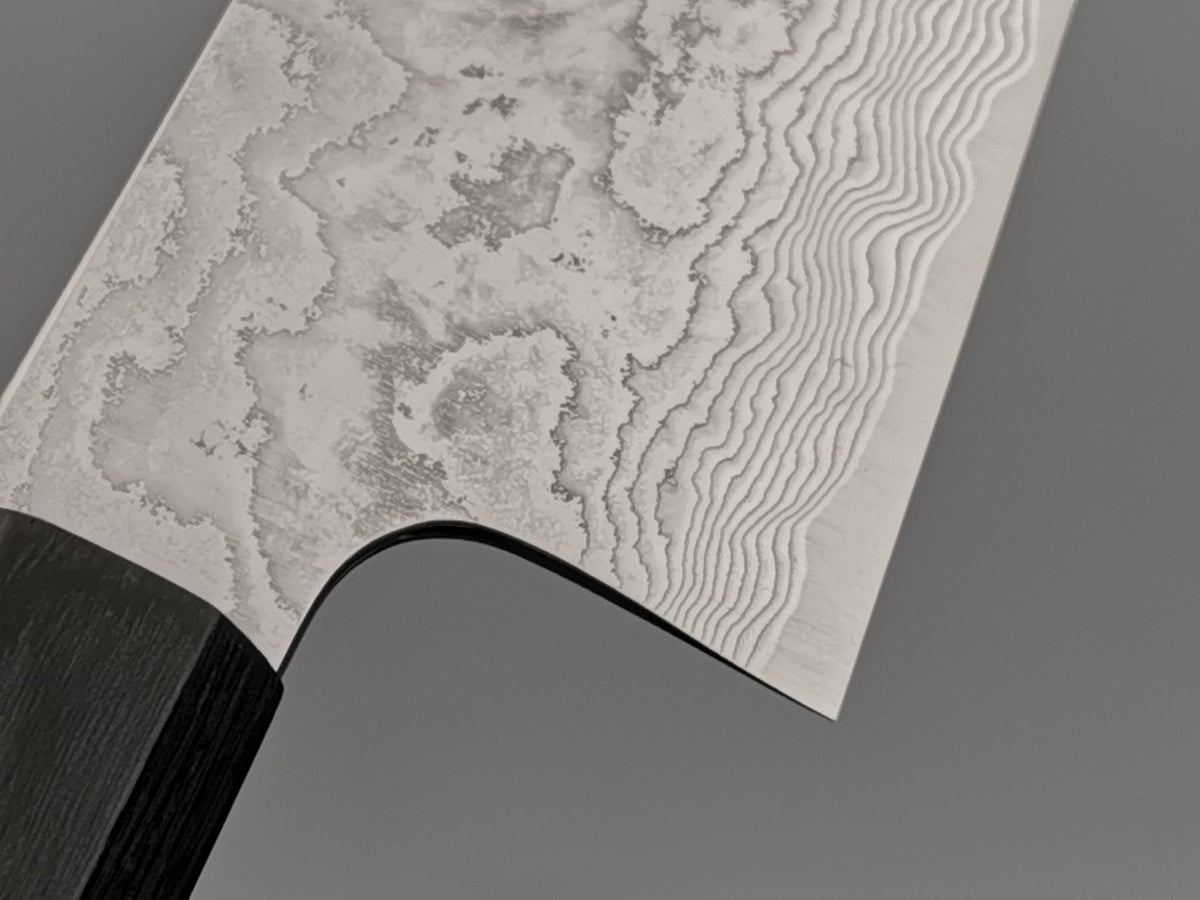
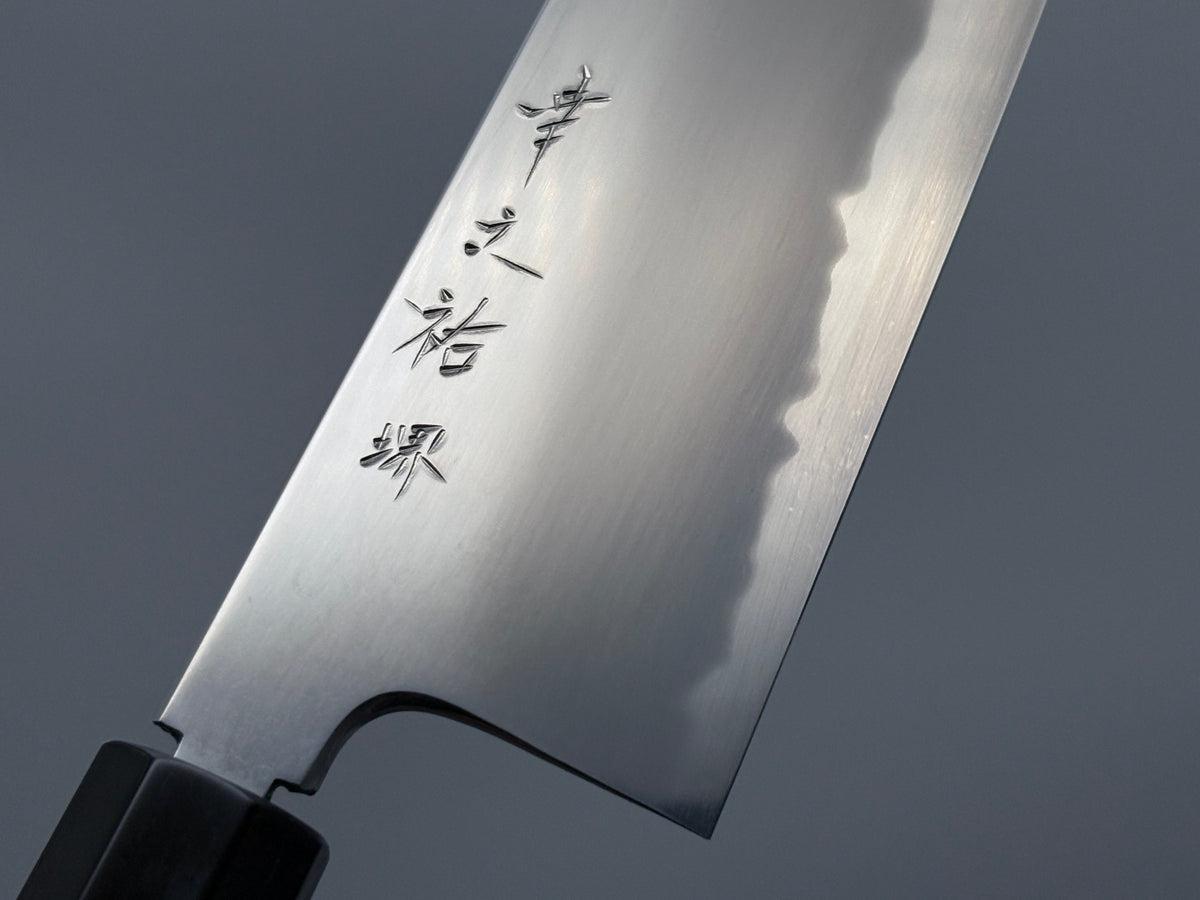
Most measure between 165mm and 180mm, comfortable for home cooks and professionals alike. The blade is double-bevelled, which makes it more approachable than single-bevel Japanese knives, and the thin stock means less resistance through dense produce. Makers like Sakai Takayuki, based in Sakai City, produce nakiri knives in premium steels including Ginsan and Shirogami, hand-sharpened to precise edge geometry that lets the style do what it does best.
Nakiri knife blade geometry and how it affects cutting
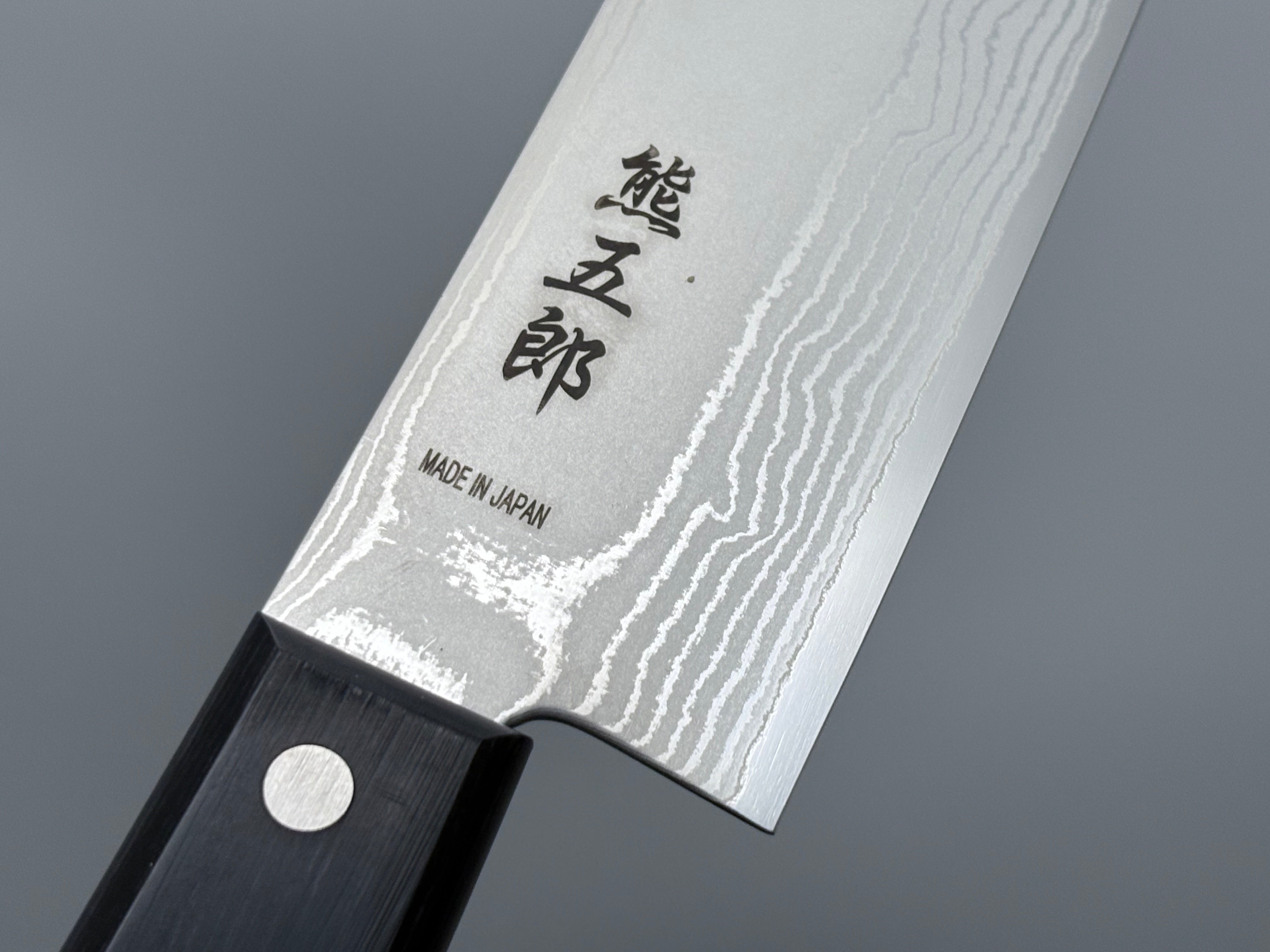
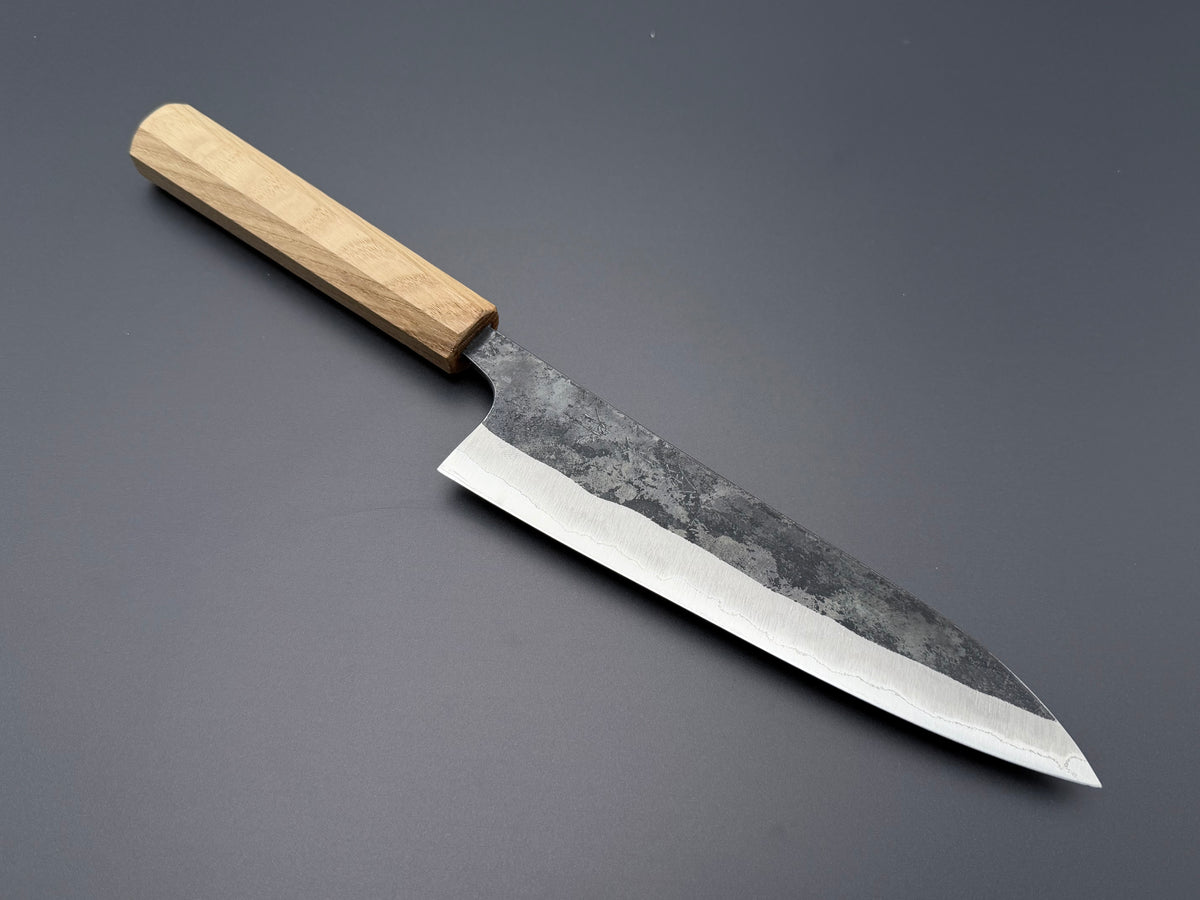
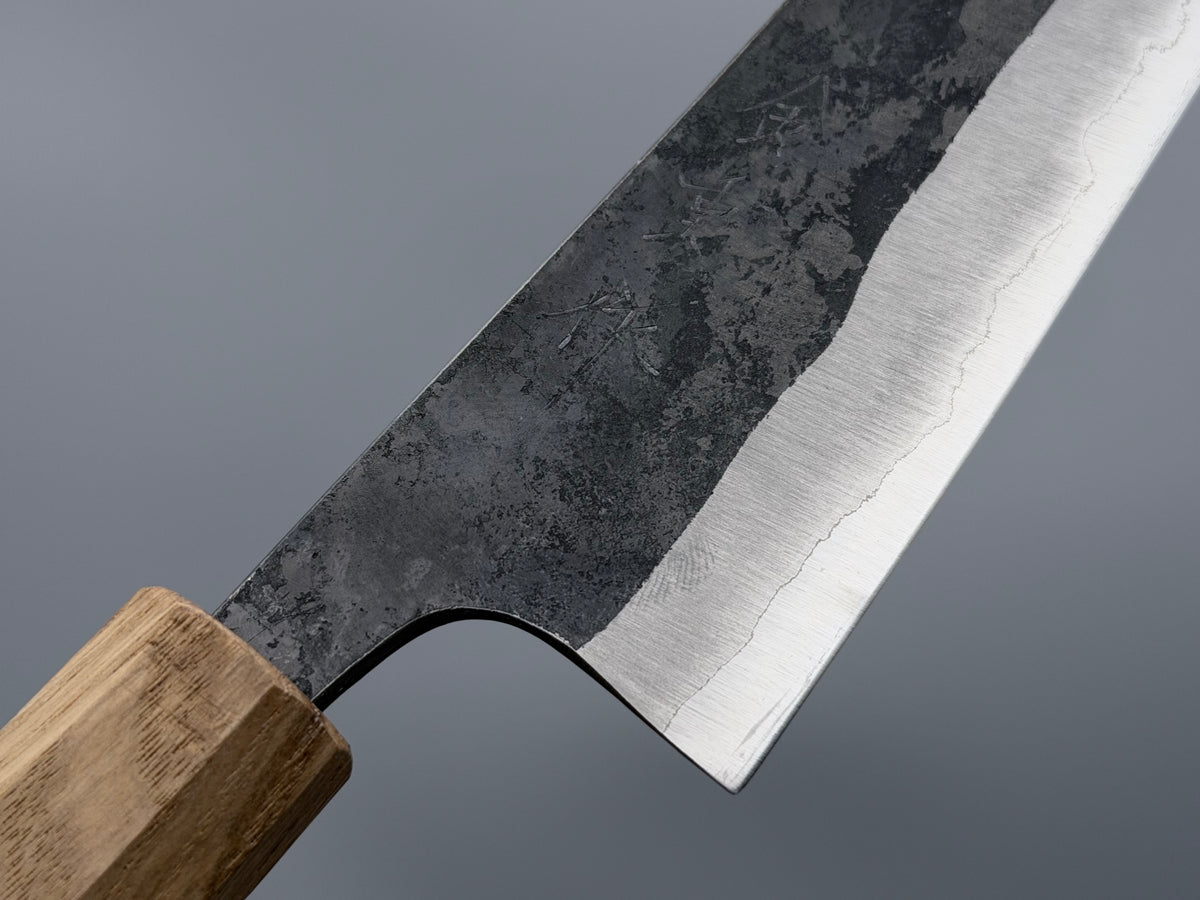
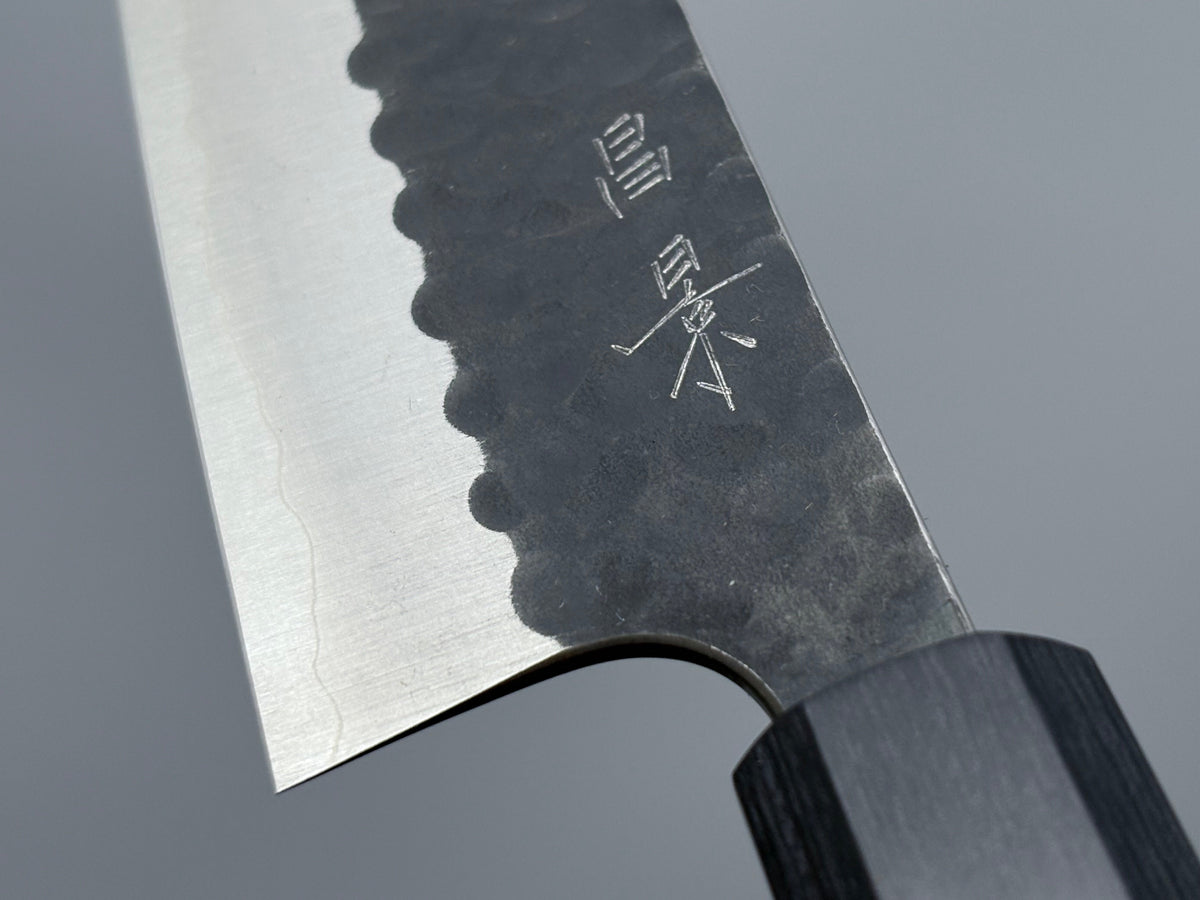
The flat profile is what sets the nakiri apart. A gyuto curves up toward the tip, which suits a rocking motion. The nakiri is built for a straight up-and-down chop, which suits high-volume vegetable work. Each stroke commits fully to the cut, so there is no adjustment mid-pile and no ingredient sliding away. The thin grind also reduces food sticking to the blade, though a kurouchi or hammered tsuchime finish helps further. If you would rather use a knife designed for vegetables than adapt a general-purpose chef's knife, the nakiri is the straightforward choice among Japanese vegetable prep knives.
Steel choices for a nakiri knife
Because nakiri knives almost never meet bone or cartilage, makers can grind them thin and use high-hardness steels that would chip on harder tasks. Common options include:
- Shirogami (white paper steel), very pure carbon steel, takes an exceptionally fine edge, reactive
- Aogami (blue paper steel), carbon steel with added tungsten and chromium, slightly tougher than Shirogami
- Ginsan (silver 3), semi-stainless steel that combines carbon-like sharpness with easier maintenance
- SG2 / R2, powdered stainless steel, very high hardness, holds an edge for a long time
Each calls for different care. Carbon steels like Shirogami and Aogami develop a patina and need drying after use. Ginsan and other semi-stainless options are more forgiving in a busy kitchen. Neither type is categorically better. It comes down to how much maintenance you want and how much you care about the cutting feel each steel provides.
Choosing the right nakiri knife for your kitchen
Budget matters, but so does fit. Pay attention to the handle material and shape too: a nakiri is held in a fairly upright grip, and a well-proportioned wa handle makes extended prep sessions noticeably more comfortable. A nakiri under £100 can be a capable knife if the geometry is right. Spending between £100 and £175 usually brings better steel, a better handle, and more refined finishing. For those drawn to handmade character and premium materials, the £175 to £250 range tends to be the sweet spot before prices move into collector territory. Browse the full range of Japanese vegetable knives to find the nakiri that fits your cooking style and budget.