
What is the machi gap on a Japanese knife?
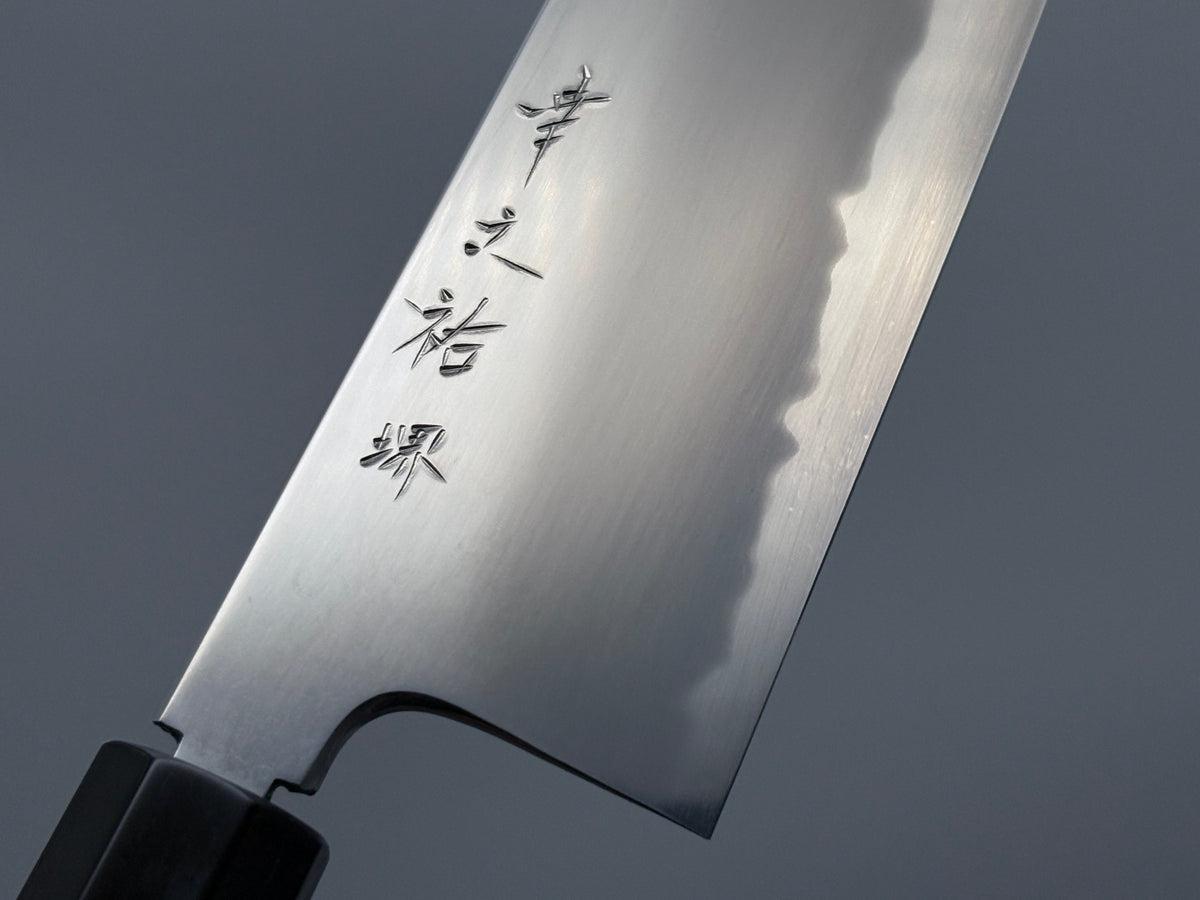
Look closely at a Japanese knife where the blade meets the handle and you will sometimes see a gap between the blade collar and the front of the handle. That gap is the "machi gap".
It is a deliberate feature on many traditional Japanese knives, particularly those with a wa-style handle and most commonly it's seen on single bevel slicing knives such as yanagiba, usuba and deba and most often on knives made in the Sakai area although it's not a hard and fast rule and so sometimes you will also see these knives with no gap or you'll see other knives such as the Konosuke BY gyuto with a pronounced machi gap.

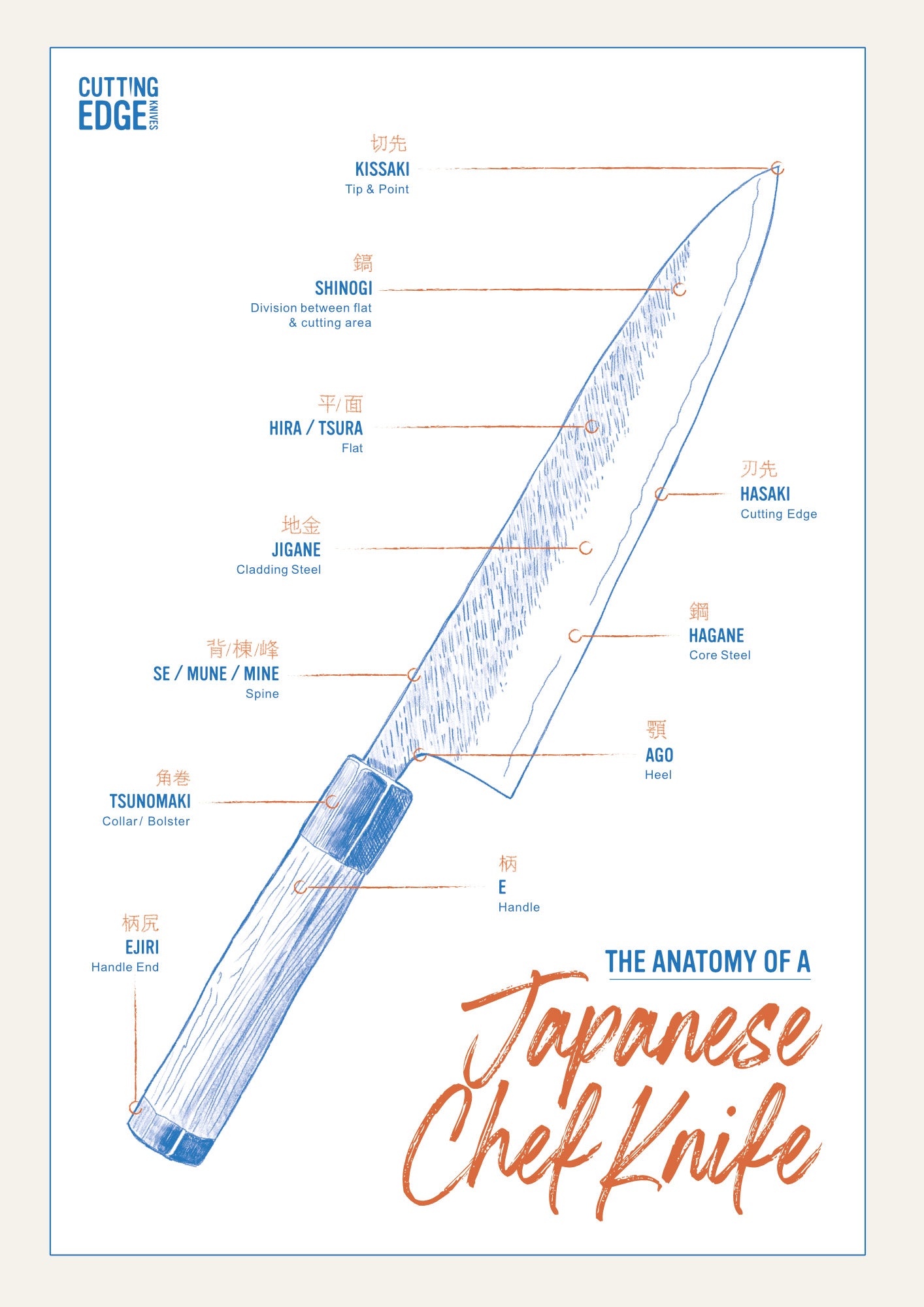
The machi itself is the notch at the base of the blade tang, where the cutting steel steps down into the narrower section that enters the handle. On a knife with a machi gap, the handle does not sit flush against that collar.
A few millimetres of space are left on purpose and is a nod to a traditional fitting style.
Why the gap is there
As the wooden handle settles and compresses with use, it can be driven further onto the tang. That built-in room makes re-handling straightforward. When a wa handle eventually needs replacing, it can be knocked off and a new one fitted without much fuss. The gap also stops moisture from being trapped between wood and steel, which matters with reactive carbon steel blades where keeping things dry is part of regular care.
The size of the gap varies by maker. On many of the handmade knives in our full knife collection, it reflects the individual smith's approach and how the handle was fitted at finishing.
Does it affect how the knife cuts?
Not strictly speaking - The machi gap has nothing to do with the cutting performance of a blade and does not mean the handle is loose or the knife is poorly made. In some instances where a handle made from lightweight wood like chestnut or magnolia a machi gap can help move the balance point of the knife forward a couple of mm but generally speaking, a machi gap is a sign of traditional fitting, not a performance feature.