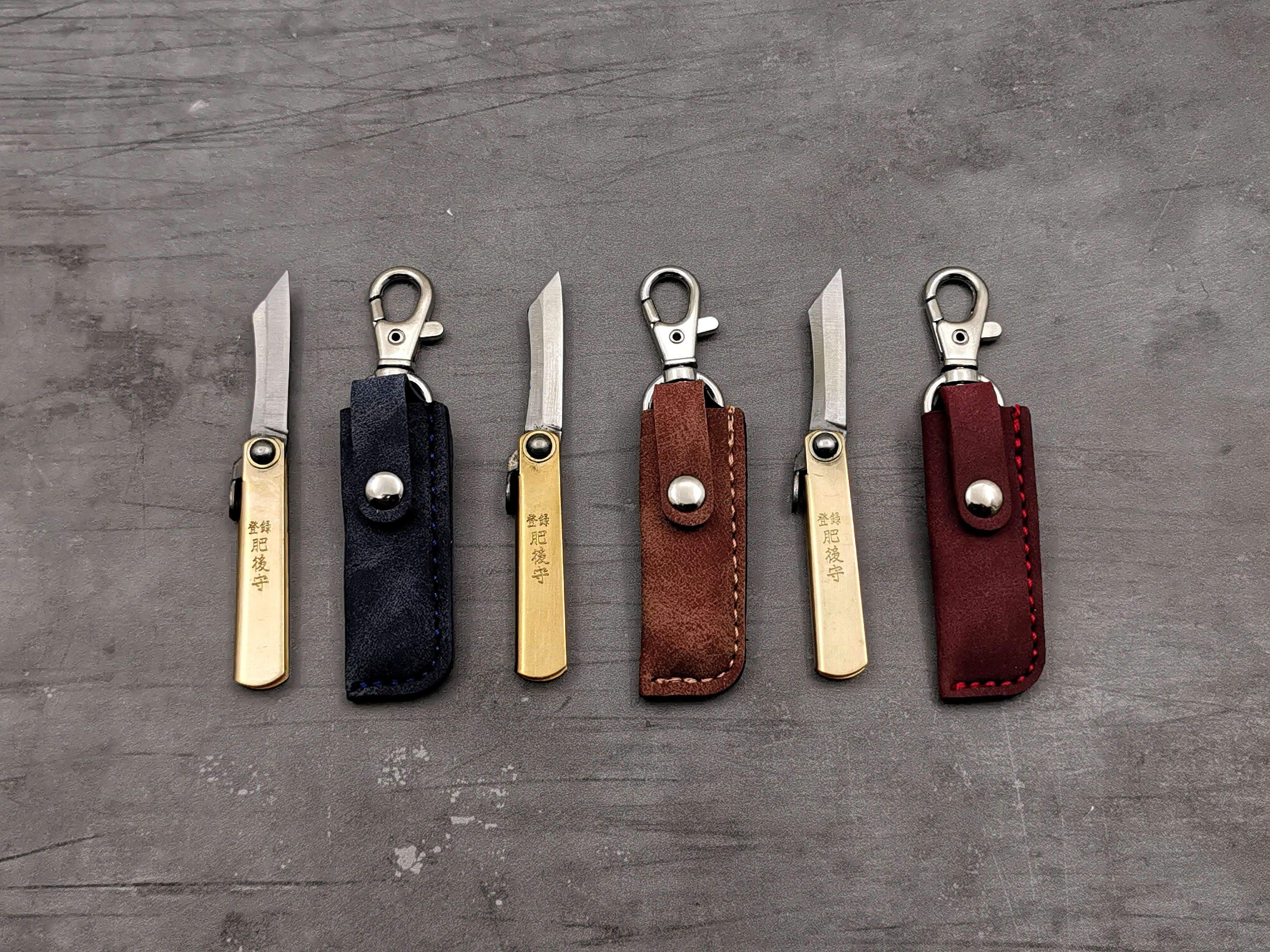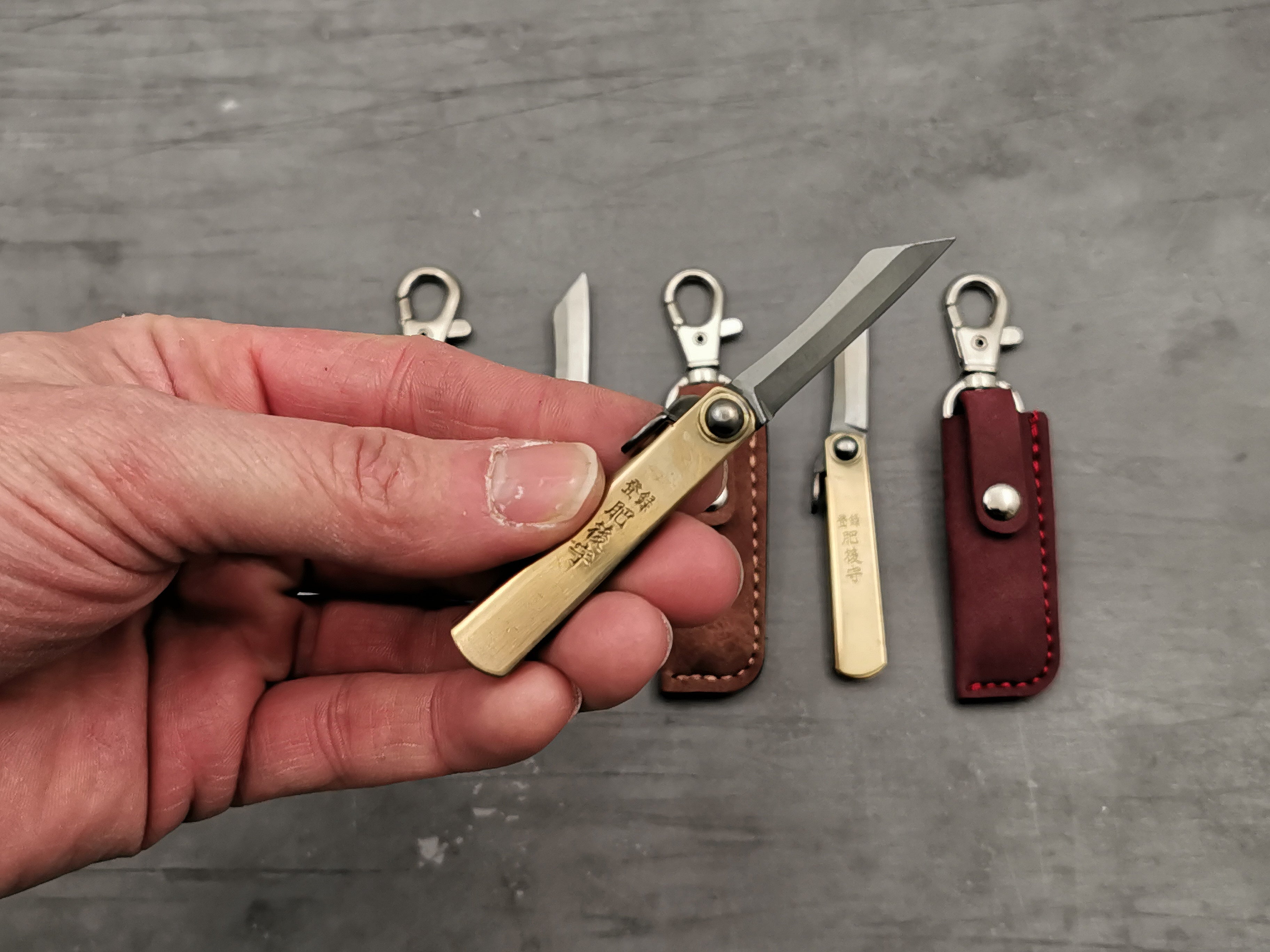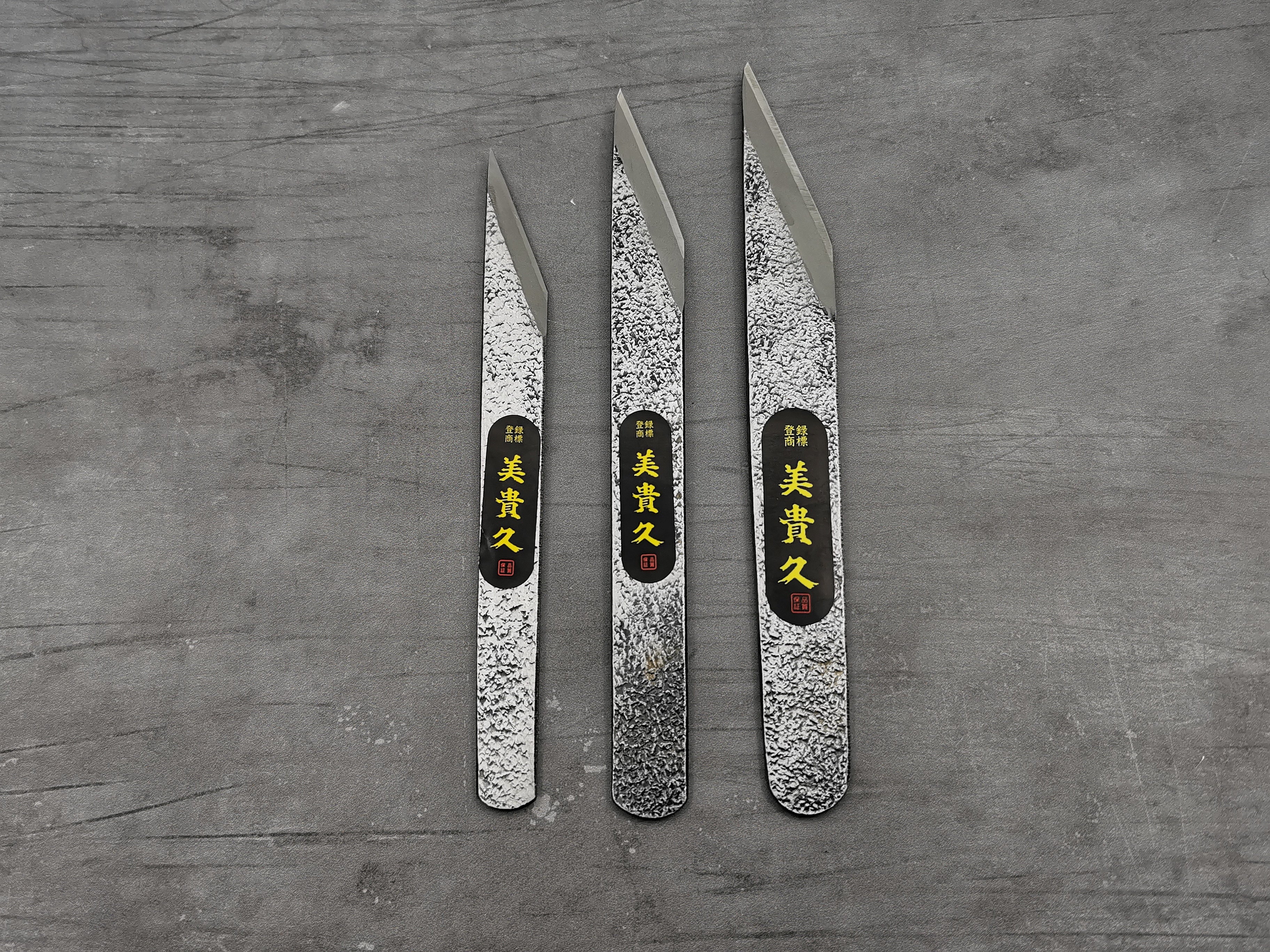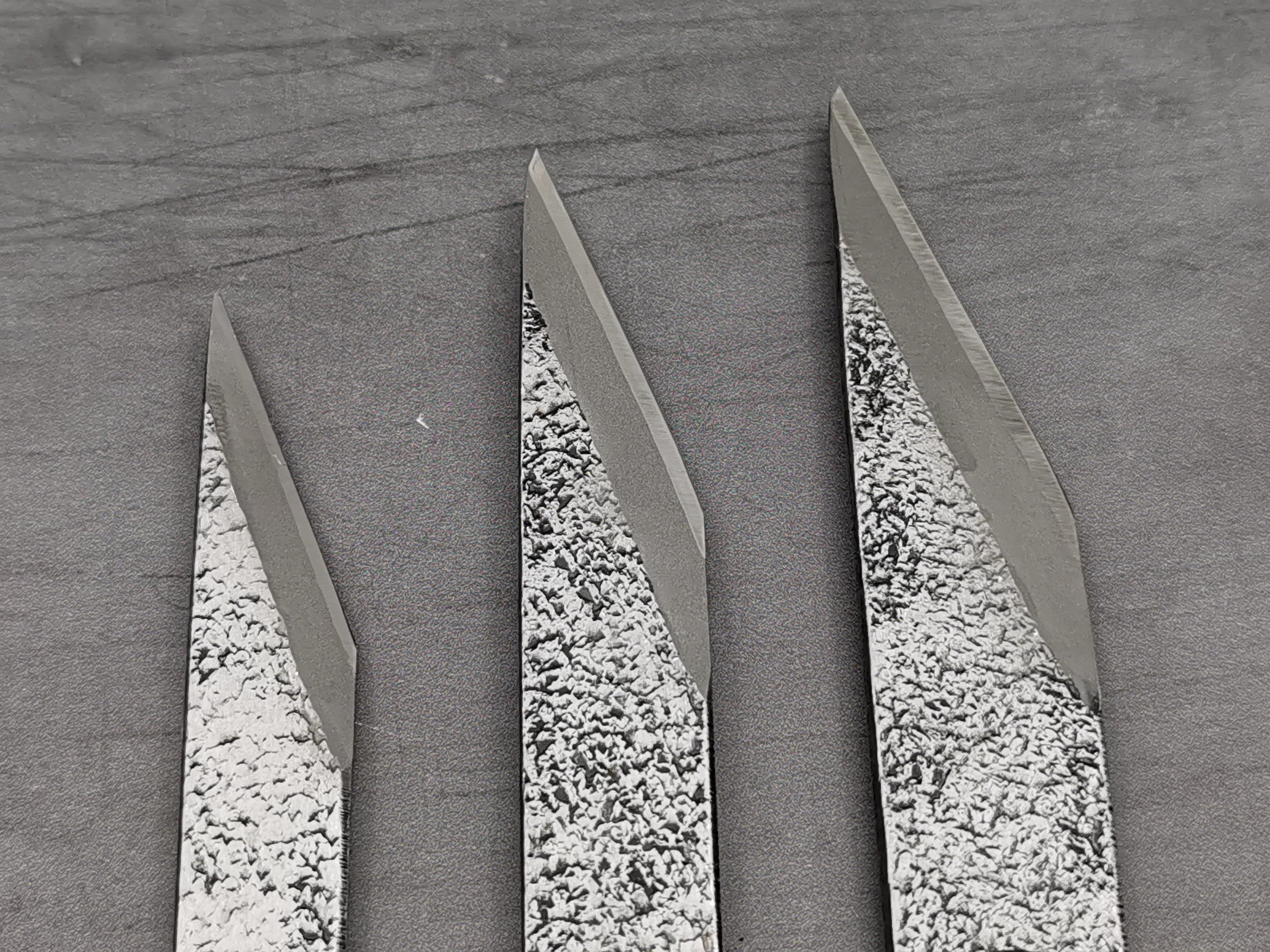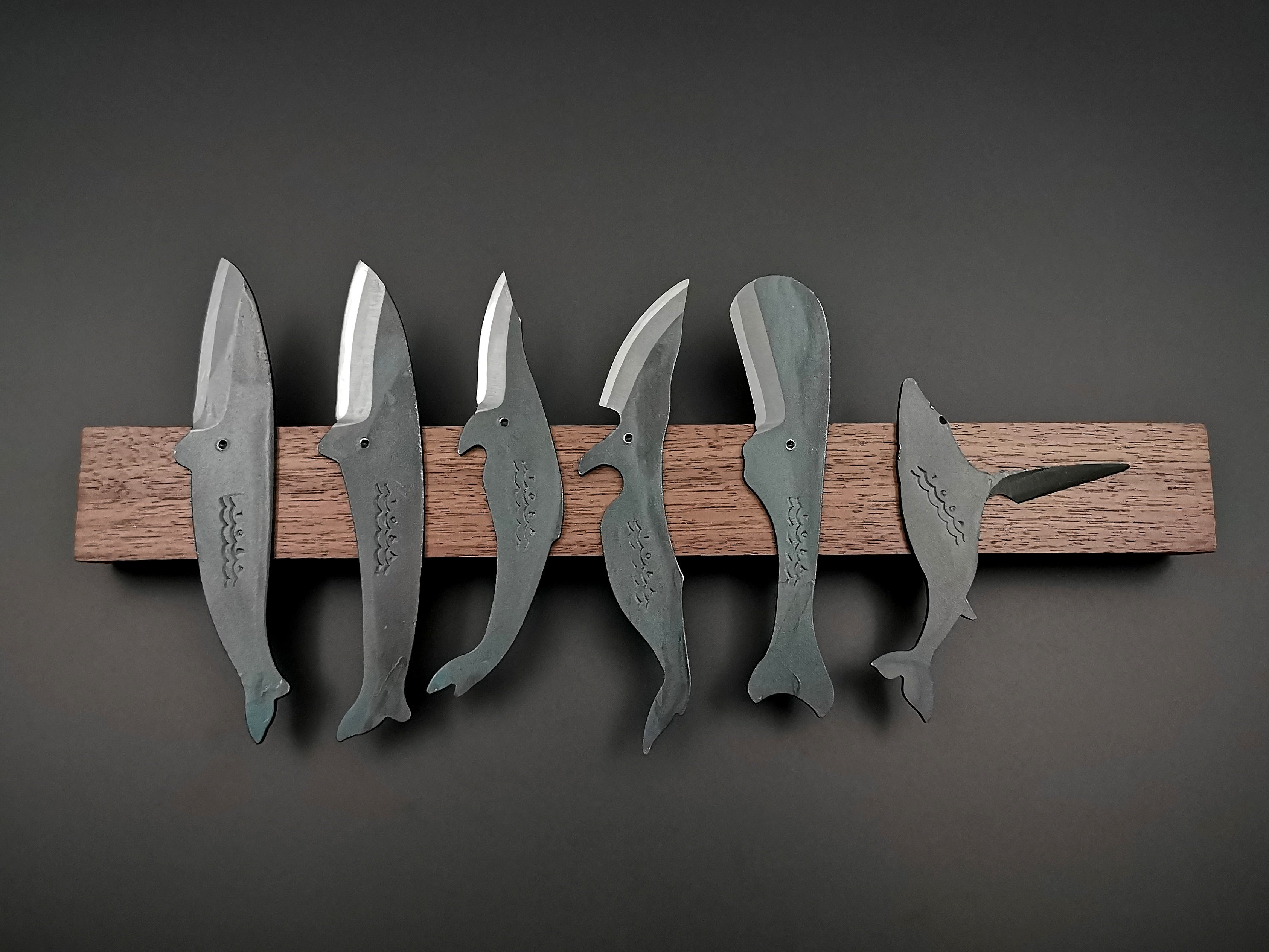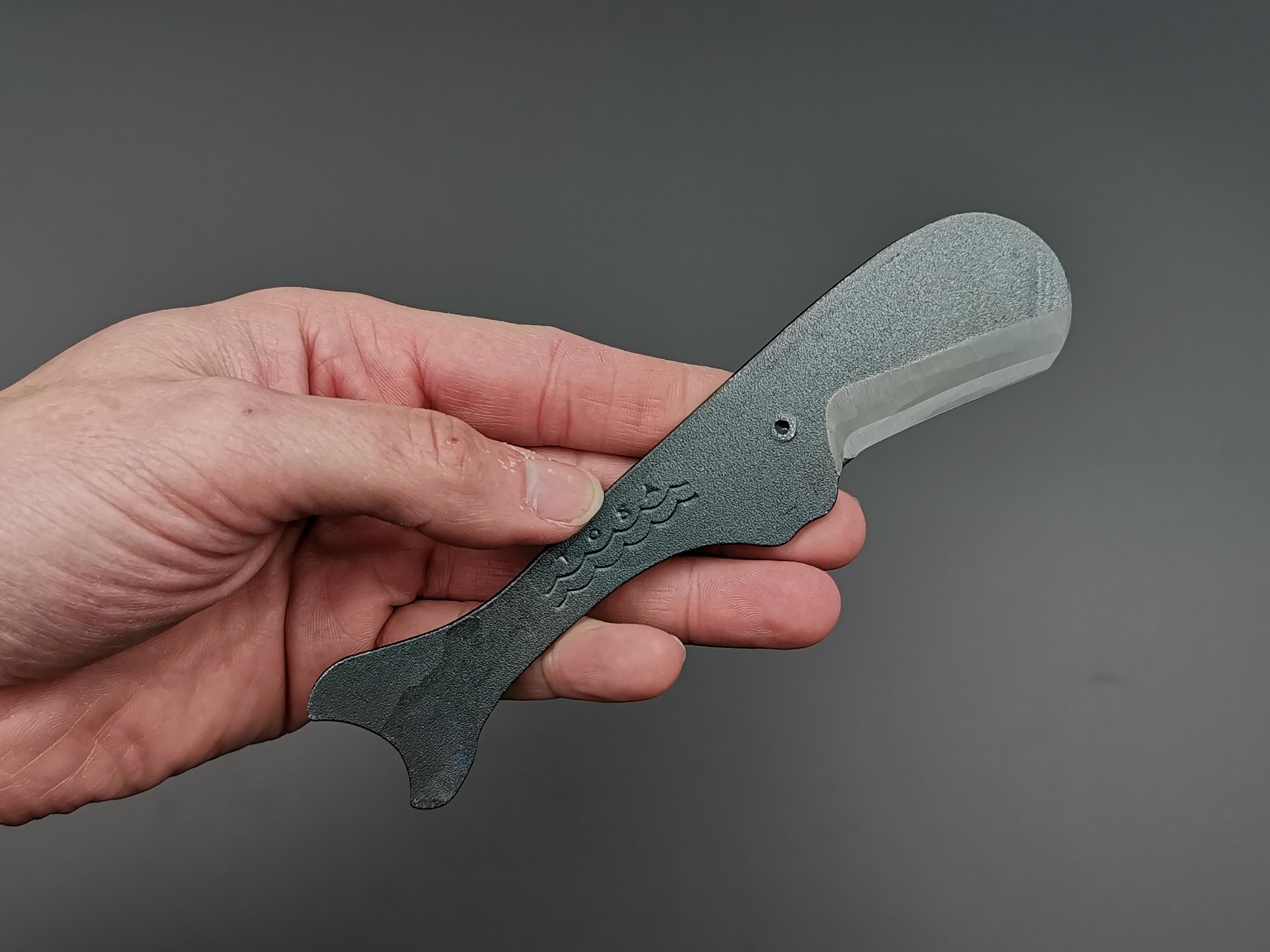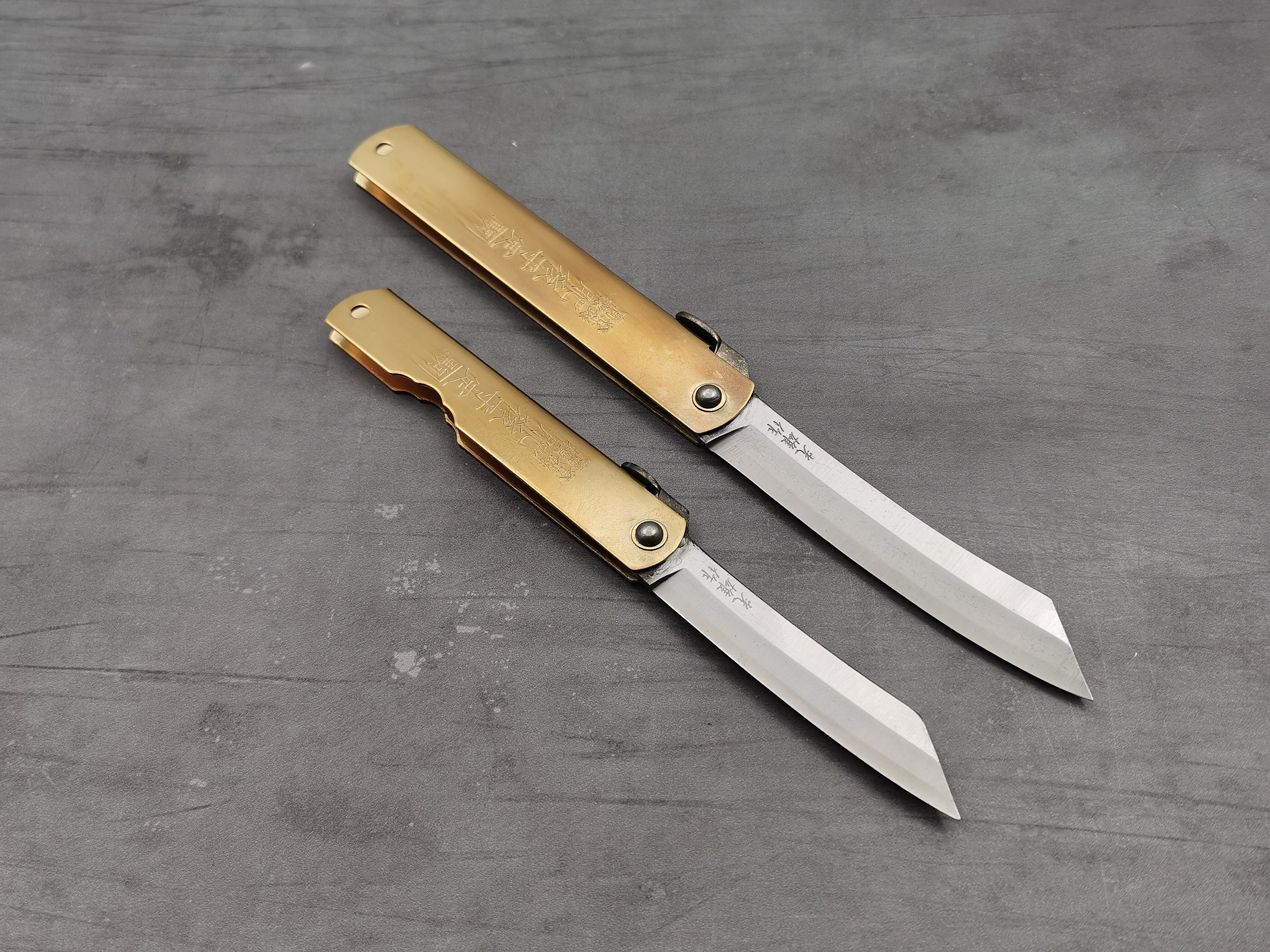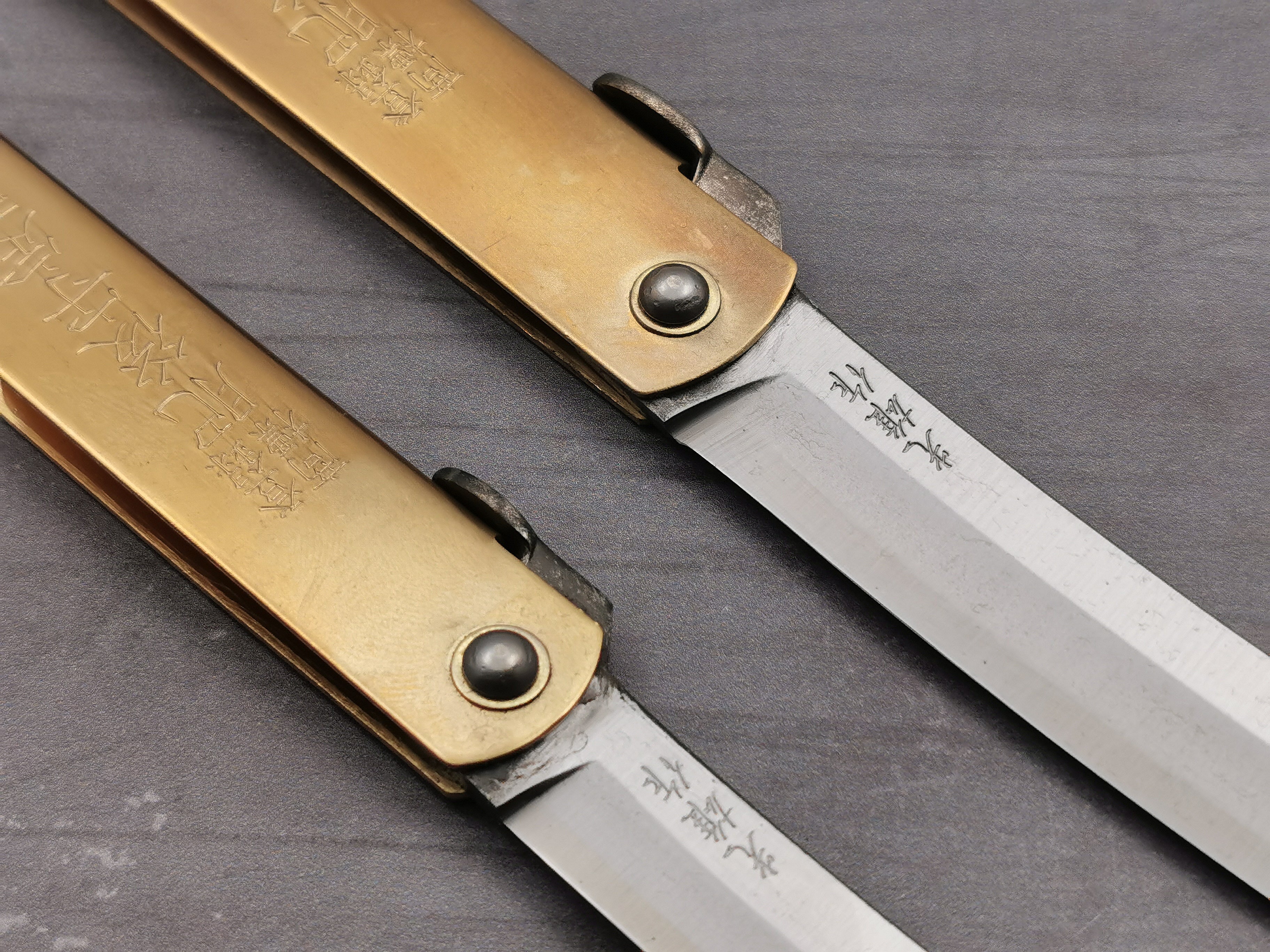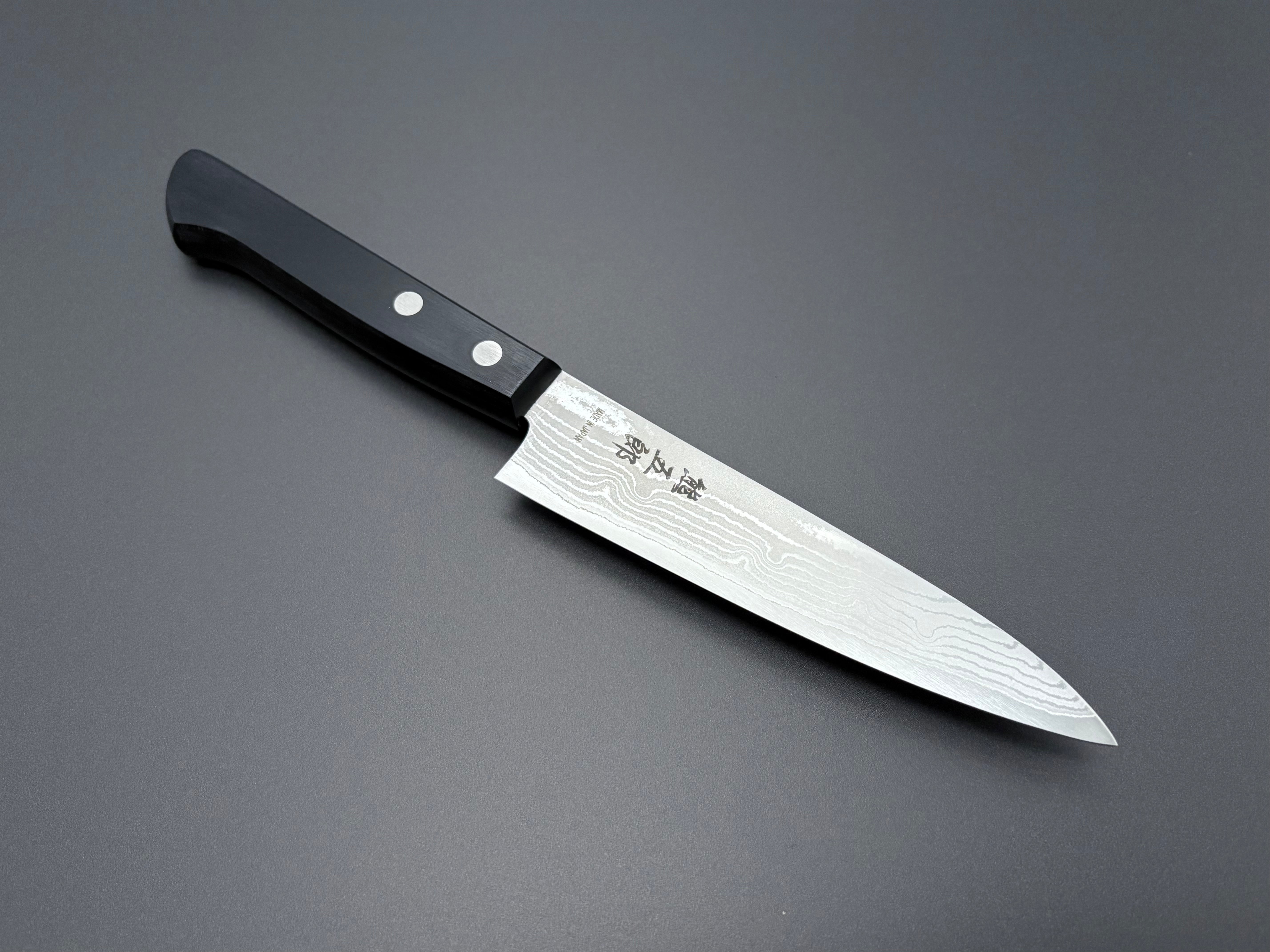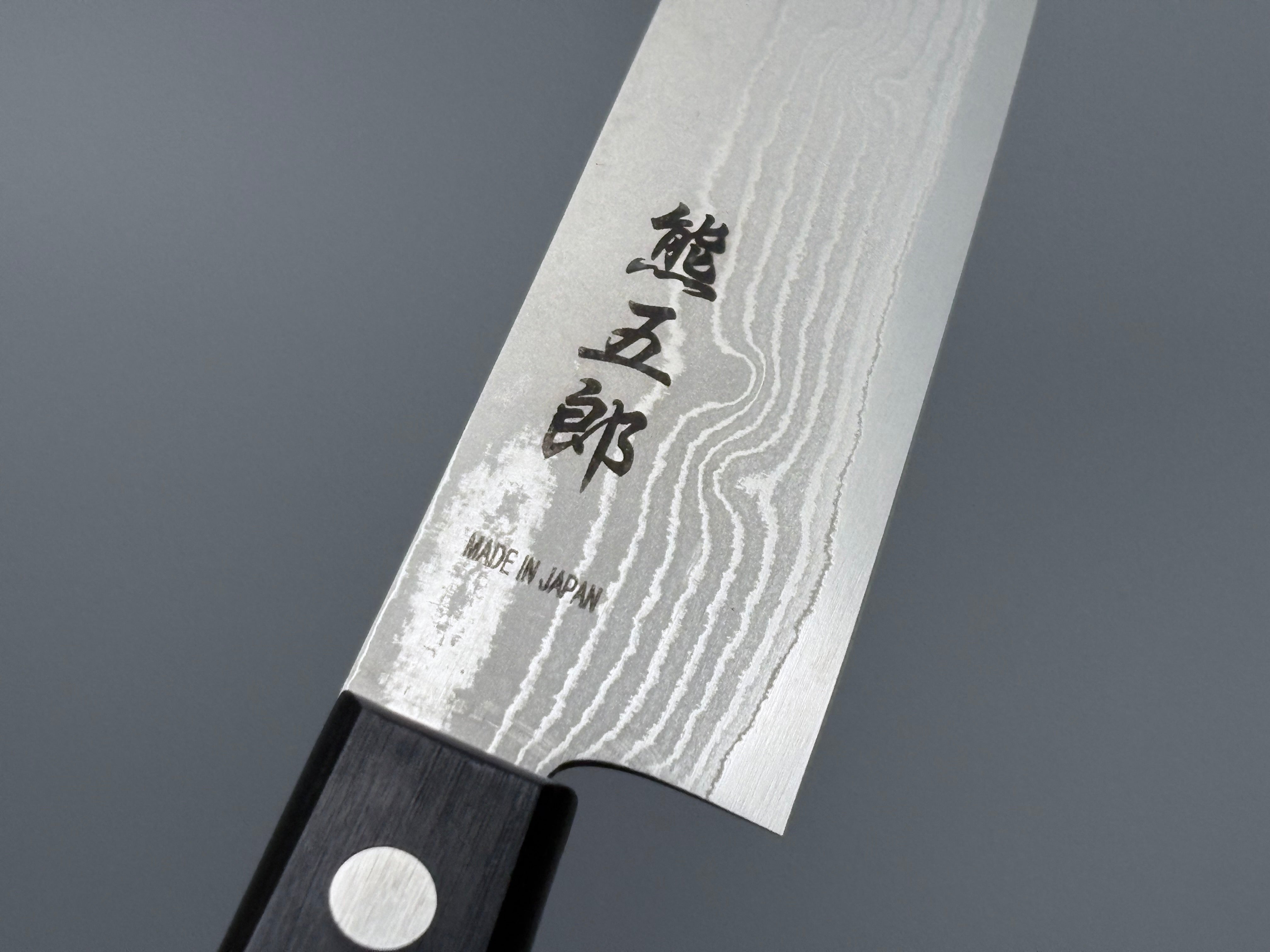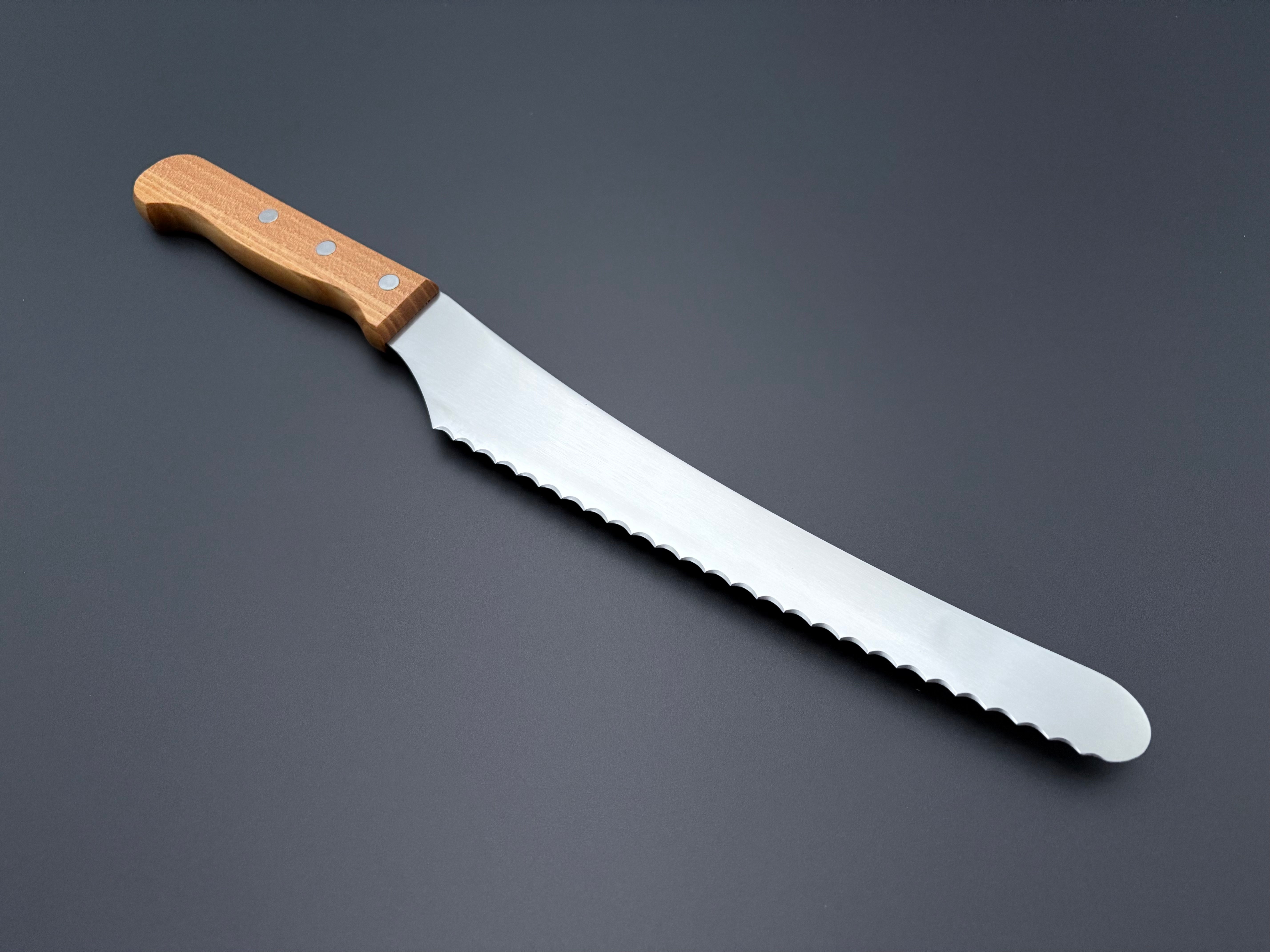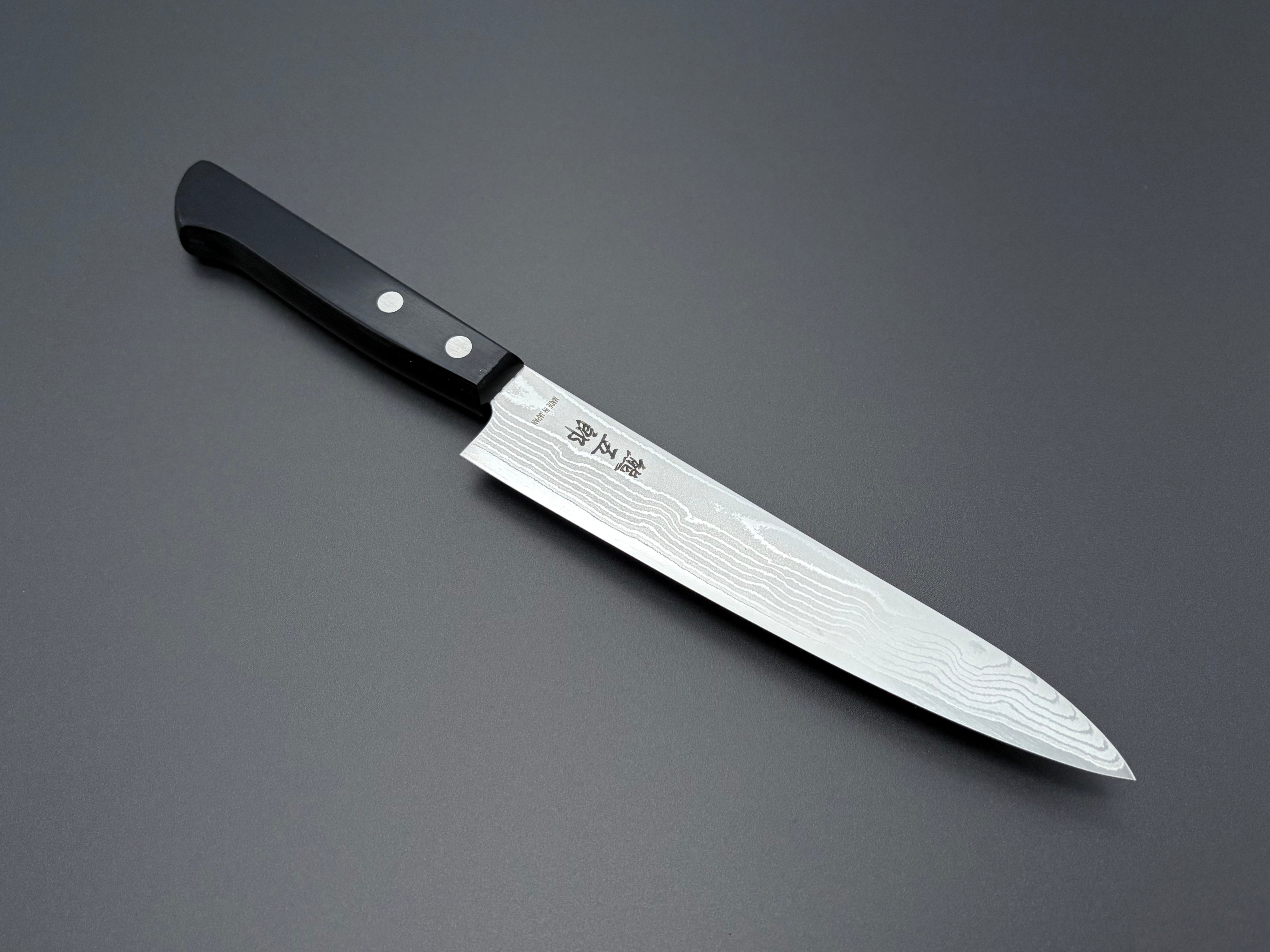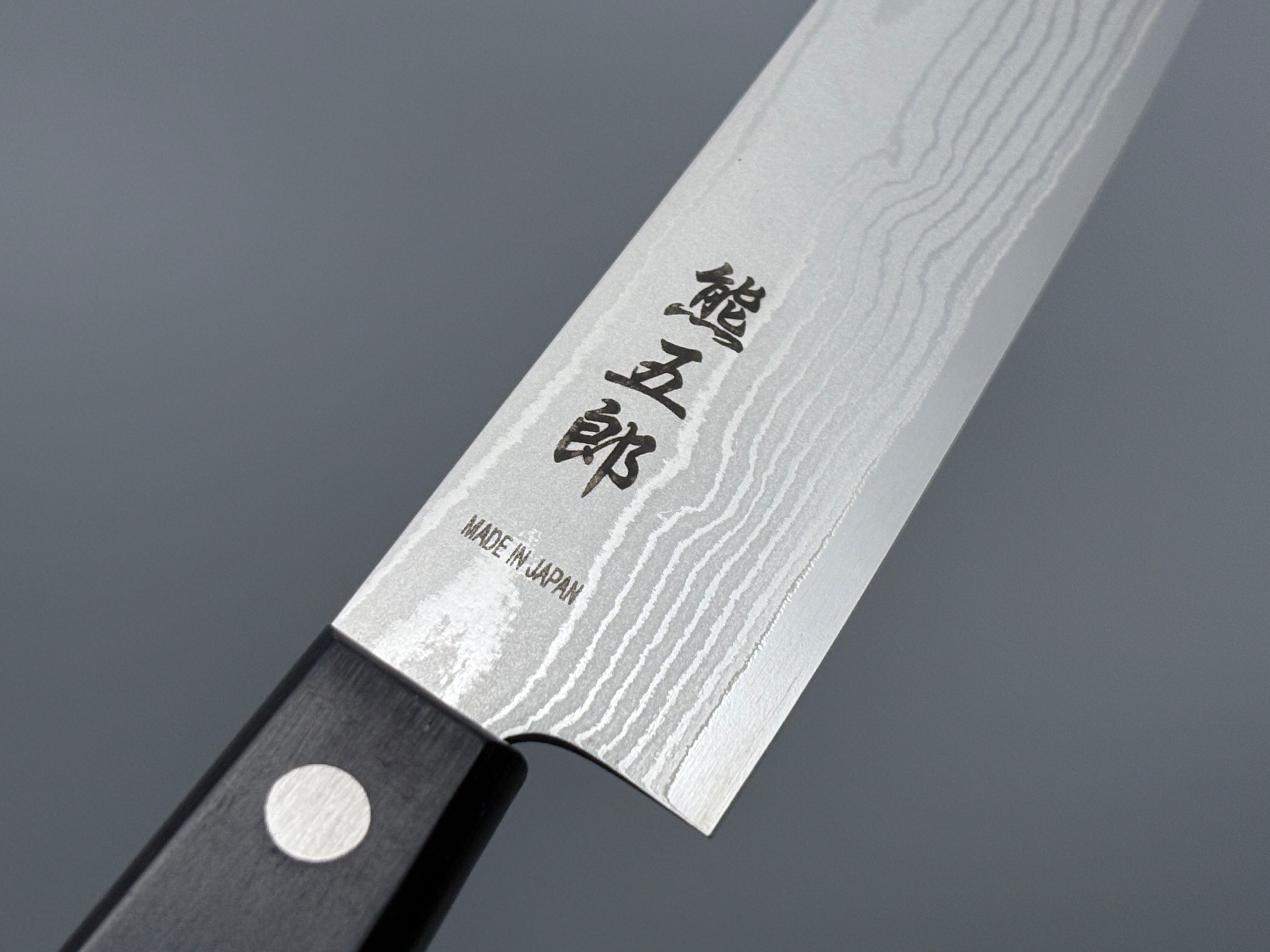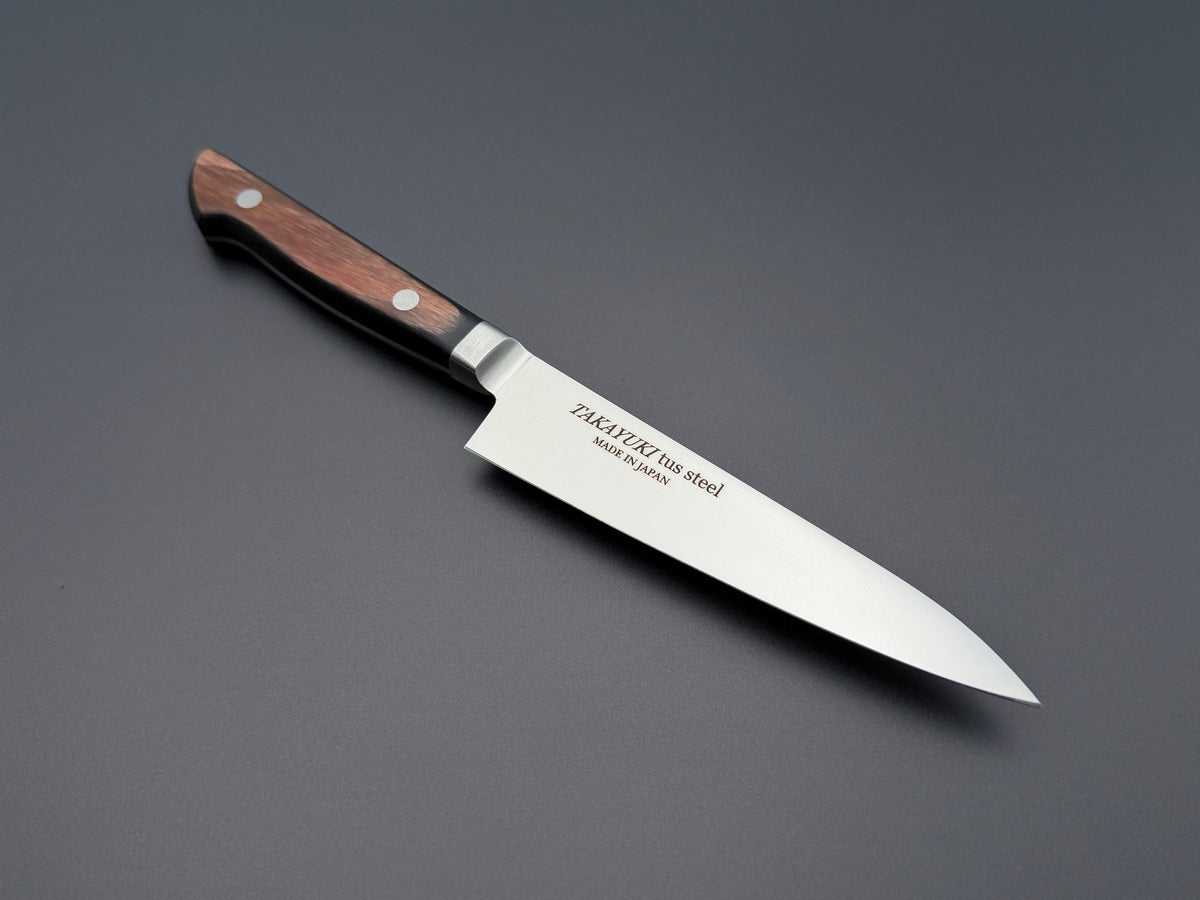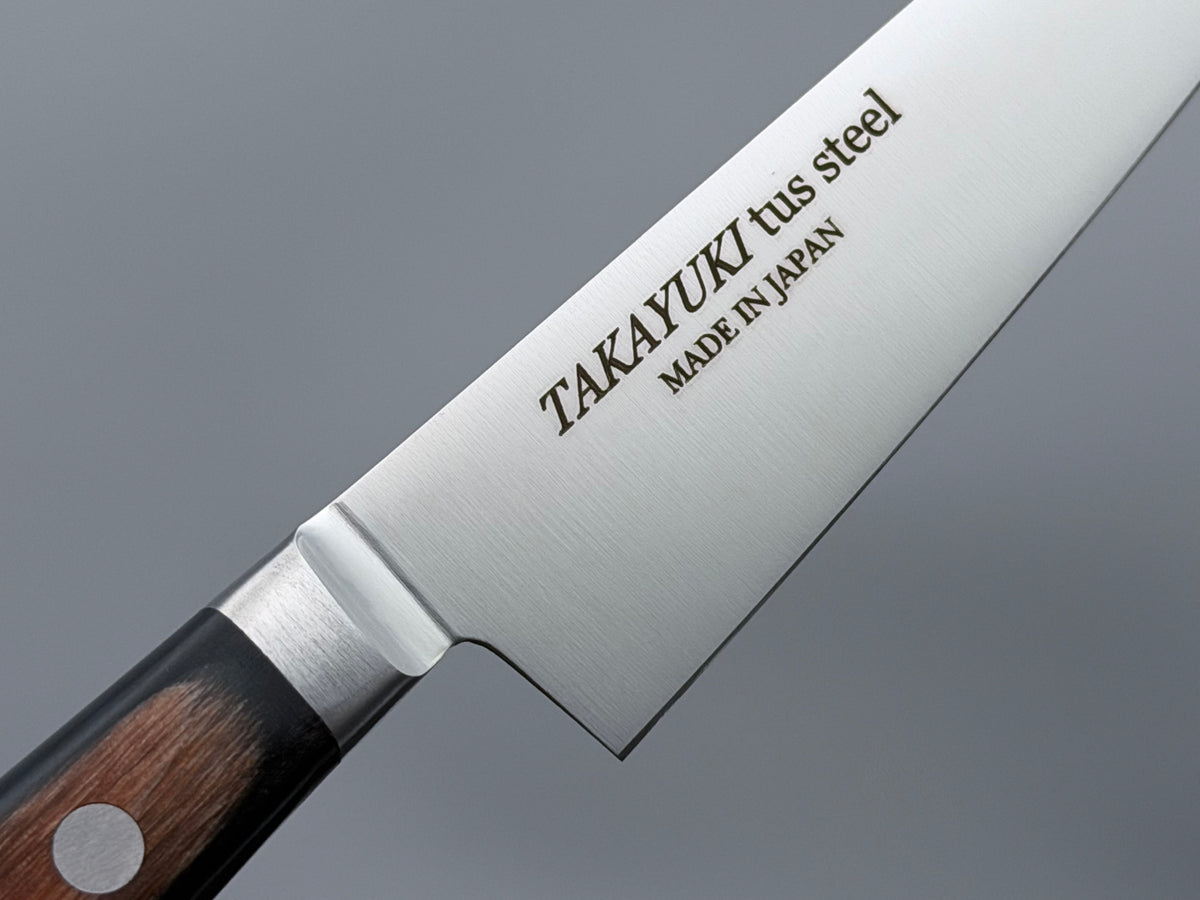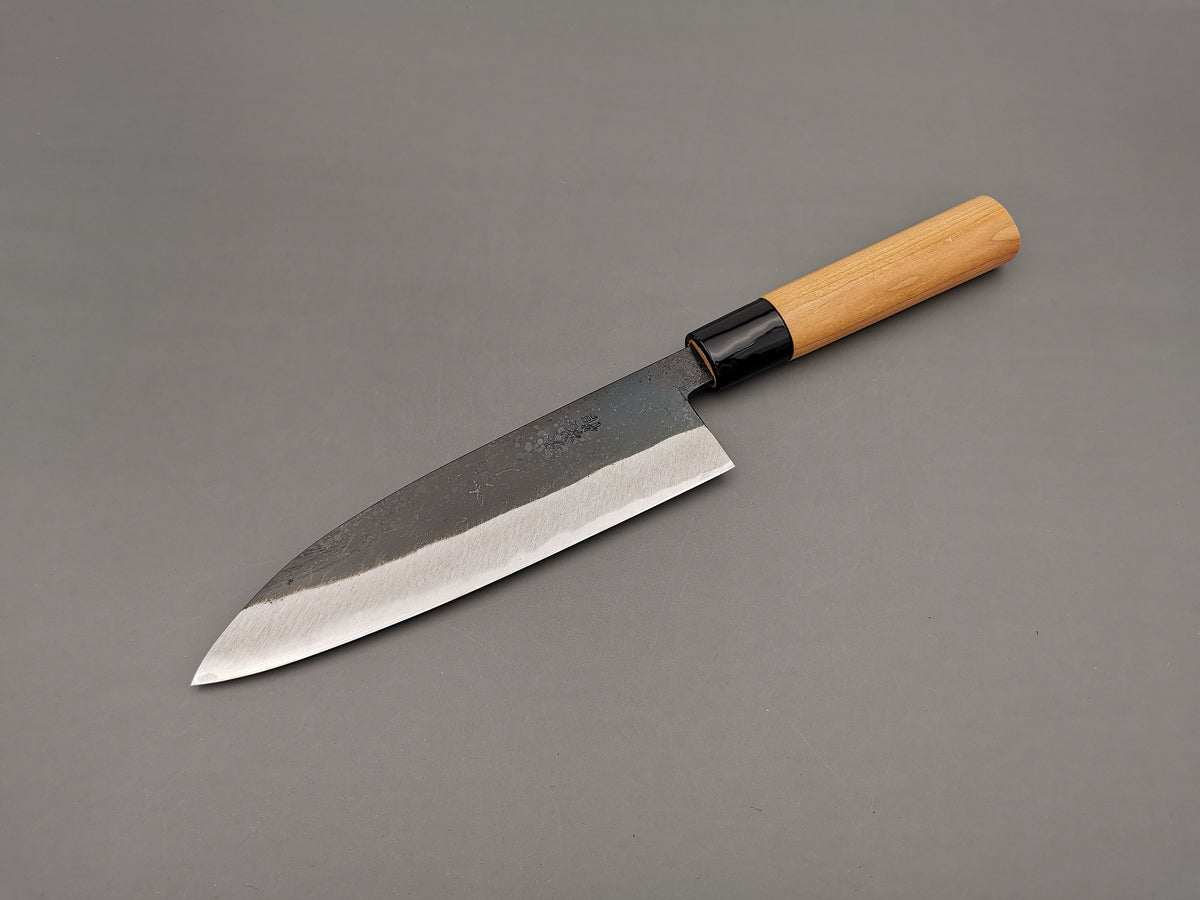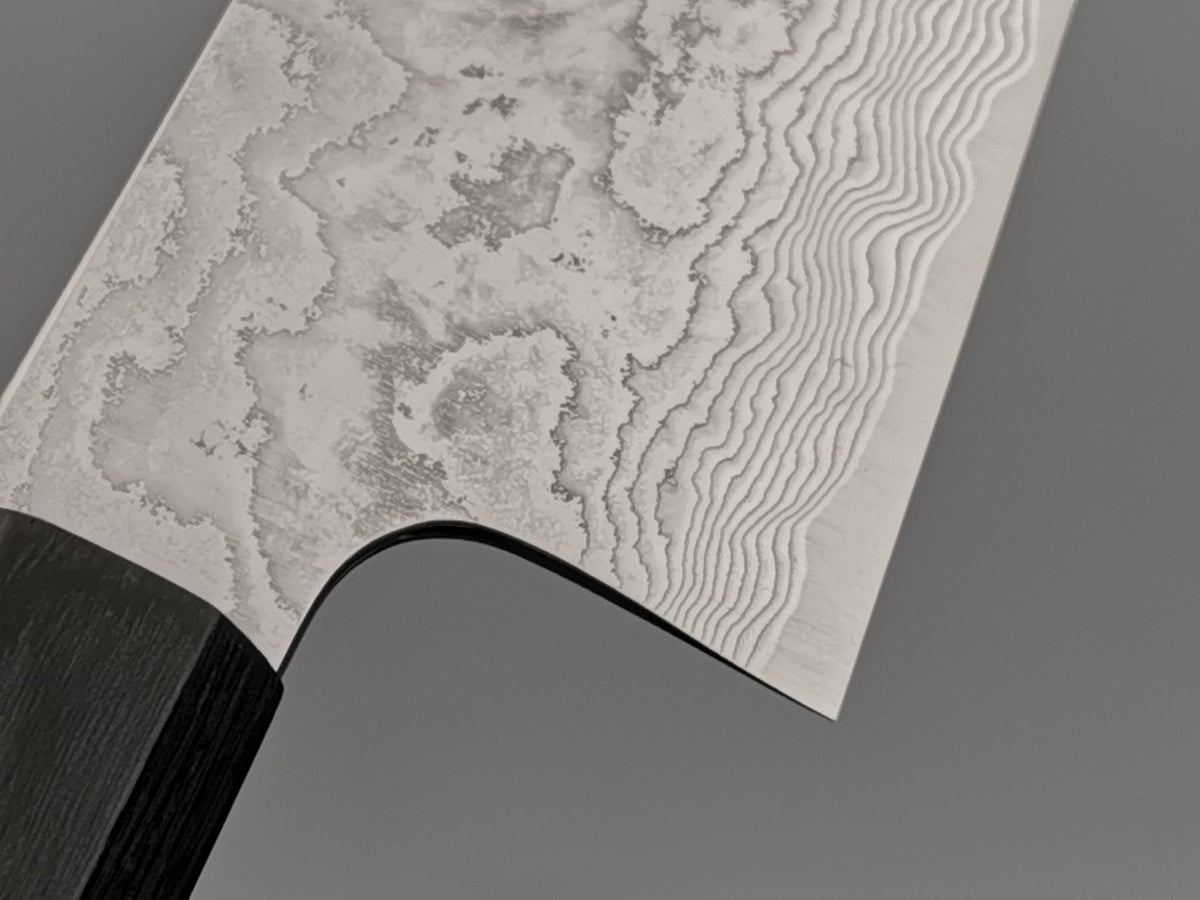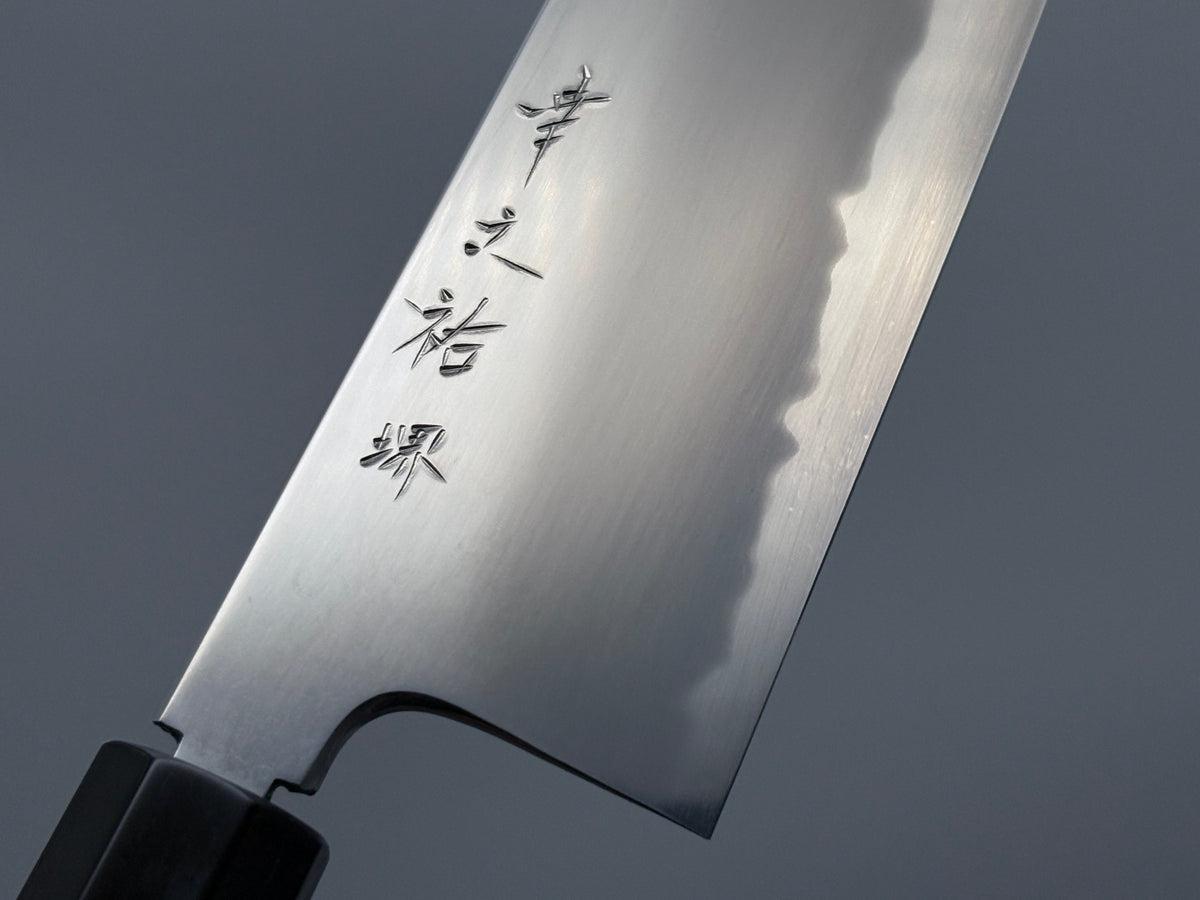

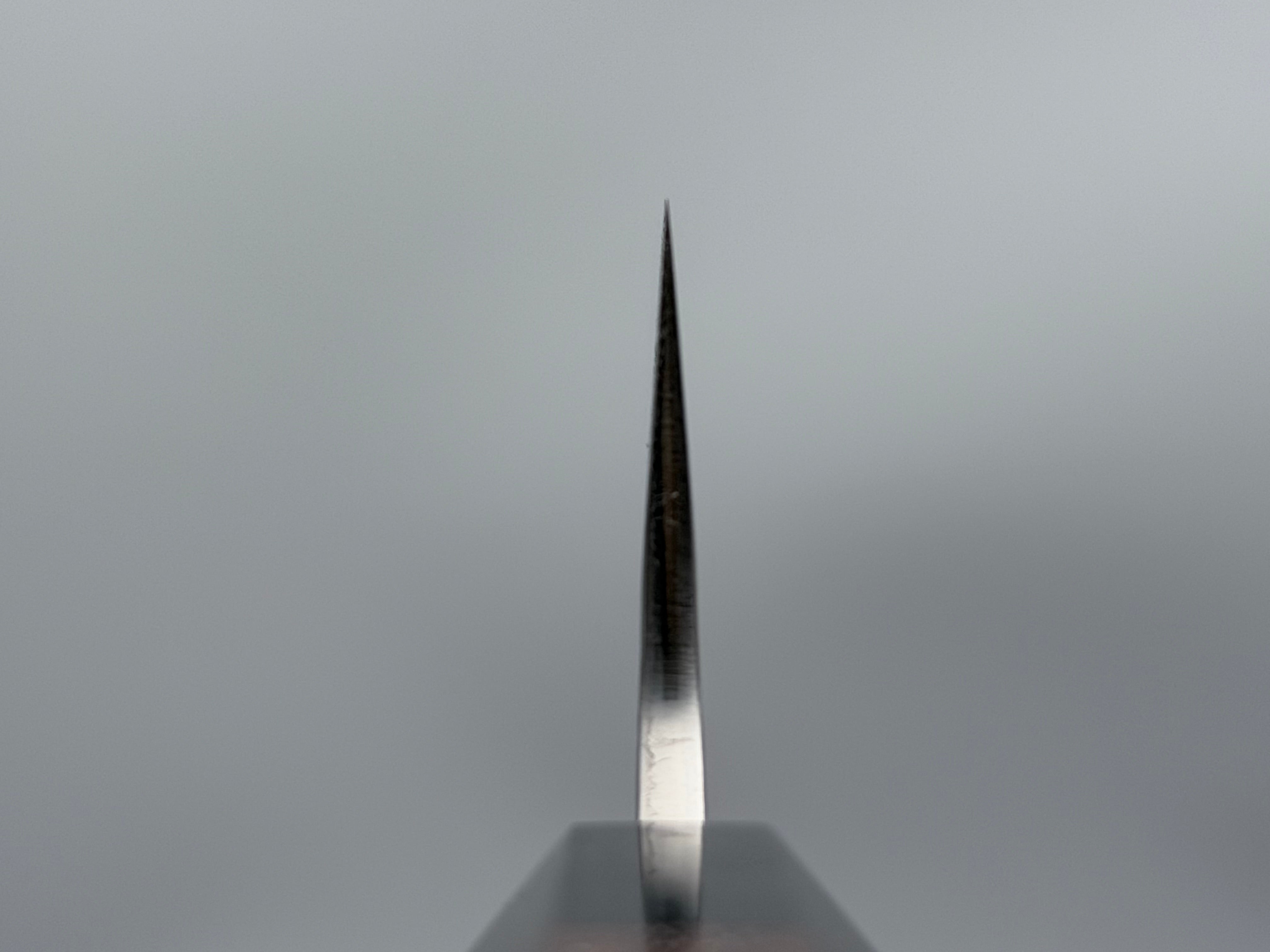
The "factory edge" on a Japanese knife refers to the initial sharpened edge that the blacksmith or workshop puts on a blade before it's sold. It's what you get "out of the box" - the edge geometry and sharpness as created in the workshop and can vary significantly from maker to maker and knife to knife.
This blog post explains why some initially very sharp factory edges can go dull very quickly which may come as a suprise if you're not expecting it!
Not all knives are finished with a factory edge that lacks initial durability, many are finished with an edge that is considered to be the finished article and for those you won't experience the quick initial loss of sharpness of a thinner factory edge can have.
Features of a sharp factory edge
Finely Sharpened
Most Japanese knives come razor-sharp from the factory, as sharpness is a hallmark of Japanese craftsmanship. However, that edge is often very fine and thin and optimised for initial performance, not necessarily long-term durability.
Edge Angle
The edge is usually ground at a very acute angle, often as low as 10-12° per side (or single bevel on traditional knives), which gives excellent cutting performance but can be a bit too fragile for longer term use causing it to dull quicker or in some cases even develop some microchips.
Not the Final Word
The factory edge is often not the most refined or durable edge the knife can have. Many knife owners prefer to refine or reprofile the edge themselves and sharpen them on whetstones after some use to create a longer-lasting, customised edge suited to their needs.
Even if you don't want to take on a significant sharpening task like thinning or reprofiling a knife, a simple "standard" sharpen on a whetstone is all that's needed to bring that edge up to the desired balance of durability and performance.
Why it matters
The main reason it matters from your perspective as a customer if you're not expecting this is that after a very short period of time and use, your knife may be relatively dull which after learning all about how incredibly sharp and durable Japanese steel is, this would be the exact opposite experience!
The good news however is that this is simply a one-time step in owning some Japanese knives and once you sharpen your knife for the first time on a whetstone, the edge you then put onto it when done correctly will be significantly more durable in terms of retaining that long term sharpness and performance you would expect.
To learn more about sharpening and longer term knife care, watch our YouTube care videos here.