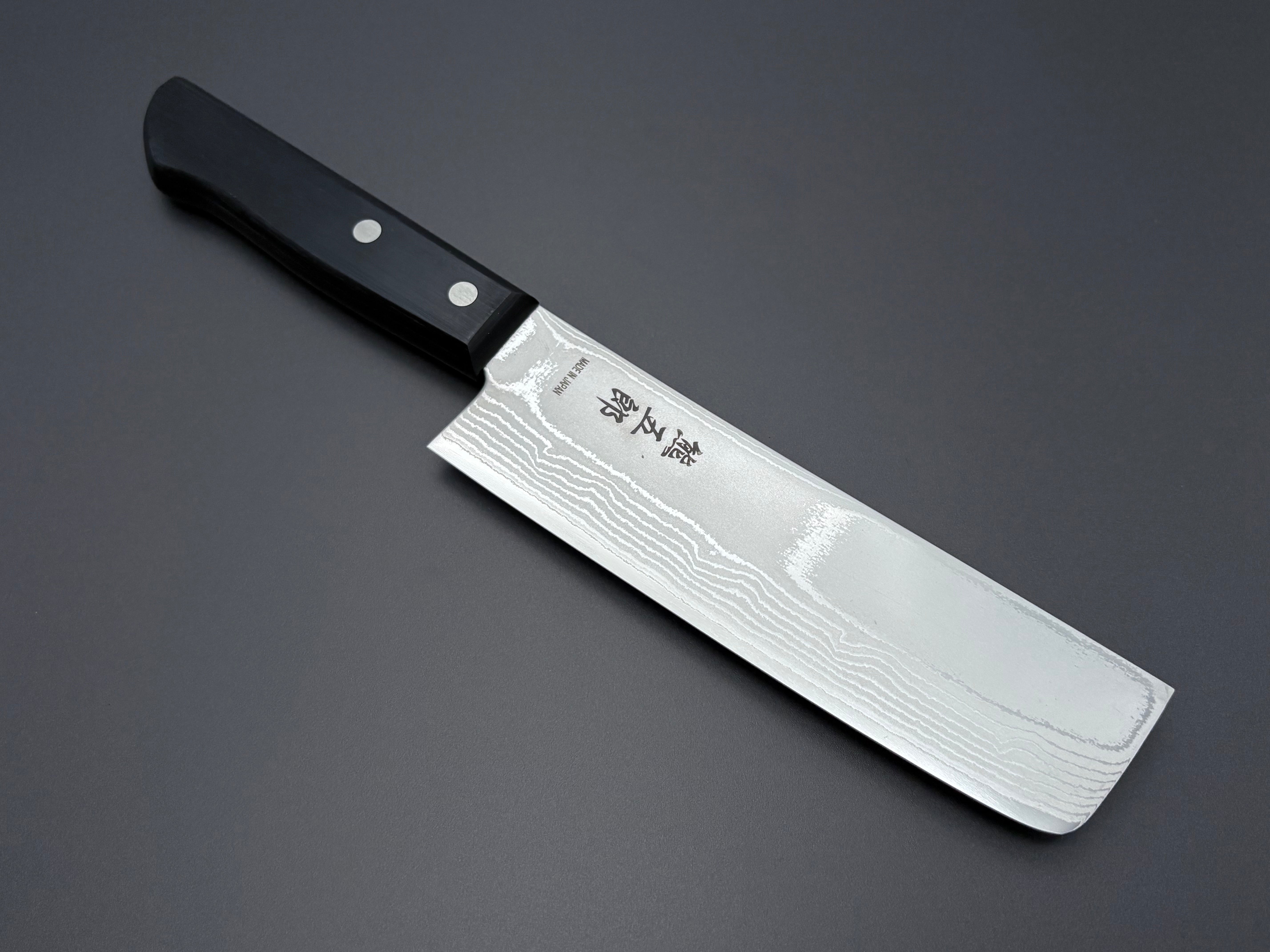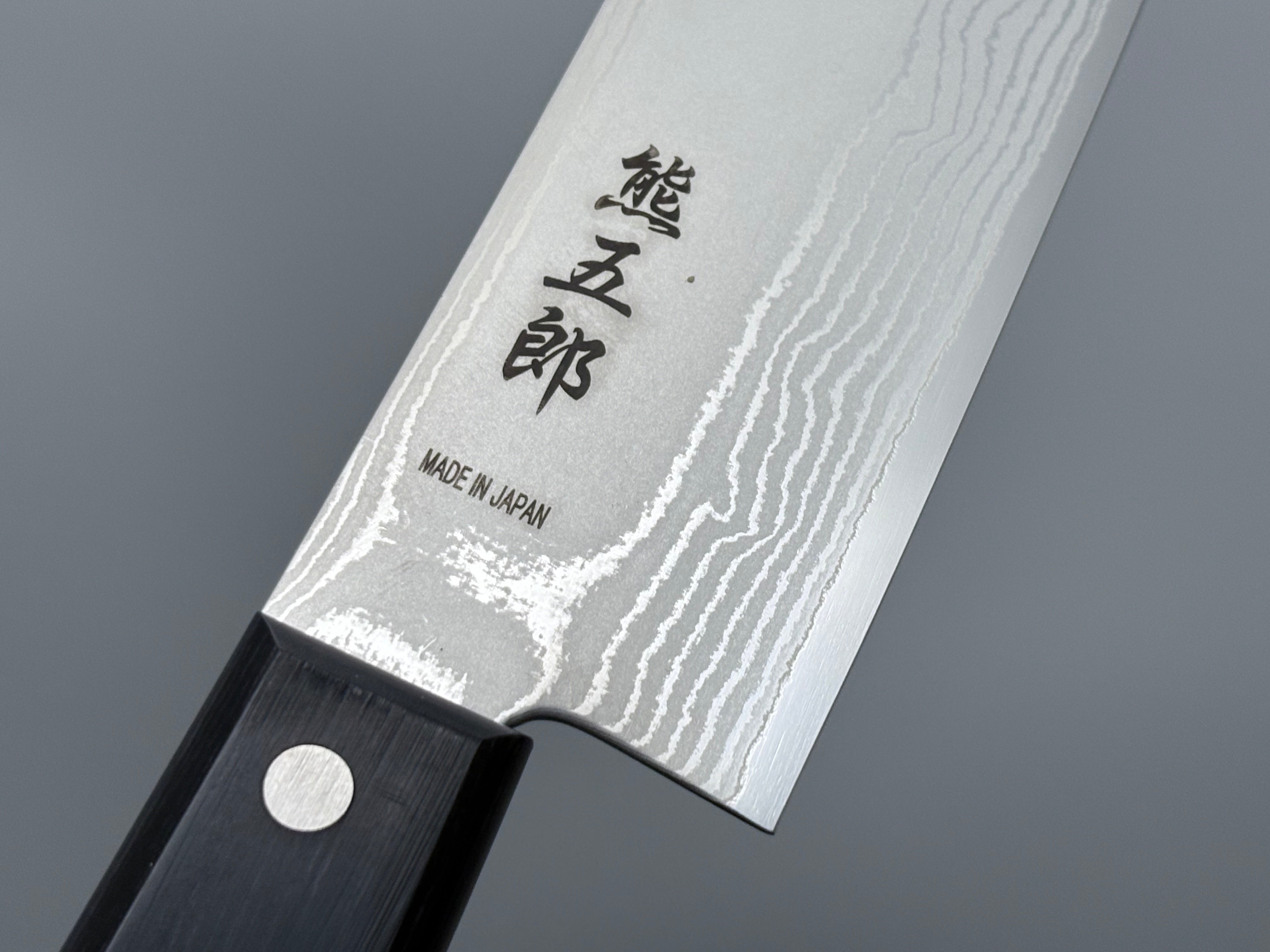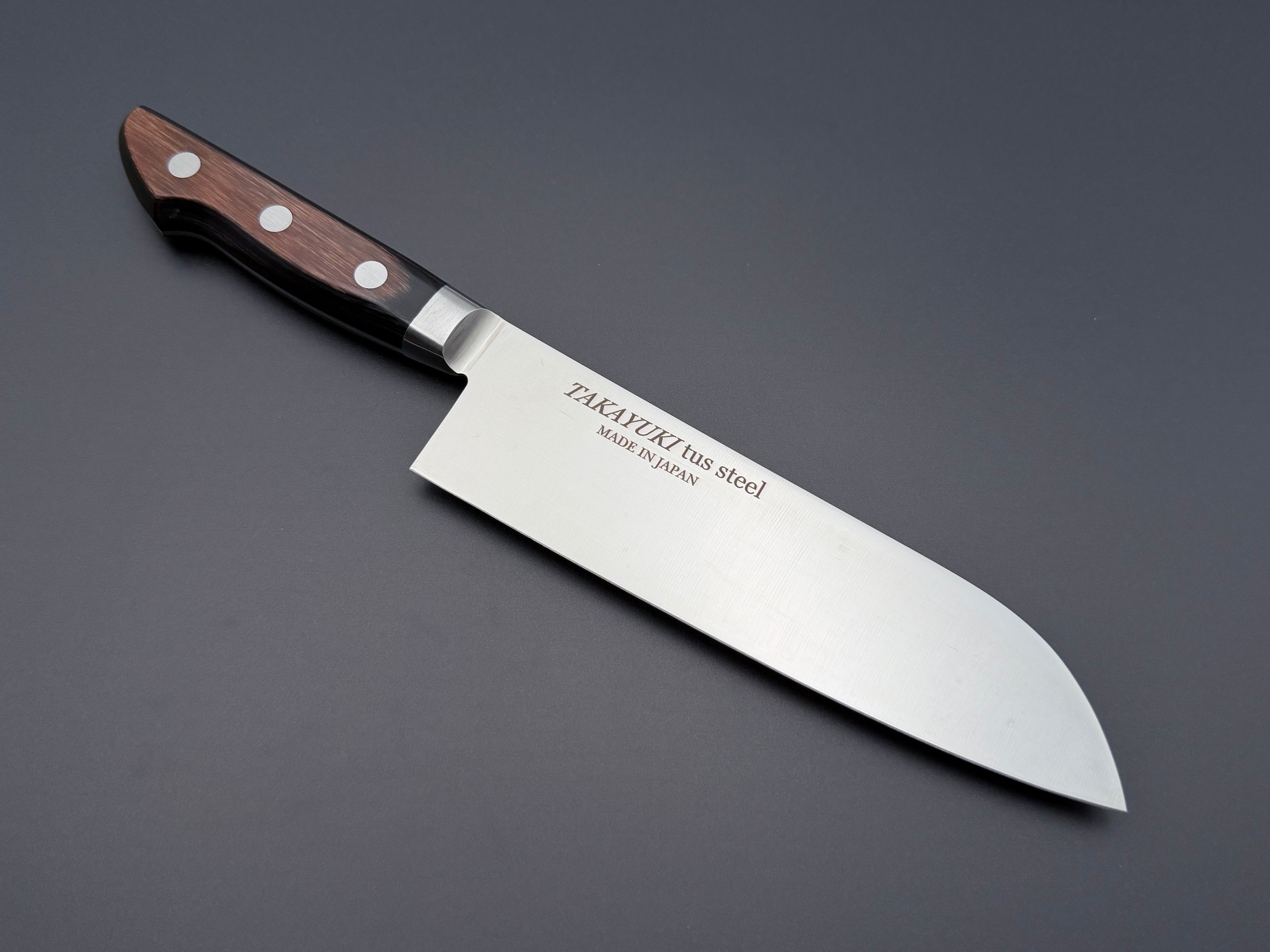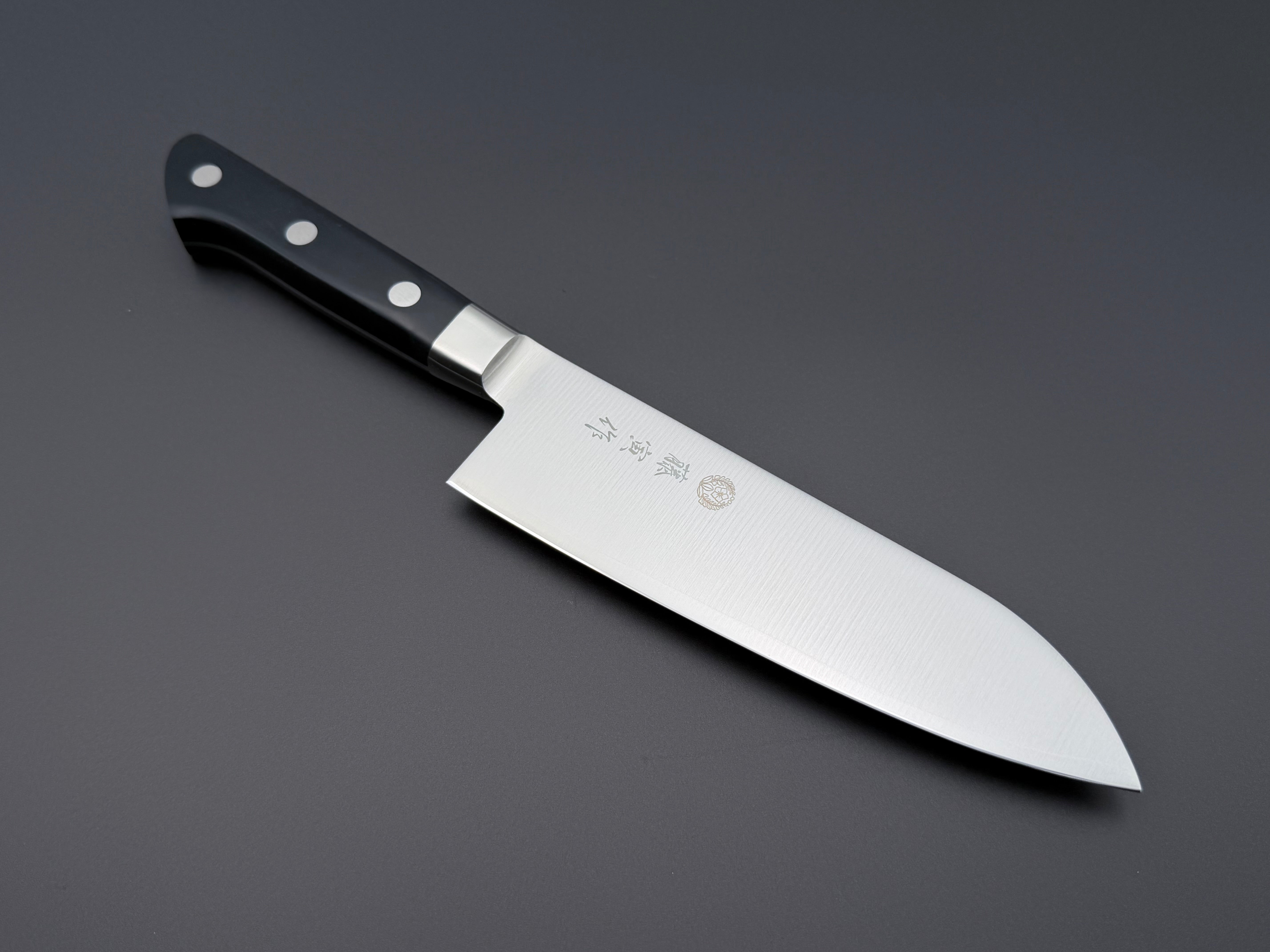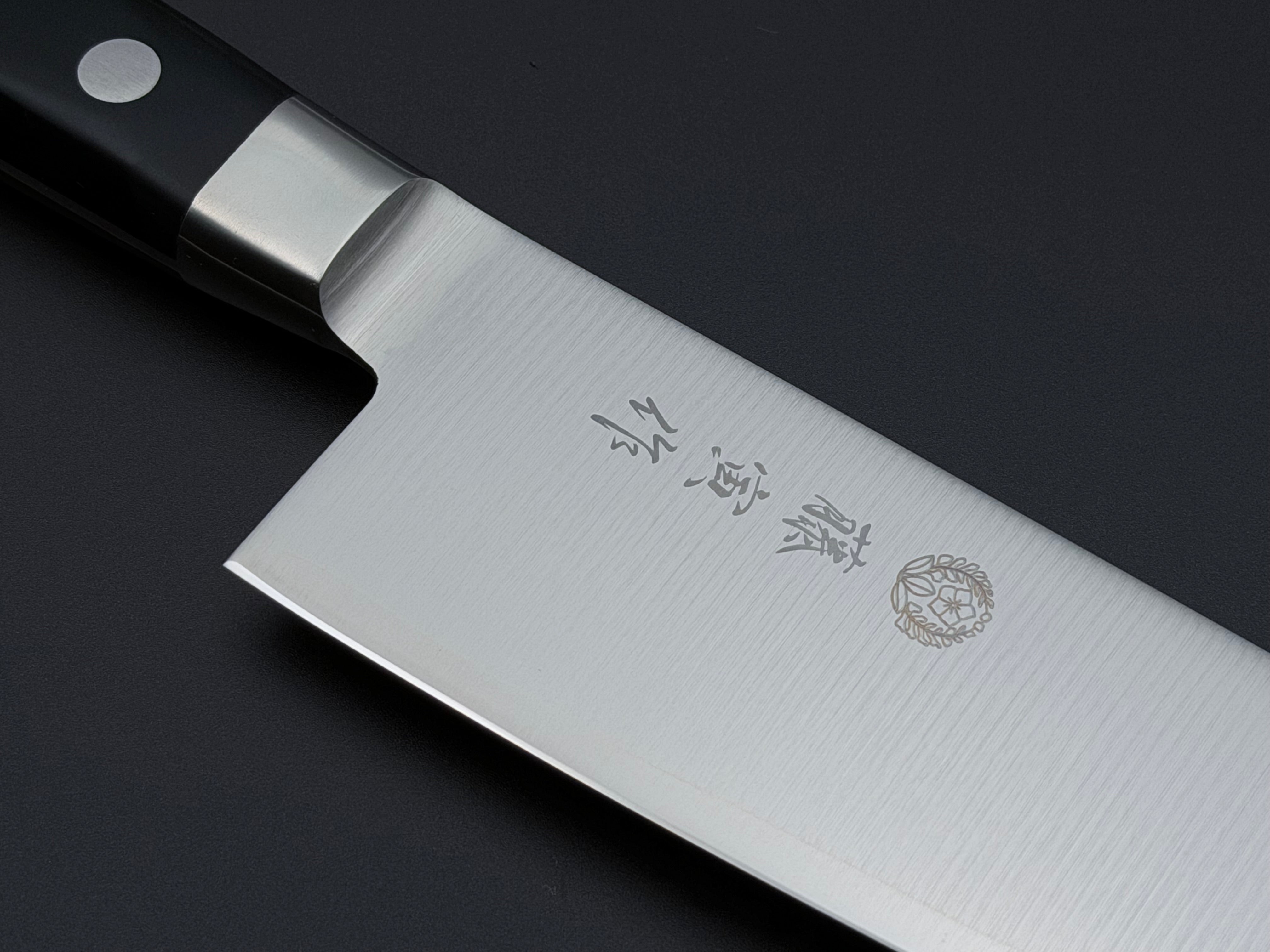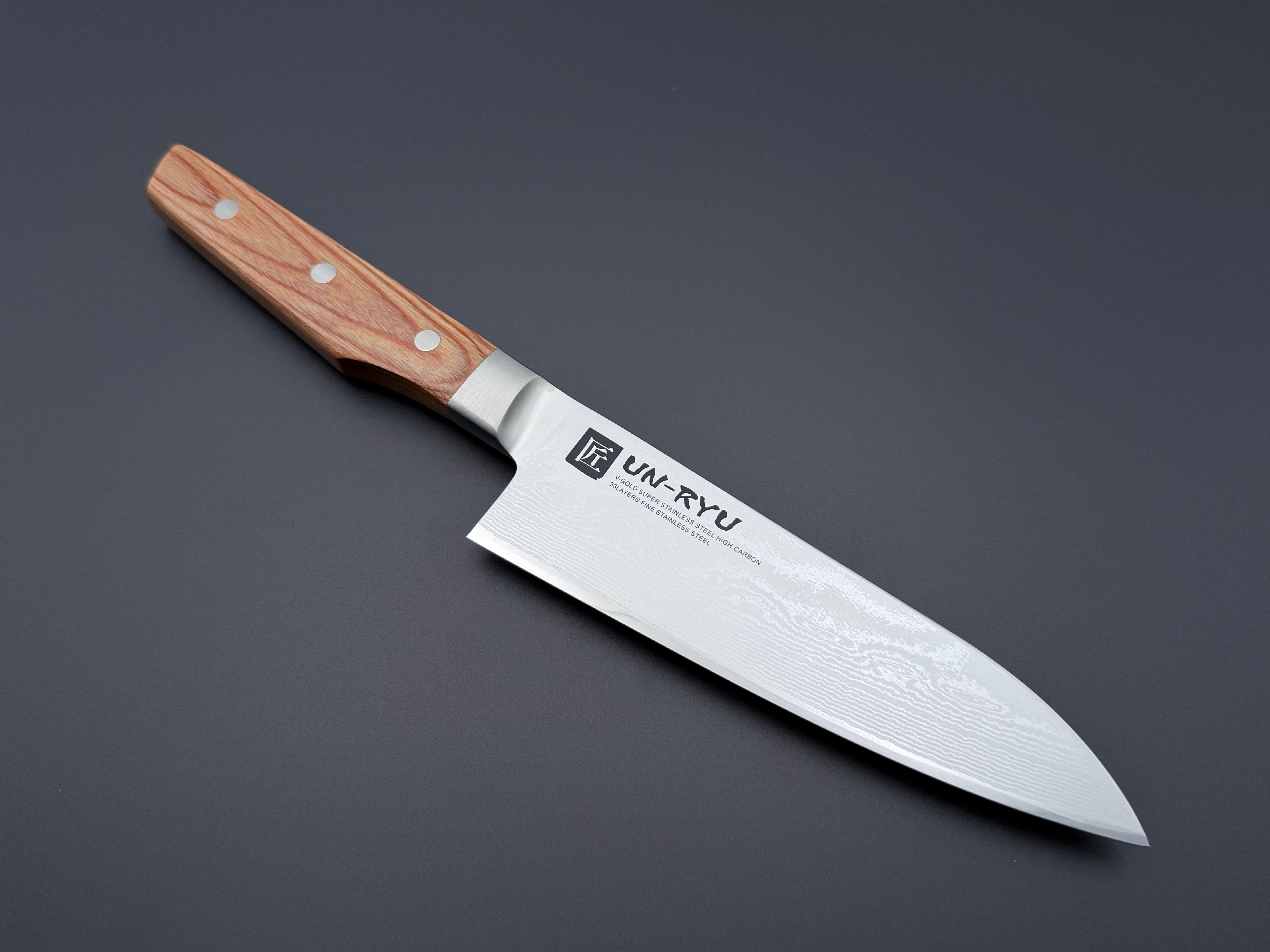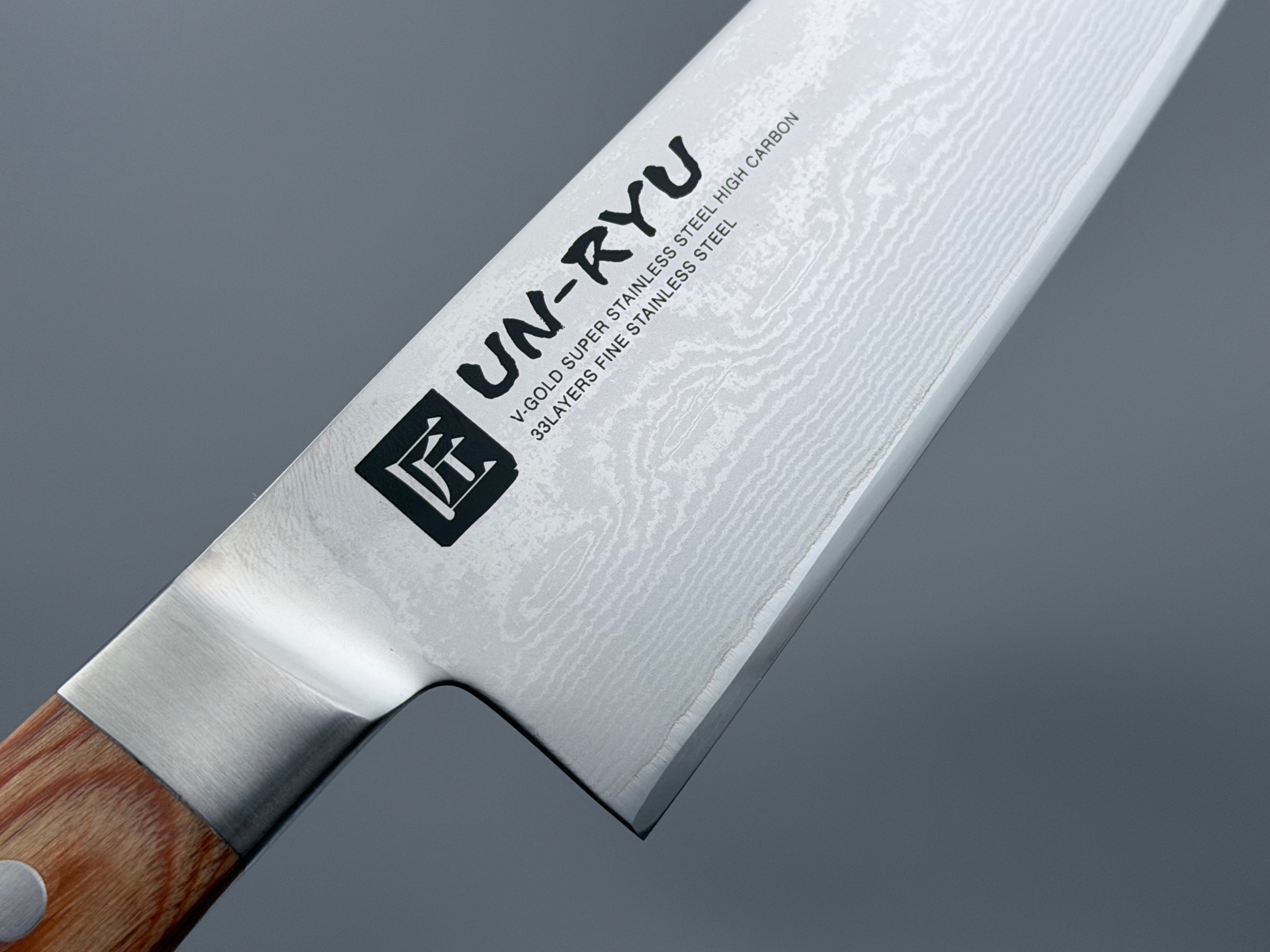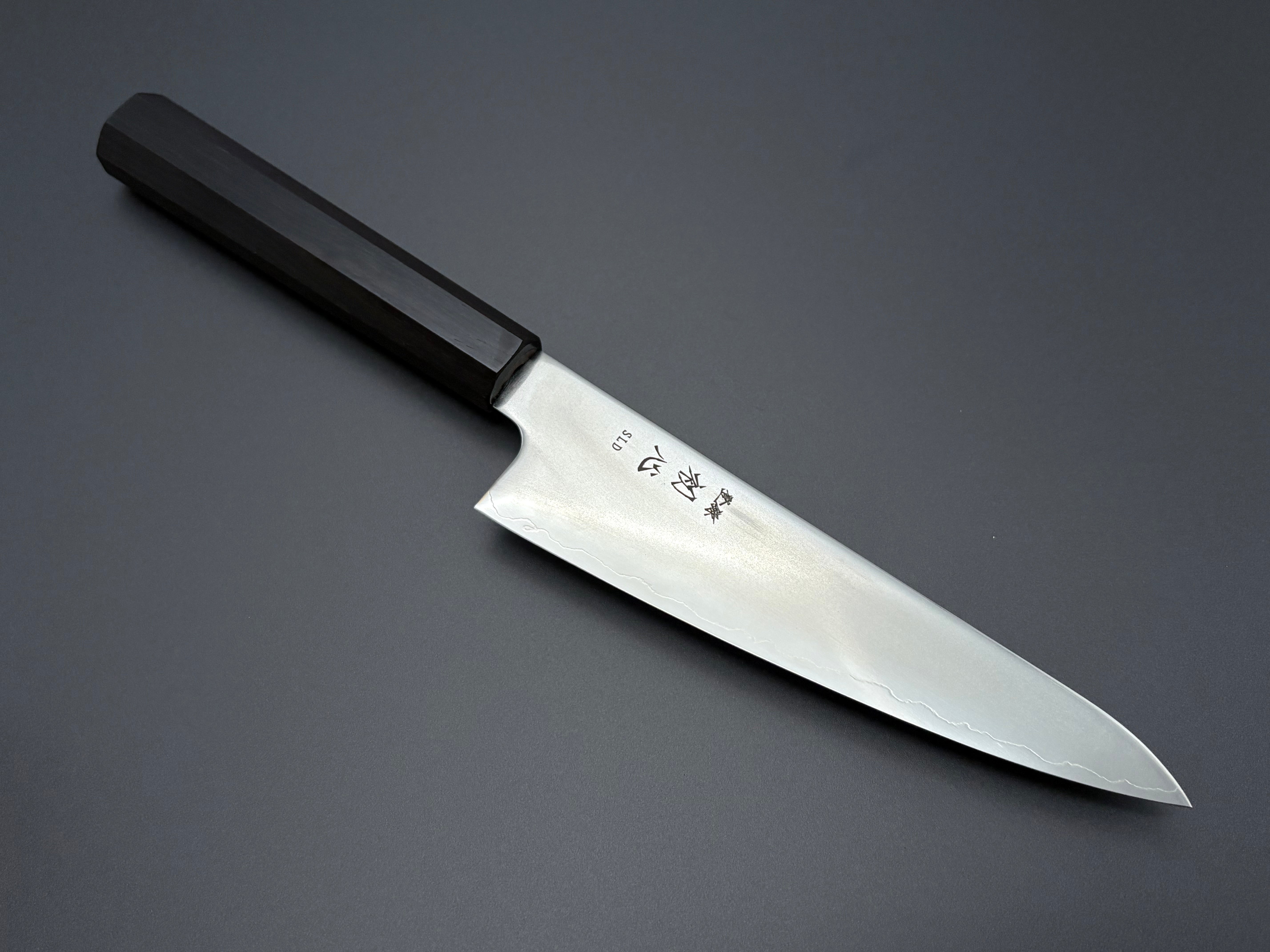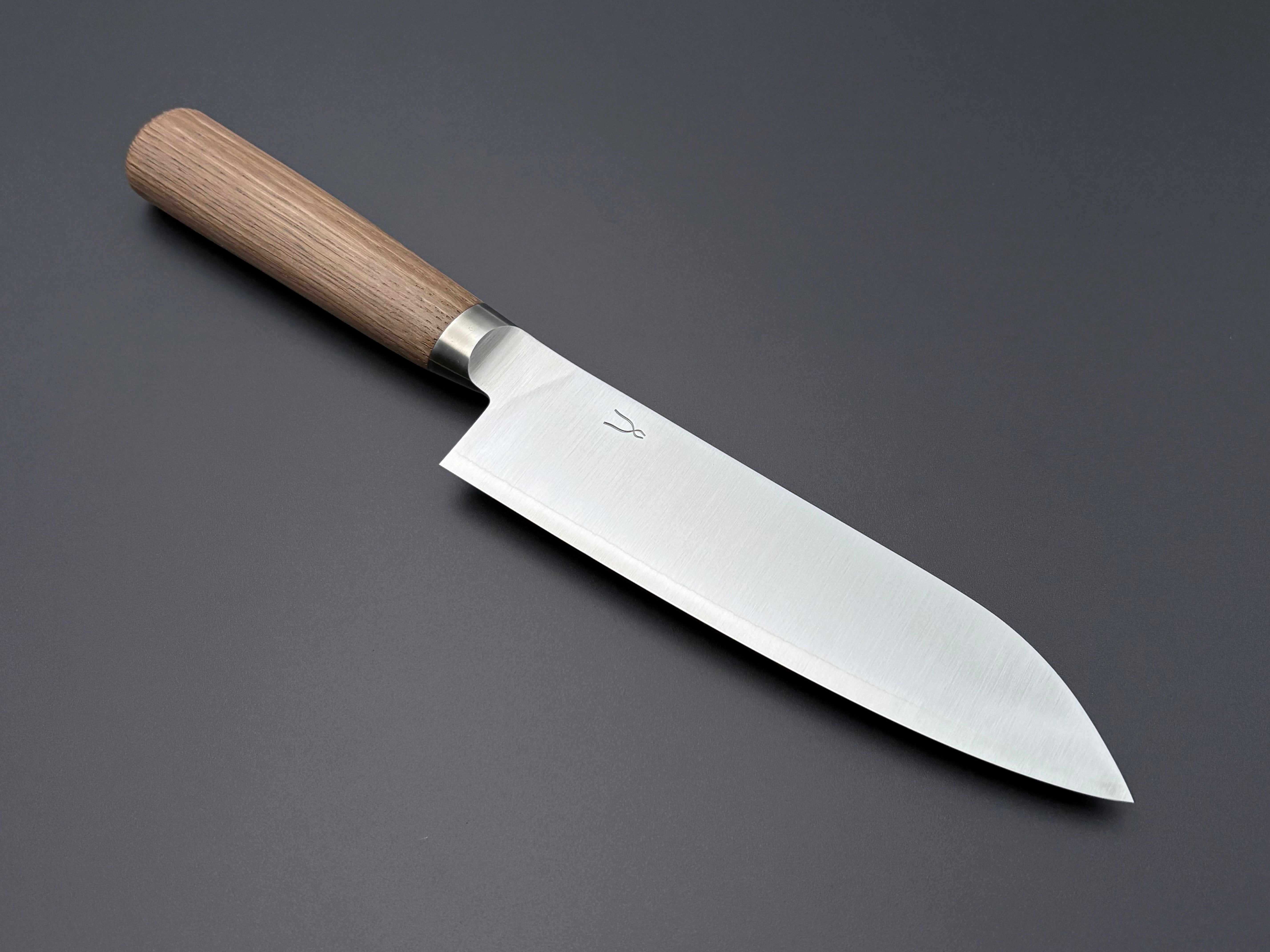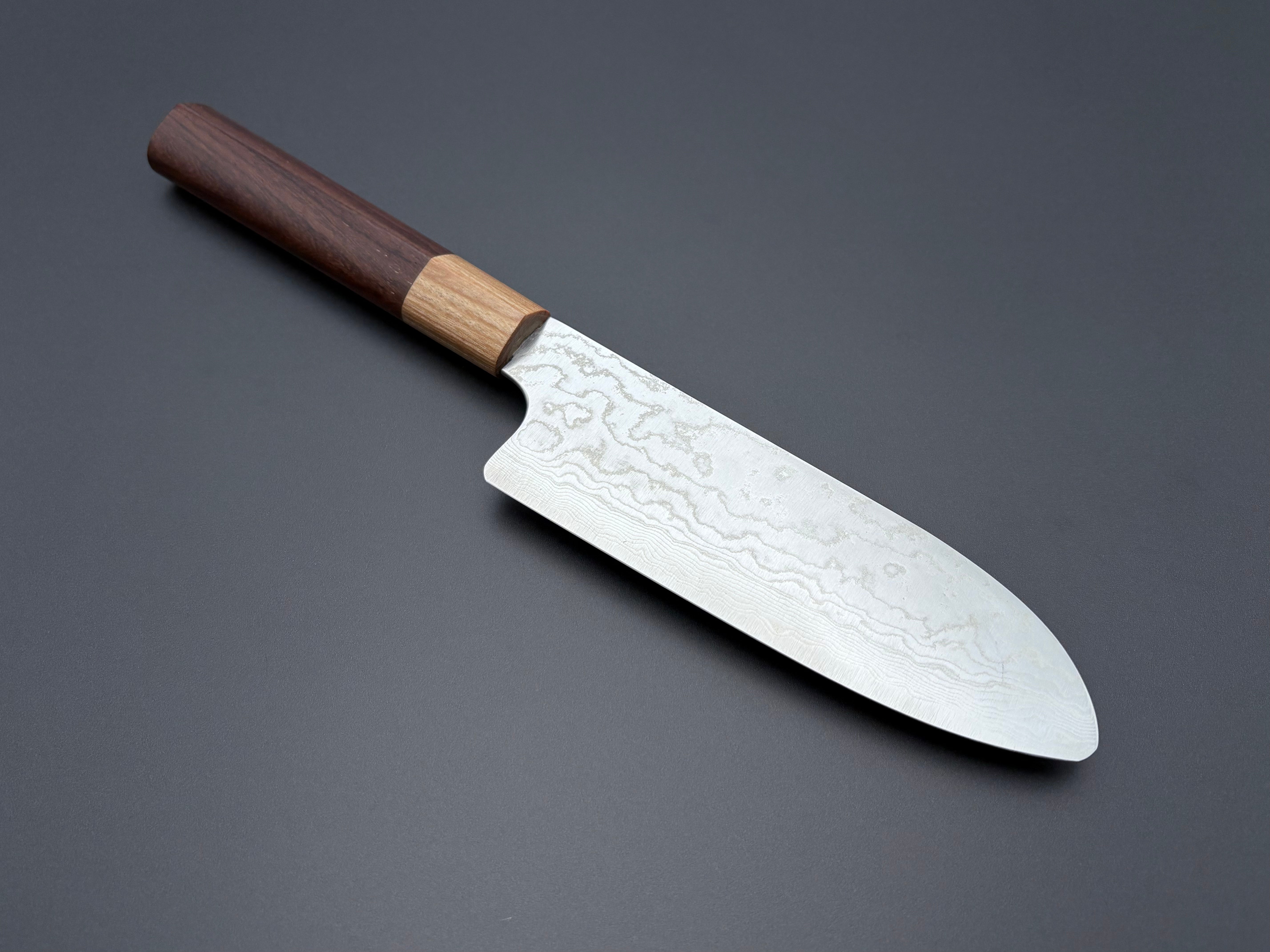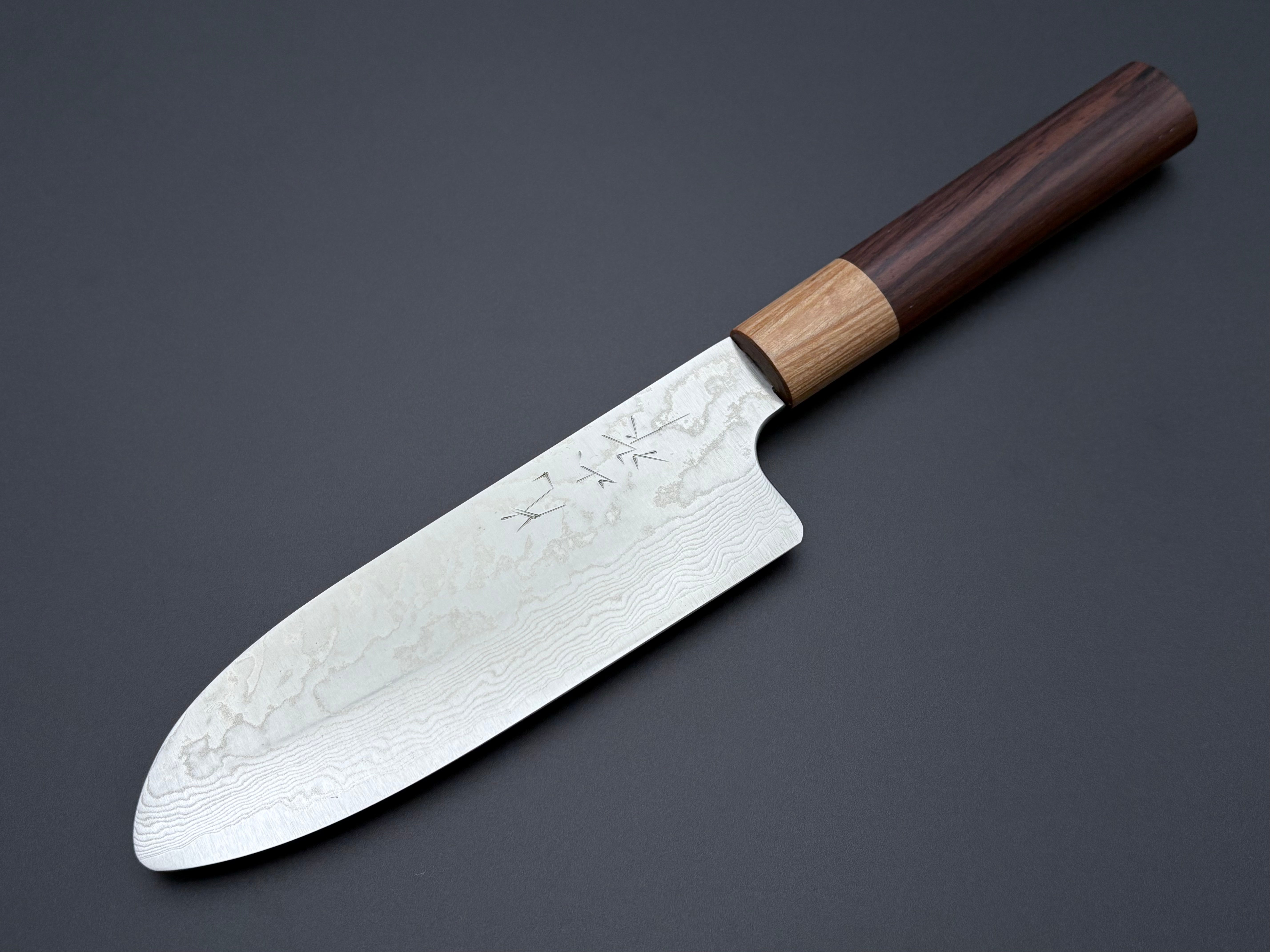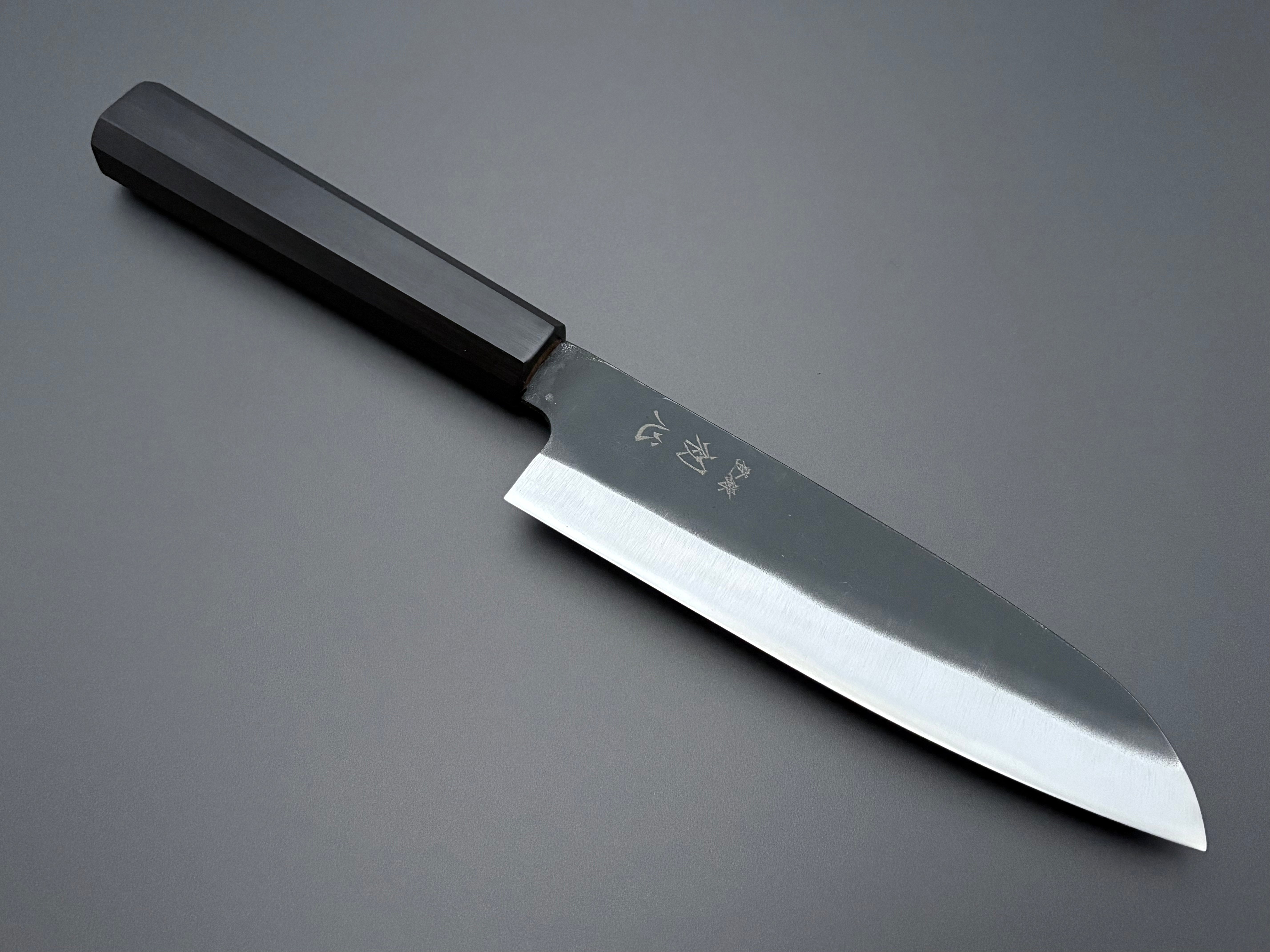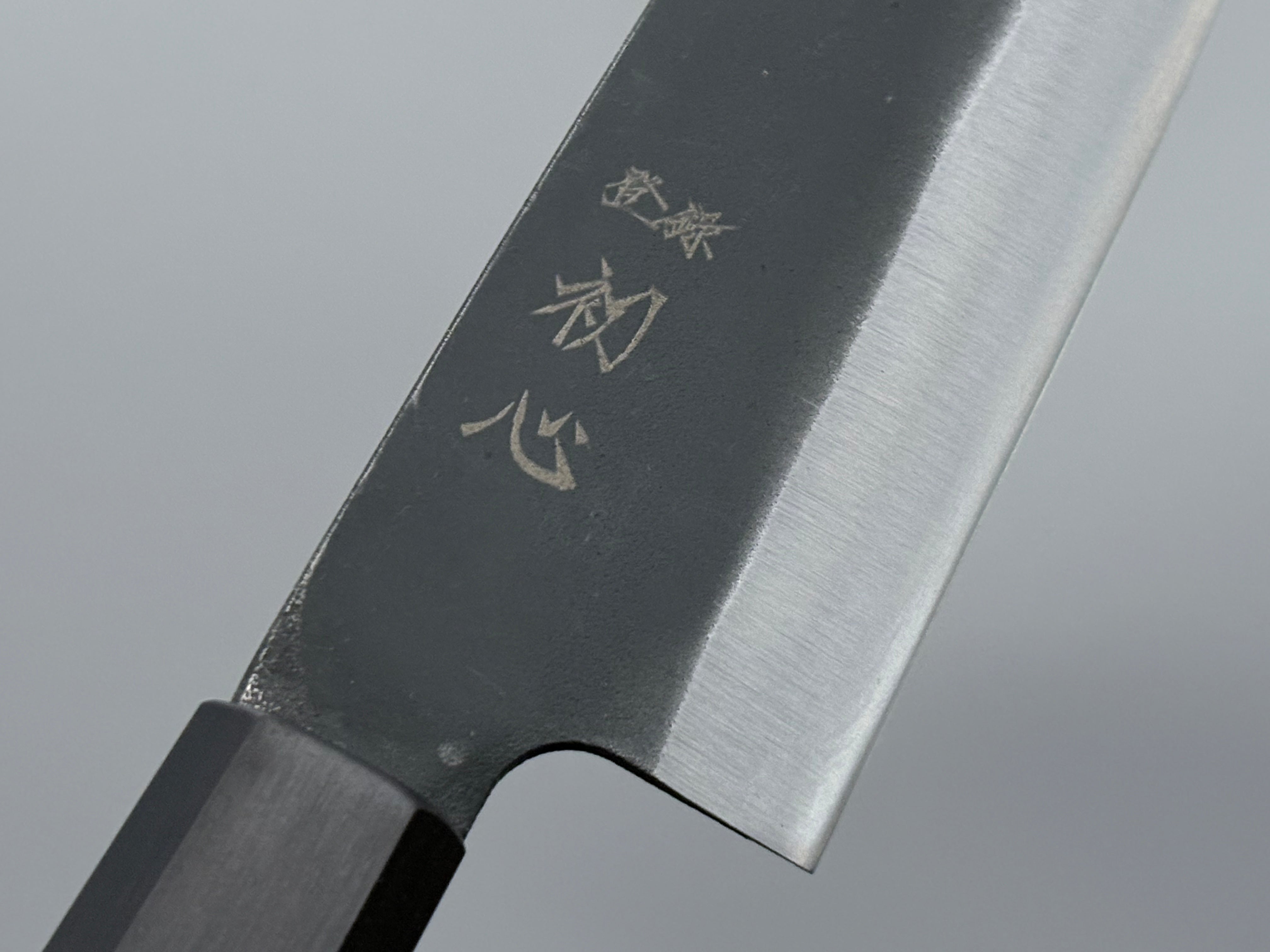

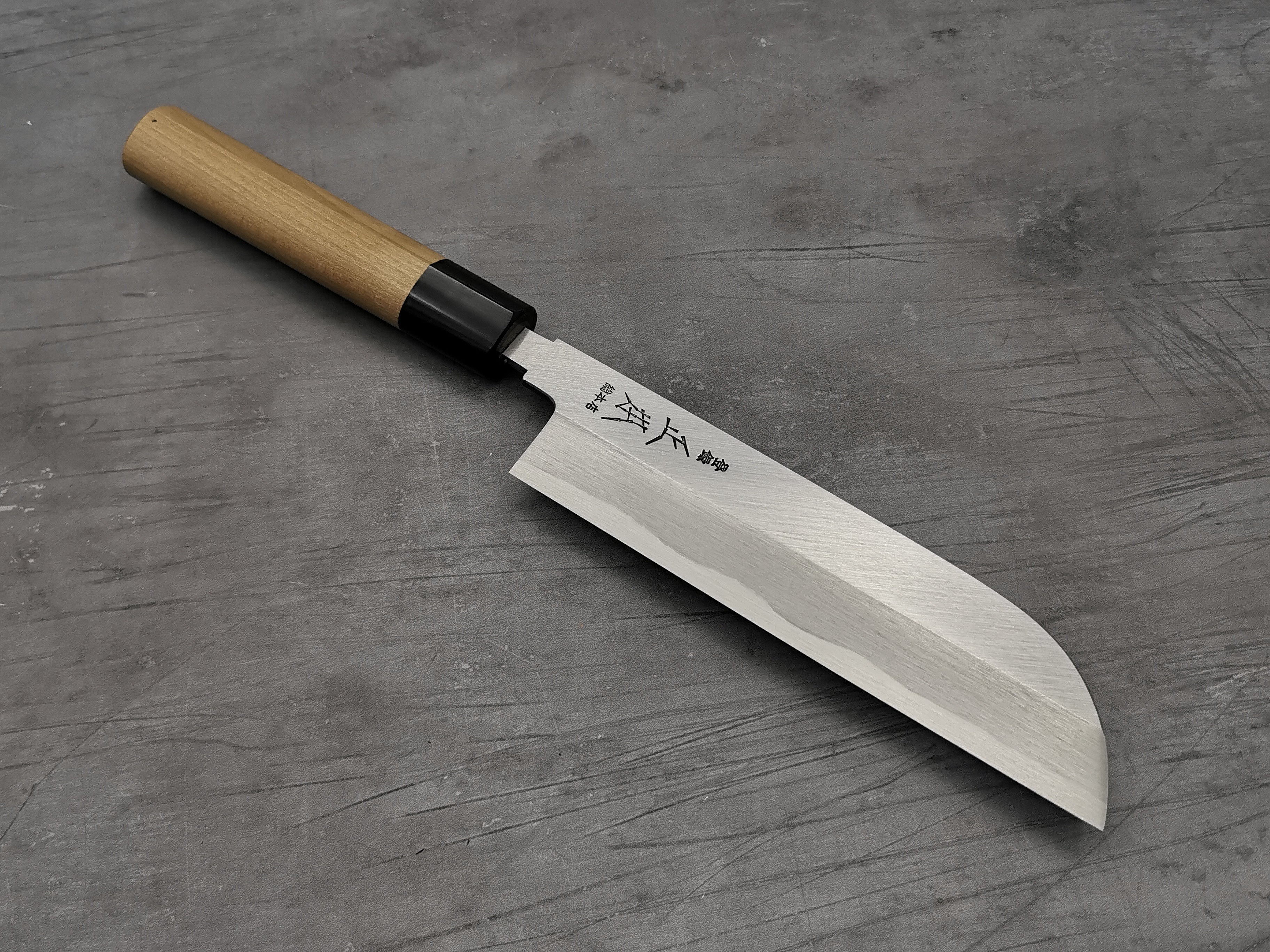
What is a usuba knife?
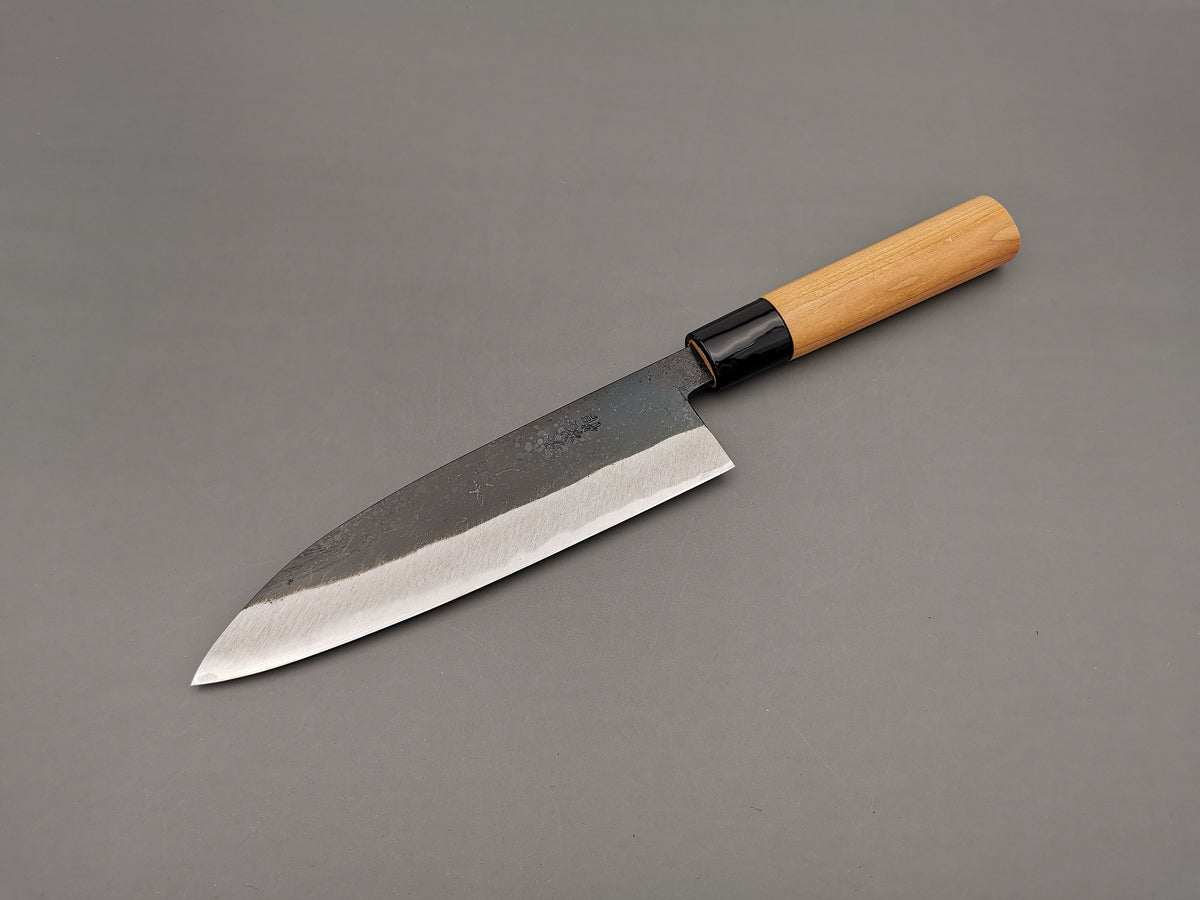
The usuba is a traditional Japanese knife built for one thing: vegetables. Its name means "thin blade," which tells you most of what you need to know. It does not try to handle everything. It makes clean, precise cuts through vegetables with minimal cell damage and almost no resistance, and the results on the plate are noticeably different from what a general-purpose knife produces. Delicate cuts, preserved texture, better appearance.

How the usuba differs from the nakiri
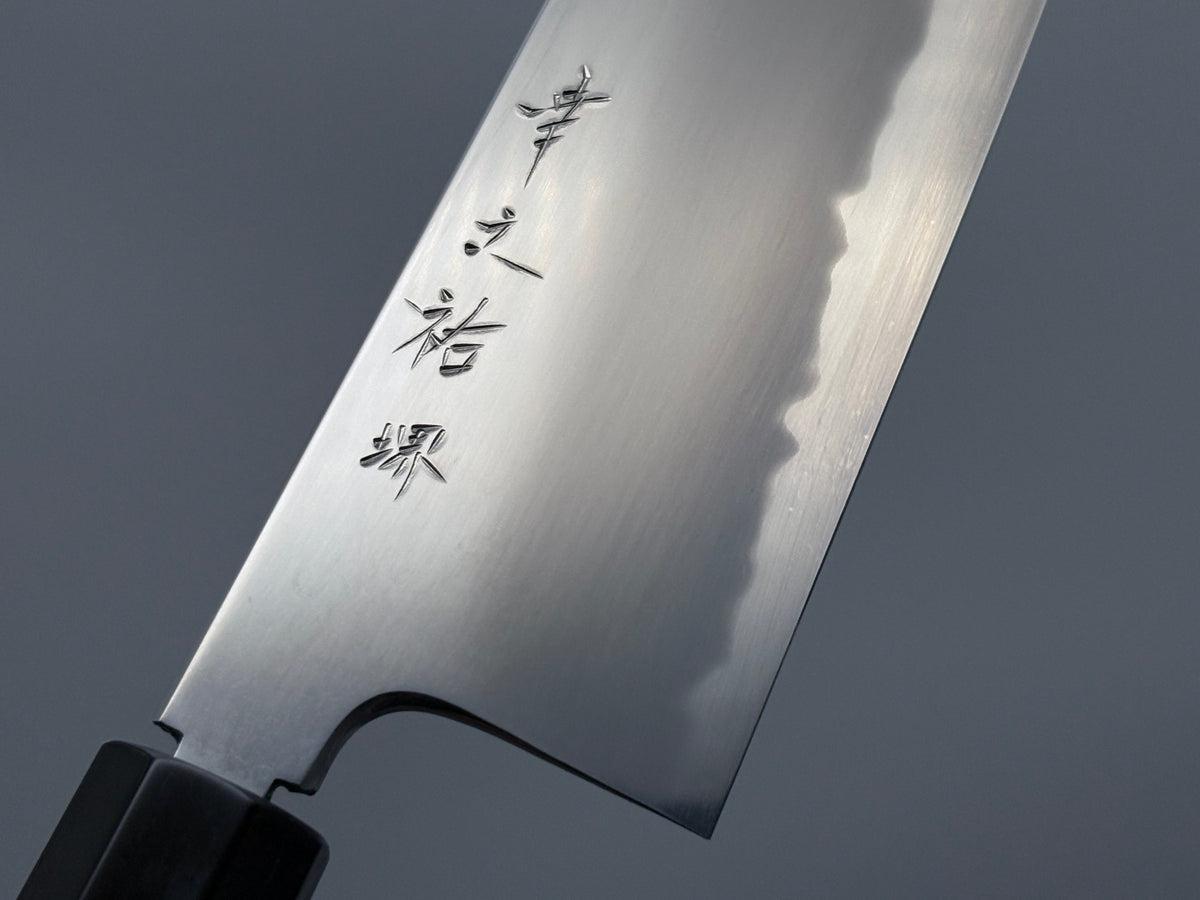
If you have seen a nakiri, you will notice the two knives share a similar rectangular profile. The difference is in the grind. The nakiri is double-bevelled, so most cooks can pick it up and get on with it. The usuba is single-bevel, ground on one side only, and made specifically for either left or right hand use. That single-bevel edge is what allows extremely fine cuts and the rotary peeling technique called katsuramuki, where a vegetable is rolled against the blade to produce paper-thin sheets. It takes time to develop. That is why the usuba tends to end up in more experienced hands. If you want to compare your options, browse our full range of Japanese vegetable knives.
Usuba styles: Tokyo versus Osaka
Two regional variants are worth knowing about before you buy. The Kanto style, from Tokyo, has a squared-off spine at the tip. The Kansai or Kamagata style, from Osaka, has a curved tip closer to a pointed heel, which gives a bit more room for detail work and decorative cuts. Both typically run between 180mm and 240mm. Our 180 to 209mm range covers the most common usuba lengths and is a reasonable starting point if you are moving into single-bevel knives for the first time.
Steel choices for a usuba
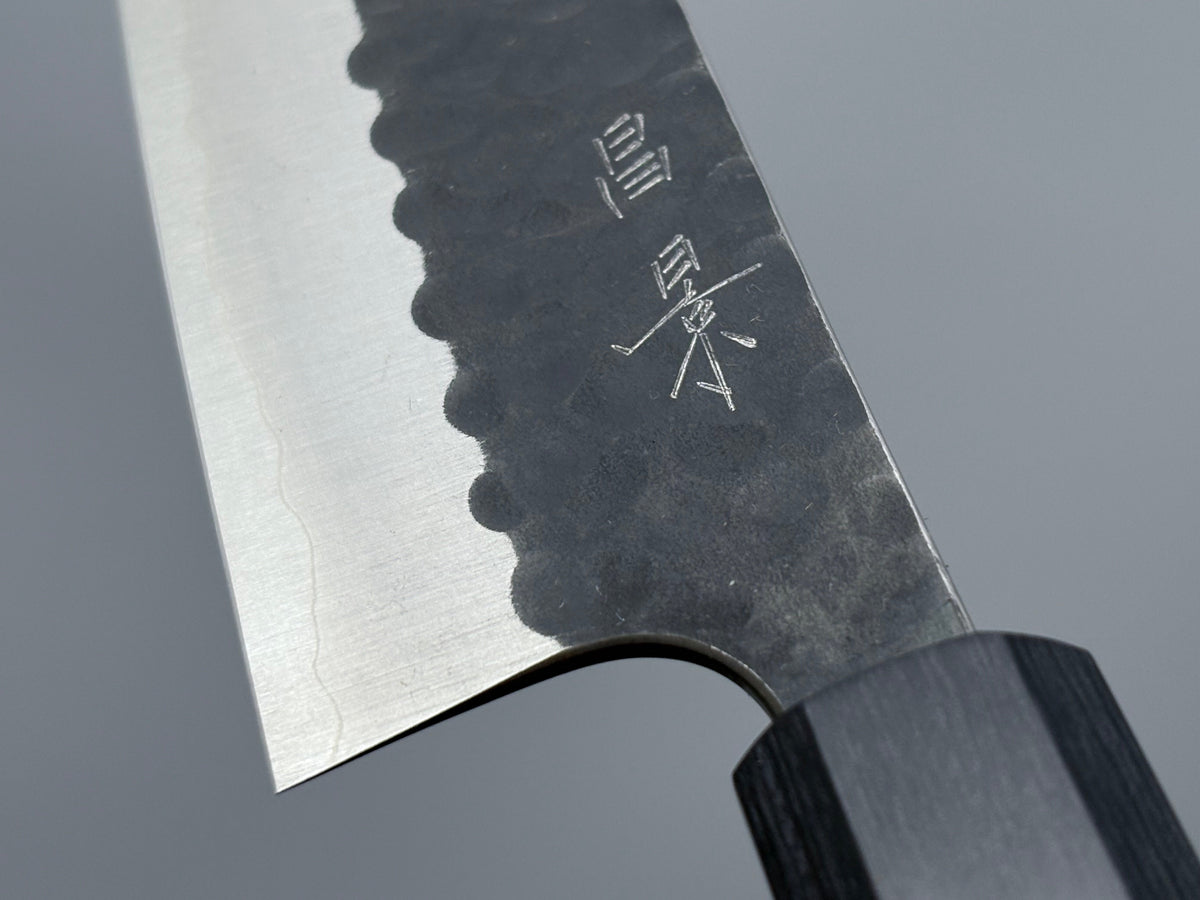
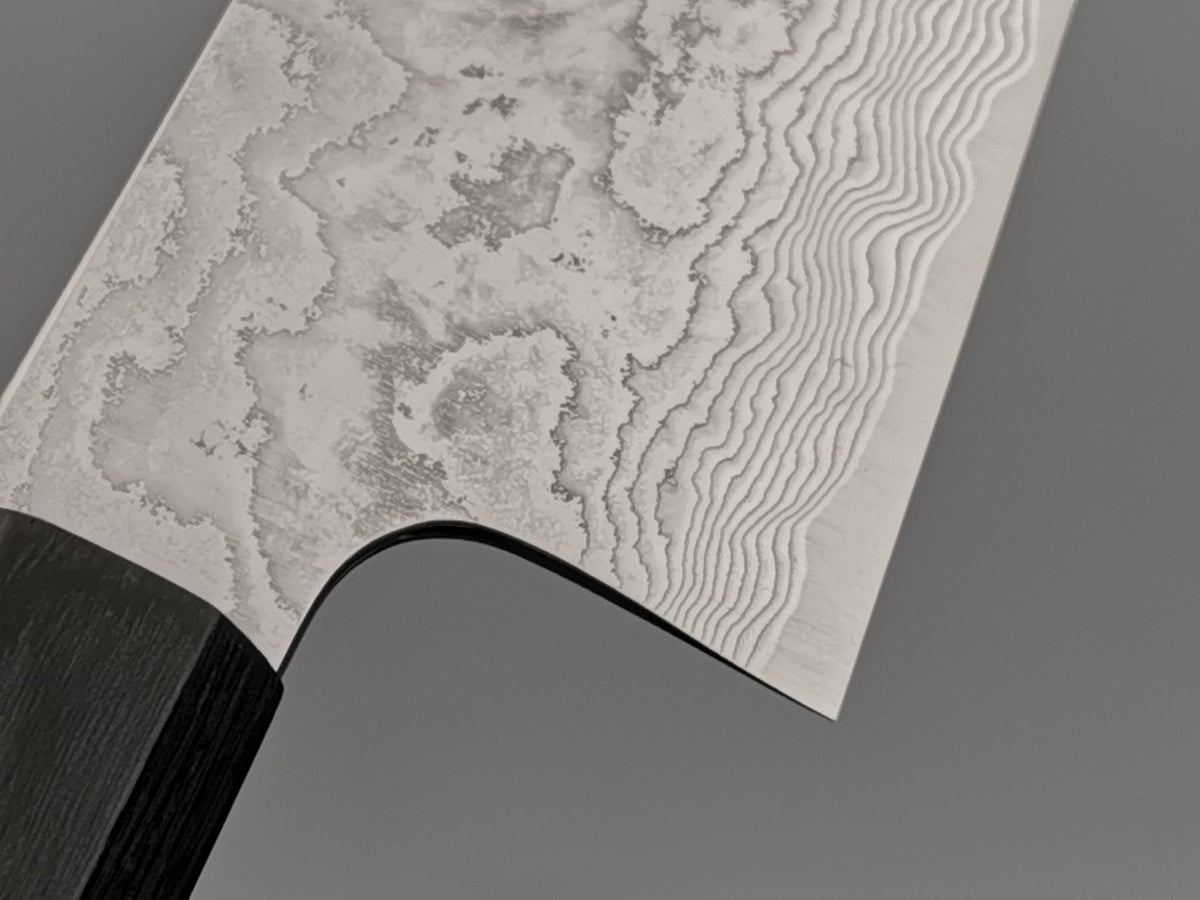
Traditional usuba knives are almost always carbon steel, most often white steel (shirogami) or blue steel (aogami). These reactive steels take an extremely fine edge and suit the thin geometry well. They do need more attention than stainless: dry them after use, give them a light oiling occasionally, and they will not give you trouble. Our aogami blue steel knives and the Hideo Kitaoka Blue #2 range show what is available at this level.
Is a usuba right for you?
If you work with vegetables every day and want to build real knife skill, a usuba is worth the time it takes to get comfortable with it. It is not the right tool if you want something that handles everything with no adjustment period. For that, a nakiri or gyuto will serve you better. But if you want to go deeper into Japanese knife work, it is a good place to go.
You can browse our full selection of usuba knives and related Japanese vegetable preparation knives at Cutting Edge Knives to find the right fit for your level and budget.