
Understanding the Tsuchime Finish on Japanese Knives
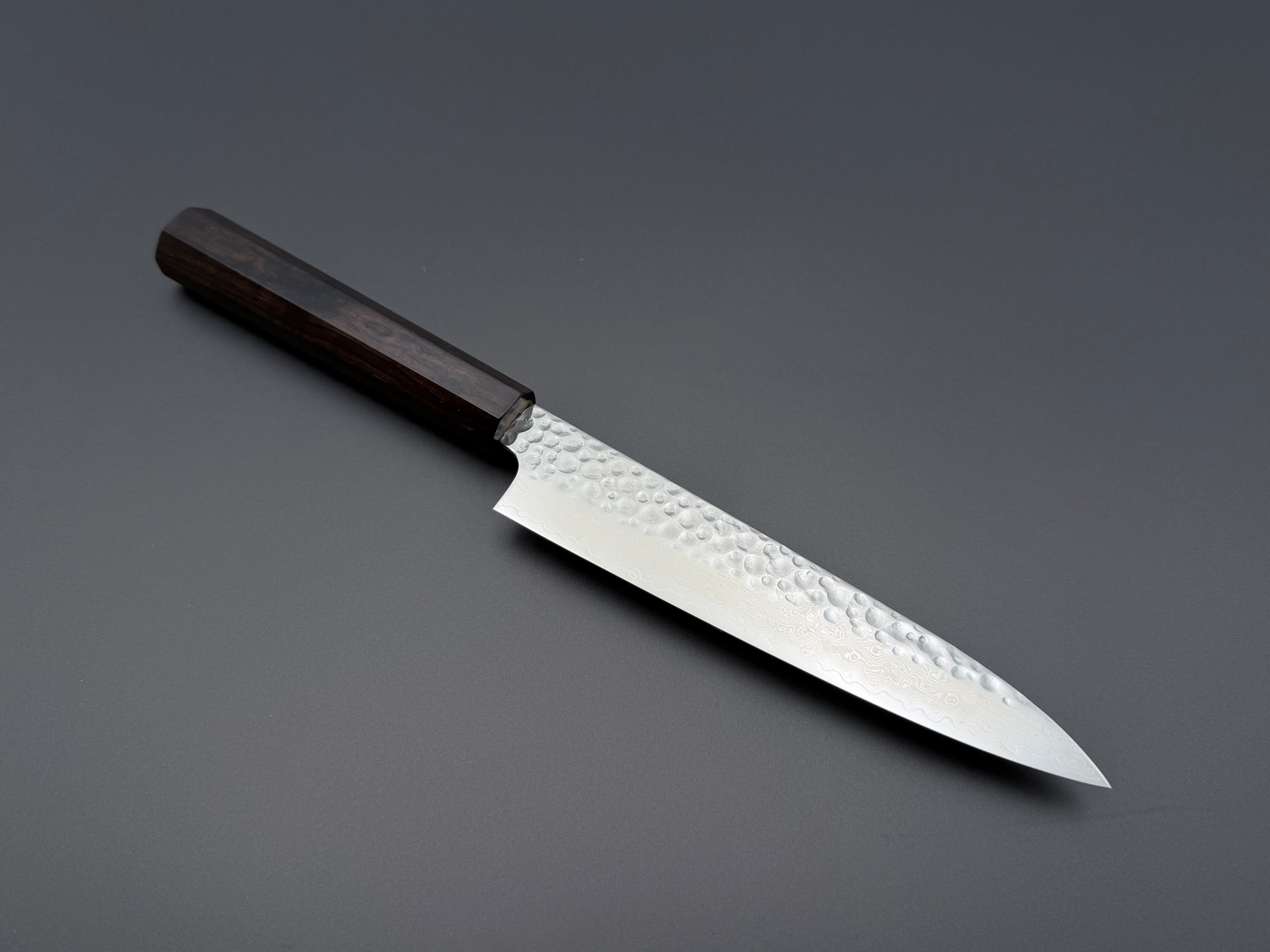
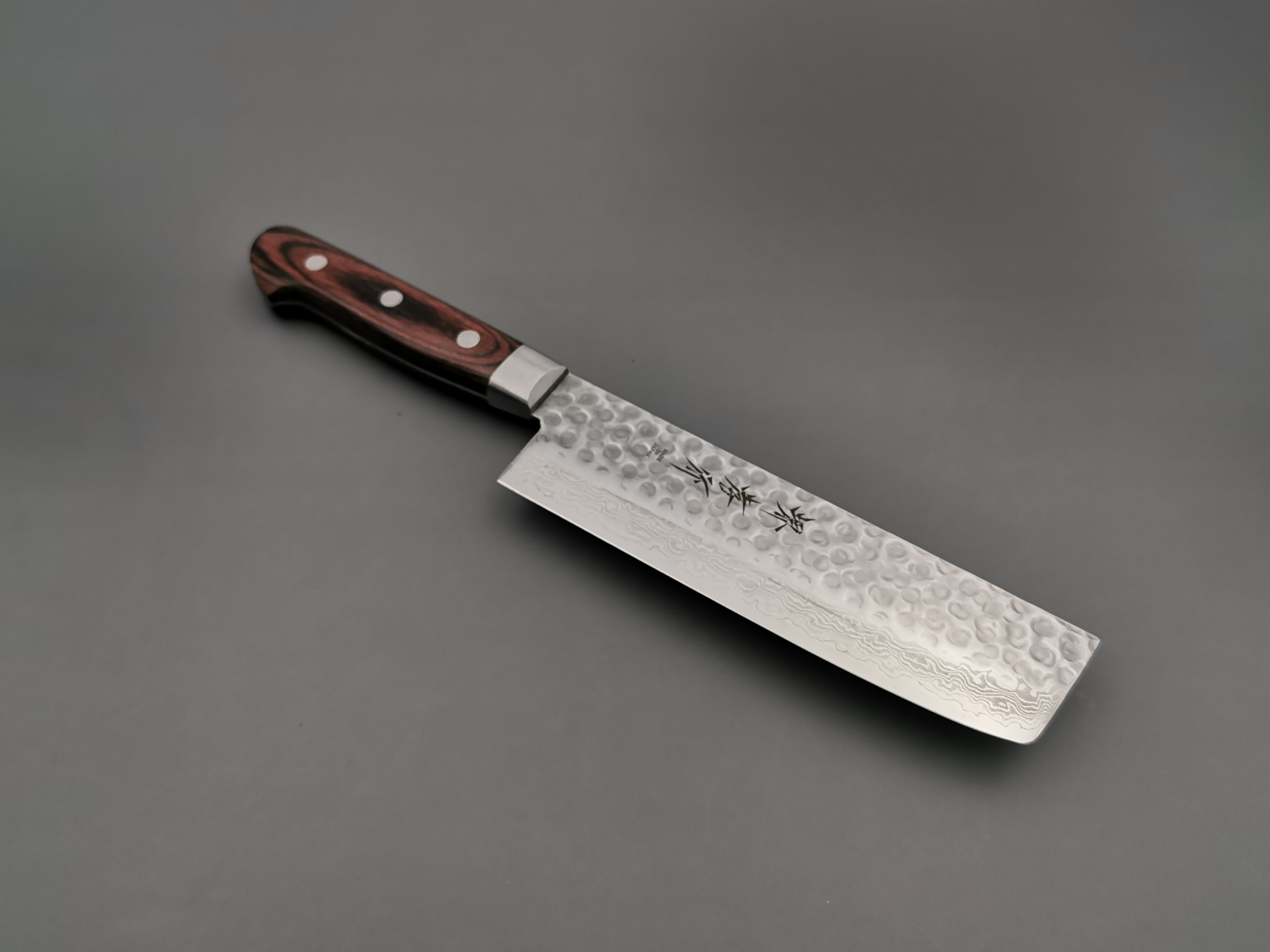
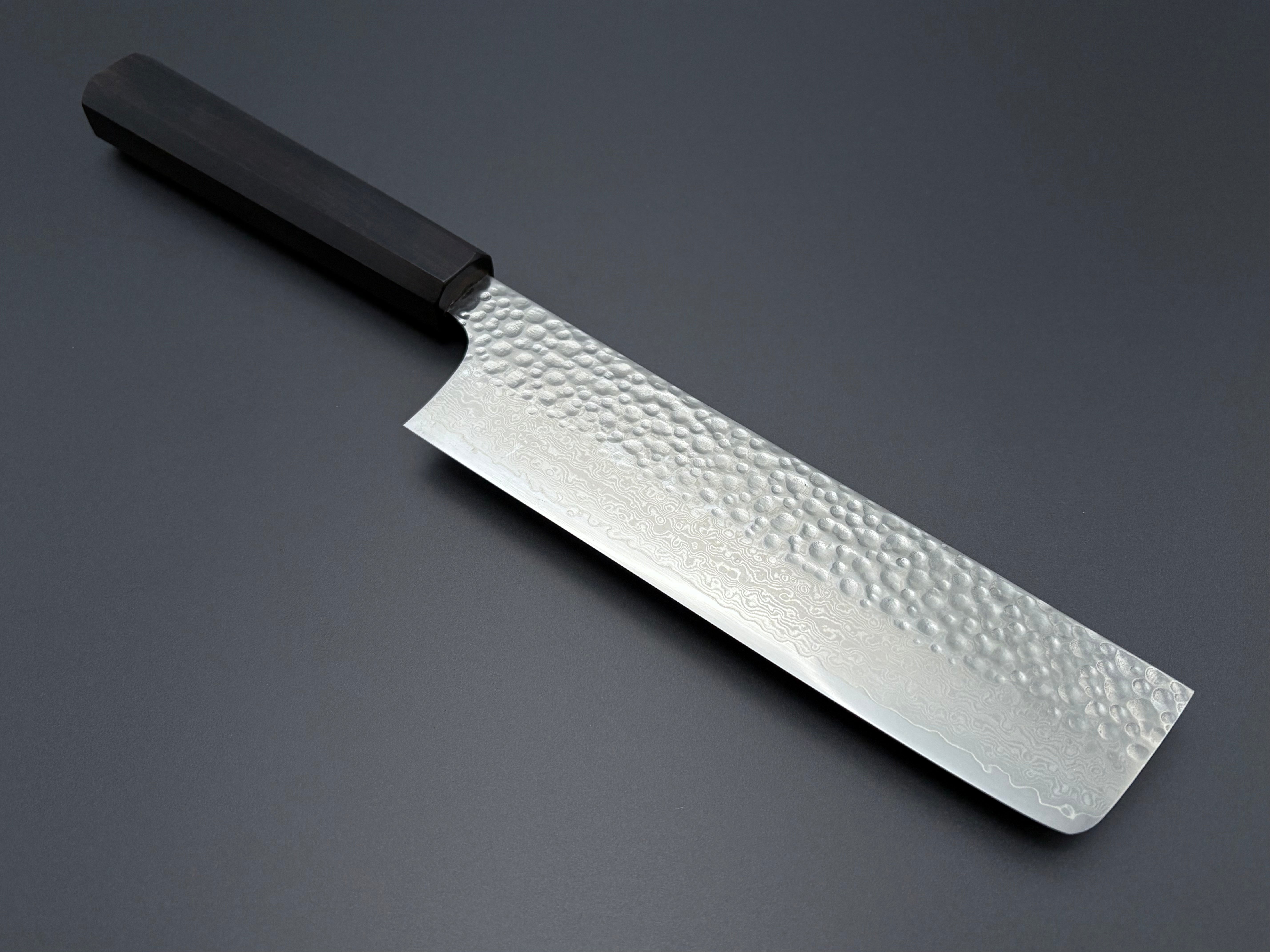
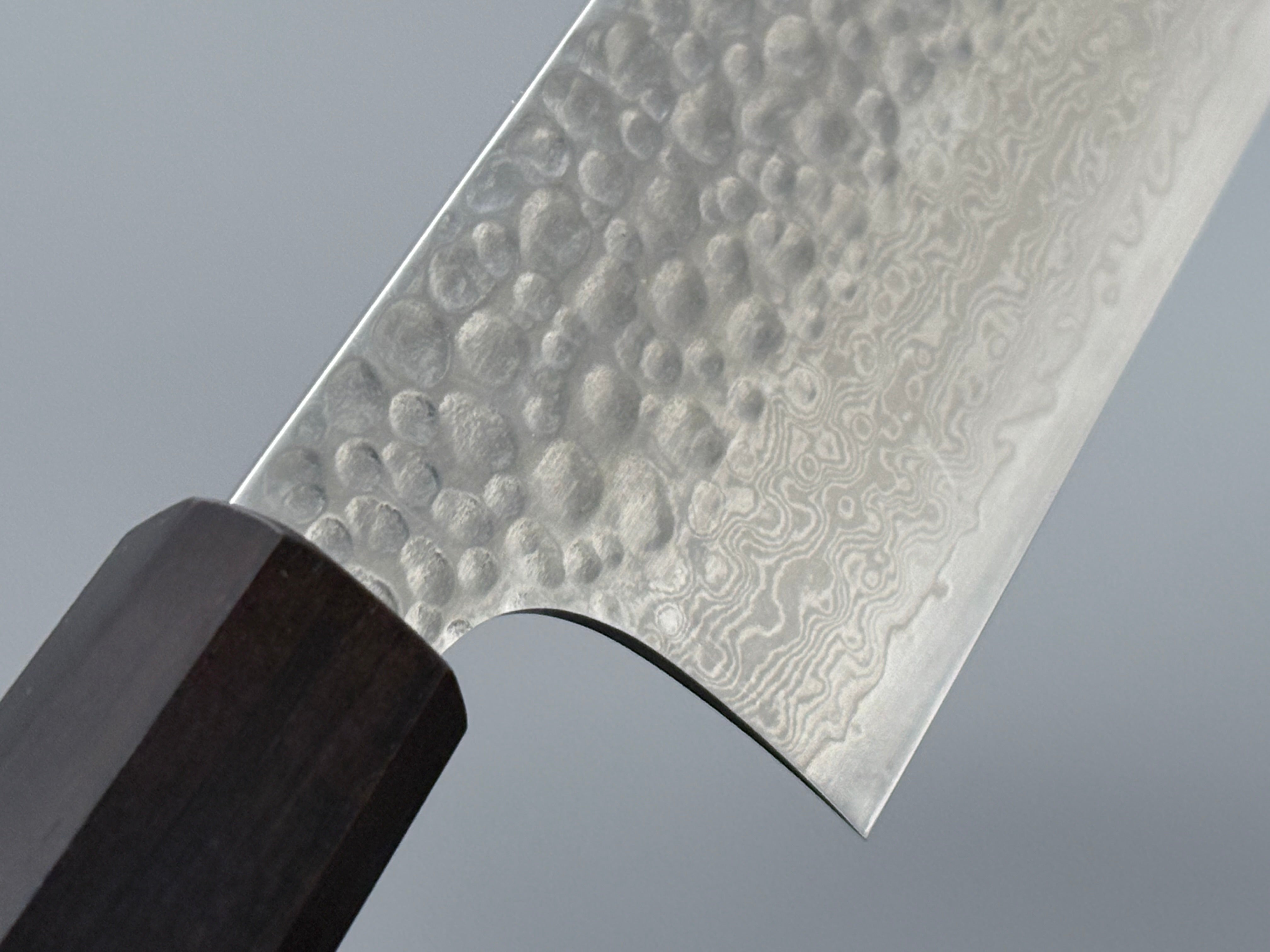
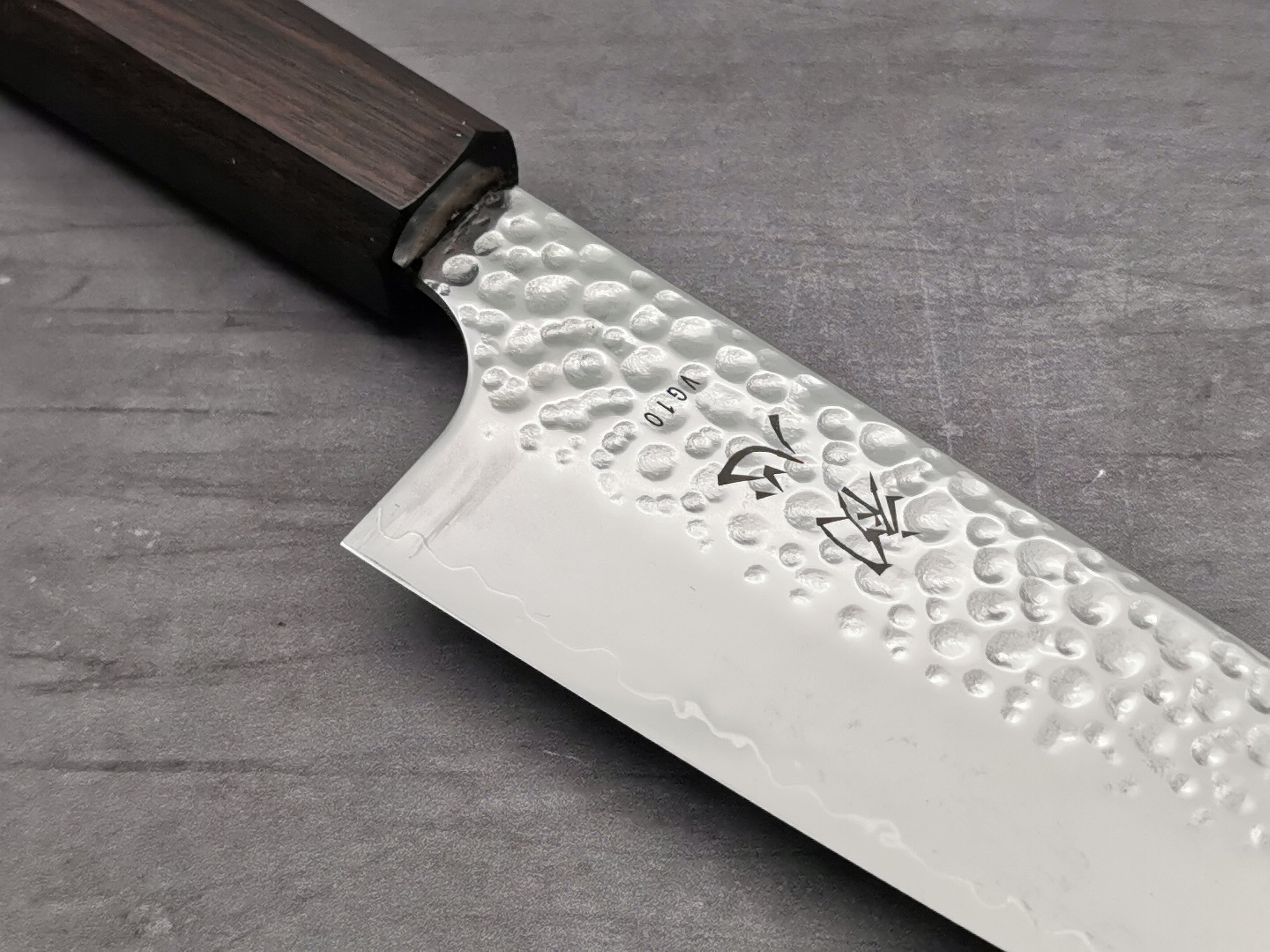
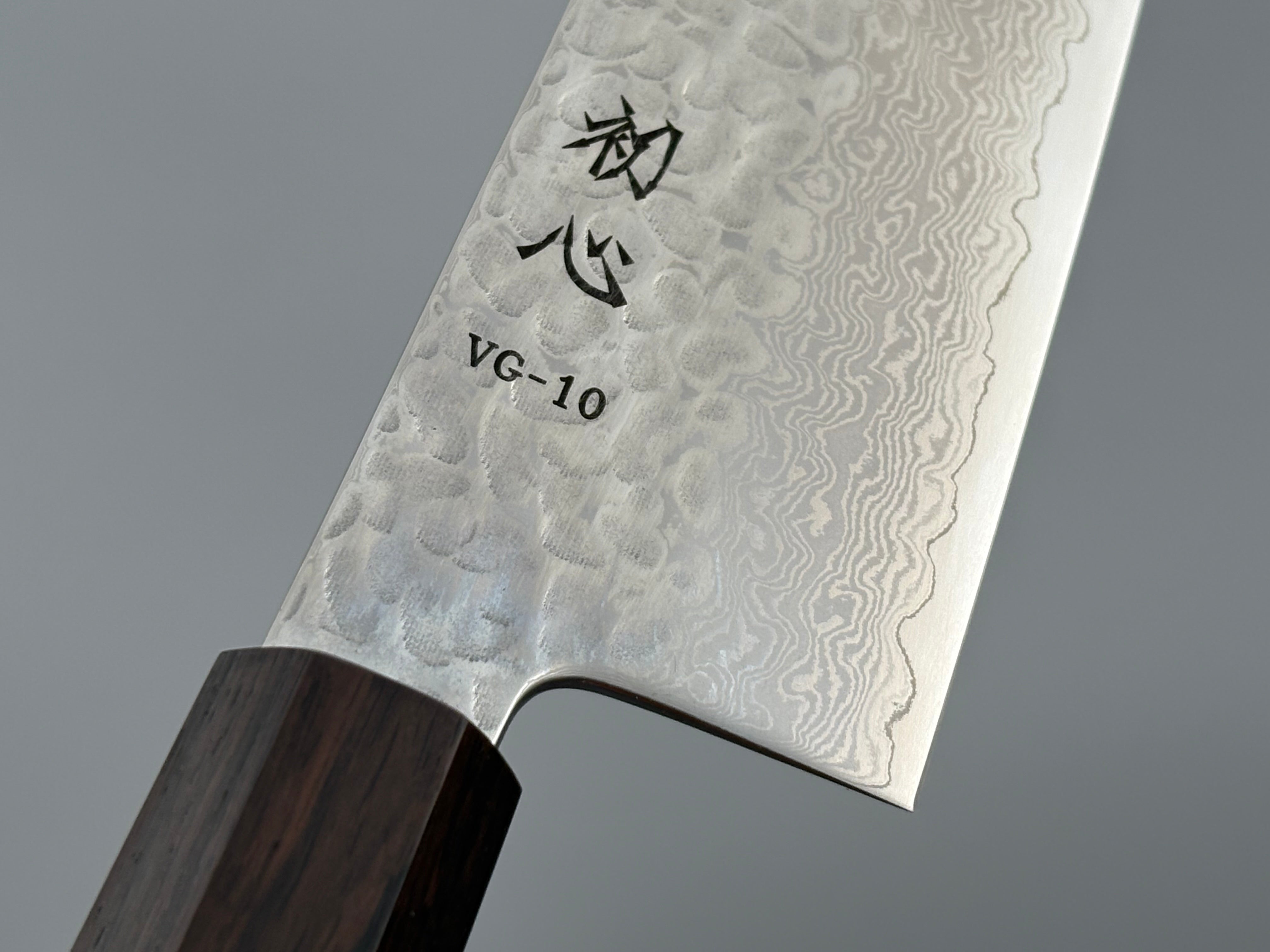
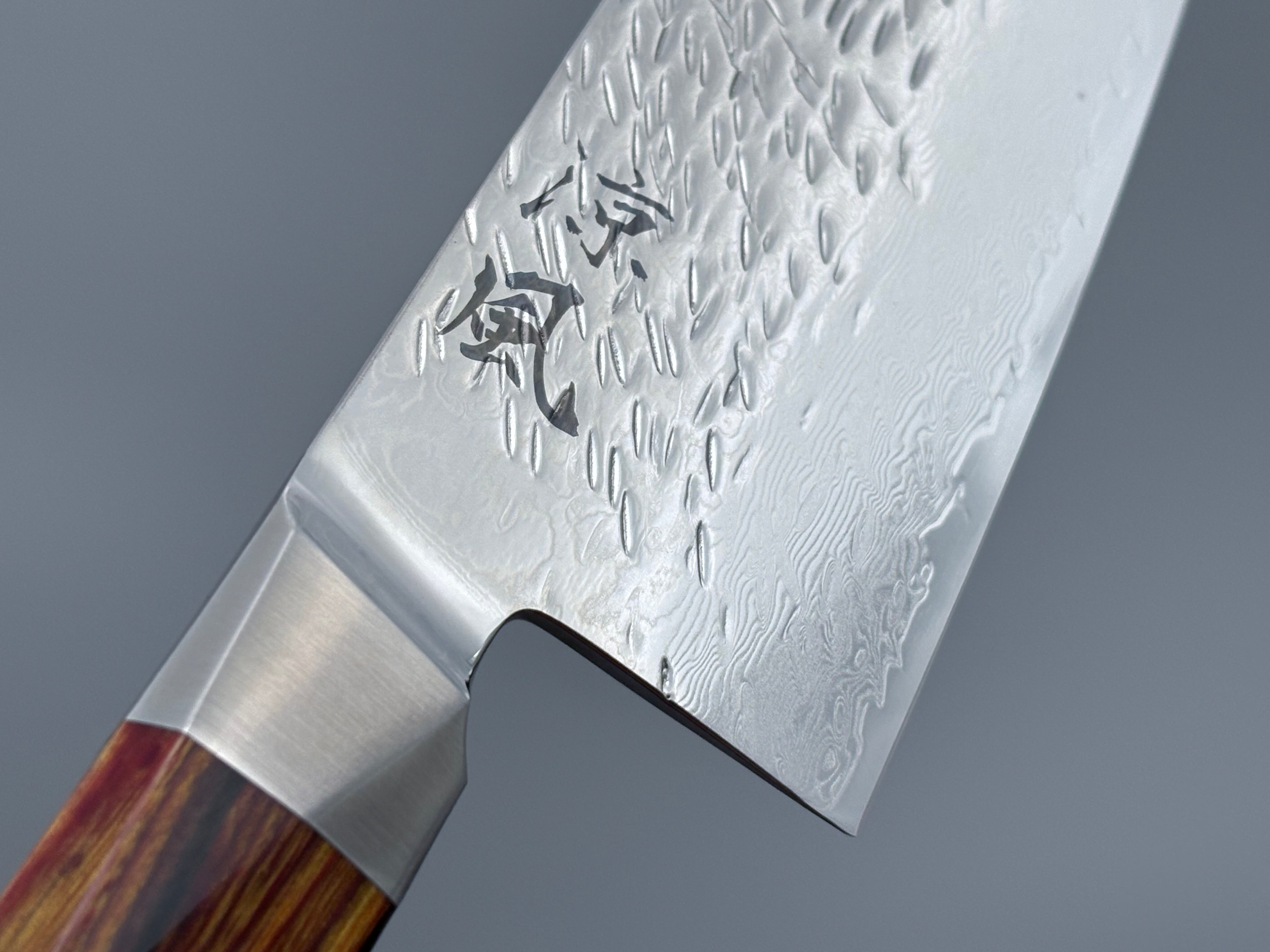
The tsuchime finish, often called a hammered finish, is a traditional and visually striking feature found on many Japanese knives. Derived from the Japanese word “槌目,” meaning “hammer mark,” tsuchime refers to the textured surface created by hammering the blade during the forging process.
These indentations are not just for aesthetics as they serve both functional and symbolic purposes in Japanese blade making.
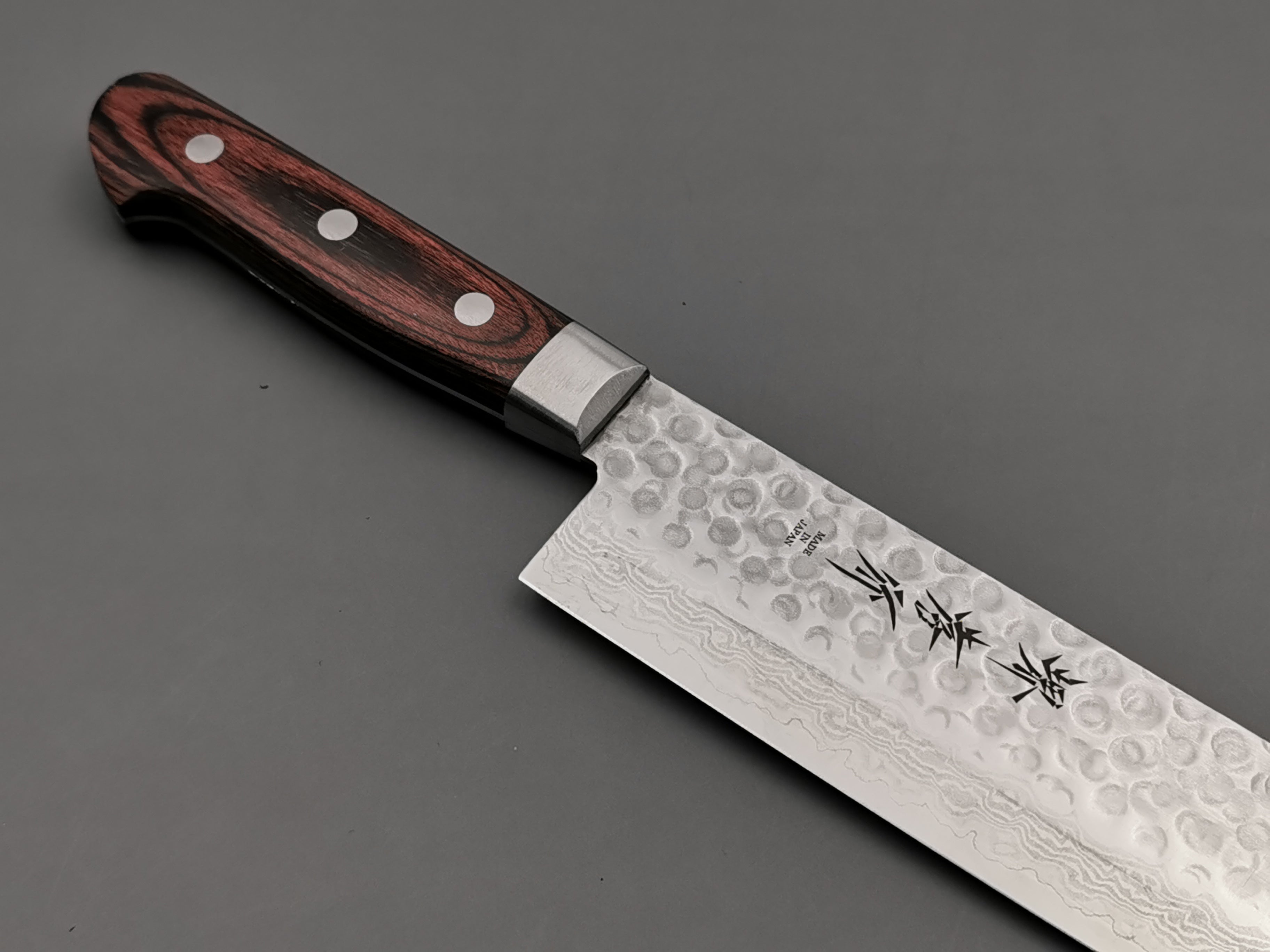
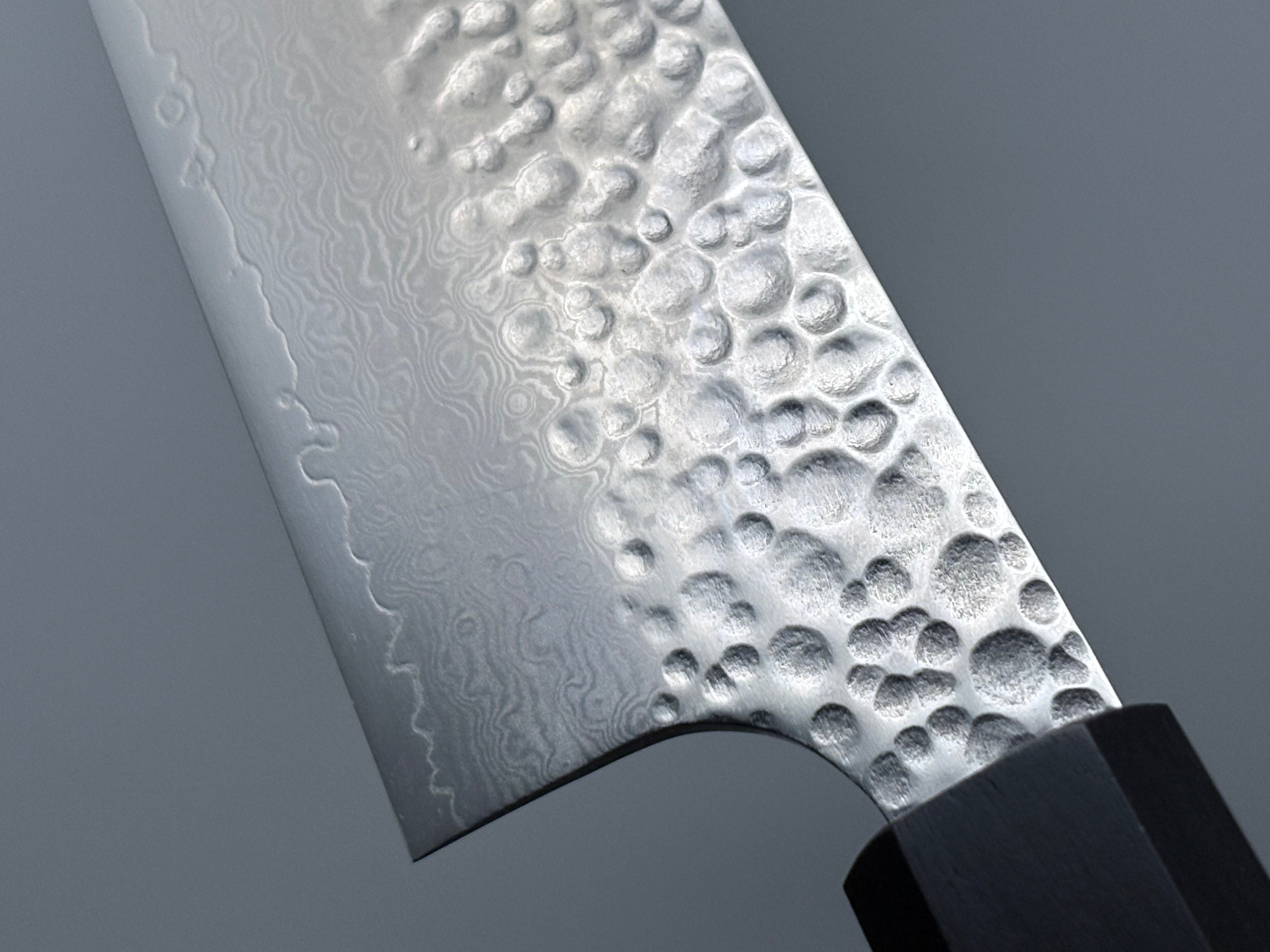
To create the tsuchime finish, blacksmiths use a hammer or punch to manually indent the surface of the blade, usually on the cladding rather than the core steel. This process results in a series of dimples or patterns that reflect light beautifully and give each knife a unique appearance.
While traditionally hammered by hand, some modern knives feature machine-applied tsuchime finishes that provide a more uniform pattern, making them quicker and more affordable to produce.
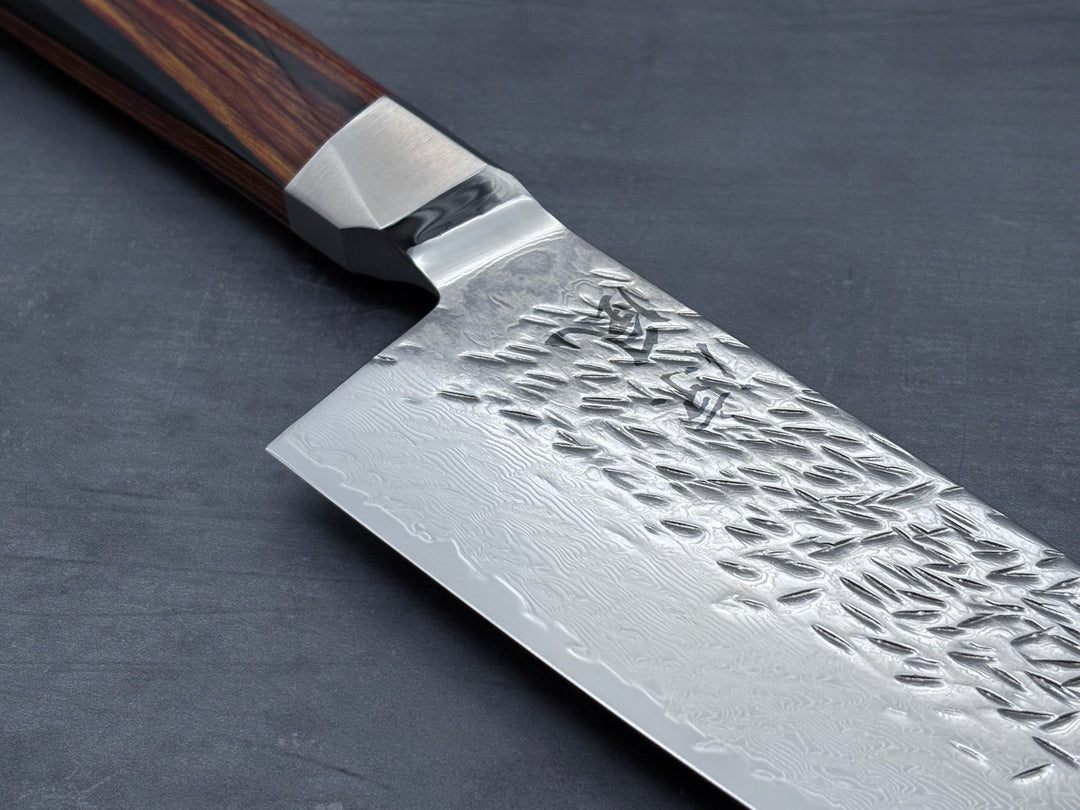
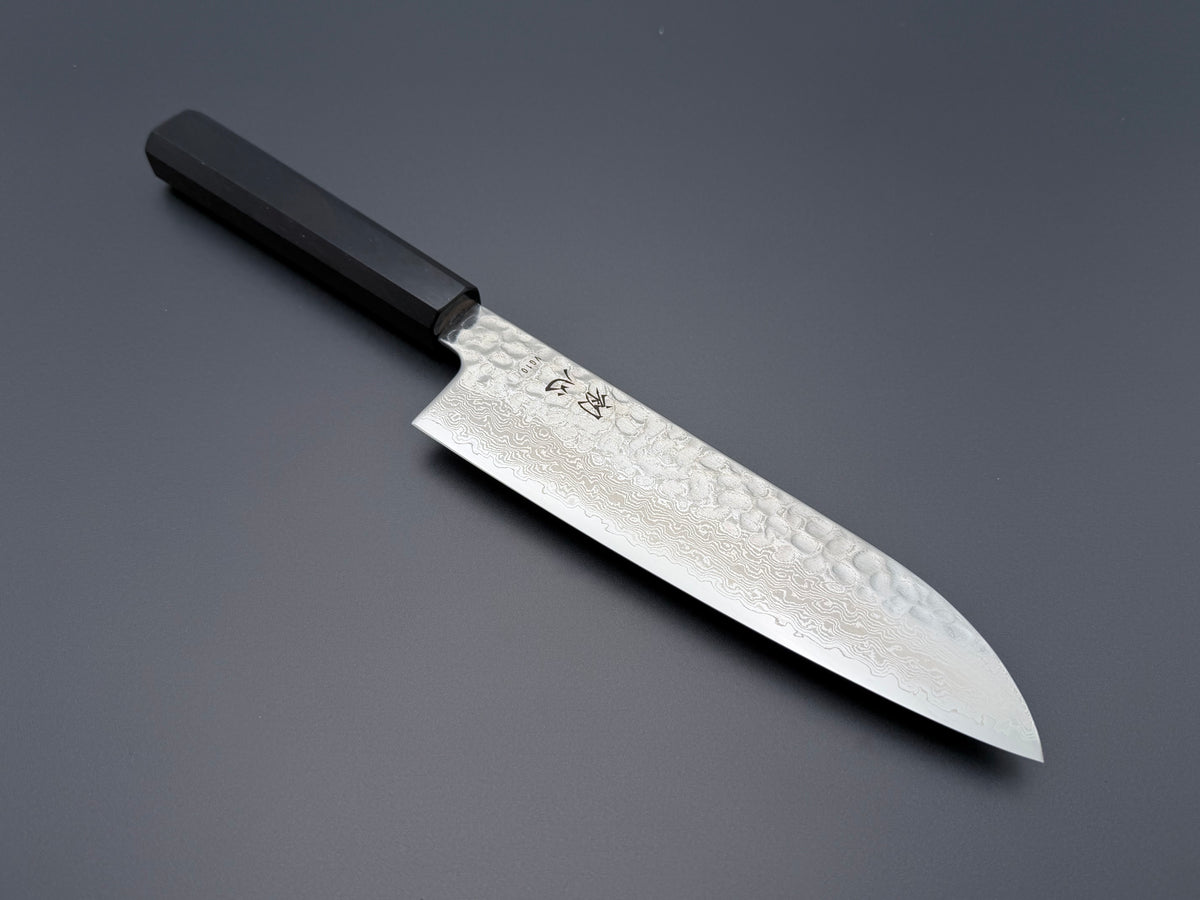
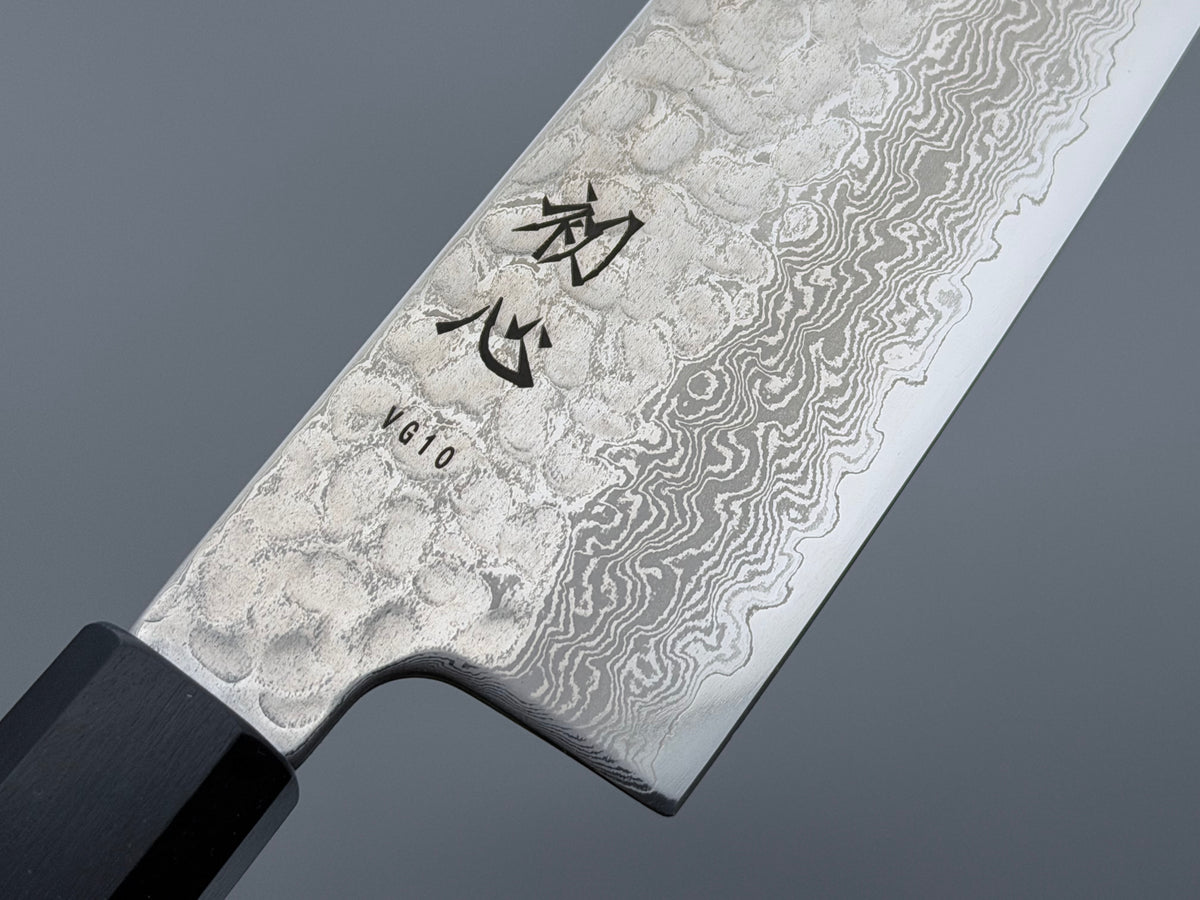
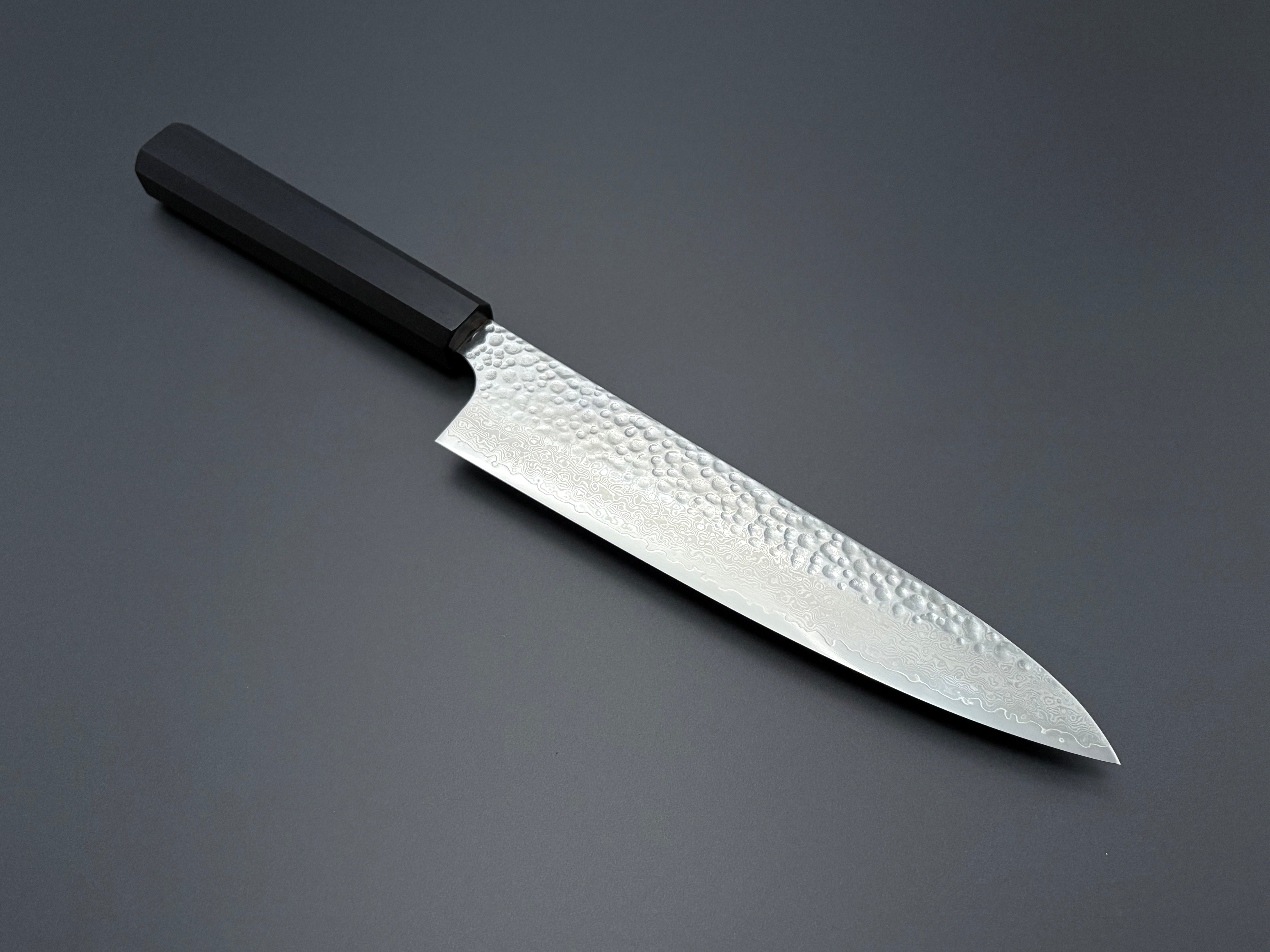
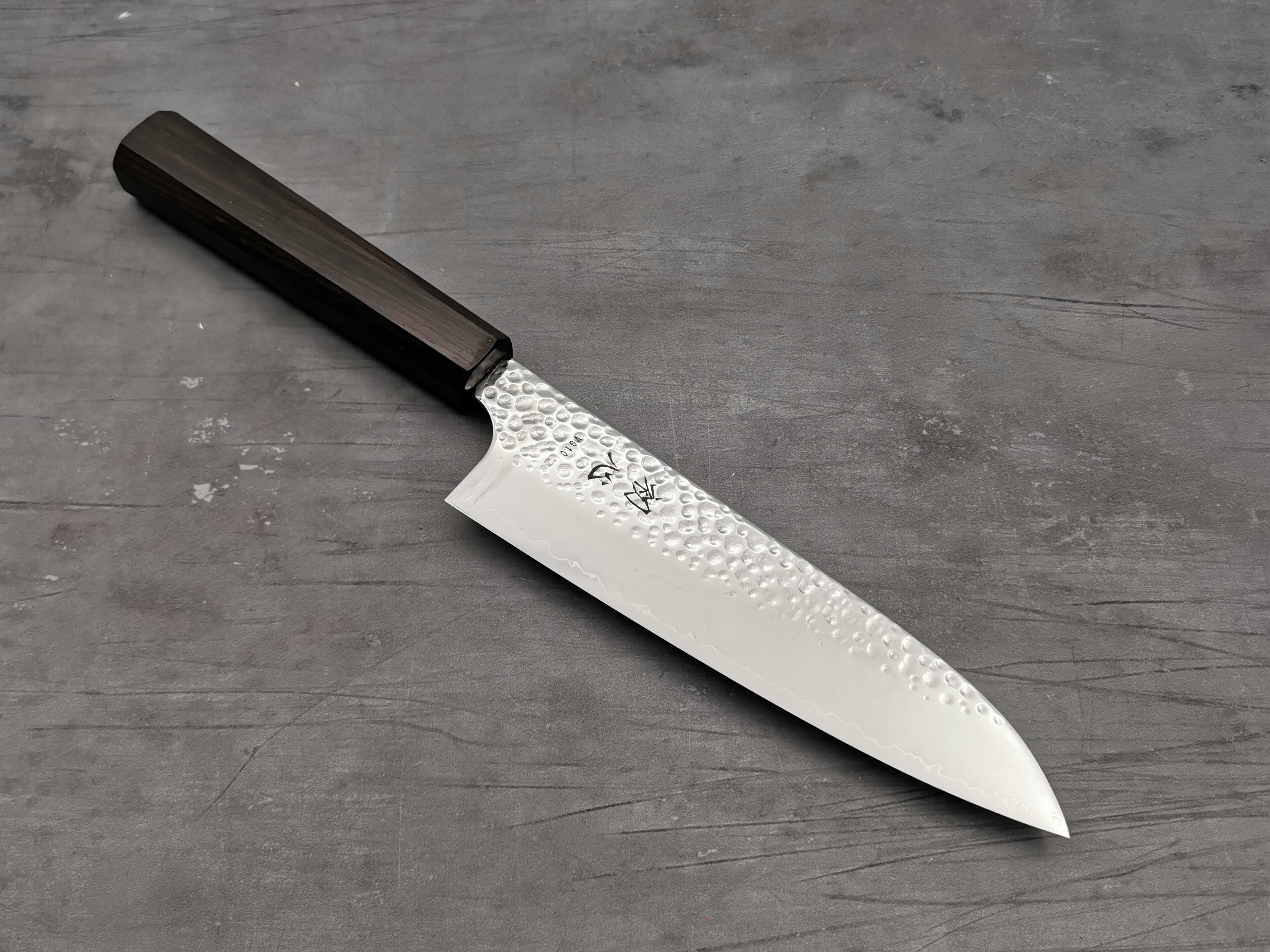
The stunning machine finished tsuchime markings on an ONO Knife santoku
The tsuchime finish also has a practical advantage. The hammered texture reduces drag by creating small air pockets between the blade and the food being cut, helping to prevent ingredients like potatoes or cucumbers from sticking to the blade during slicing.
Tsuchime finishes can vary widely between makers and even individual knives, depending on whether the process is hand forged or machine finished. Handmade tsuchime tends to have a more organic, individual feel, while machine finishes are cleaner and more consistent. This variation adds to the character and craftsmanship of each knife, making the tsuchime finish both functional and decorative.
View all Tsuchime finish Japanese knives