
What makes carbon steel knives different
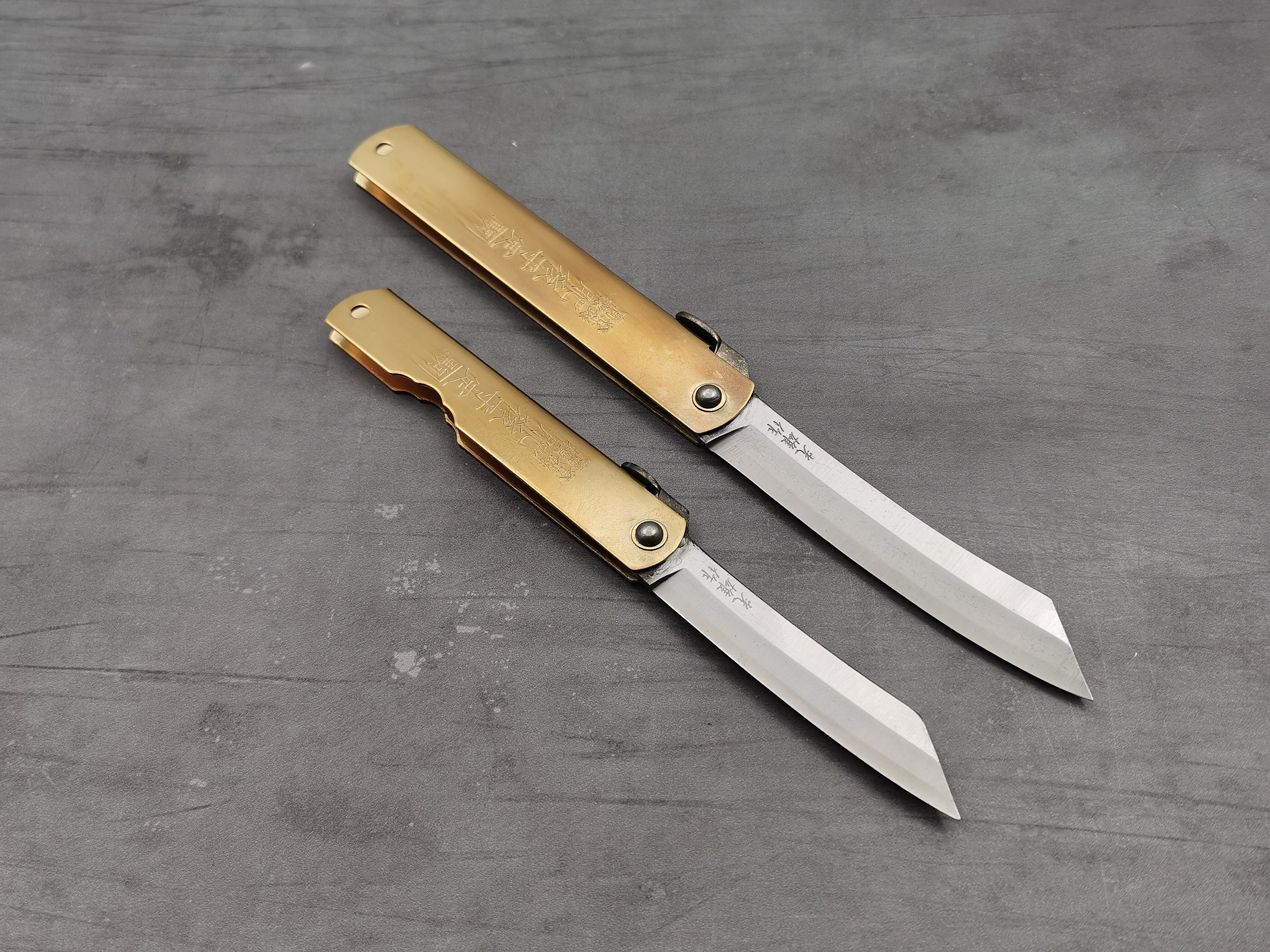
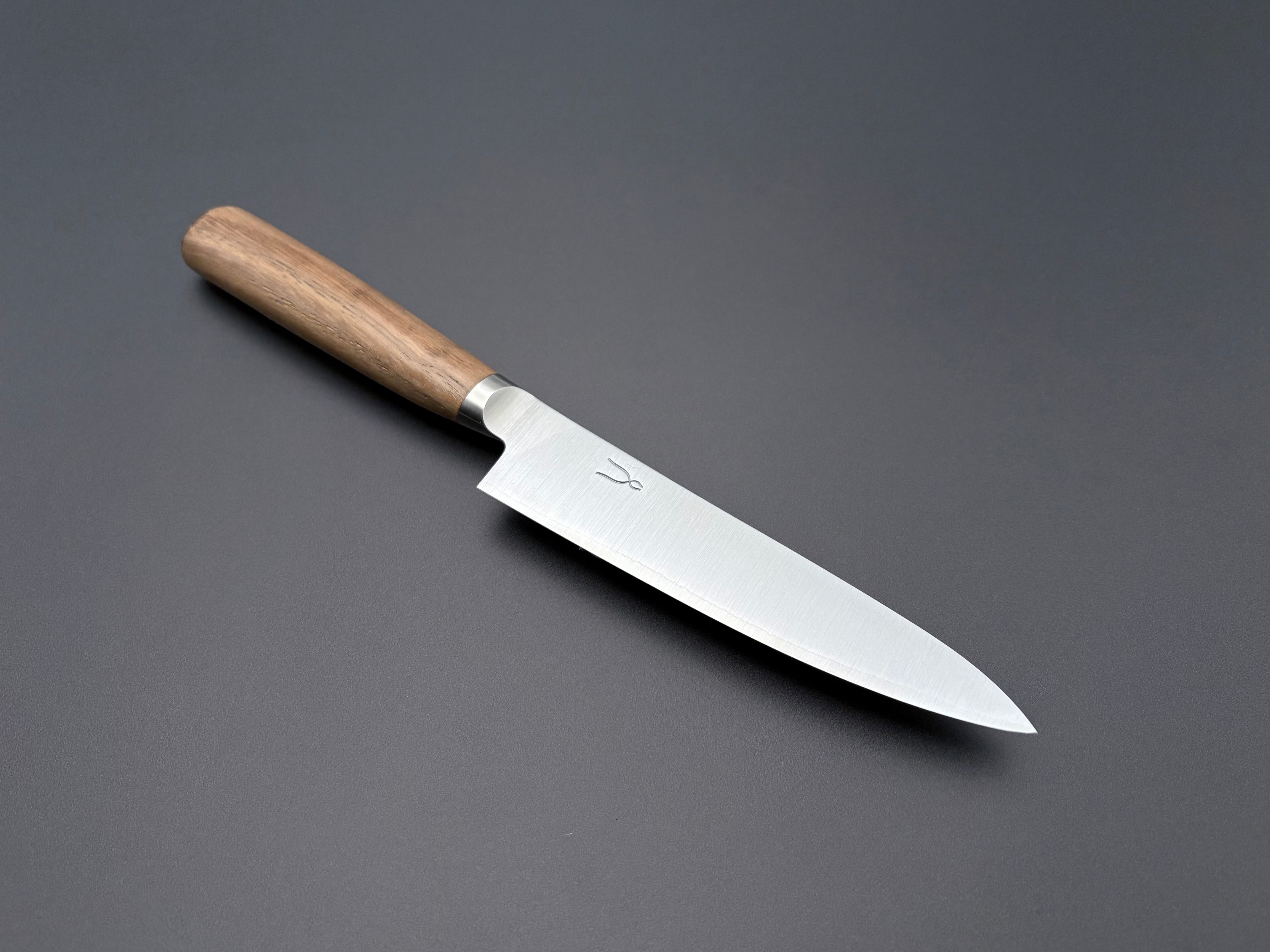
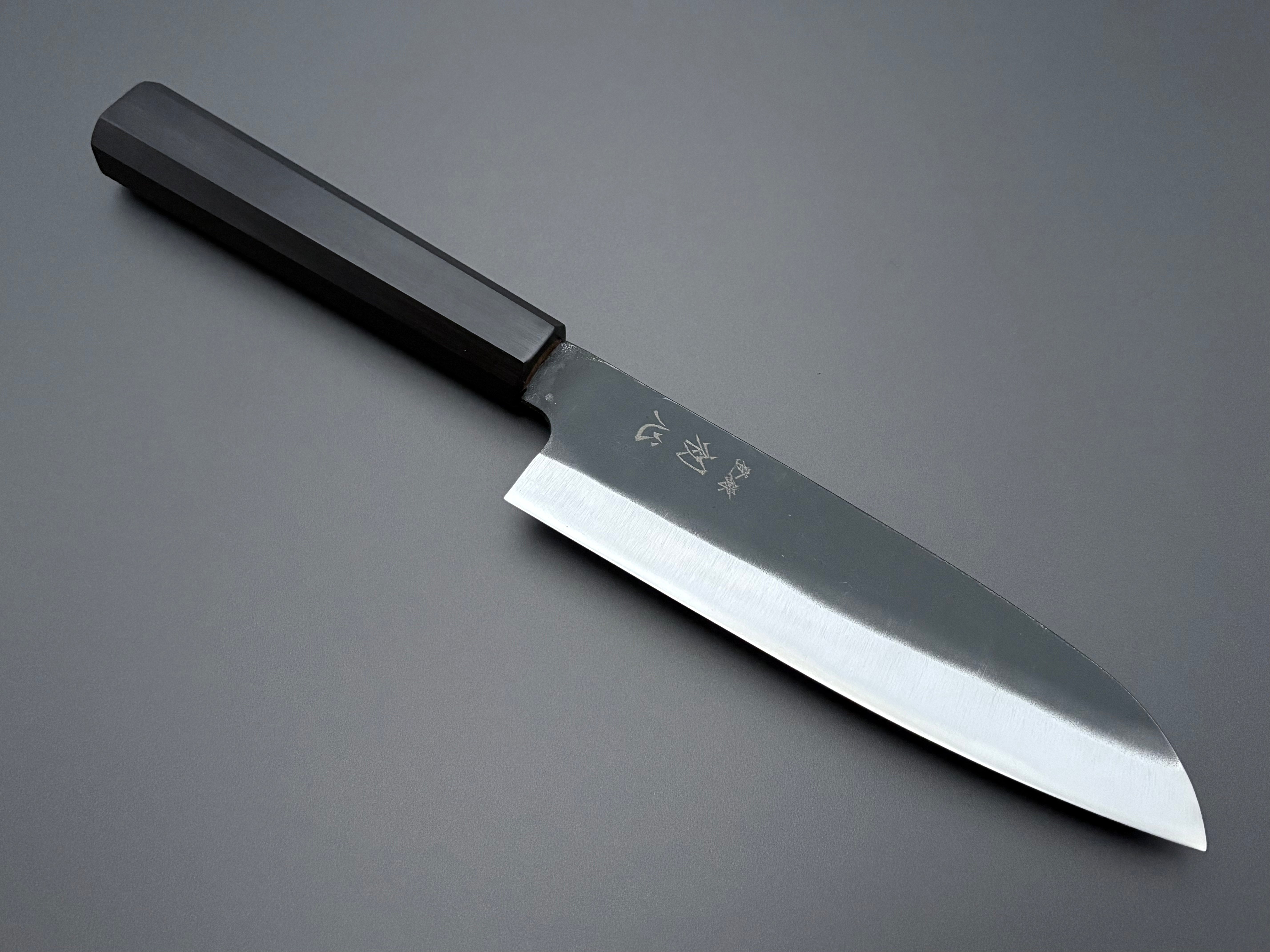
Carbon steel knives sit in a different category from stainless. Stainless steel uses chromium to resist corrosion. Carbon steel has little or none, which changes how it behaves entirely. The higher carbon content lets the steel harden further, which means a finer, more acute edge. For cooks who care how a knife actually feels in use, that sharpness potential is hard to walk away from.

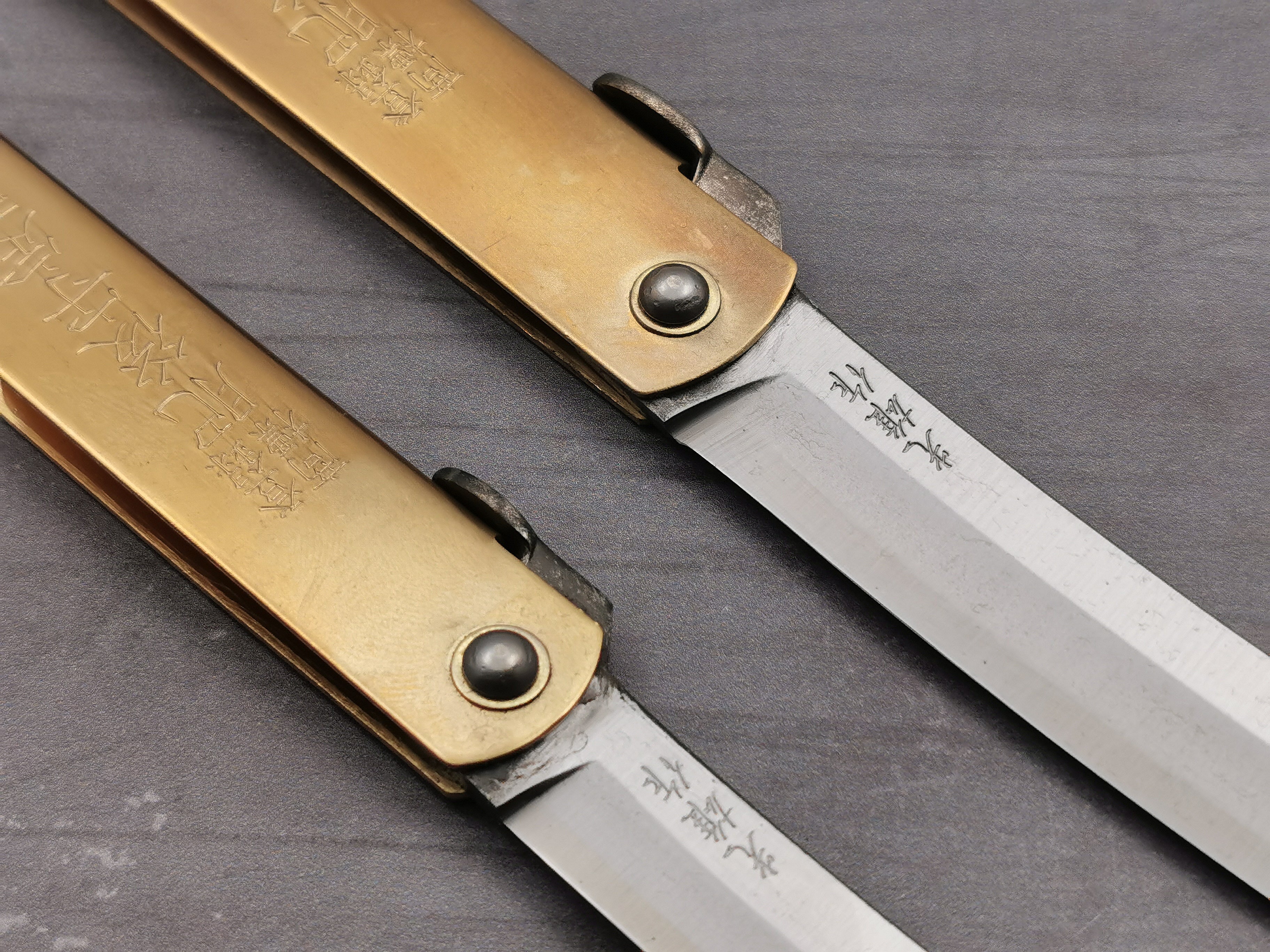
The trade-off is reactivity. Leave a carbon steel blade wet or in contact with acidic food and it will oxidise. Over time it builds a patina, darkening unevenly at first and then settling into something consistent. Most experienced cooks see this as a good thing. The patina stabilises the surface and reduces reactivity once it is established. It also gives each knife a personal character that stainless blades never develop. Some cooks speed the process along by wiping a new blade with mustard or resting it briefly against cut onion, pushing the darkening in a controlled direction from the start.
The main carbon steels used in Japanese knife making
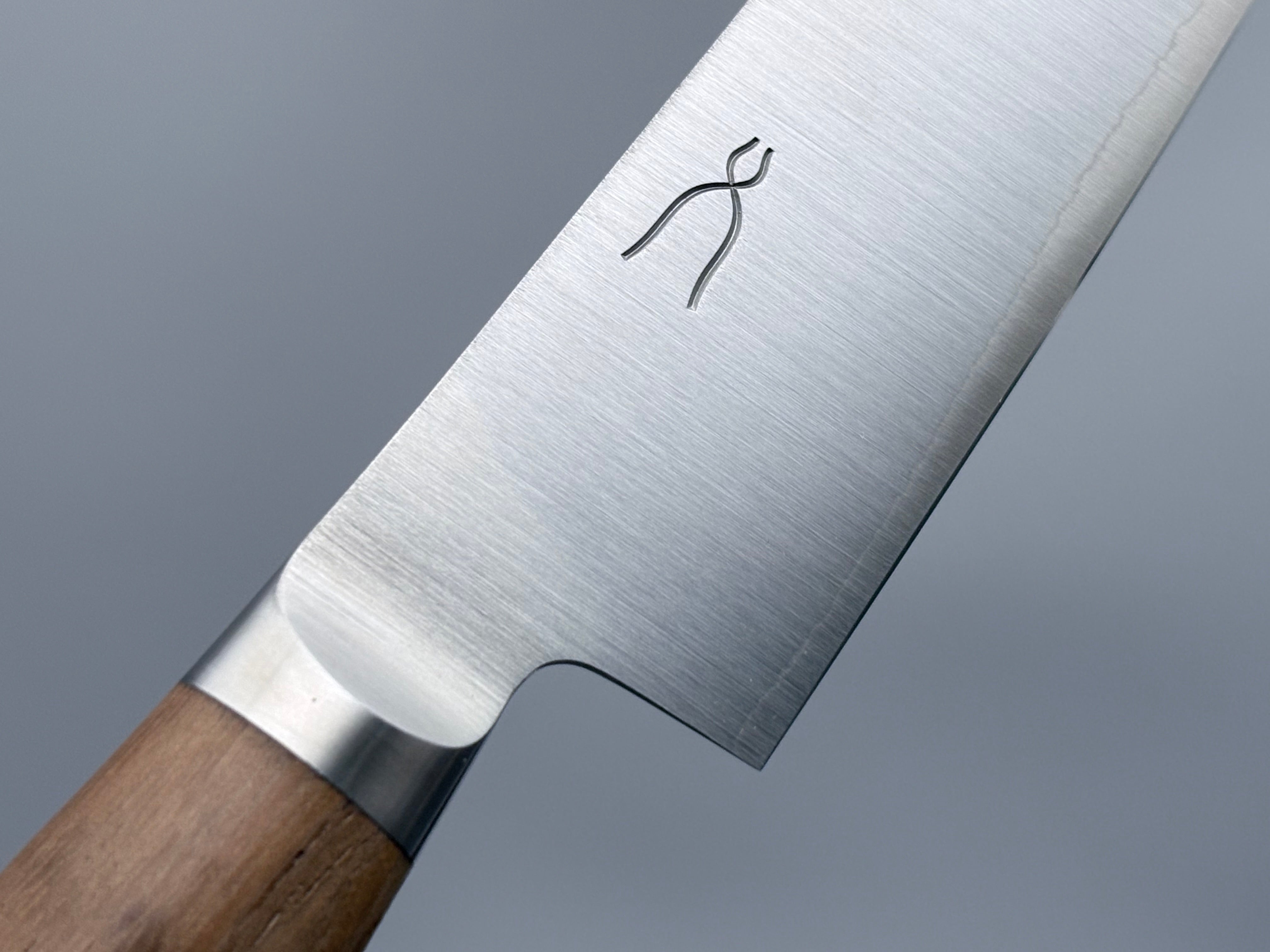
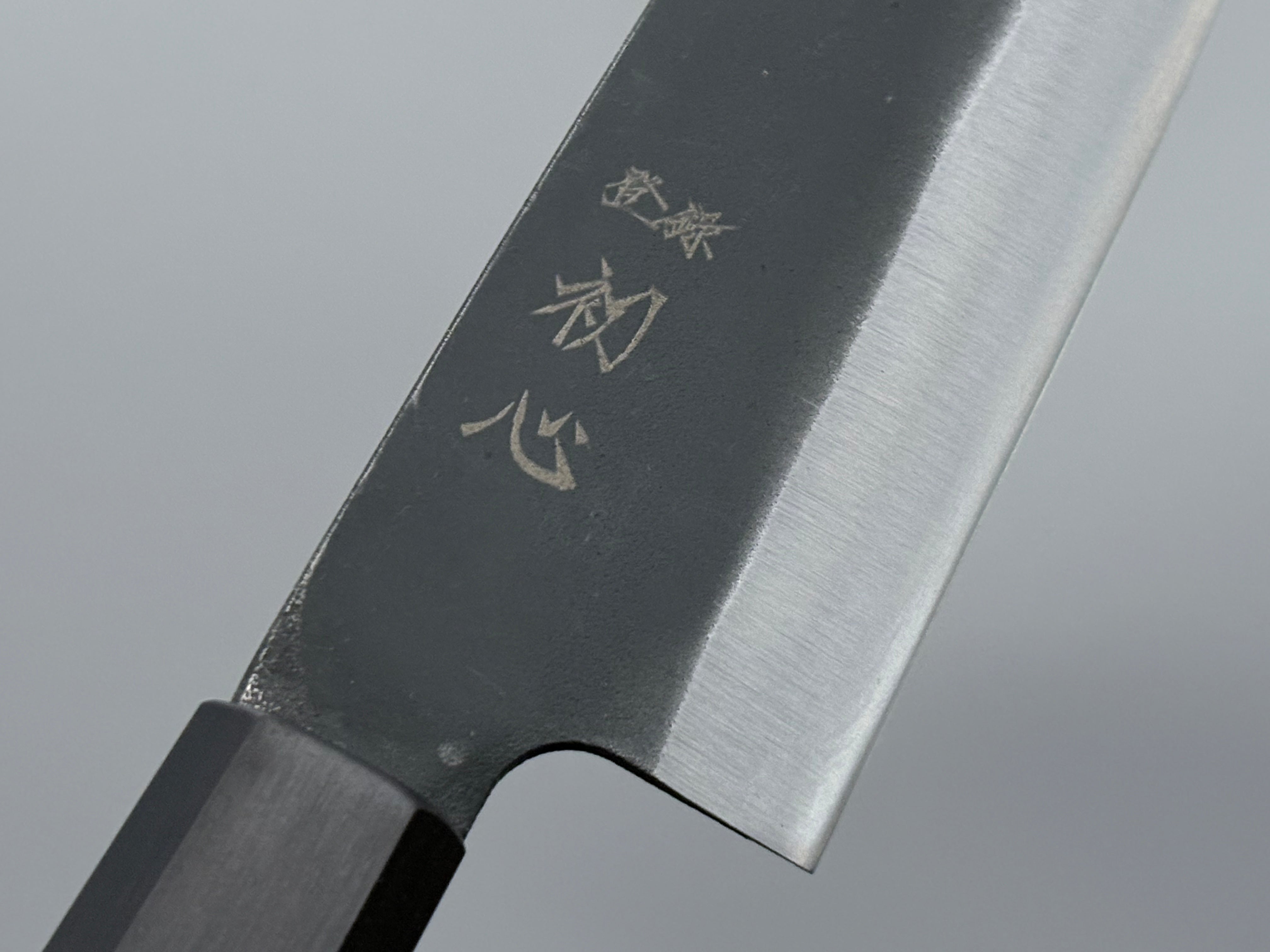
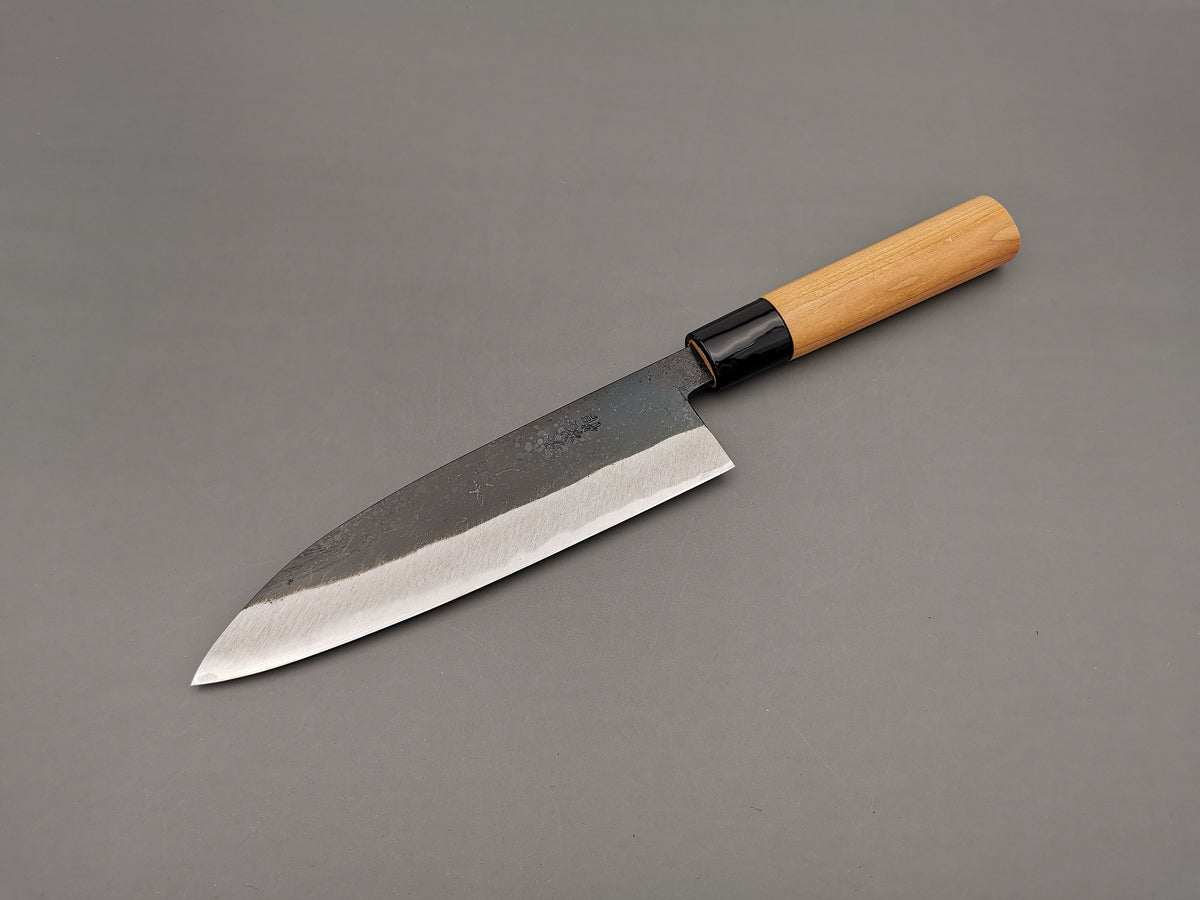
Japanese bladesmiths work with several well-regarded carbon steel types. Shirogami (white steel) and Aogami (blue) steel Japanese knives are among the most common. Shirogami is a very pure high-carbon steel. Aogami adds small amounts of tungsten and chromium, improving wear resistance without crossing into stainless territory. Aogami Super Blue steel goes further, with molybdenum and vanadium added for exceptional edge holding.
Both respond well to sharpening on a whetstone, which is a large part of why professional chefs reach for them. A properly sharpened carbon steel blade can get sharper than most stainless knives will ever manage. The feedback from the stone is also more intuitive. You can feel when the edge is right.
Anryu Knives: carbon steel forged in Echizen
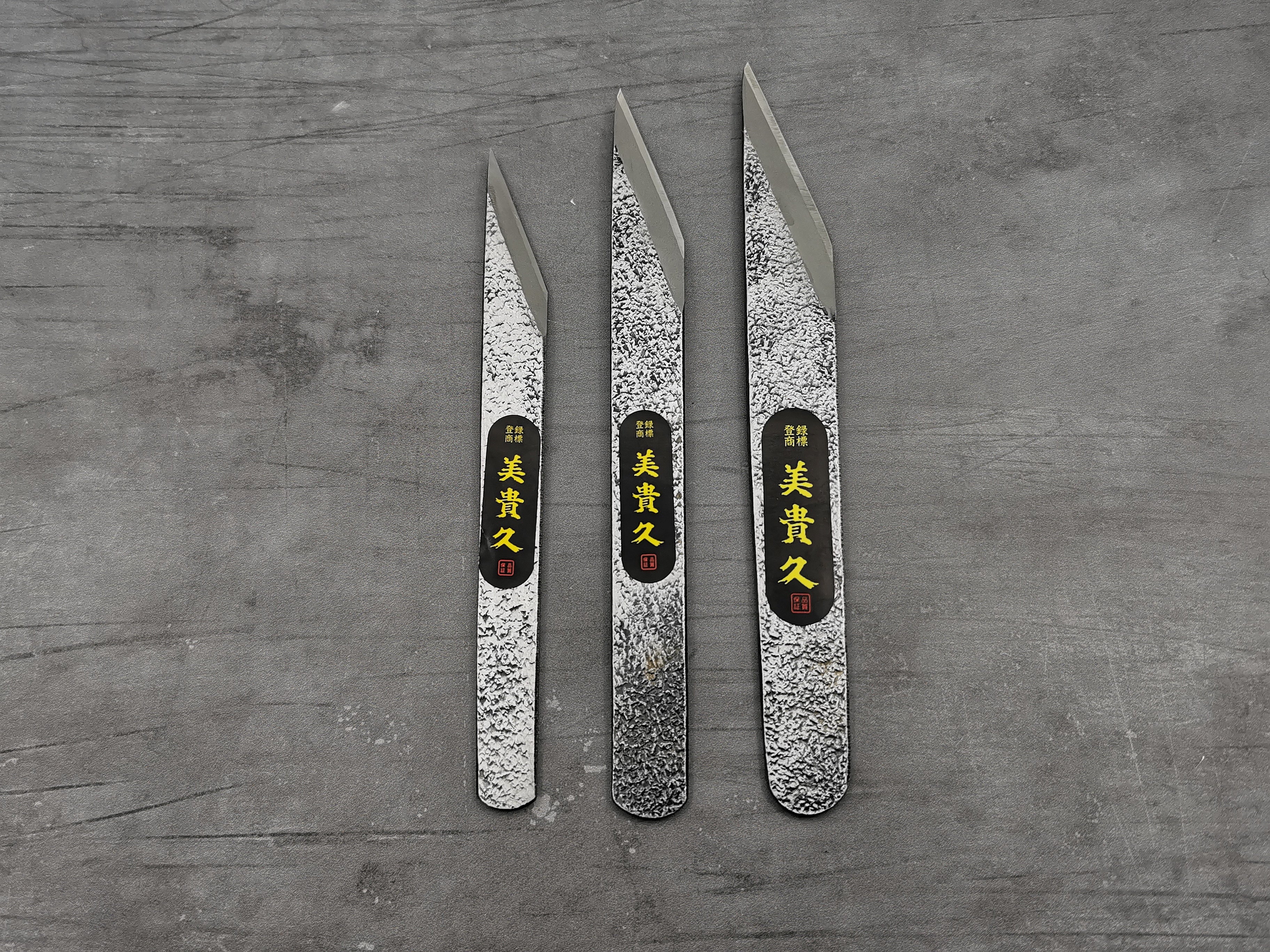
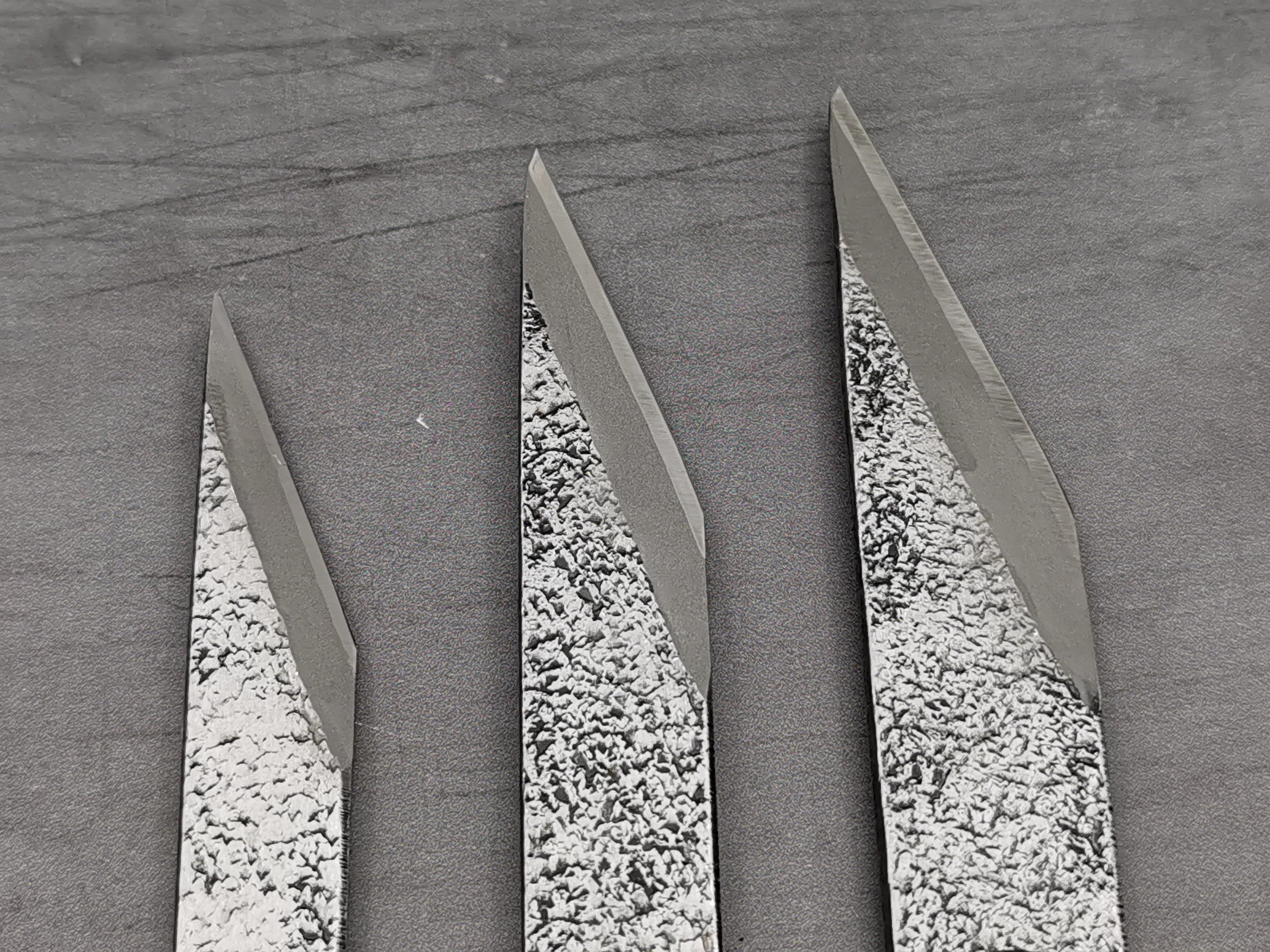
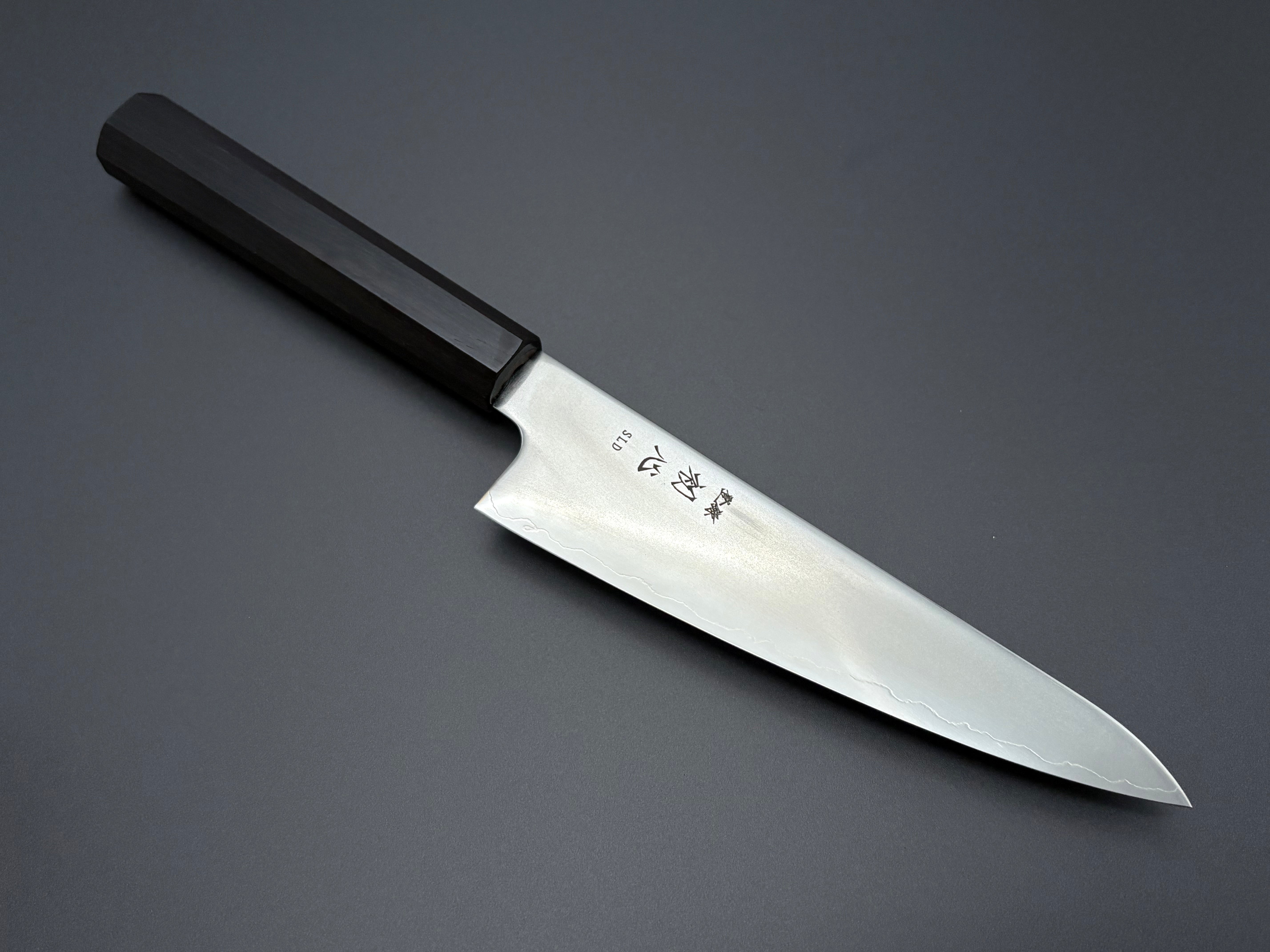
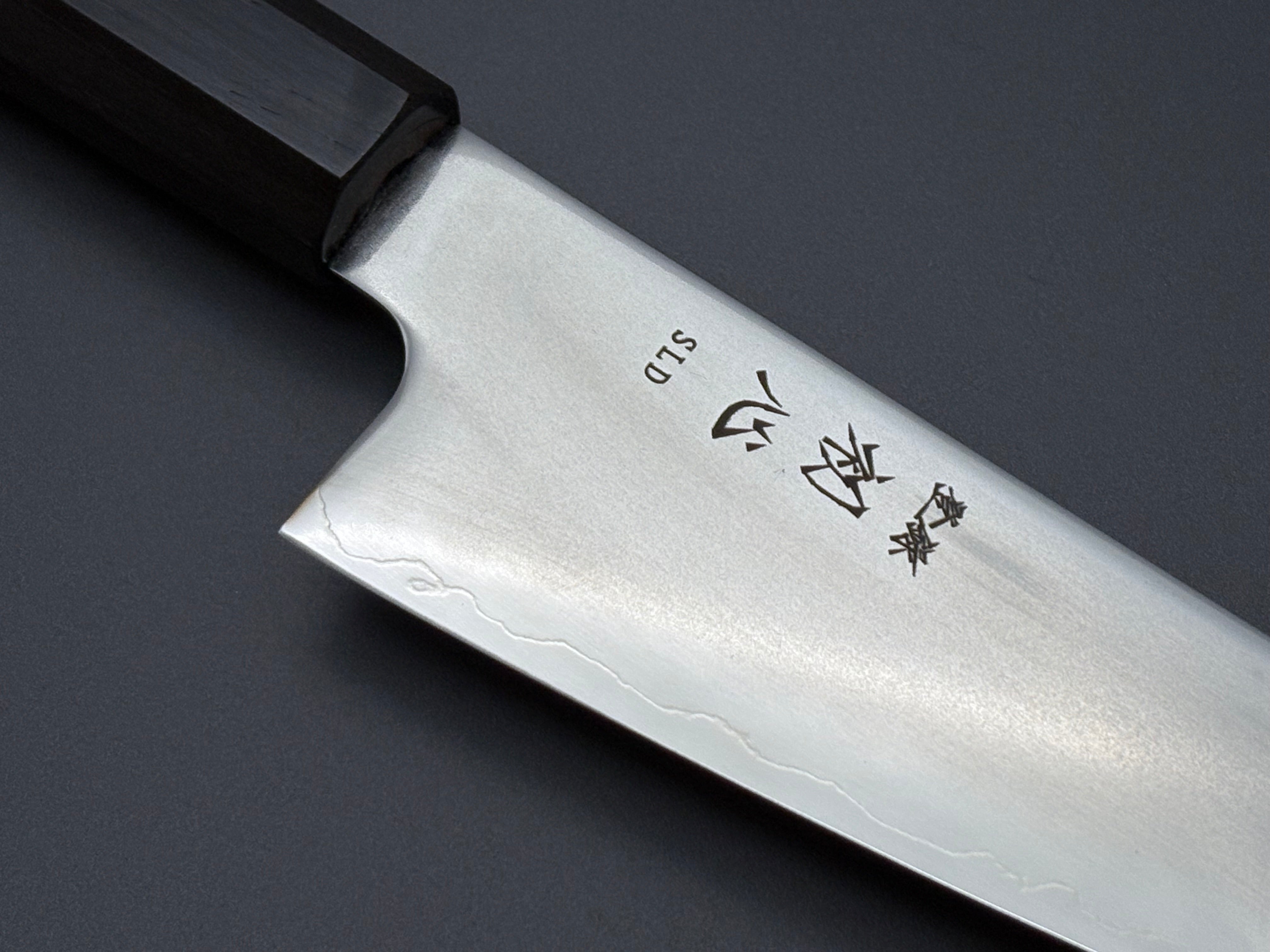
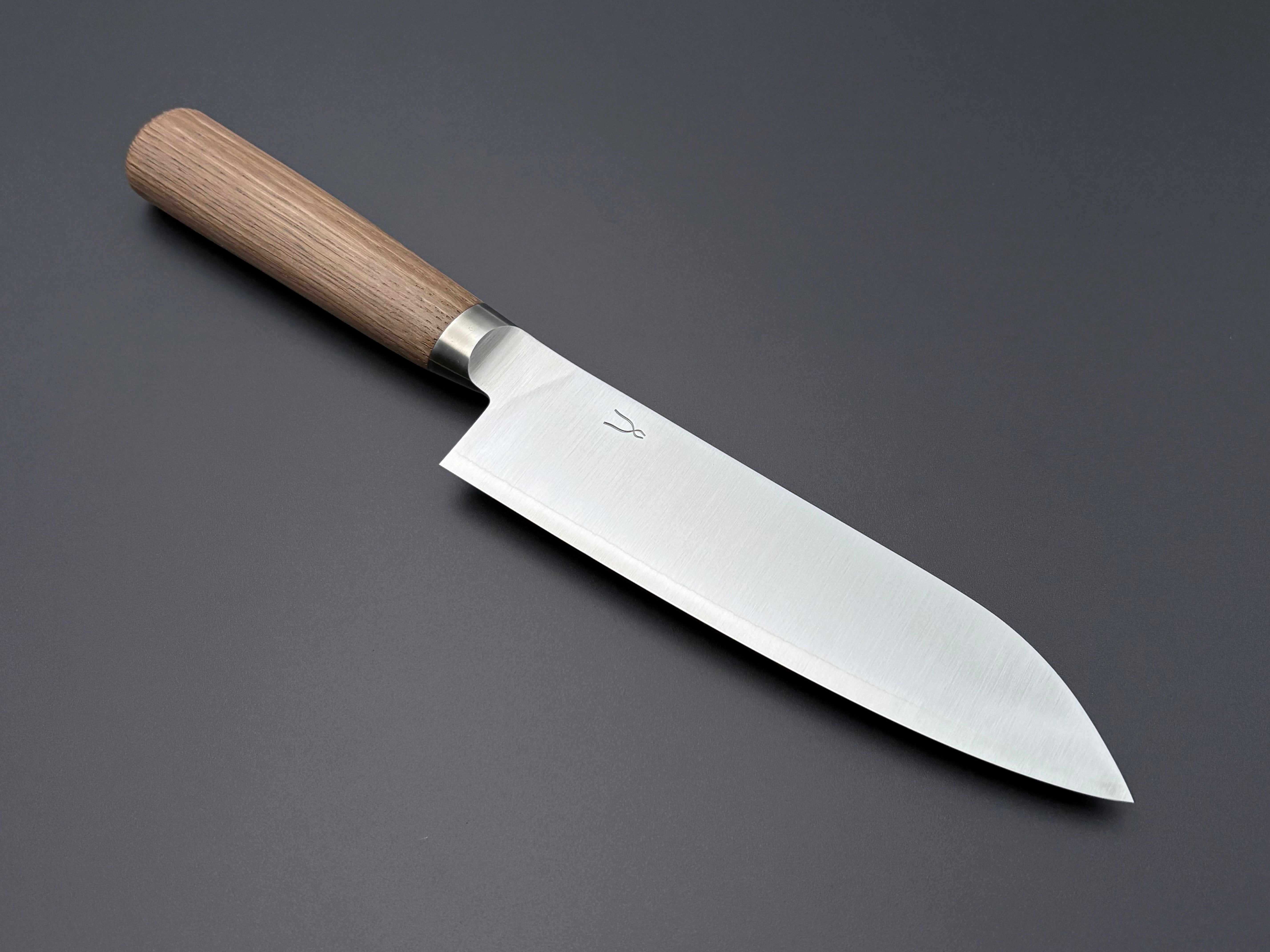
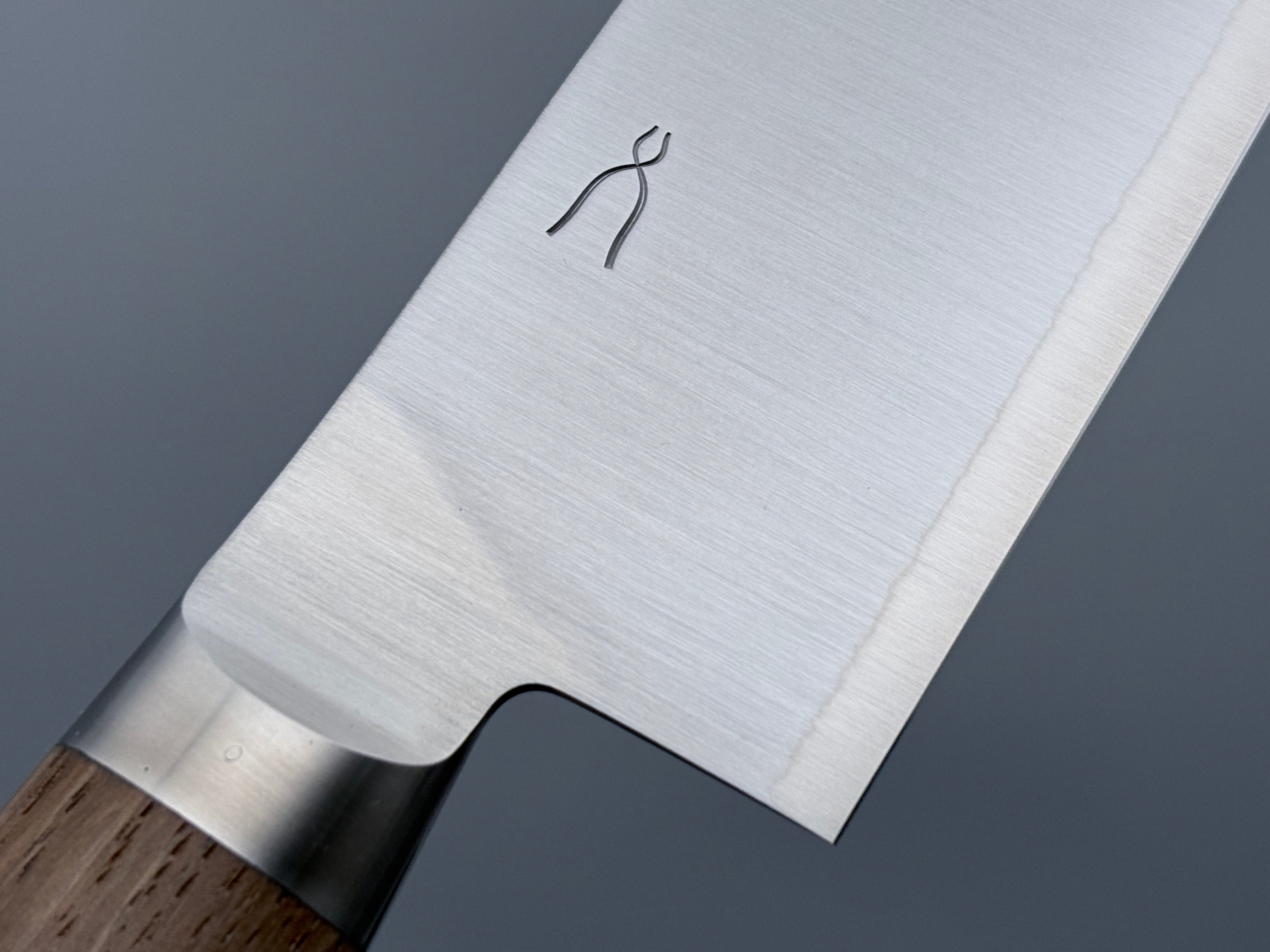
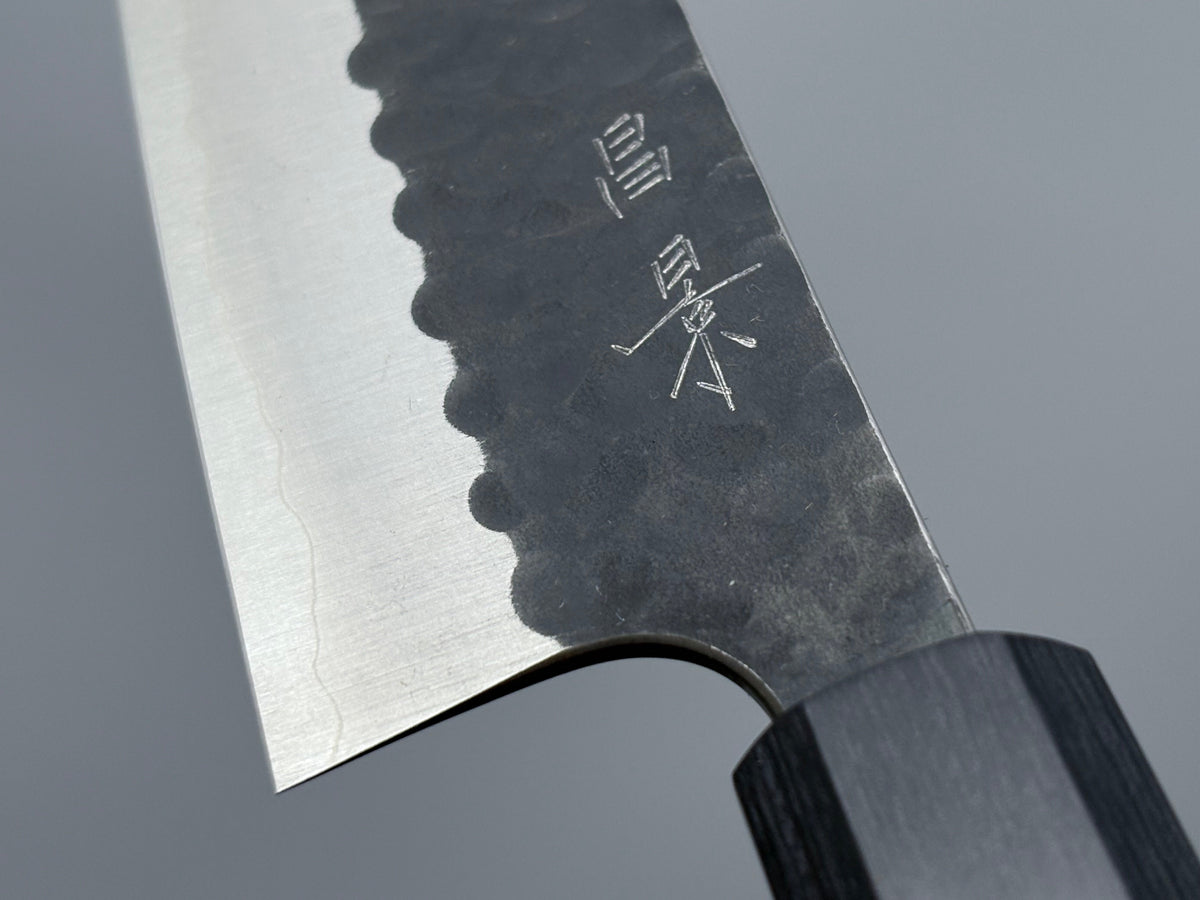
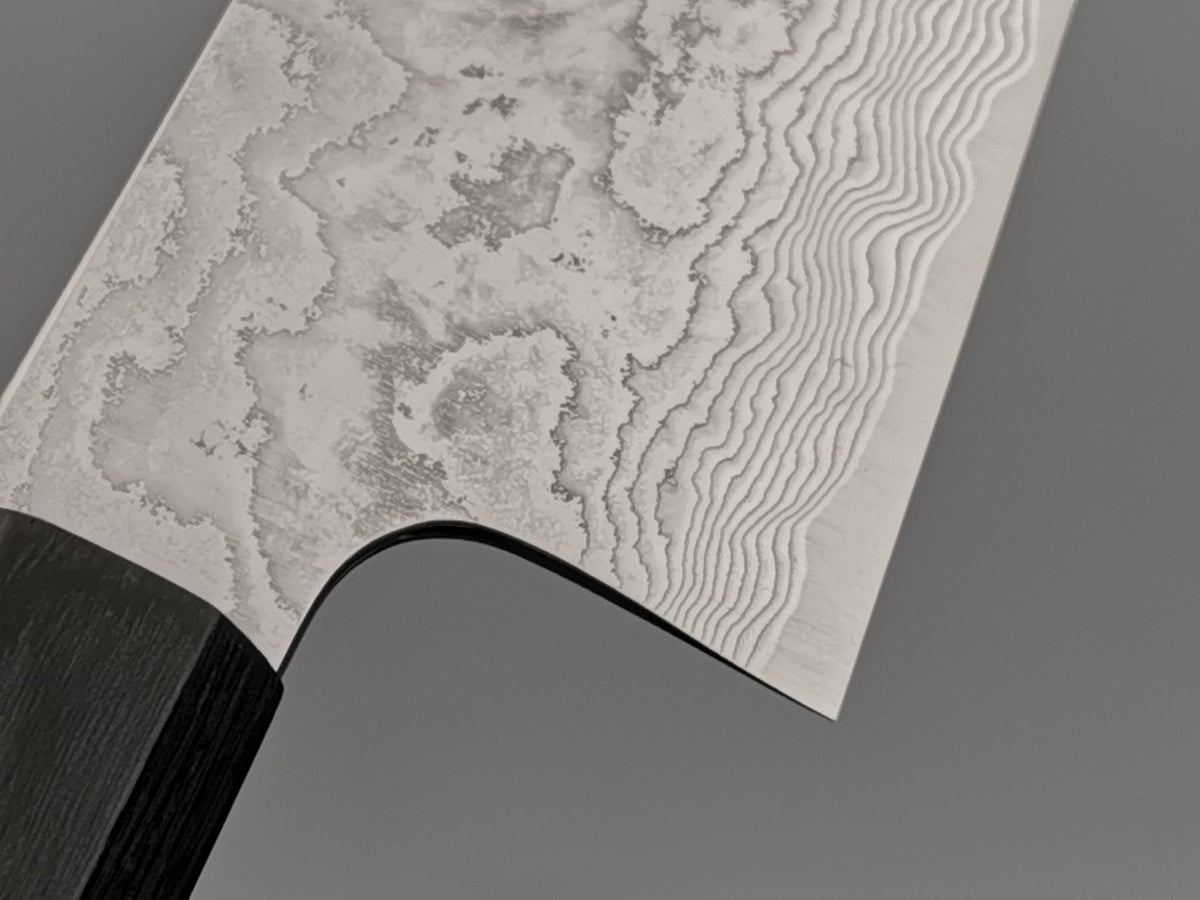
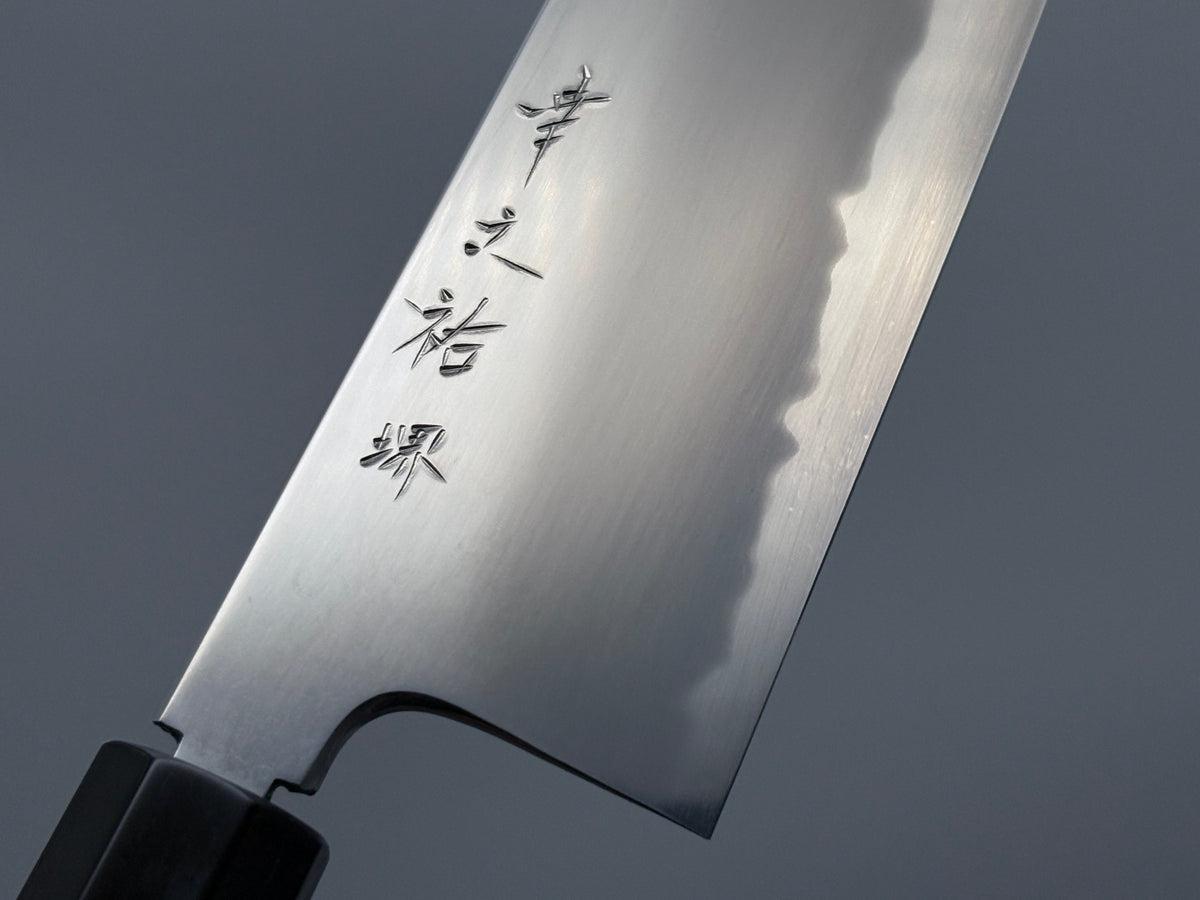
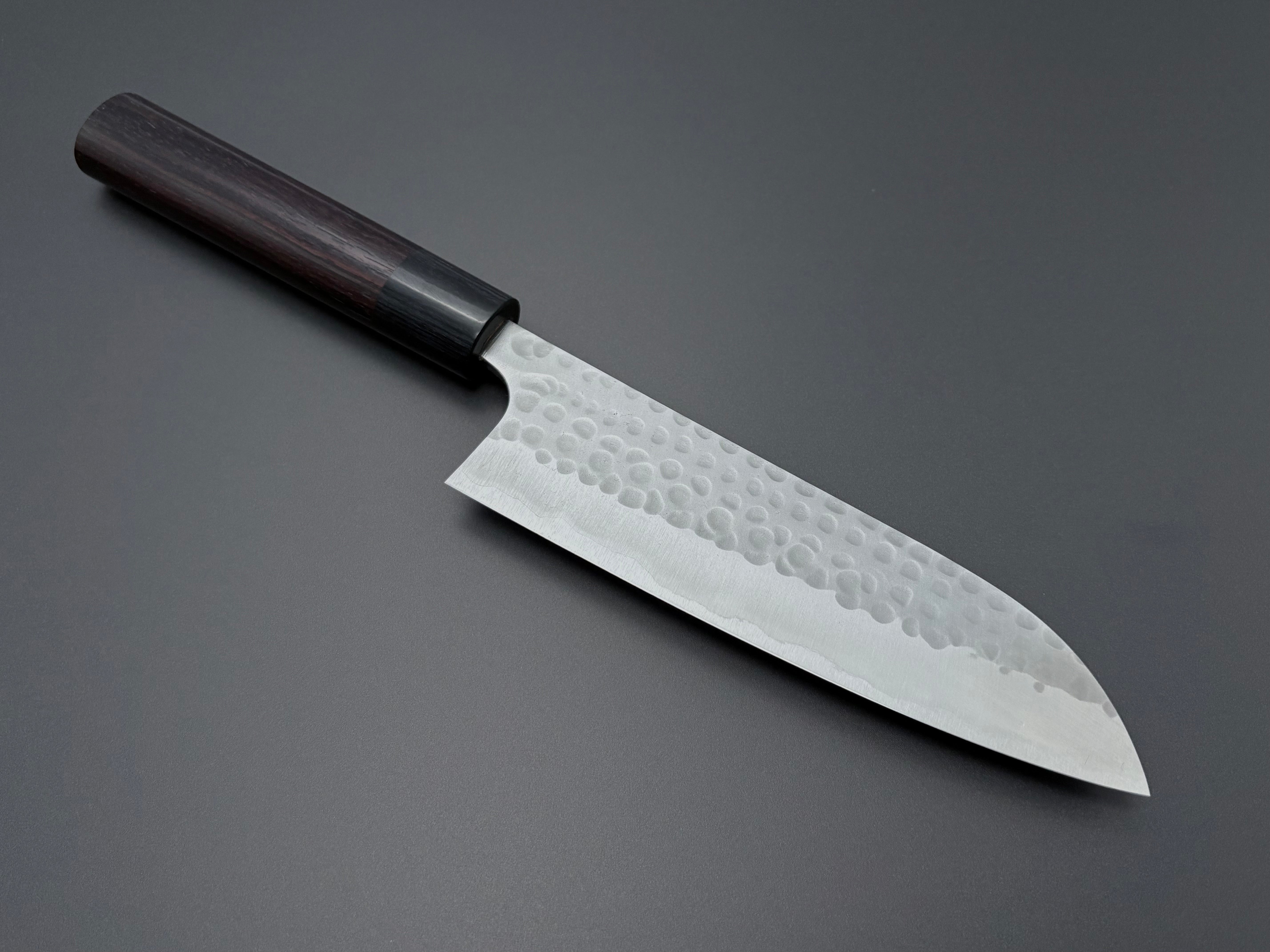
Few makers show what carbon steel can do as clearly as Anryu Knives. The forge is in Echizen, Fukui Prefecture, a region with centuries of blade-making behind it. The workshop is over 80 years old, built its name under fourth-generation master blacksmith Katsushige Anryu, and in 2022 passed to his nephew Takumi Ikeda, who carries on working by hand with steels including Blue #2. The Anryu Aogami Tsuchime range shows what careful heat treatment and traditional forging produce. The hammered finish is also functional: it reduces surface contact between blade and food, so slices release more cleanly during cutting.
Caring for carbon steel knives
Carbon steel needs a bit more attention than stainless, though not much. Dry the blade after washing, apply a thin coat of food-safe oil if it will sit unused for a while, and keep it out of the dishwasher. Wipe it down after cutting citrus, tomatoes, or anything else acidic. A whetstone is the right tool for sharpening reactive steel. Pull-through sharpeners are not.
- Dry immediately after washing
- Let the patina develop naturally
- Use a whetstone for sharpening
- Store with a blade guard or in a knife rack
Find your carbon steel knife
Browse our full range of carbon steel Japanese knives to find the right blade for your kitchen.