
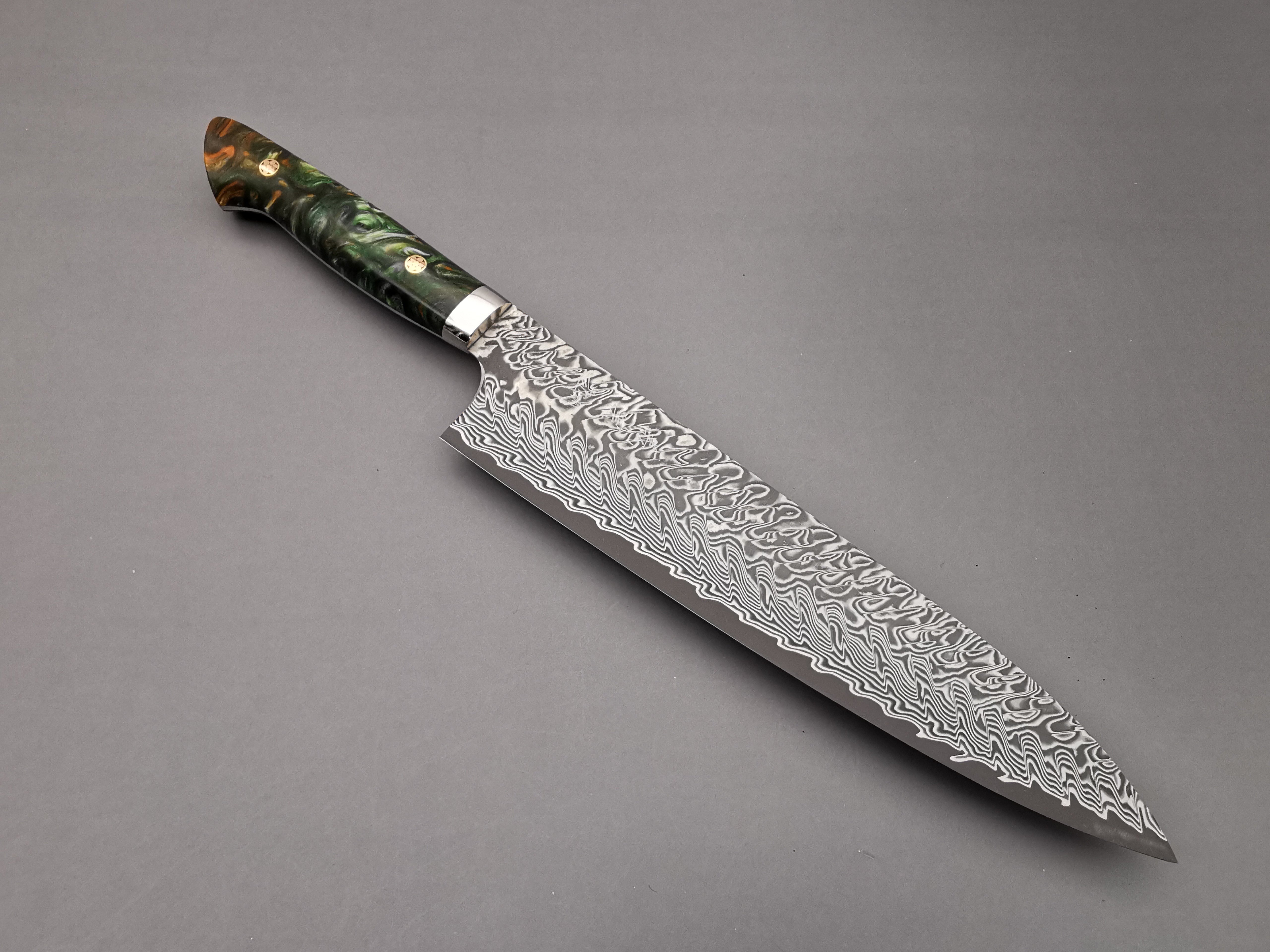
Why Japanese steel has a different character
If you've spent any time researching kitchen knives, you'll have noticed Japanese steel comes up constantly as the benchmark for edge retention and cutting performance. That reputation isn't marketing shorthand. It reflects real differences in metallurgy, heat treatment traditions, and the demands placed on professional blades in Japanese kitchen culture. Understanding those differences helps you make a more informed choice when buying a knife.

Carbon steel vs stainless: the two main families
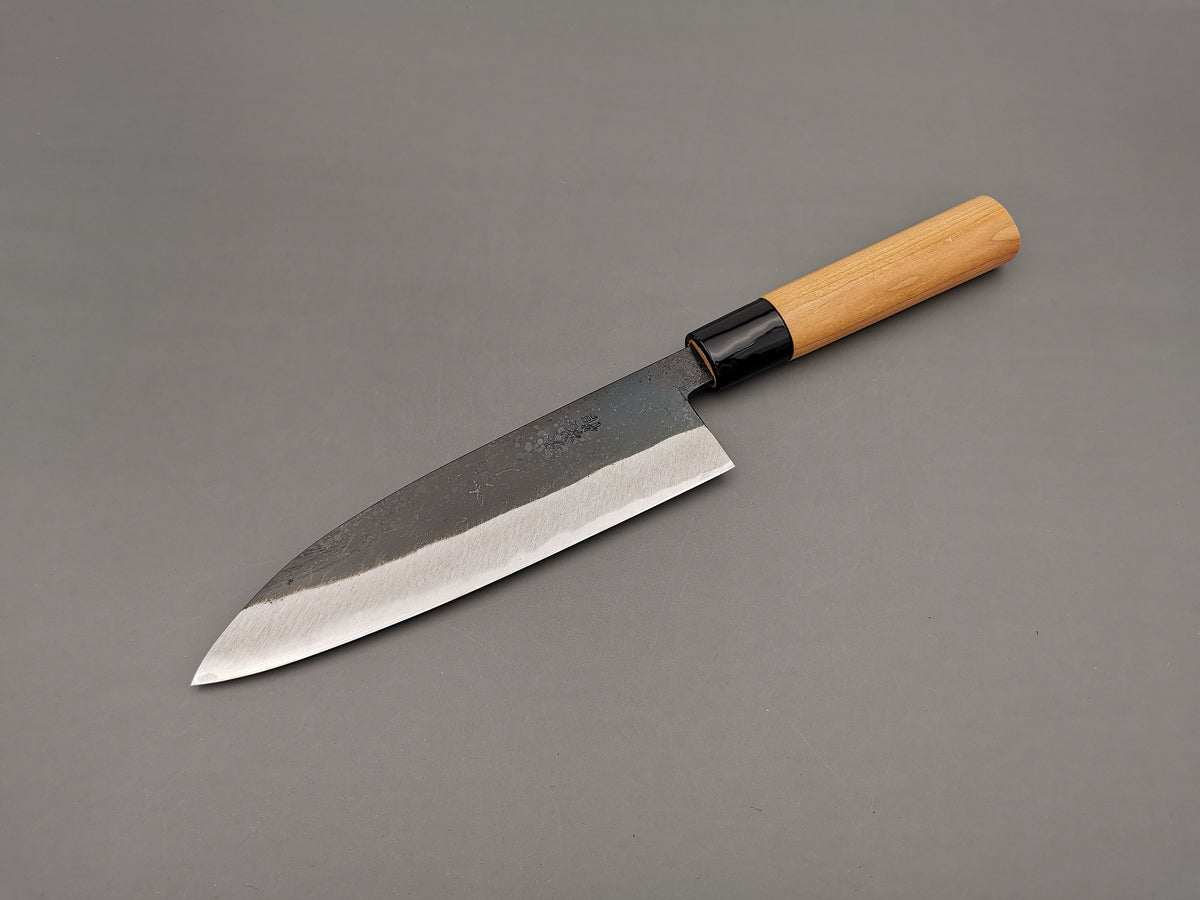
Japanese steel divides broadly into carbon and stainless categories, with a few semi-stainless alloys sitting between them. Carbon steels like Shirogami (white steel) and Aogami (blue steel) can be hardened to very high Rockwell values, which means they hold a finer, more acute edge than most Western knives.
The trade-off is reactivity: carbon steel will patina and can rust if you neglect it. Stainless options like Ginsan Silver 3 and VG10 give up a small amount of edge retention for much greater corrosion resistance, making them practical for everyday home use without the careful drying and oiling that carbon steel requires.
You can browse knives by steel type across our full range. For high-carbon options, our collection of Aogami blue steel Japanese knives and knives made with Aogami Super Blue steel covers some of the most sought-after alloys available. If stainless appeals more, our Ginsan Silver 3 steel knives offer a good balance of sharpness and low maintenance.
Hardness and what it means in practice
Most Japanese knives sit between 60 and 67 HRC, noticeably harder than the 56 to 58 HRC typical of European blades. Higher hardness allows a thinner grind and a more refined bevel angle, which translates directly to cleaner cuts through fish, vegetables and boneless meat. The downside is brittleness: lateral force or contact with a hard surface can chip the edge. This is why technique matters as much as the steel itself. A Japanese knife used with proper board contact and clean pull cuts will outlast any habit that puts sideways stress on the blade, regardless of the alloy.
Powder metallurgy and modern alloys
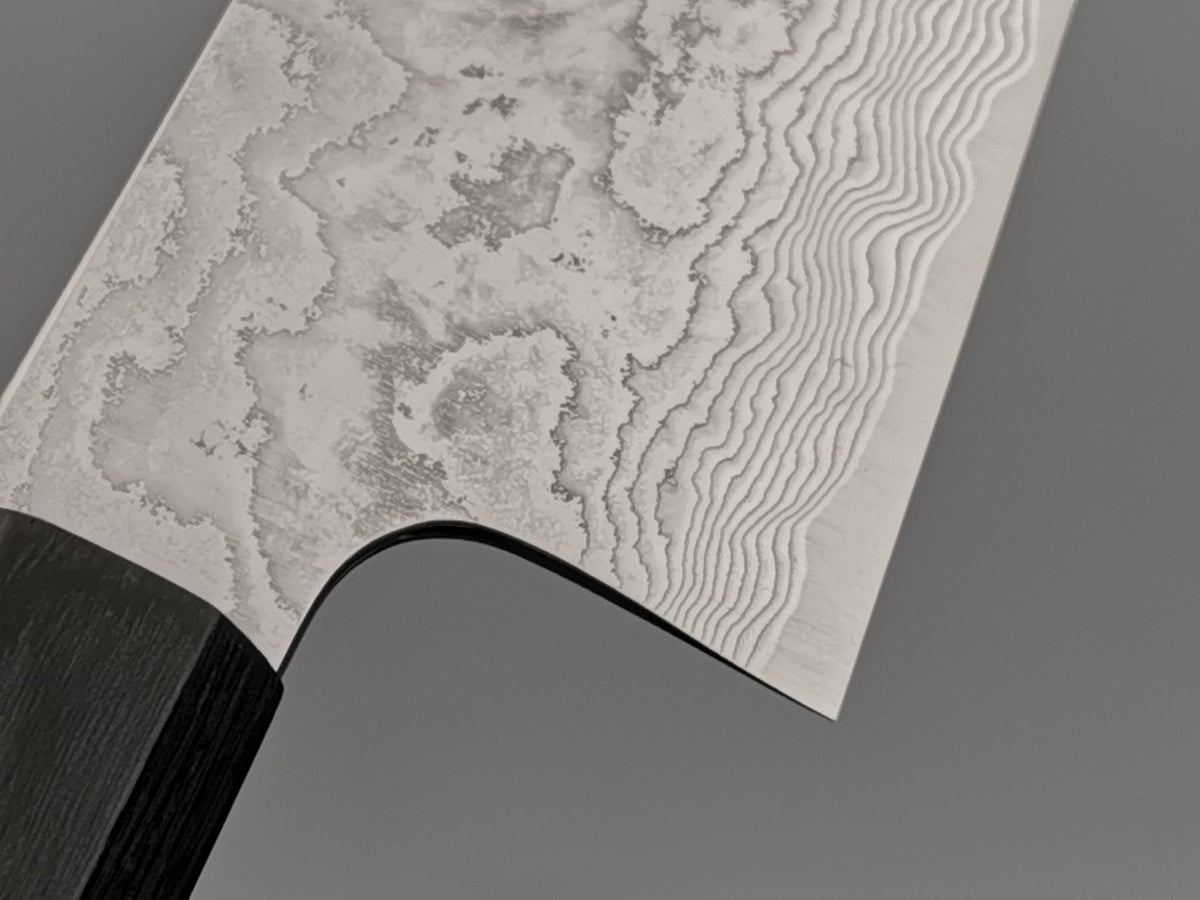
Alongside traditional Japanese steel, powder metallurgy alloys like SG2 and HAP40 have become increasingly common. These steels achieve extreme hardness with improved toughness by producing a finer, more uniform carbide structure throughout the blade. The result is a knife that holds its edge longer under demanding conditions while staying less prone to micro-chipping than some older high-carbon steels at similar hardness levels. Knives built around HAP40 core steel represent the top of what production knives can achieve in edge retention.
Find the right Japanese steel knife for your kitchen
Whether you're drawn to the character of reactive carbon steel or prefer the convenience of a stainless alloy, the best starting point is to browse by steel type alongside your budget. Our full collection of Japanese knives and accessories lets you filter by maker, steel and size to find what suits your cooking.