
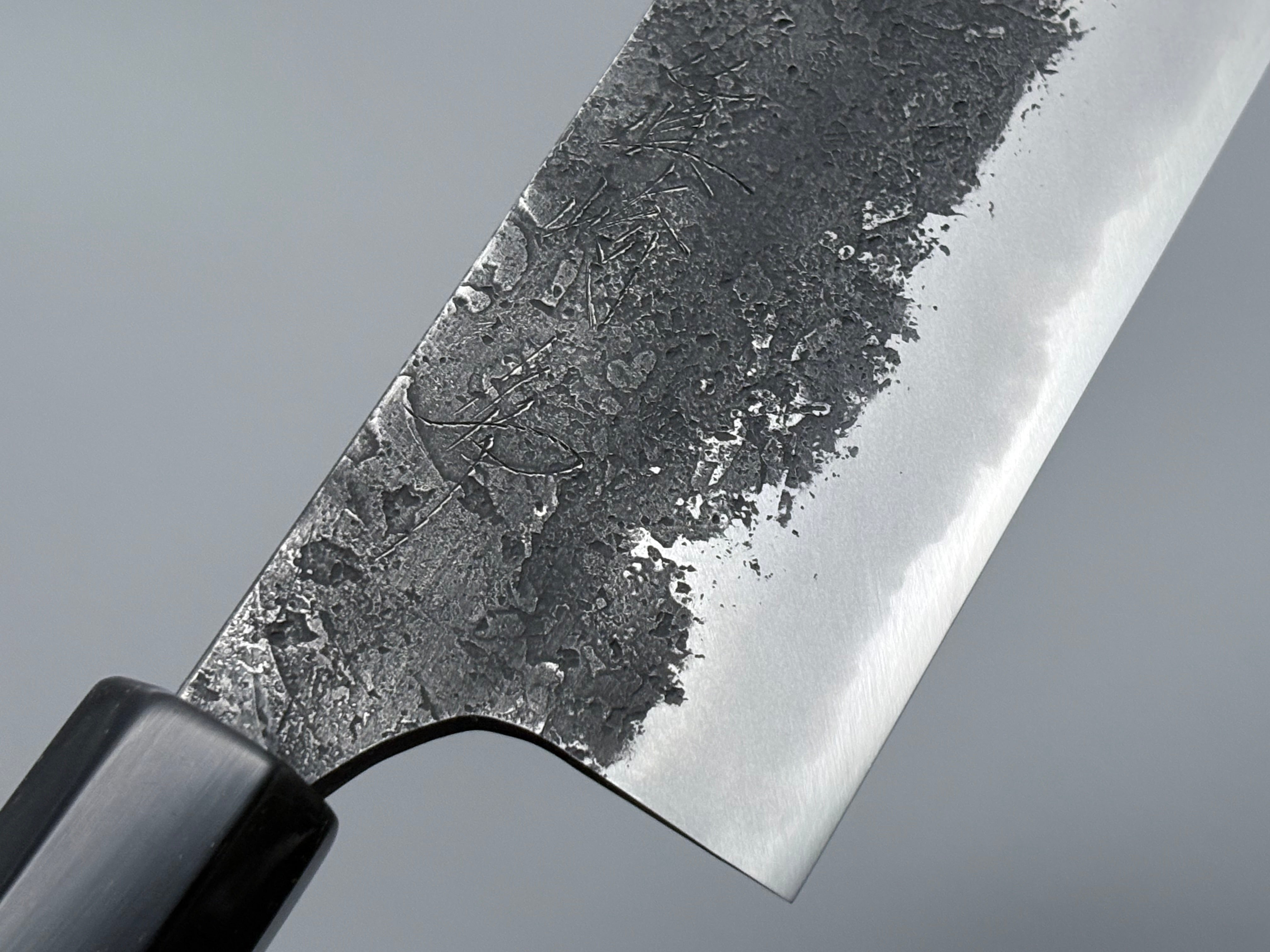
Who is Naoki Mazaki?
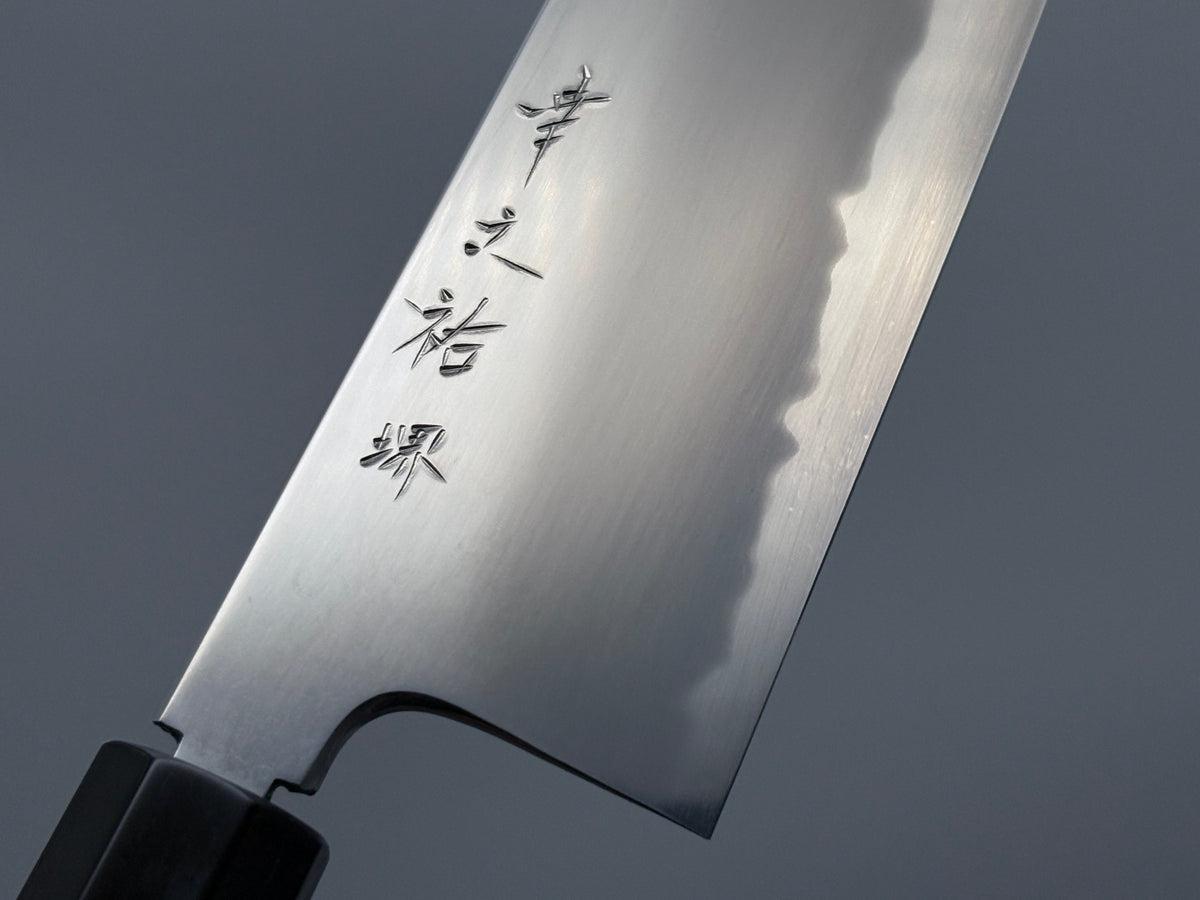
Naoki Mazaki is an independent blacksmith working out of Sanjo City, Niigata Prefecture, a part of Japan that has been producing serious blades for centuries. What sets him apart is that he does everything himself. Forging, heat treating, grinding, finishing, one person, one workshop, every knife. That level of personal involvement is rare even among Japanese independent makers, and it shows up in how consistent and characterful his work is. You can see his full range in our Naoki Mazaki collection.

What steels and finishes does Naoki Mazaki use?
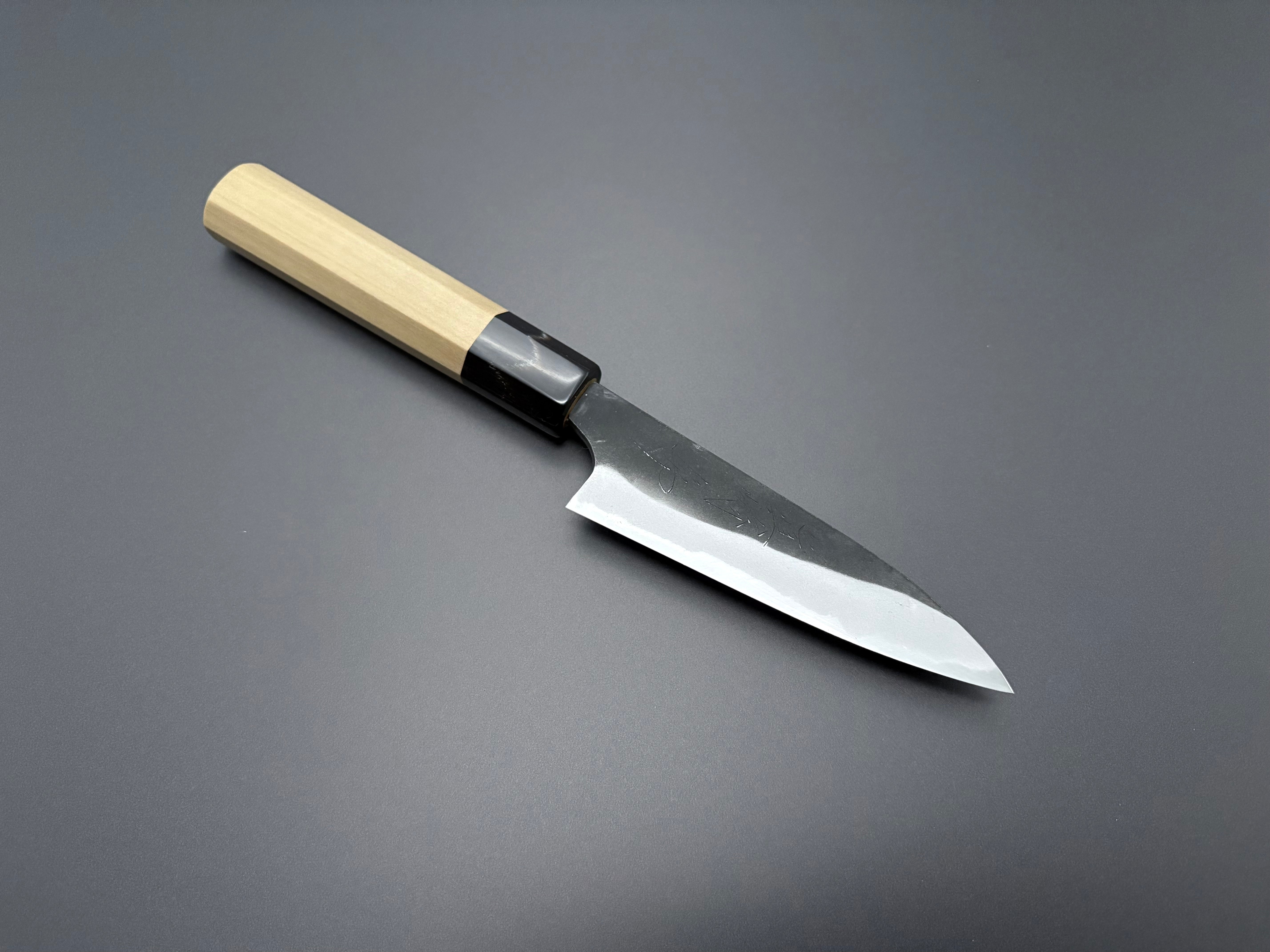
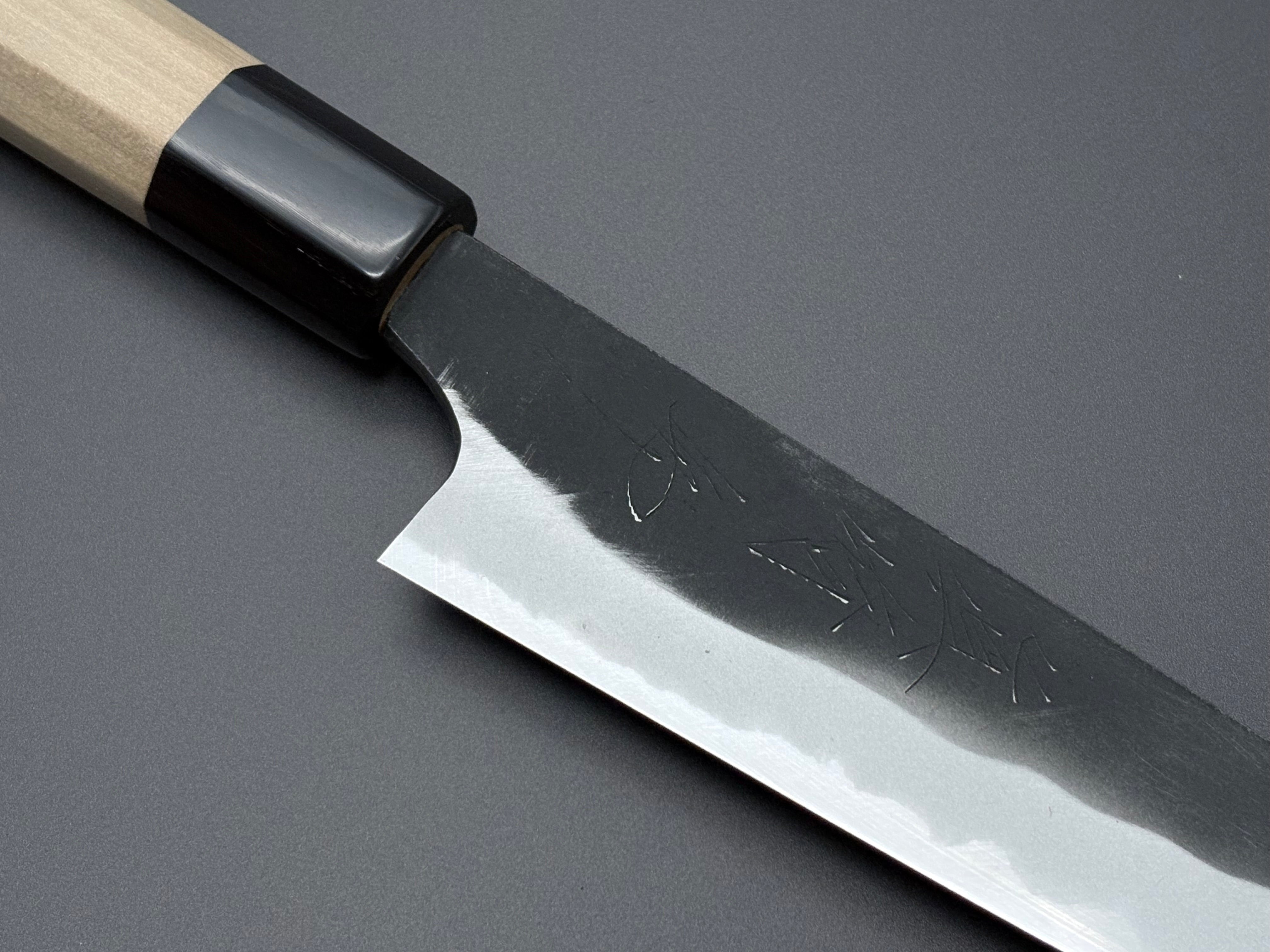
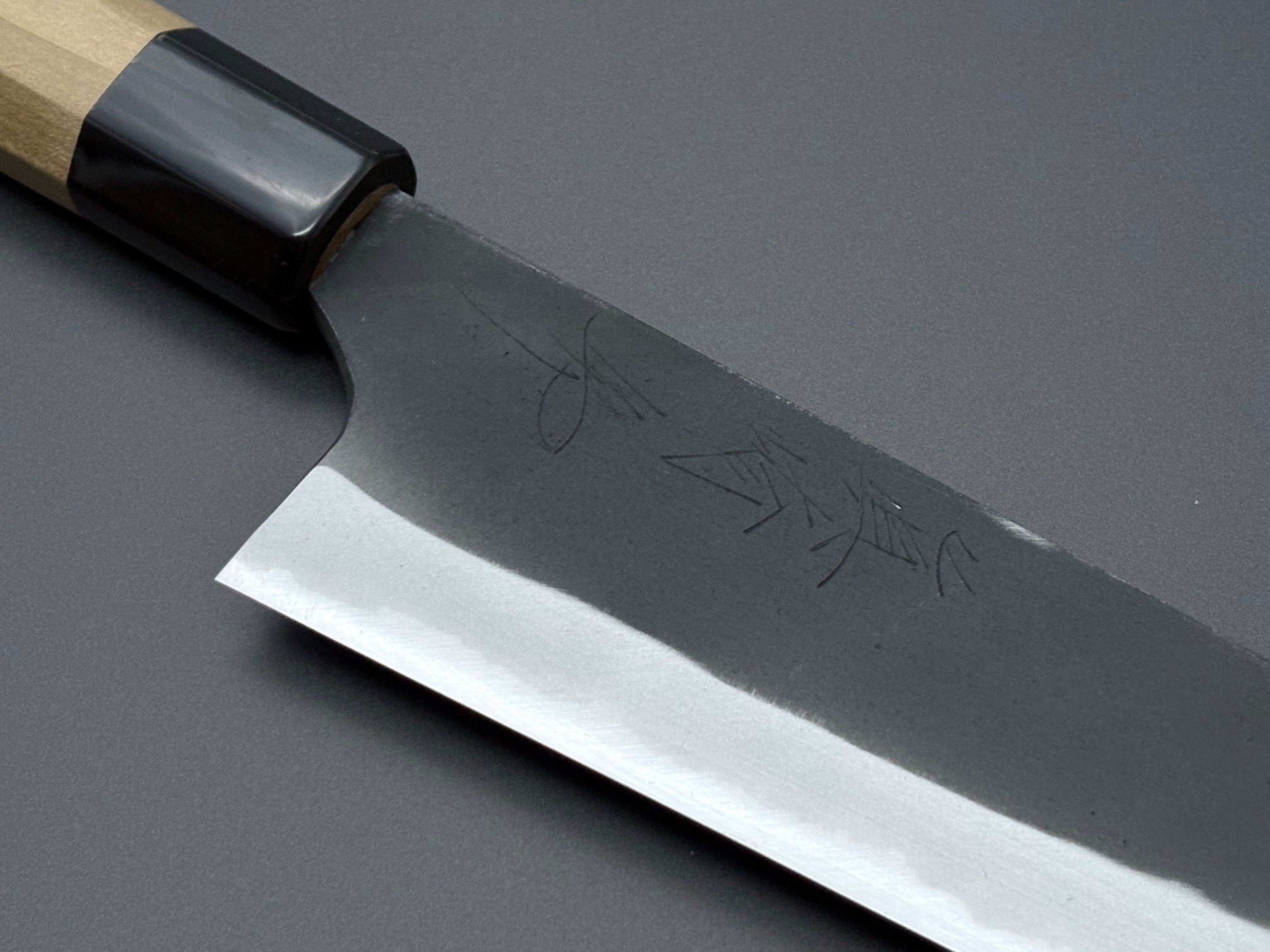
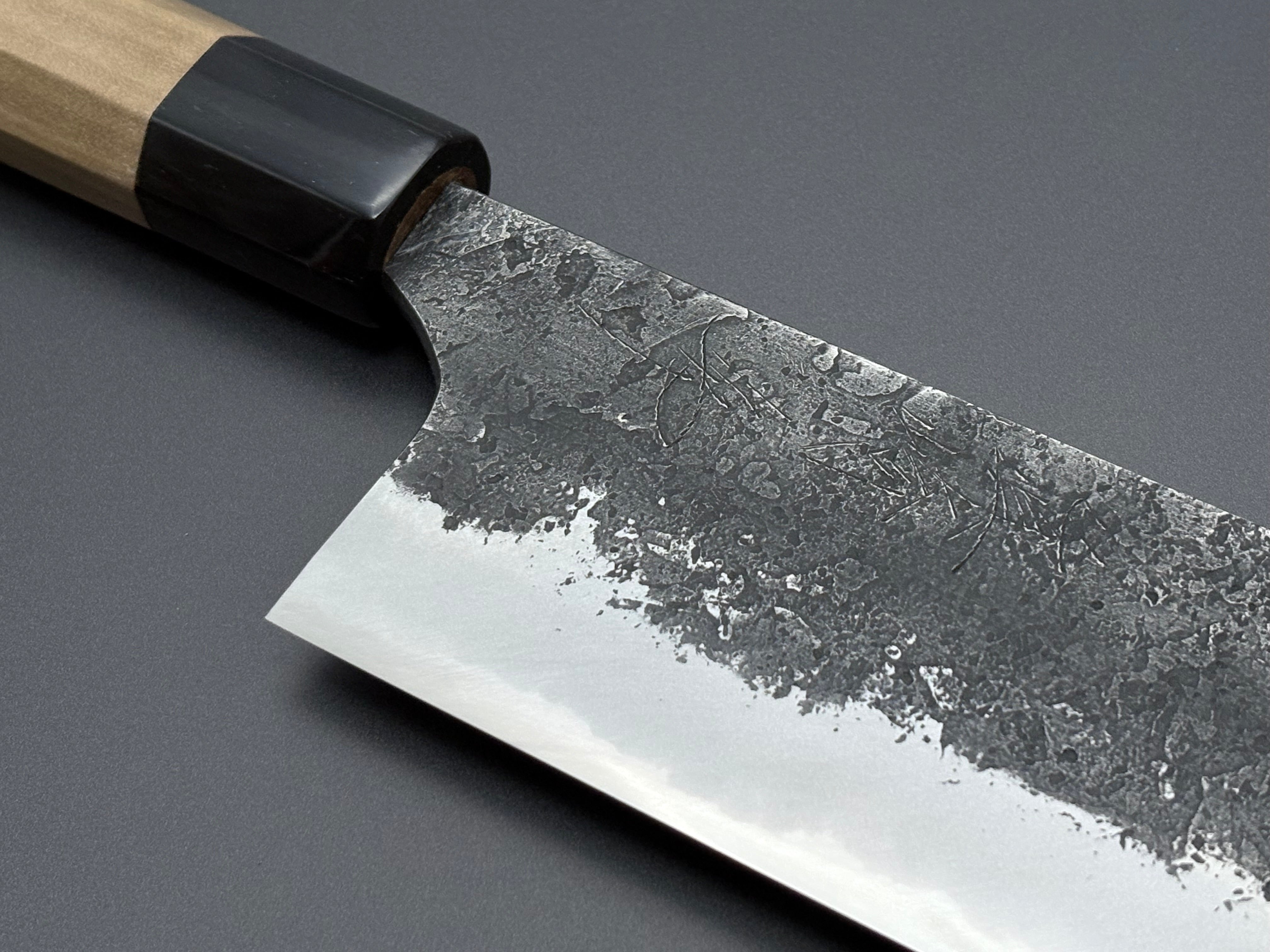
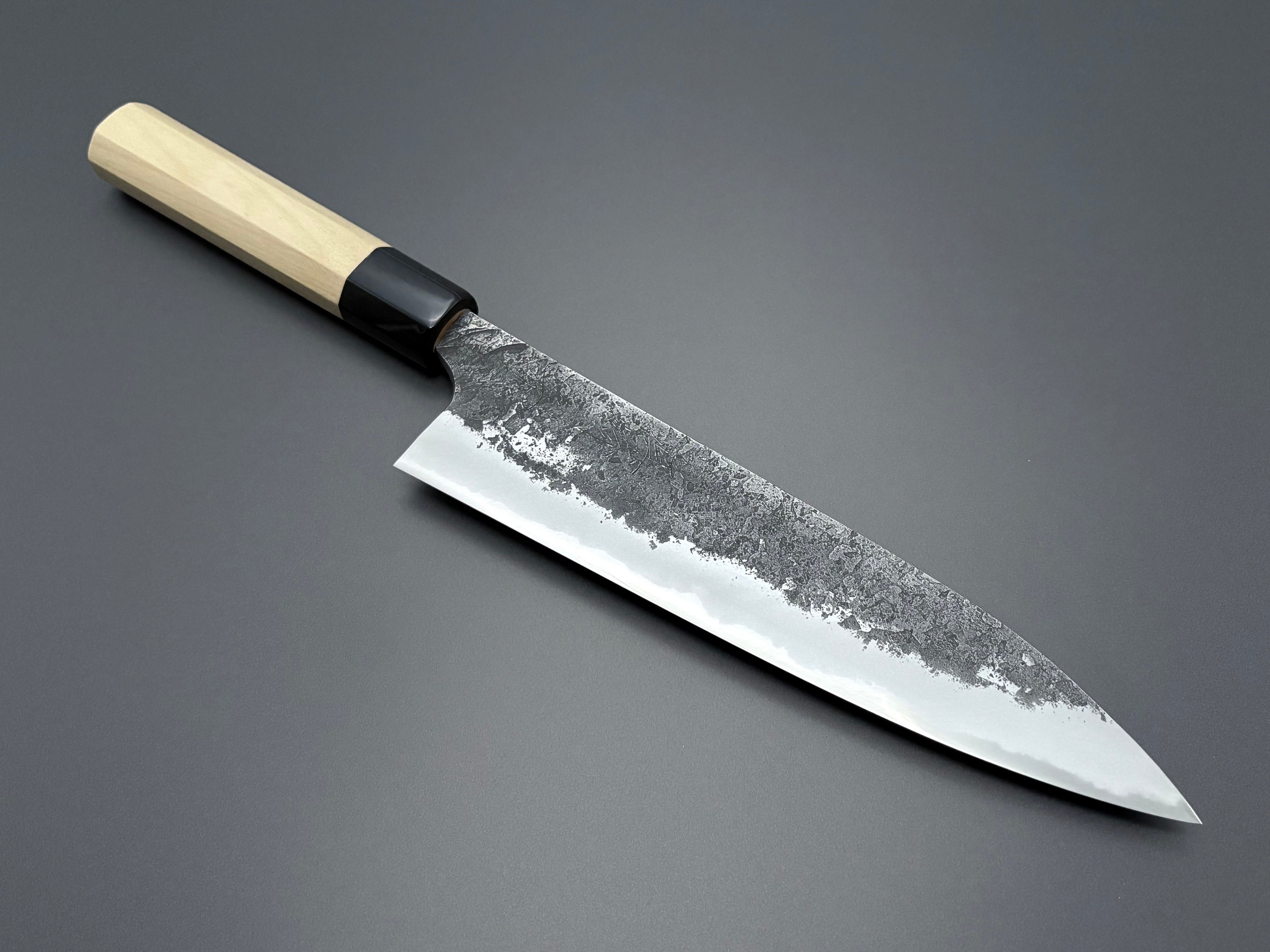
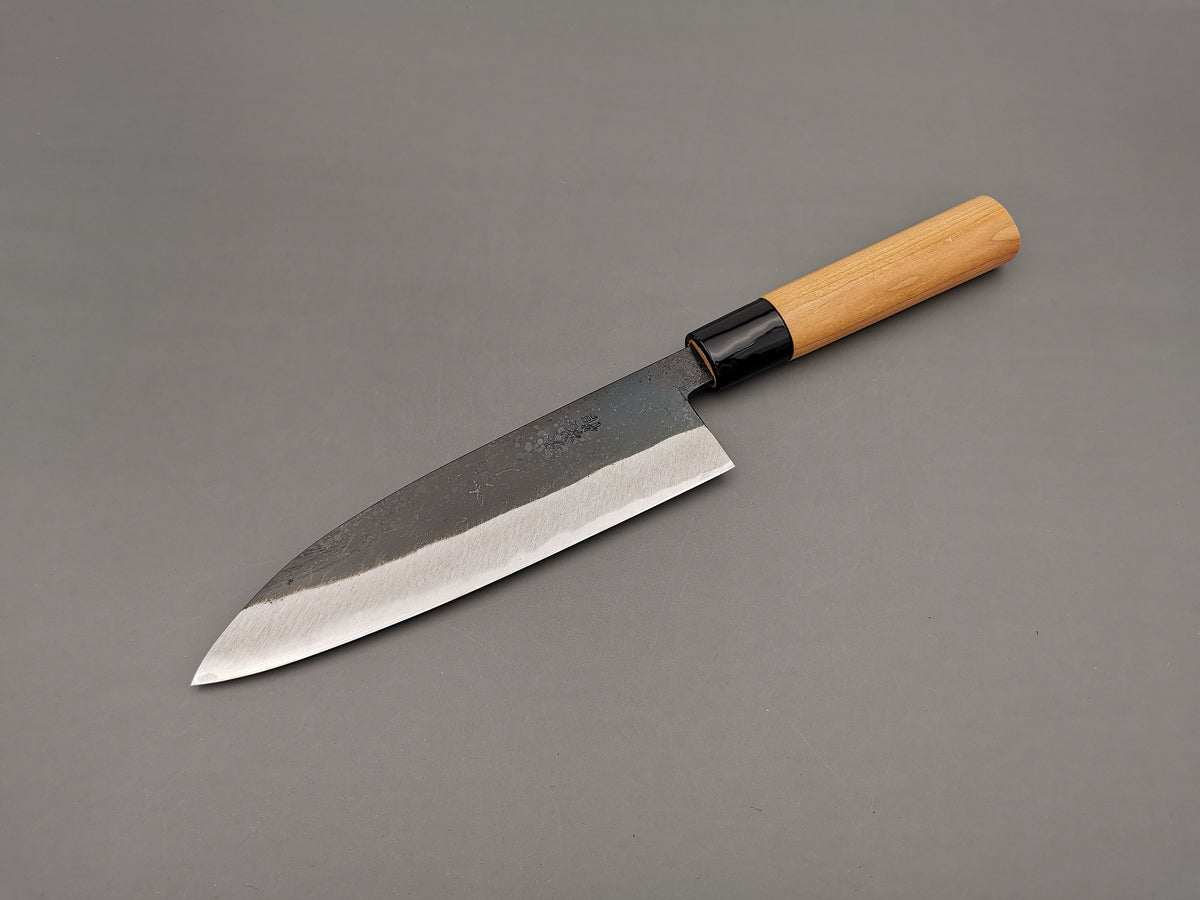
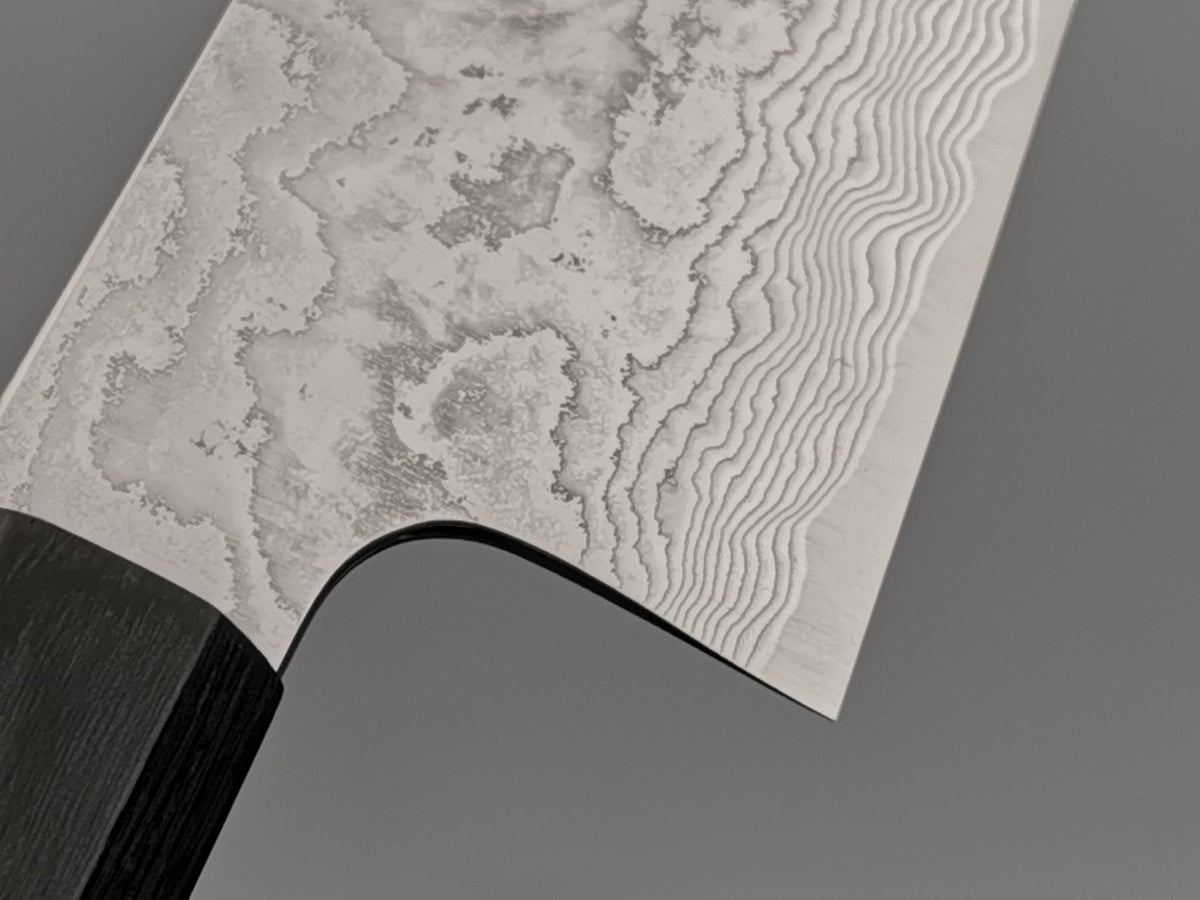
Mazaki works mainly with traditional Japanese carbon steels: White #2 (Shirogami) and Aogami (Blue steel). Both take an exceptionally sharp edge and hold it well with regular use. Most of his blades have a kurouchi finish, where the dark forge scale is left on the upper portion of the blade rather than polished away. This gives each knife a distinctly handmade, slightly rough character and also helps protect the steel from early surface rust. If that aesthetic appeals to you, our kurouchi finish Japanese knives collection is worth a look.
How Naoki Mazaki knives perform in the kitchen
The performance comes from geometry, not presentation. Mazaki grinds his blades thin behind the edge with confident distal tapers, so they feel light in hand and move through food with very little resistance. Many users also notice good food release, which comes from the subtle asymmetry and forged surface texture. These are not display pieces. They are built for daily use.
His range covers gyuto, nakiri, petty, santoku and sujihiki, so there is a practical option for most tasks. If you are considering a gyuto as your main chef's knife, his work in that category is among the most characterful hand-forged options available at the price.
Naoki Mazaki in the wider world of Japanese handmade knives
Mazaki is relatively young as a blacksmith, but he has built a real following among collectors and professional cooks who care more about authenticity than production volume. He works within Sanjo's blacksmithing traditions while developing his own approach, which puts him alongside some of the more respected independent makers in Japan. His handles tend to be plain wood without much ornamentation, the same thinking as the blades: function first, and whatever beauty comes out of that is enough. For a sense of how his carbon steel choices sit alongside other makers, our Aogami Blue #2 knives and kurouchi finished knives pages are useful reference points.
Shop Naoki Mazaki at Cutting Edge Knives
We stock a carefully chosen selection of his work, shipped from our base in Holmfirth, West Yorkshire. Visit our Naoki Mazaki collection to see what is currently in stock.