
What is patina on a carbon steel knife?
If you own a carbon steel Japanese knife, you have almost certainly noticed the blade changing colour over time. This surface discolouration is known as patina, and it is one of the most common points of confusion for new owners. Understanding what it is, and what it is not, will help you care for your knife properly.

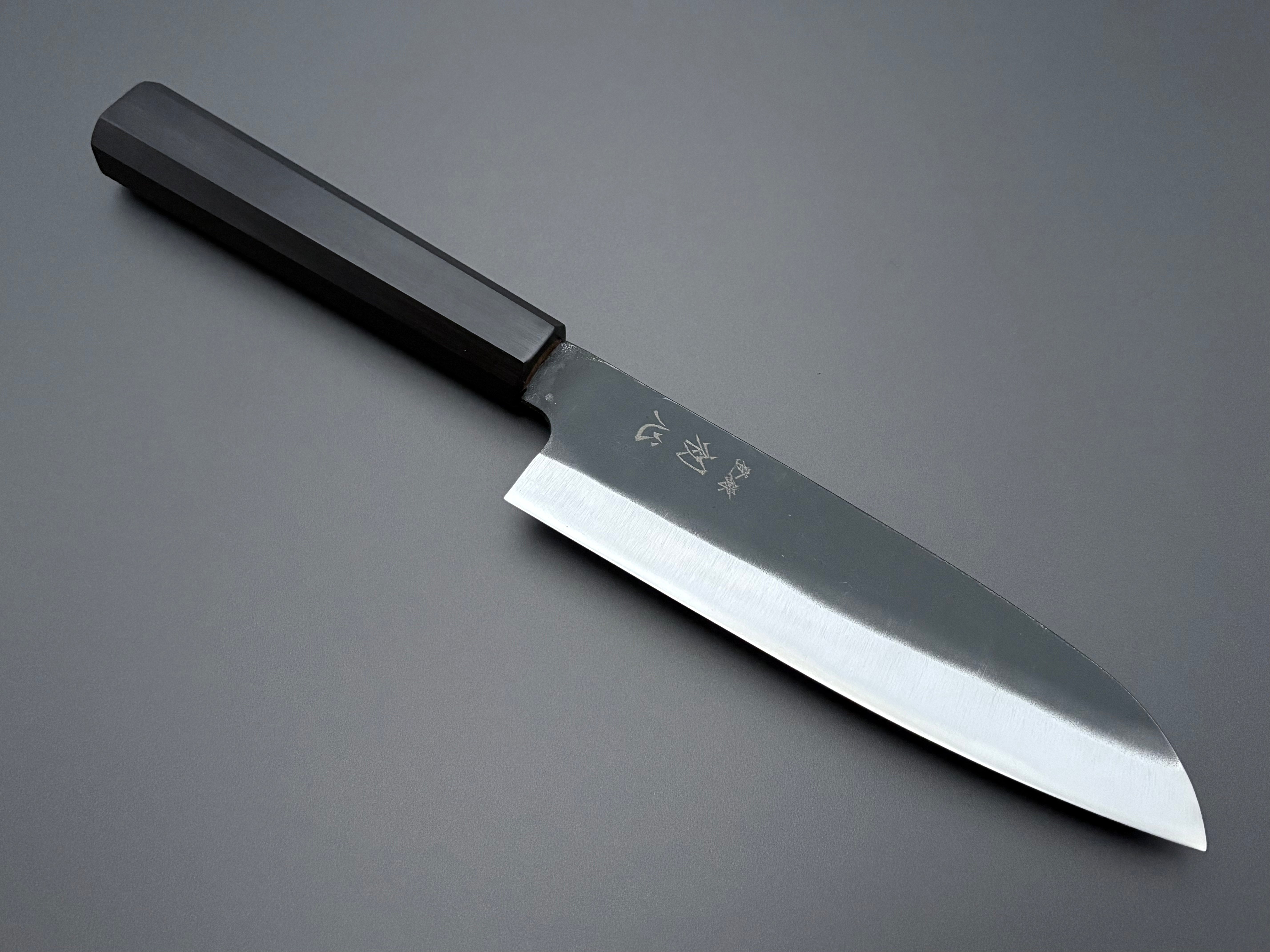
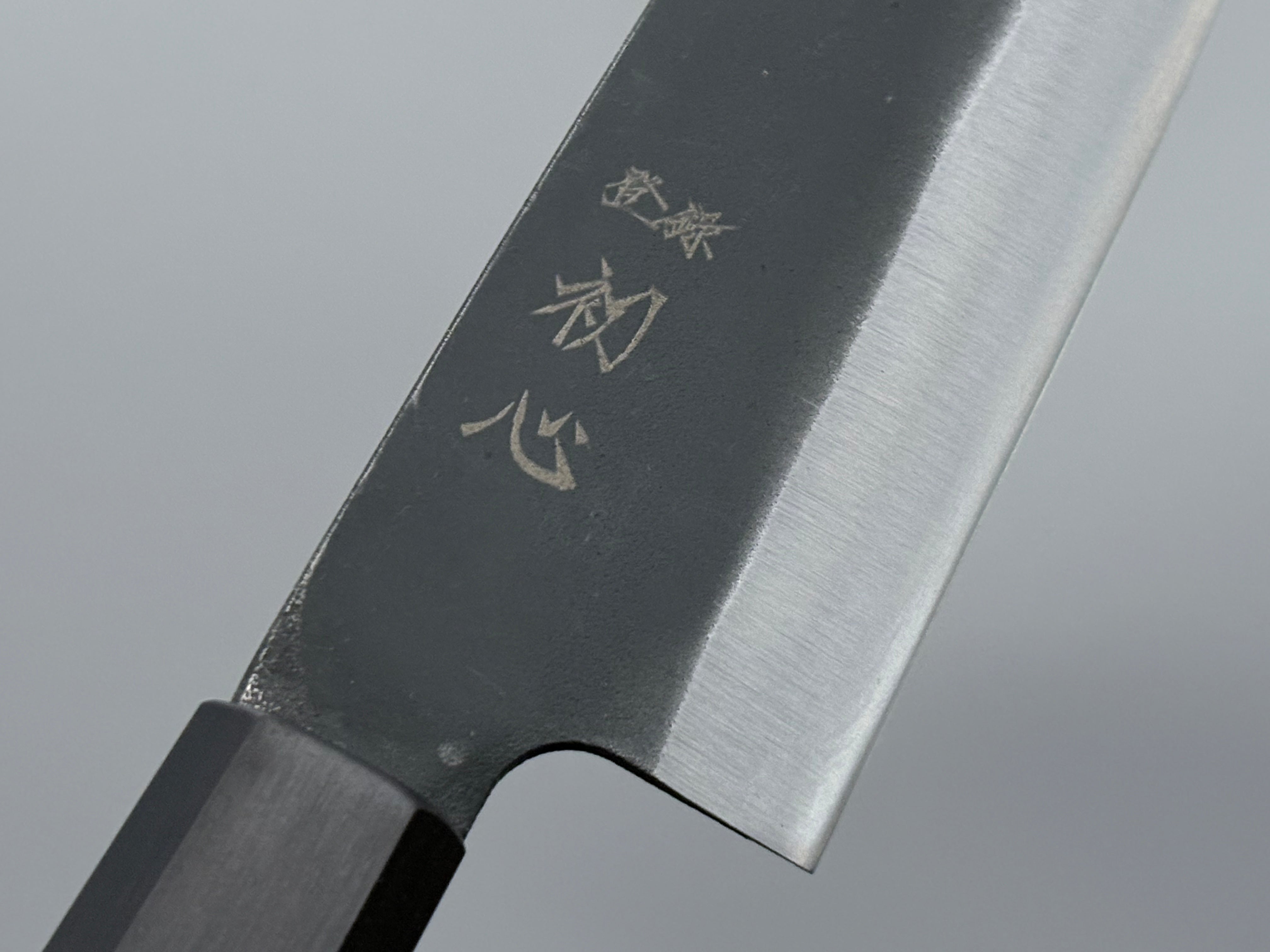
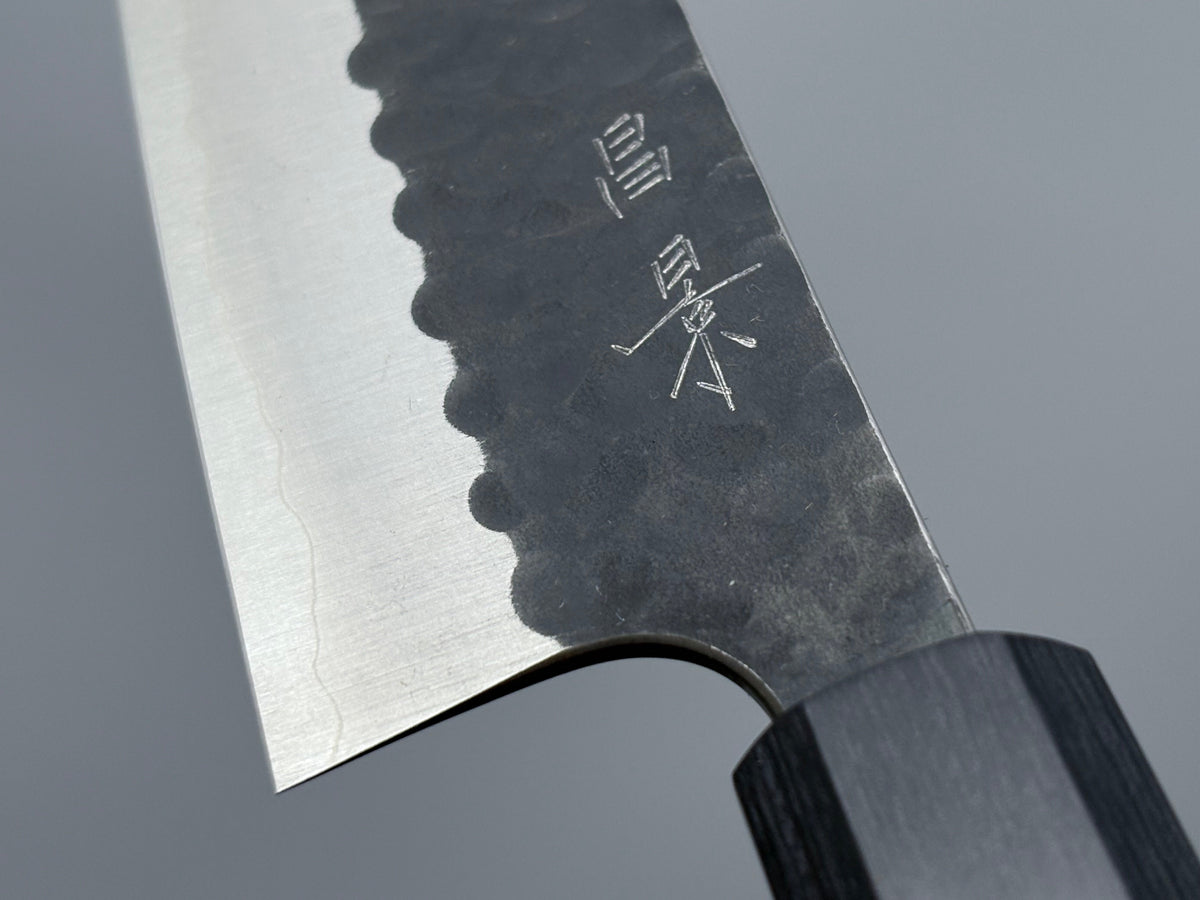
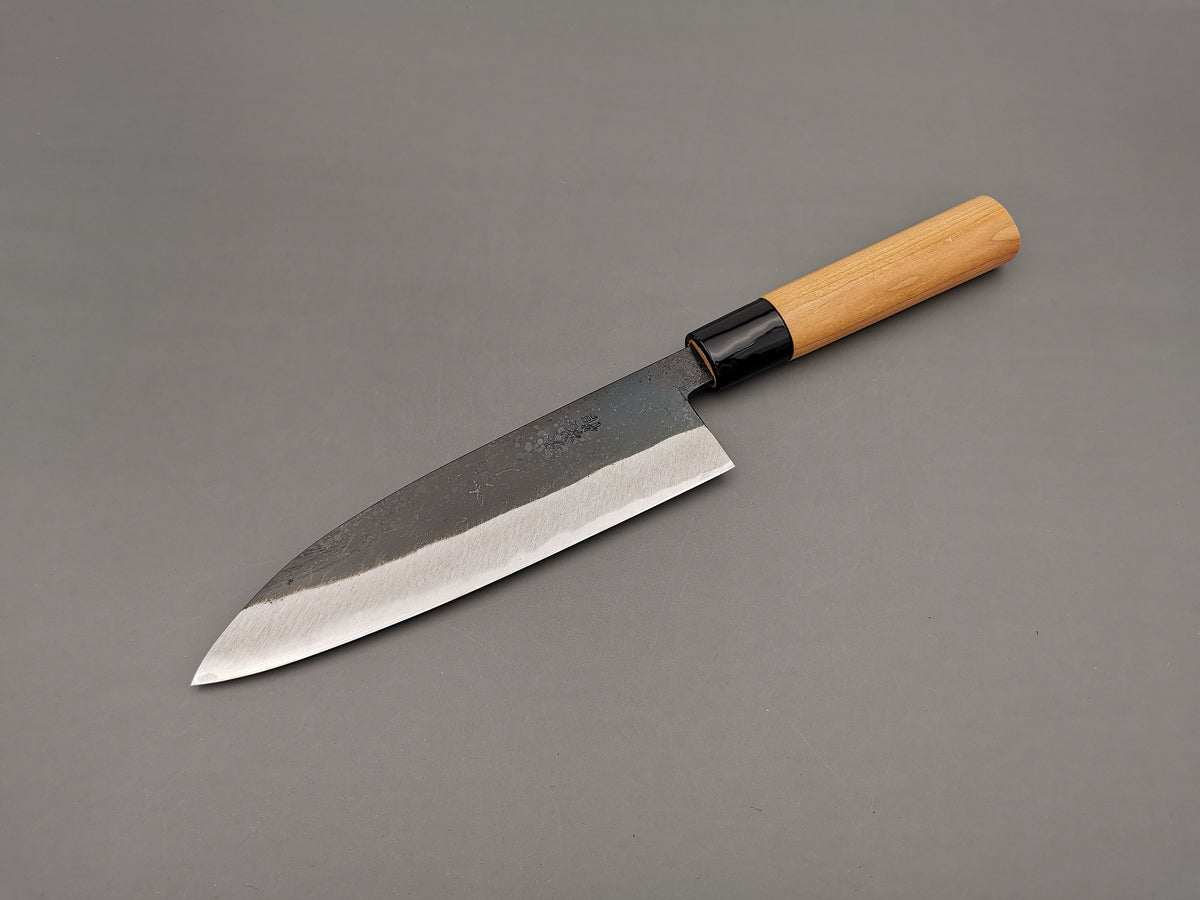
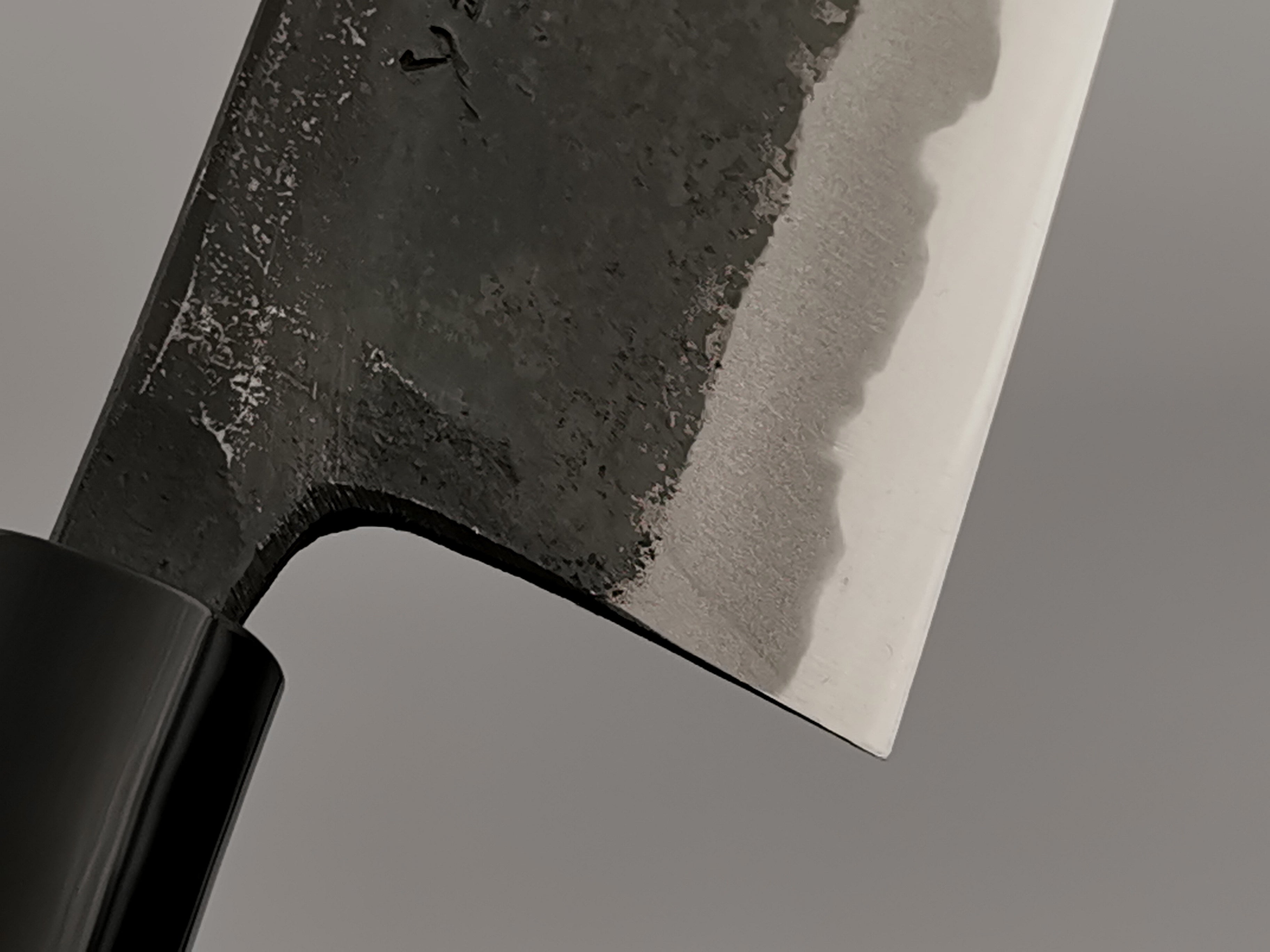
Patina is a thin, stable layer of iron oxide that forms on the surface of carbon steel when it reacts with food acids, moisture, and oxygen. Unlike active rust, which is reddish-brown, flaky, and damaging, a well-developed patina appears as a blue-grey or dark charcoal tone sitting evenly across the blade. It is the steel doing exactly what it is supposed to do, and most experienced knife users come to see it as a sign of a well-used blade.
Why patina is a good thing
A patina acts as a passive barrier. Once the surface has oxidised in a controlled way, it becomes less reactive, which means the blade is less likely to transfer a metallic taste to food and more resistant to further corrosion. Many experienced cooks actively encourage patina development by wiping the blade with a cut lemon or onion after use. Over time the colour deepens and the blade becomes noticeably more stable in everyday kitchen conditions.
Carbon steel knives, including those made from Aogami blue steel and Aogami super blue steel, are prized for their sharpness and edge retention. That performance comes from a higher carbon content, which is precisely what makes them reactive. Most serious cooks consider the trade-off more than worth it.
How to tell the difference between patina and active rust
Active rust feels rough to the touch, appears in orange or red patches, and tends to occur in spots rather than evenly across the blade. It usually forms when a knife is left wet or stored in a damp environment. Patina, by contrast, is smooth, even, and dark in tone. If you see orange spotting appear, deal with it quickly. A light scrub with a cork dipped in fine abrasive powder, or a few careful passes on a whetstone, will remove surface rust before it has the chance to progress into something more serious.
Signs to look out for:
- Smooth, dark grey or blue-grey colour across the blade: this is healthy patina
- Orange or reddish spotting, especially near the edge or spine: this is active rust that needs attention
- Pitting or rough texture under the discolouration: this suggests neglect over a longer period
How to care for a reactive carbon steel blade
The main rules are simple. Wash and dry your knife immediately after use. Never leave it resting in water or wrapped in a damp cloth. Apply a thin layer of camellia oil or food-safe mineral oil after drying, particularly if the knife will not be used for a few days. Good knife care accessories such as blade oil and protective sheaths make this routine much easier to keep up.
If you are new to carbon steel and want to explore the range, browse our full collection of reactive carbon steel Japanese knives, including options from makers such as Anryu and Hado. Each one will develop its own patina over time.