
Shimomura knives and the Sanjo metalworking tradition
Shimomura Industrial has been making blades in Sanjo, Niigata Prefecture, since 1874, which puts it among the older names in Japanese knife making. Sanjo has been a metalworking town for centuries, with skills passing through family workshops and small manufacturers across generations.

Shimomura started out making agricultural tools and switched to kitchen cutlery after World War II, a shift that turned out to define everything that followed. You can browse the full range of Shimomura knives at Cutting Edge Knives, where all three current models are stocked.
From farm tools to kitchen knives
The move from agricultural implements to kitchen knives was less of a leap than it sounds. Forging durable, well-balanced field tools and forging reliable kitchen blades draw on the same core skills. Shimomura's makers brought an understanding of metallurgy built over generations, and that shows in how they think about steel. Rather than staying with traditional carbon steels, the company moved to high-quality stainless alloys that suit modern kitchens and a wider range of cooks. Many Japanese blade makers had to rethink their output entirely in the post-war years; those who adapted carefully rather than chasing volume generally came through with their reputations intact. Shimomura is a good example of that.
The Un-Ryu VG10 Damascus range
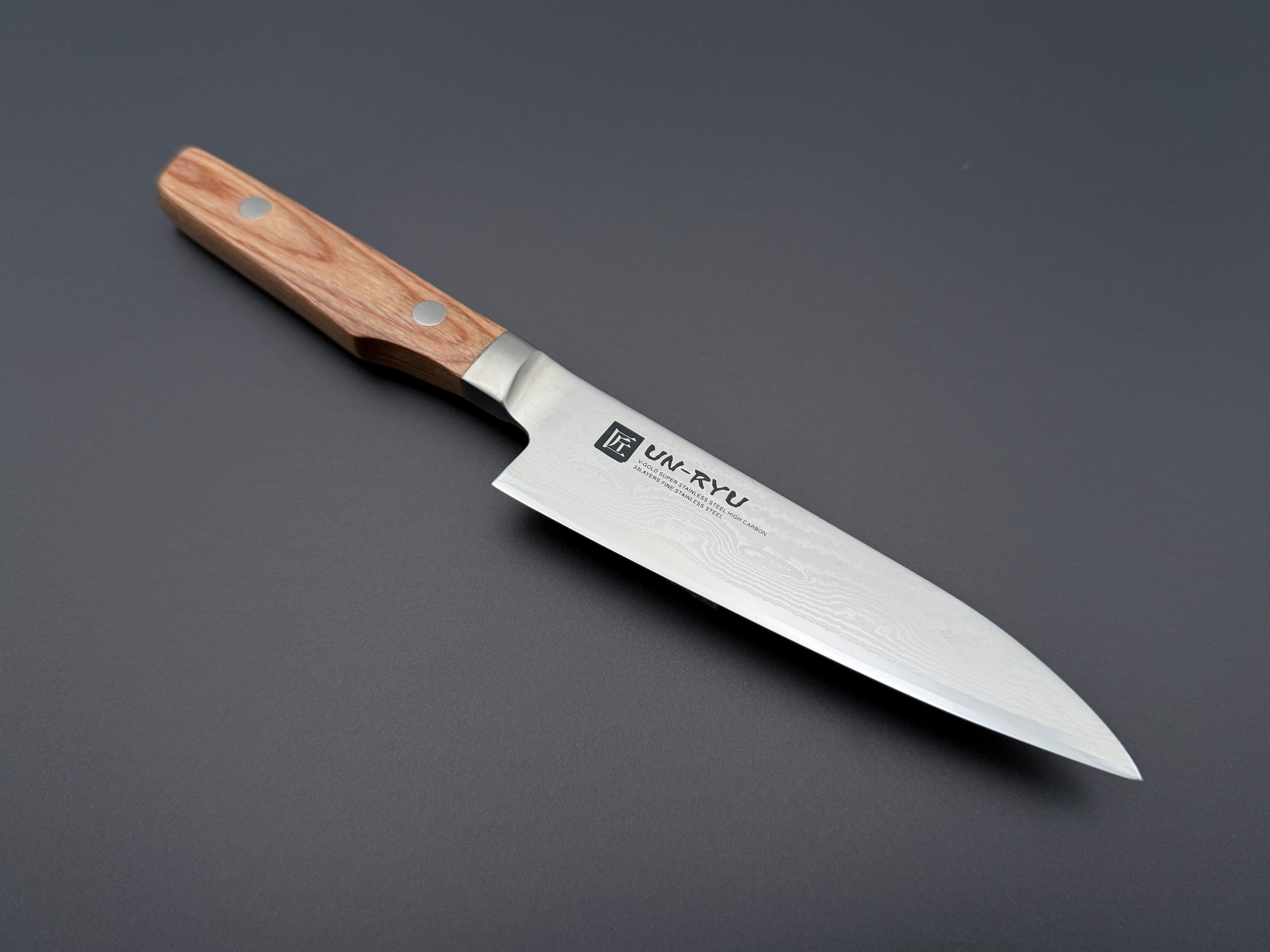
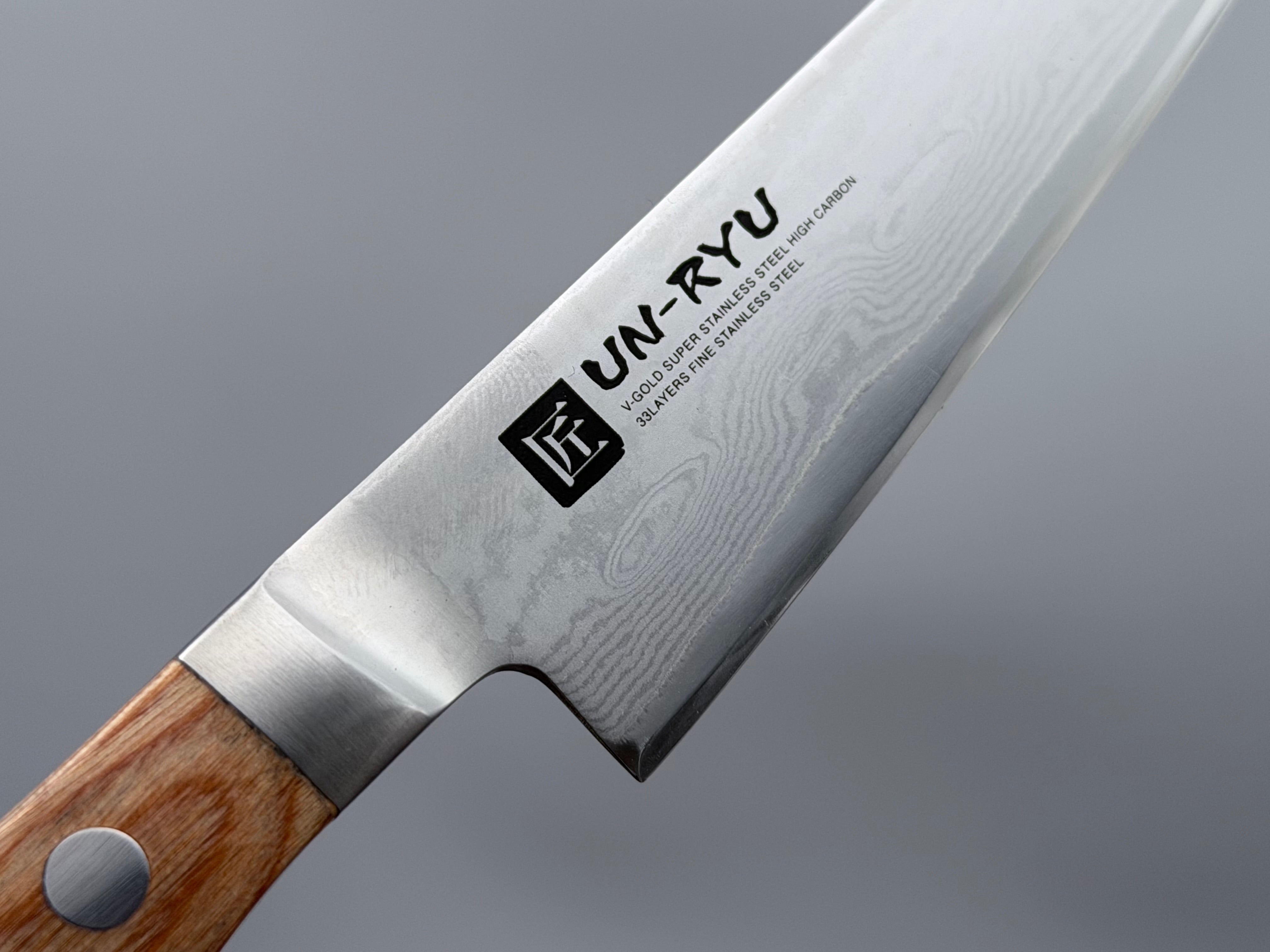
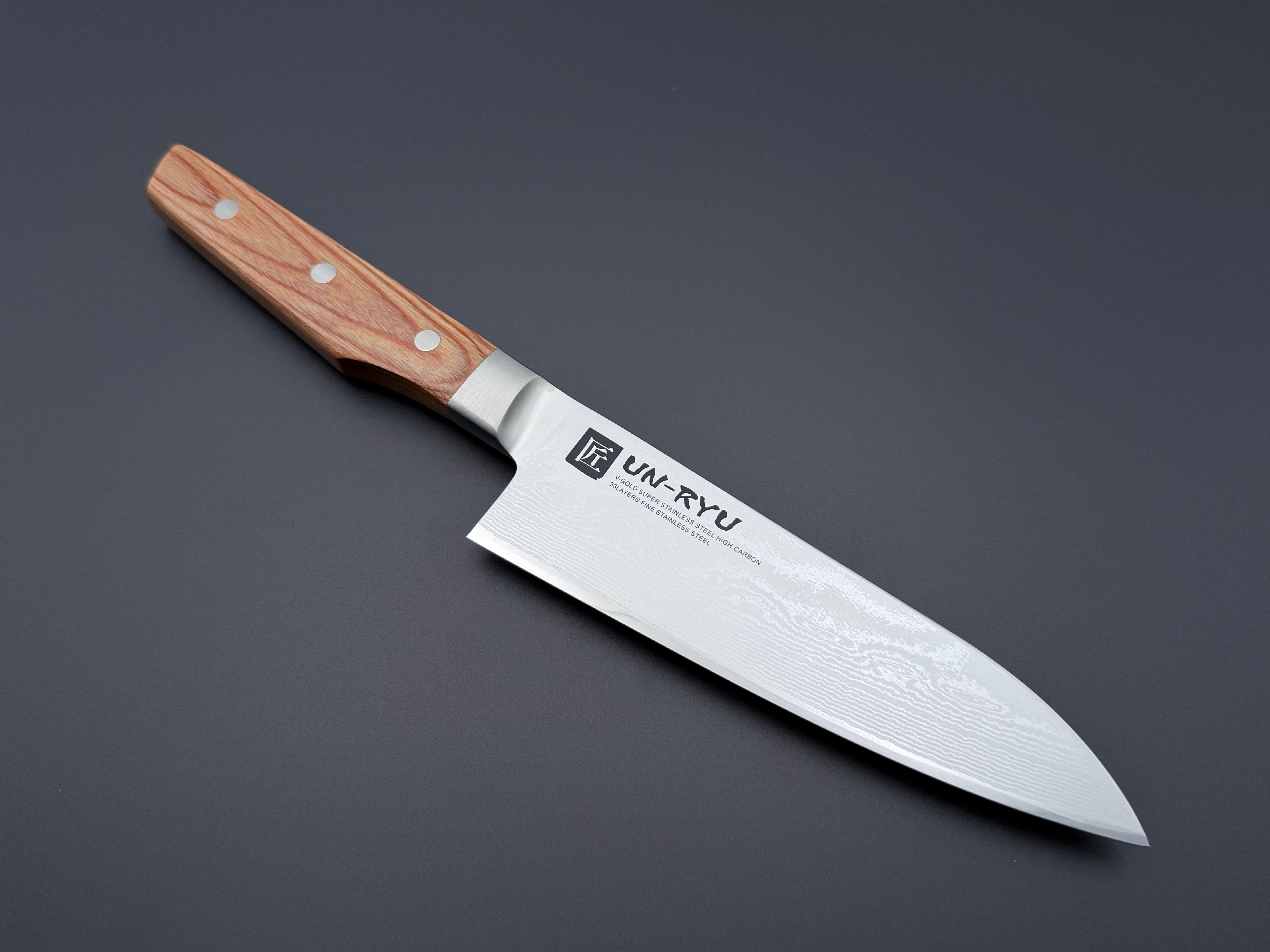
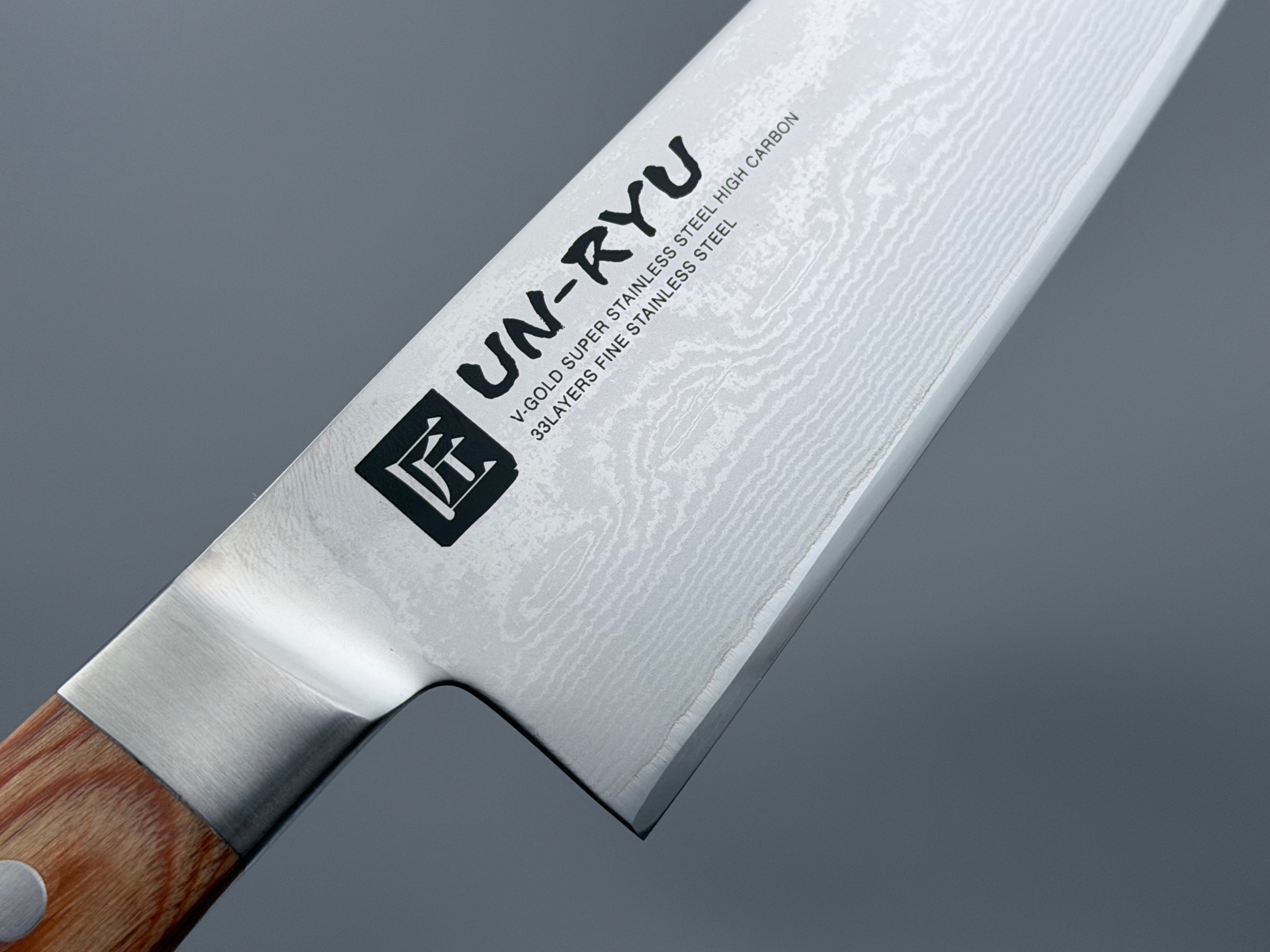
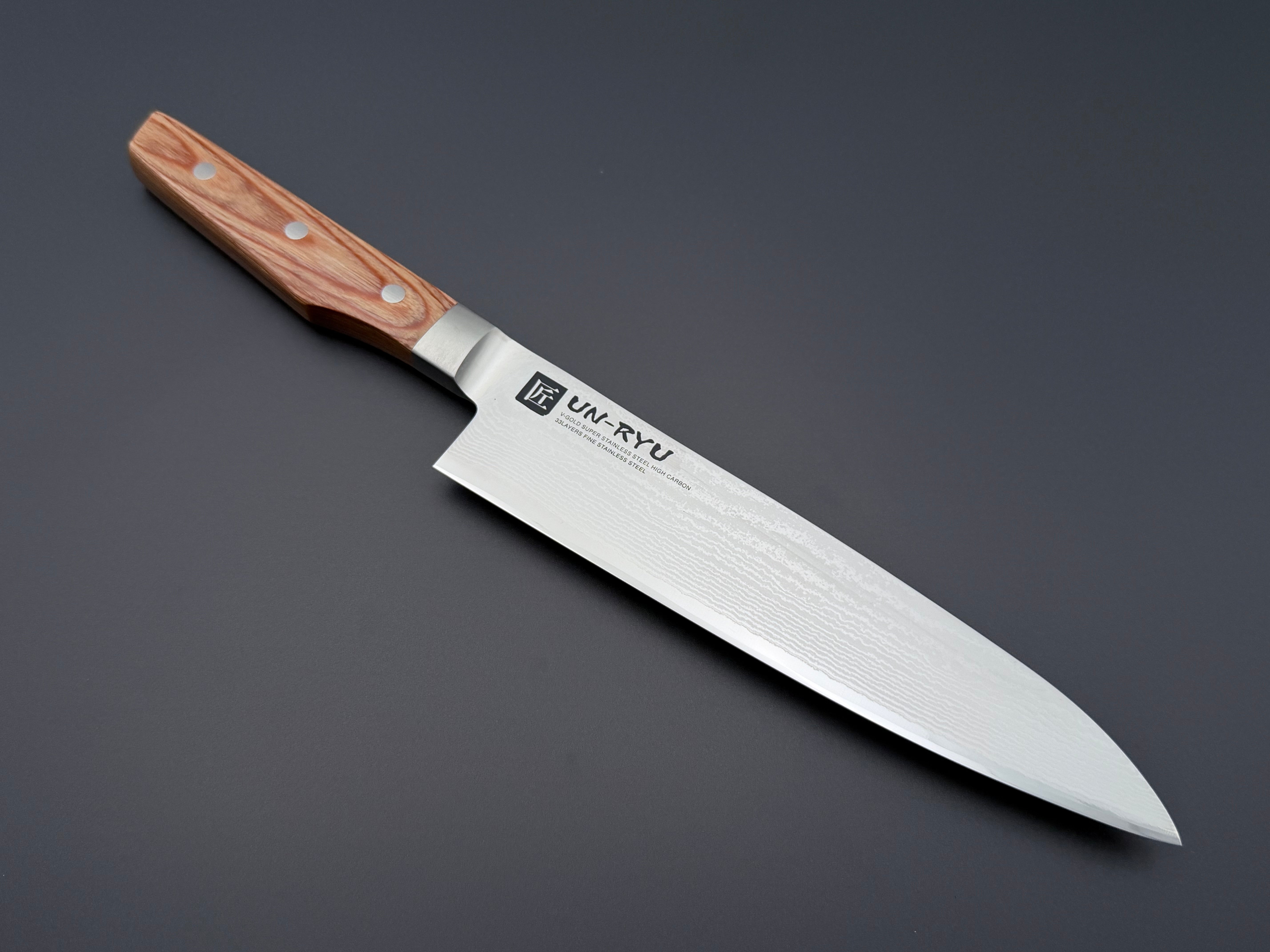
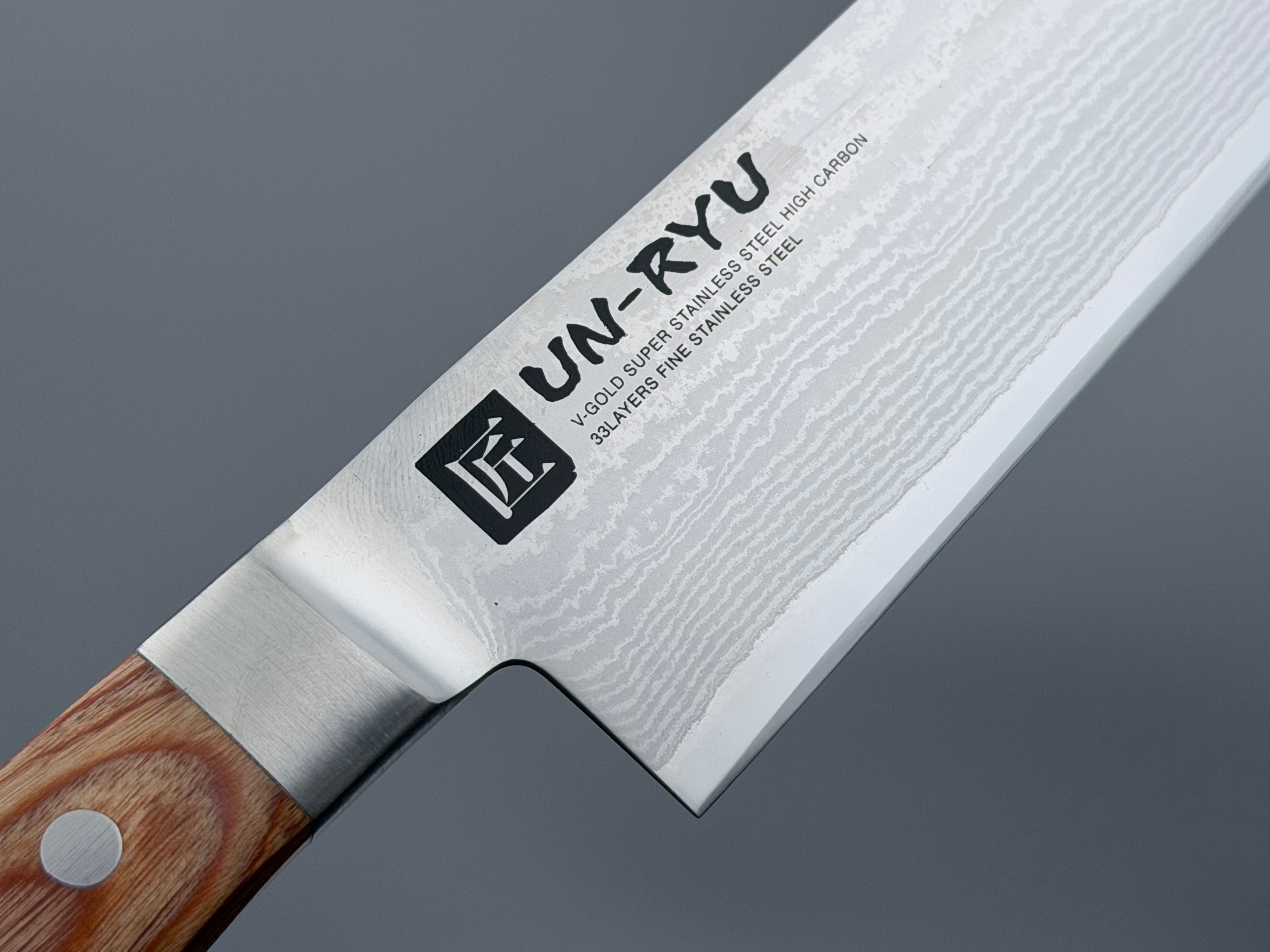
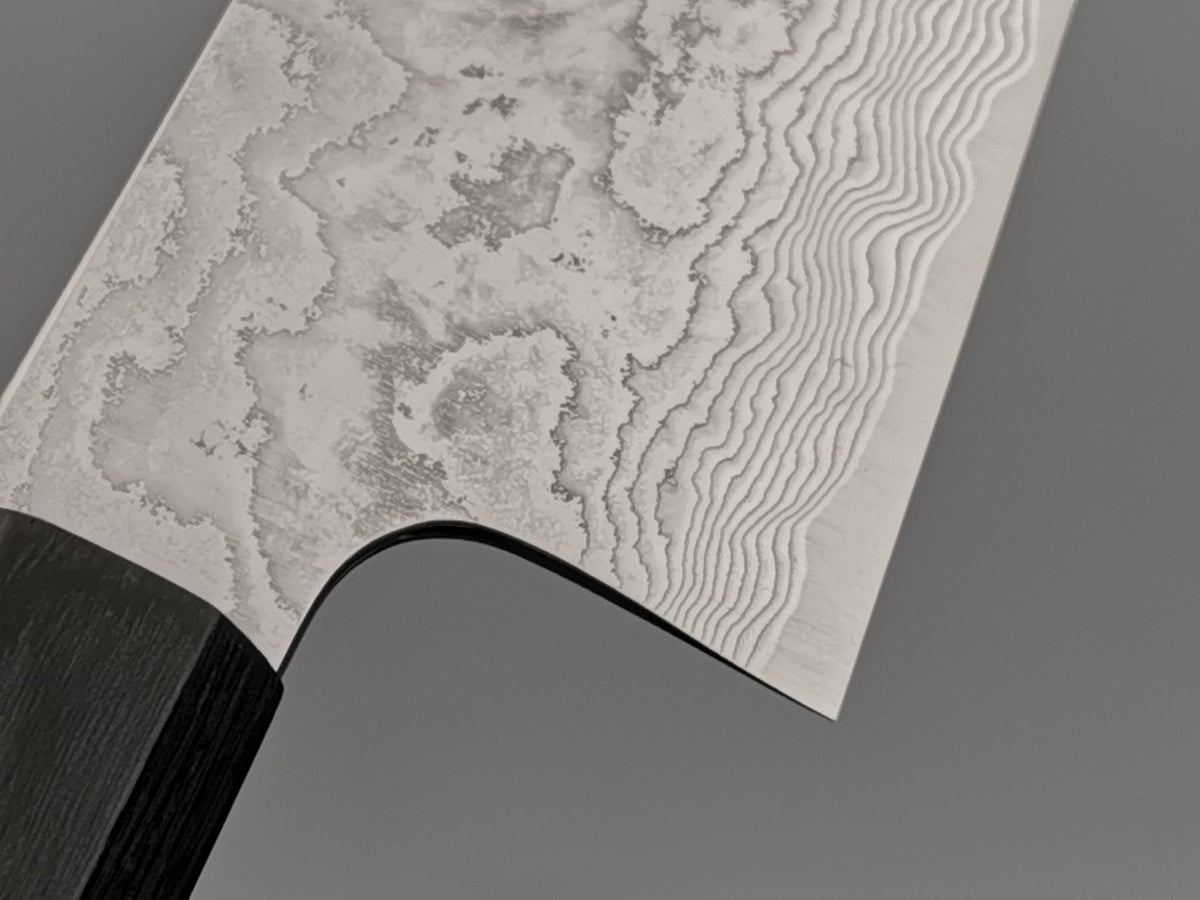
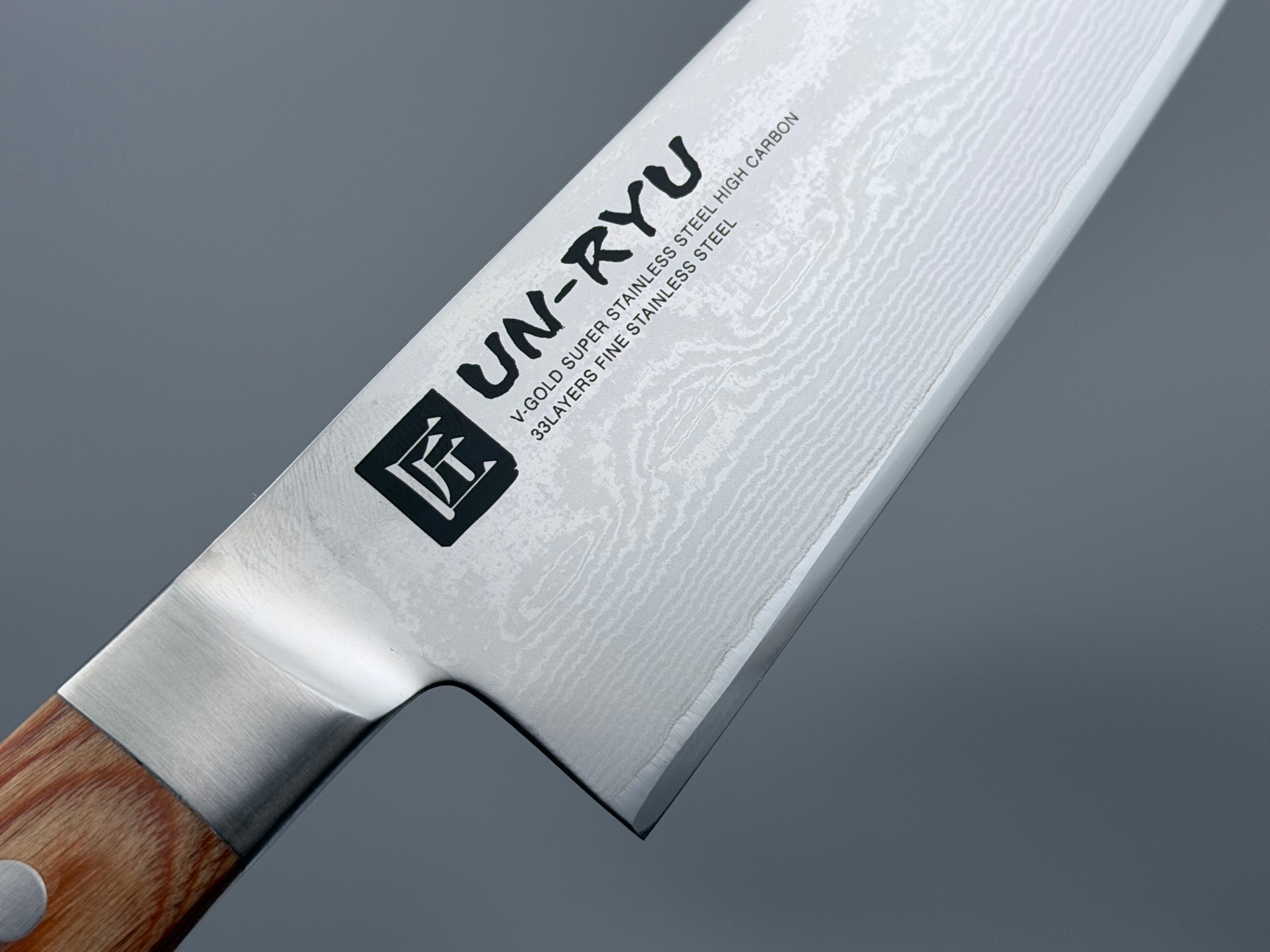
All three Shimomura knives currently available come from the Un-Ryu line, built around a VG10 stainless steel core wrapped in Damascus cladding. VG10 holds a sharp edge well, offers reasonable toughness, and handles moisture far better than reactive carbon steels. The name Un-Ryu means roughly "cloud dragon," a reference to the flowing patterns that come out of the Damascus layering process. If you are new to Japanese VG10 stainless steel chef knives, the Shimomura range is a solid place to start.
Three blade profiles are available:
- The Un-Ryu VG10 Damascus Petty 120mm, priced at £115, is a compact utility knife suited to detailed prep work. It sits within the 120mm and shorter knife collection.
- The Un-Ryu VG10 Damascus Santoku at £135 handles everyday cooking tasks well. Browse similar options in the all-rounder chef knives collection.
- The Un-Ryu VG10 Damascus Gyuto 210mm at £160 is the longest of the three and the right pick if you want a full chef knife. It appears in the 210 to 240mm knife range.
Damascus finish and everyday use
The Damascus cladding on these knives is not purely decorative, though the flowing pattern is genuinely striking. The layered construction stiffens the blade and keeps the cutting edge protected. Handles across the Un-Ryu range are comfortable whether you use a pinch grip or hold the full handle. For anyone comparing options in the Japanese knives priced between £100 and £175, the Un-Ryu line holds up well on quality for the price.
Shop Shimomura knives at Cutting Edge Knives
The Shimomura Un-Ryu range covers the three most useful blade shapes, petty, santoku, and gyuto, made by a company with 150 years in the trade. Visit the Shimomura collection to see current stock and order direct from our Holmfirth base.