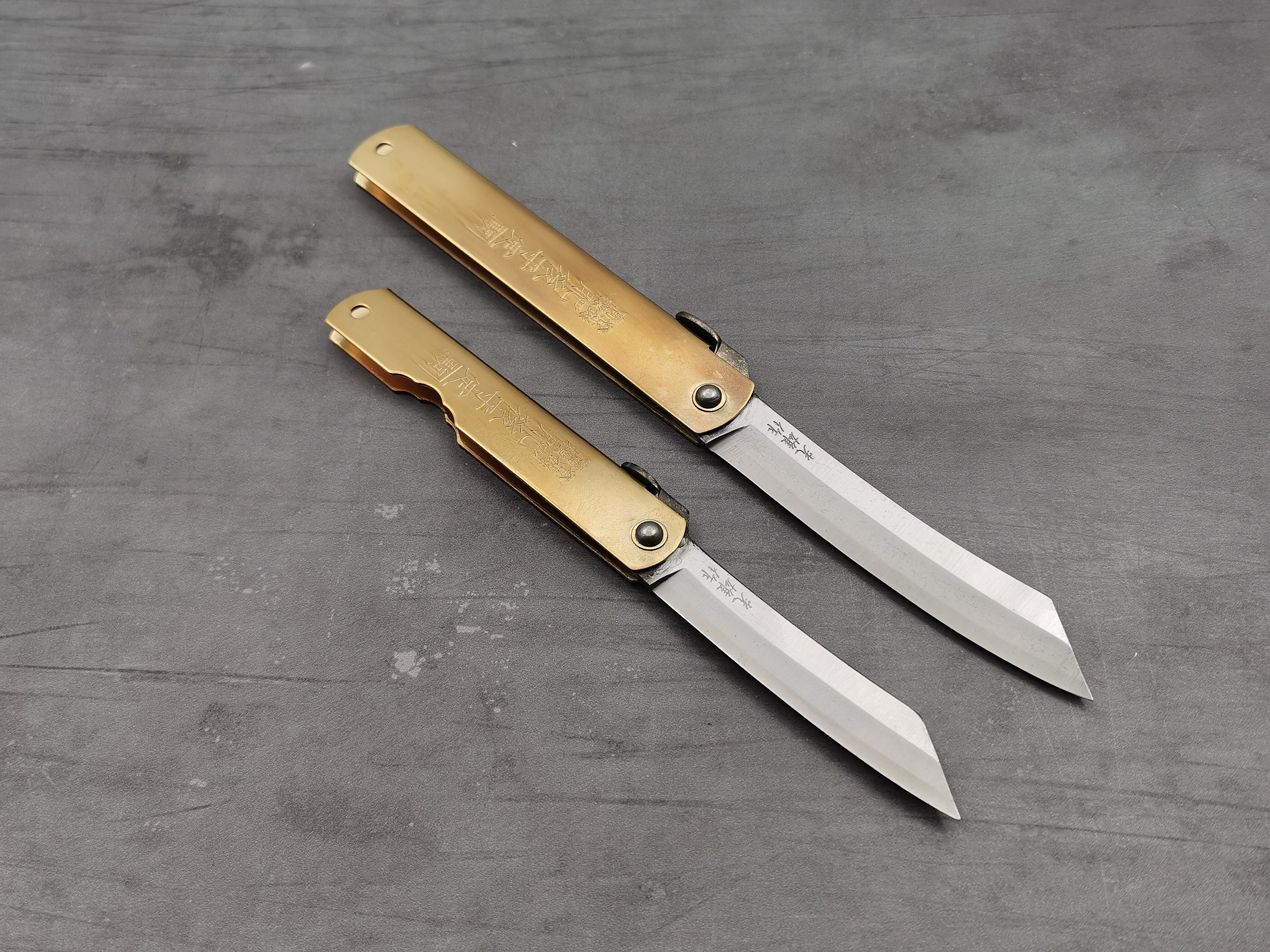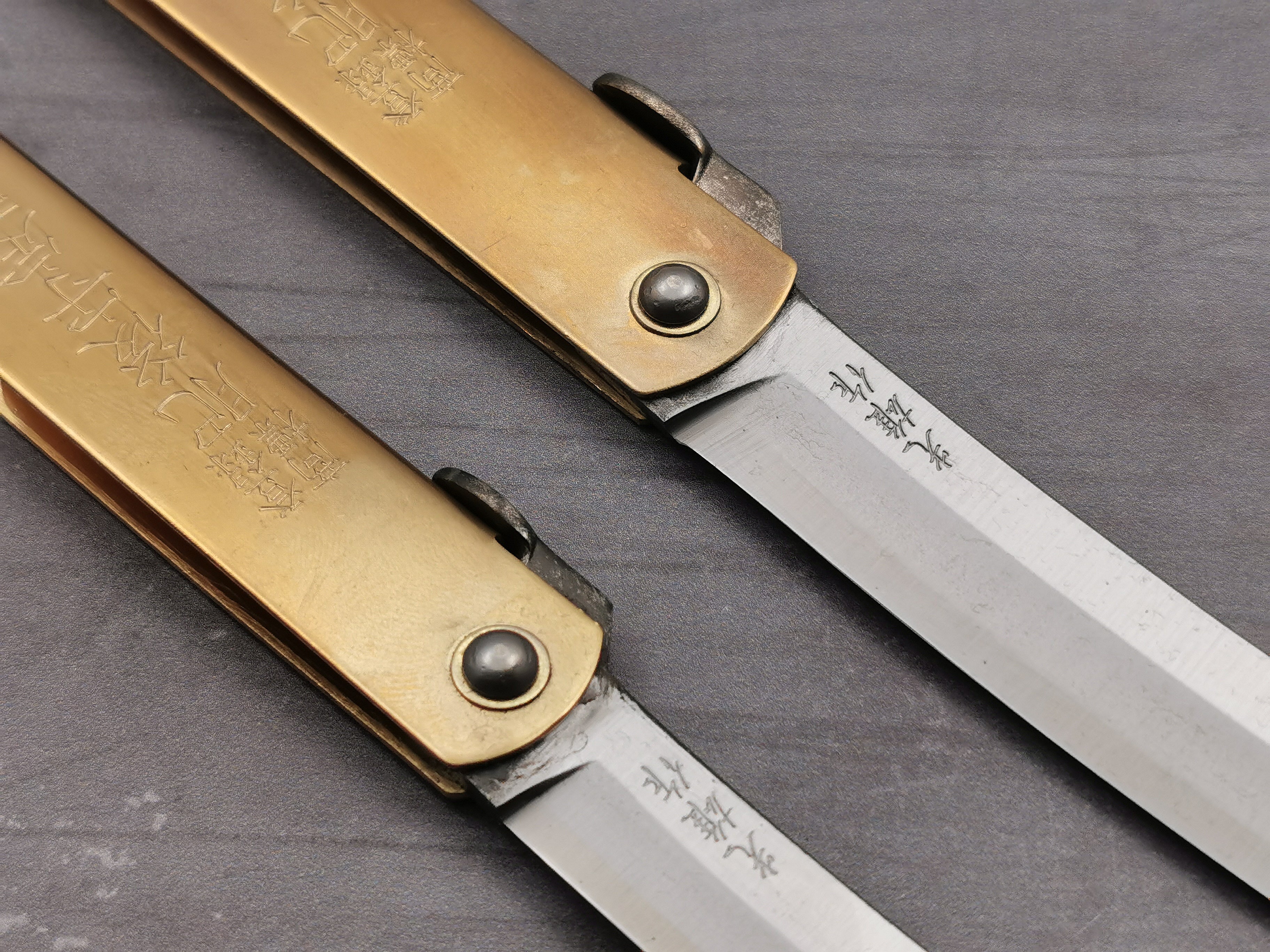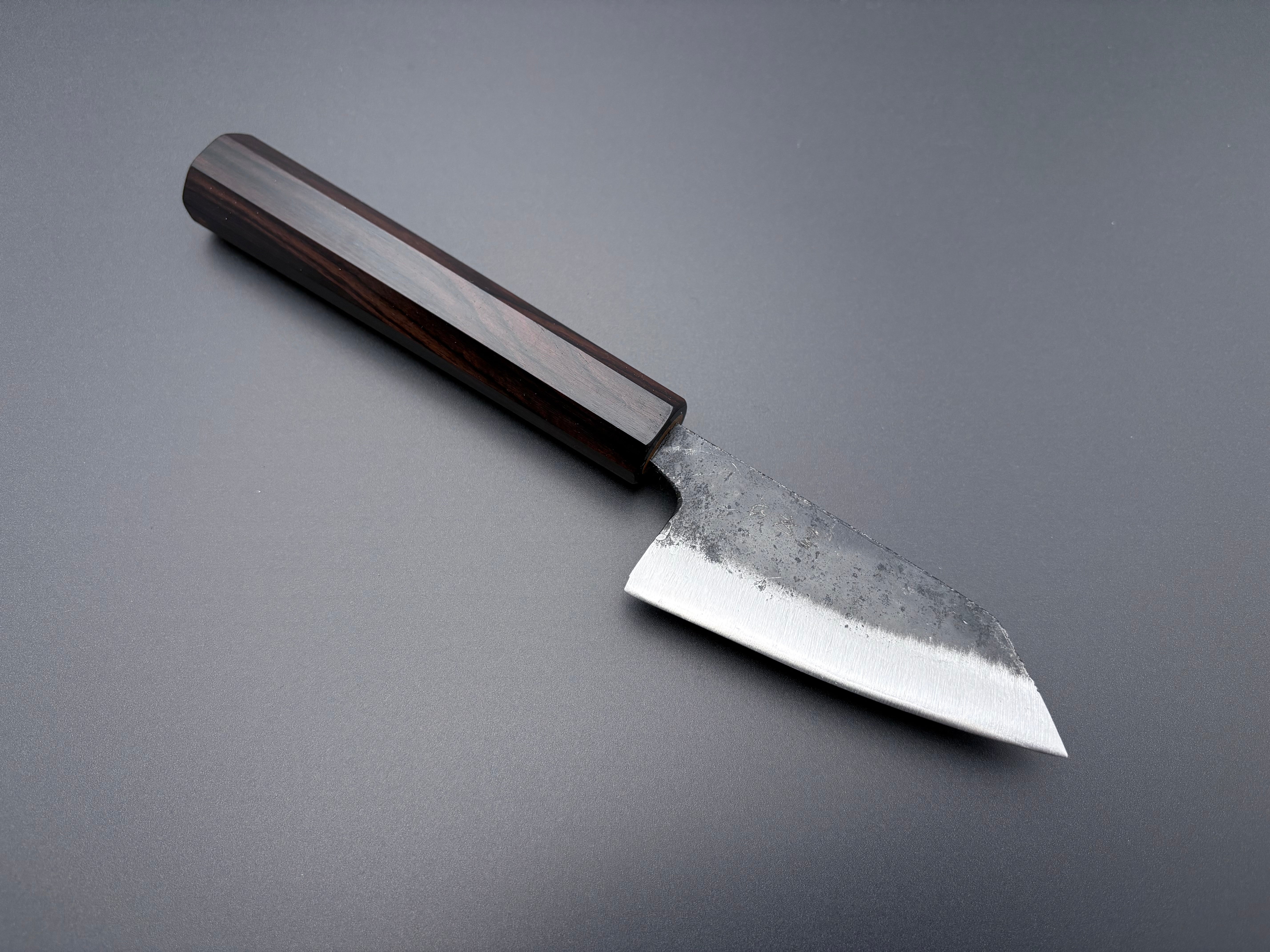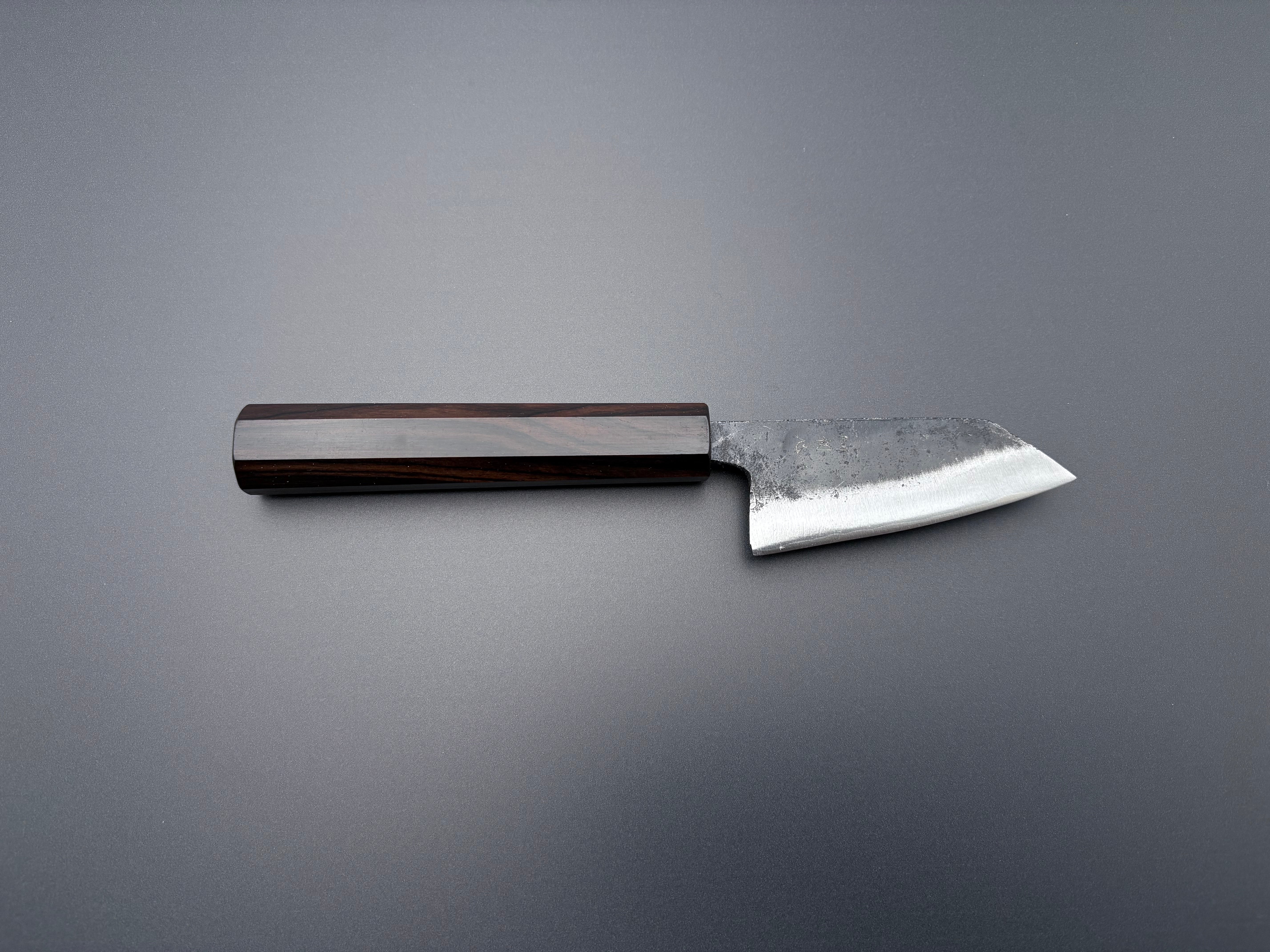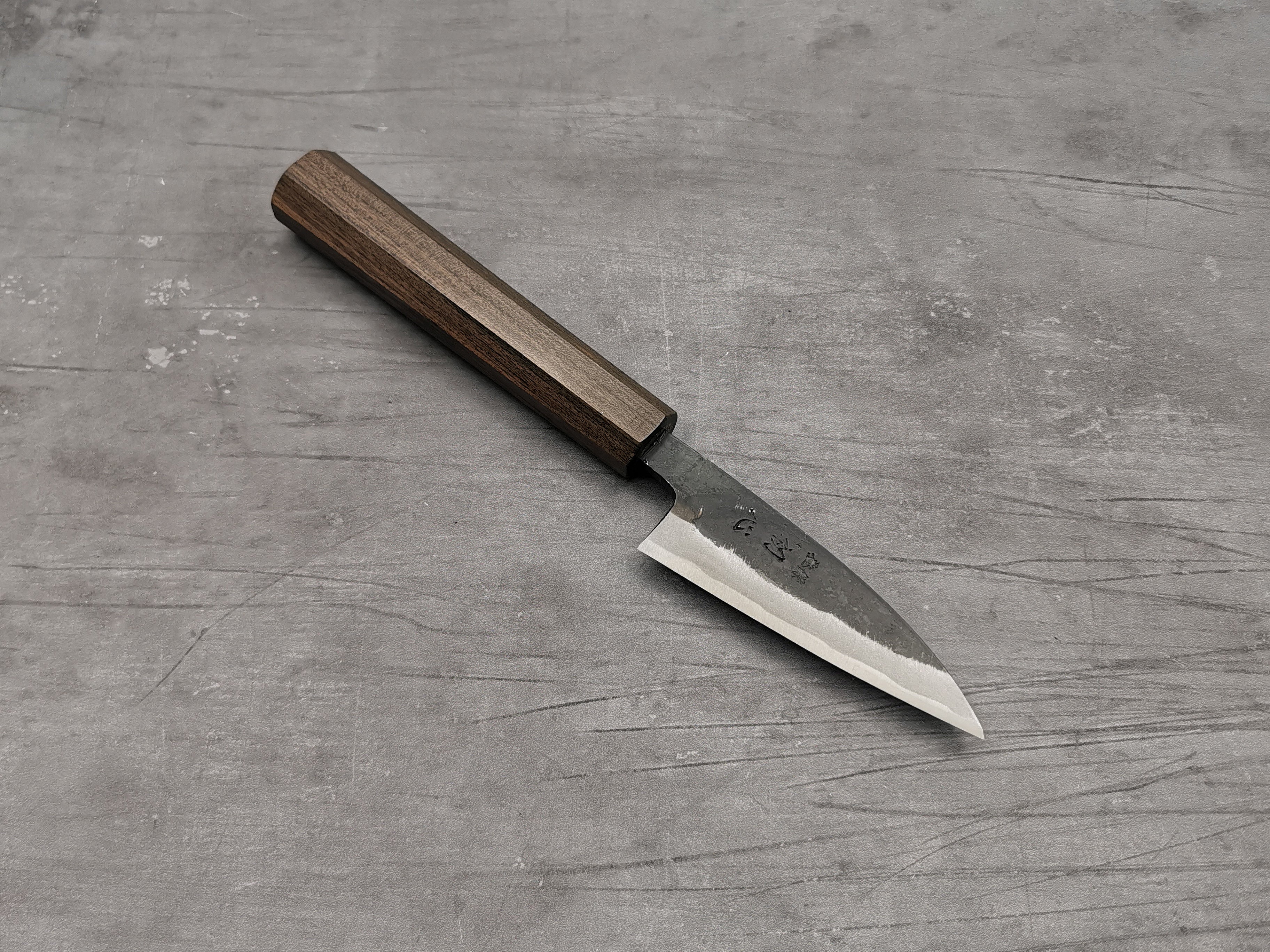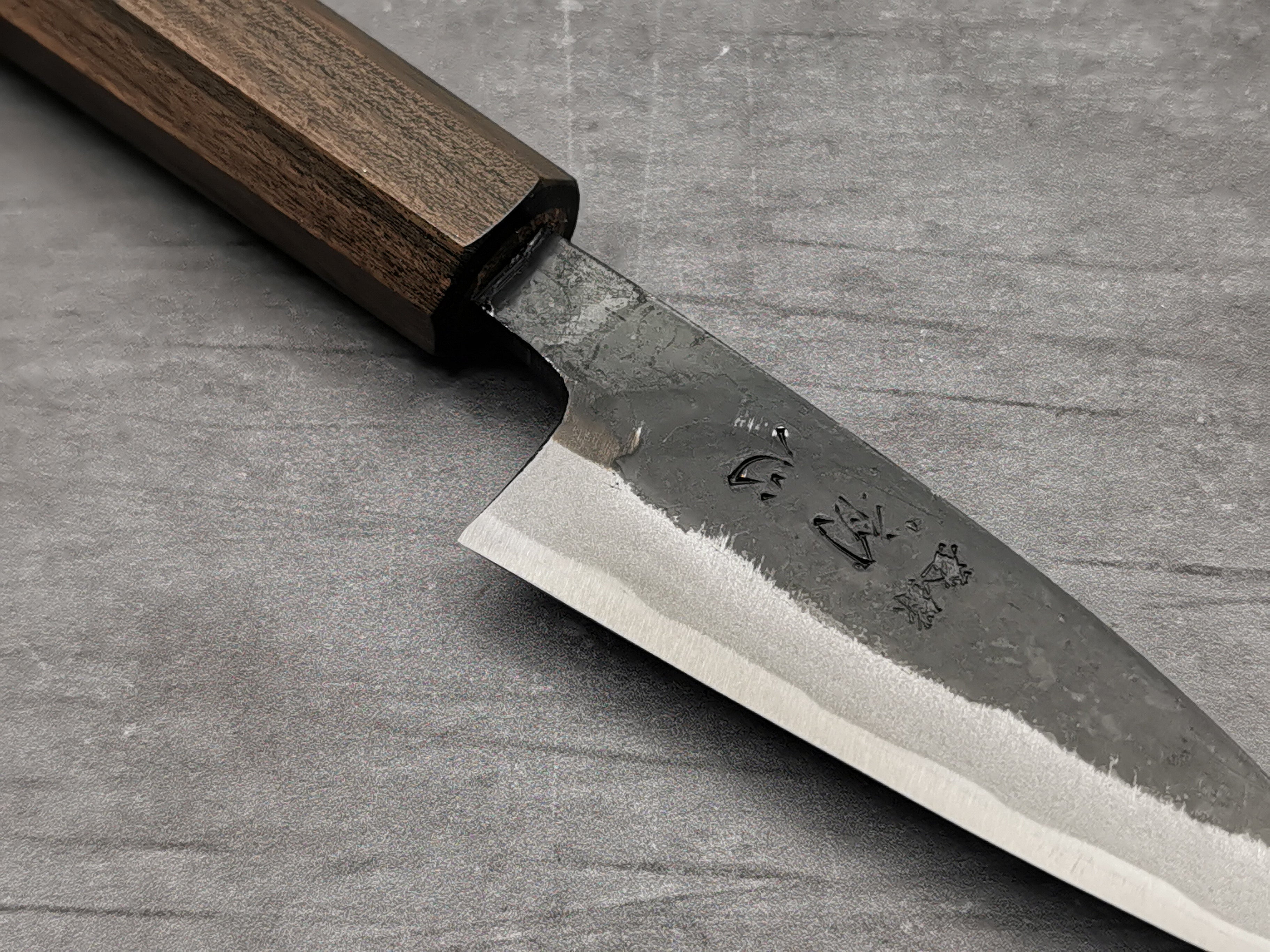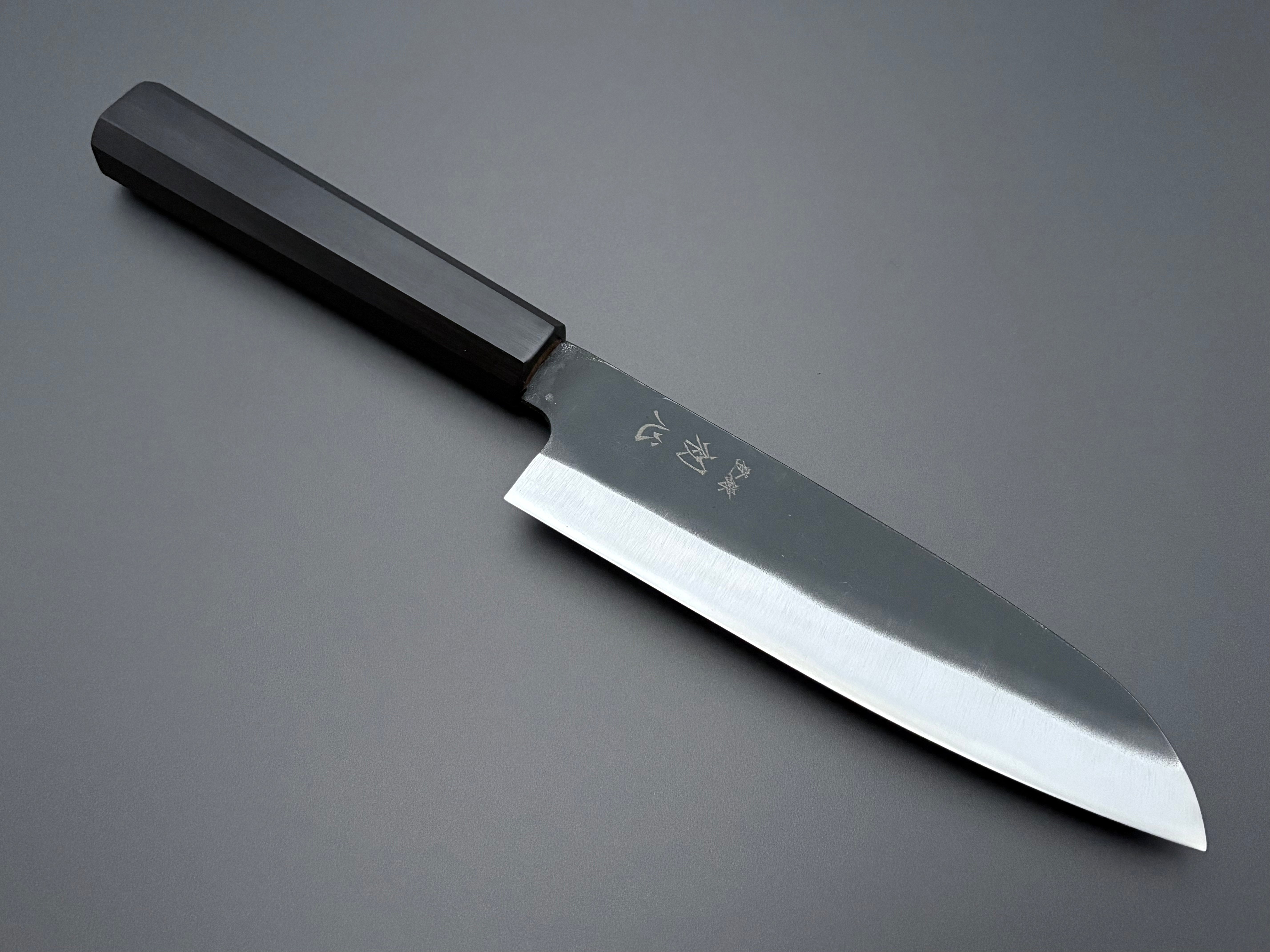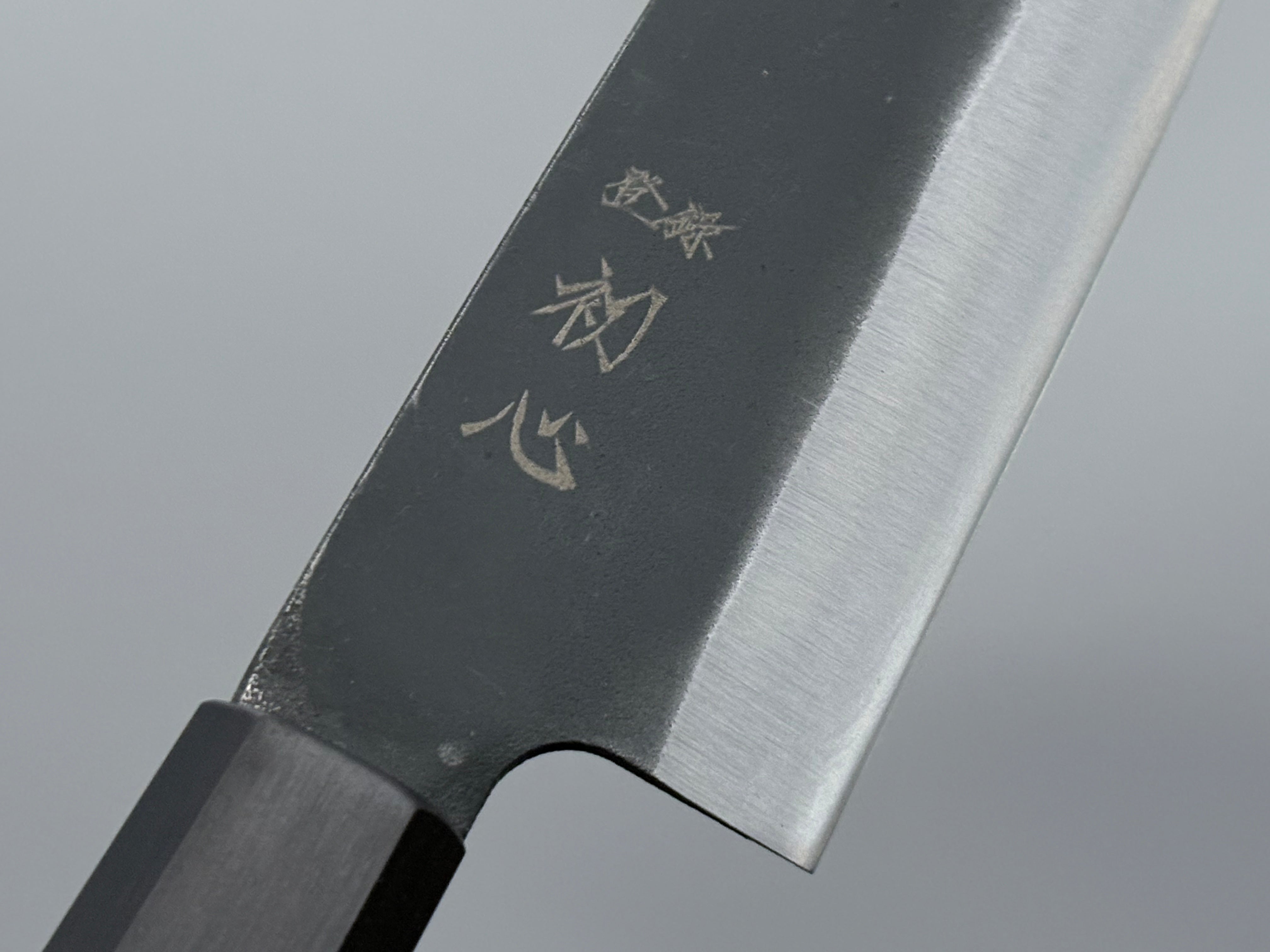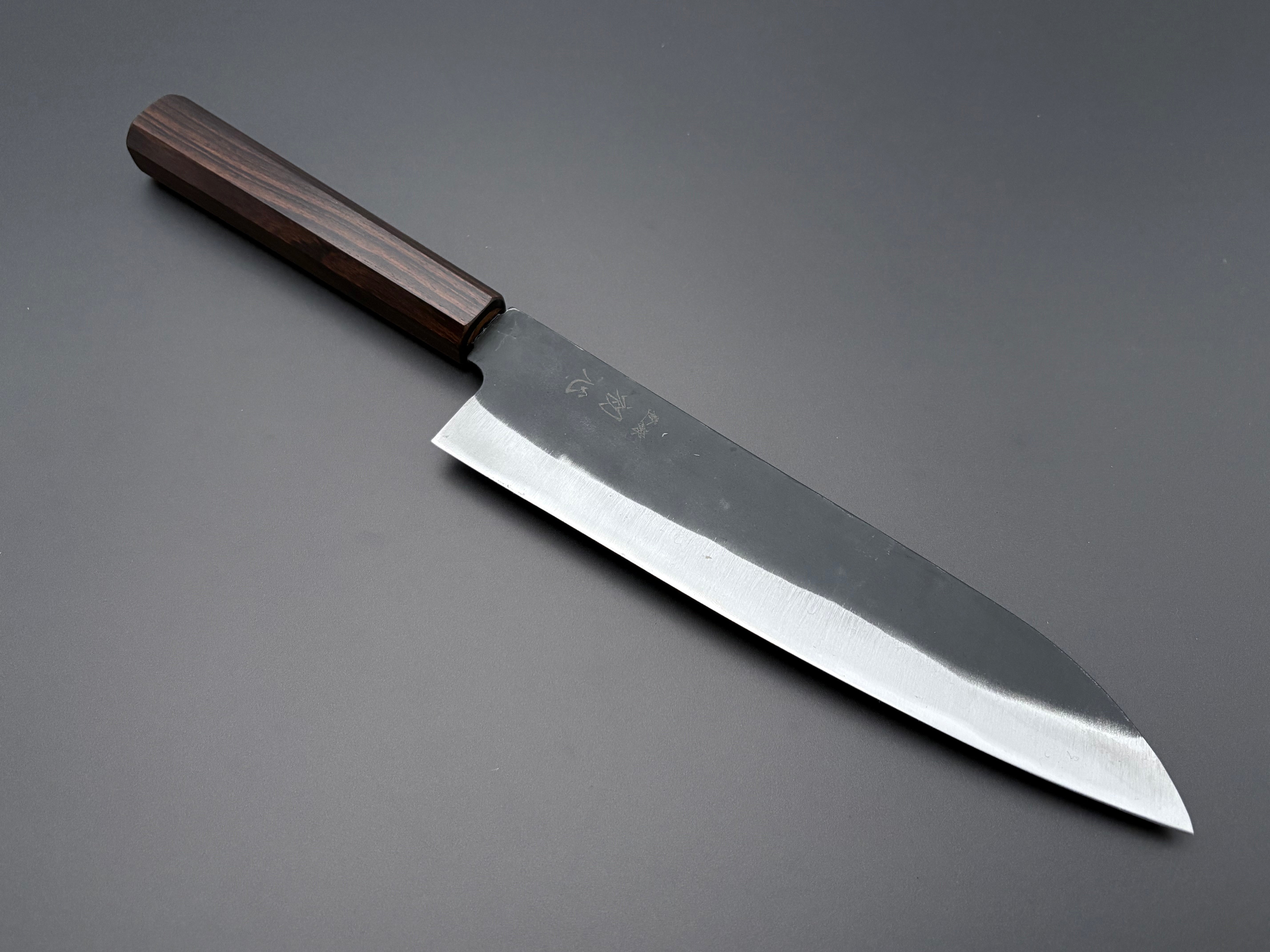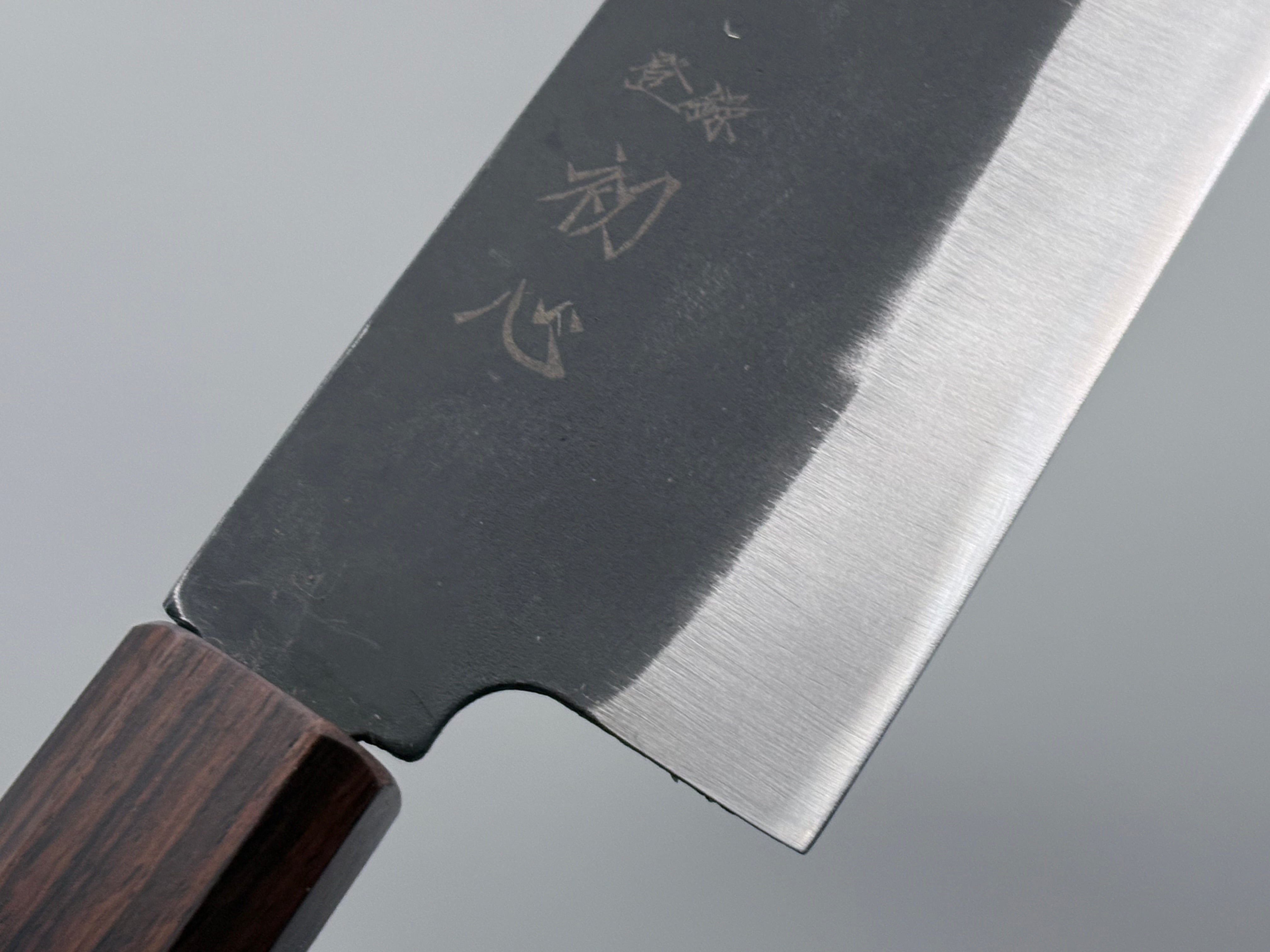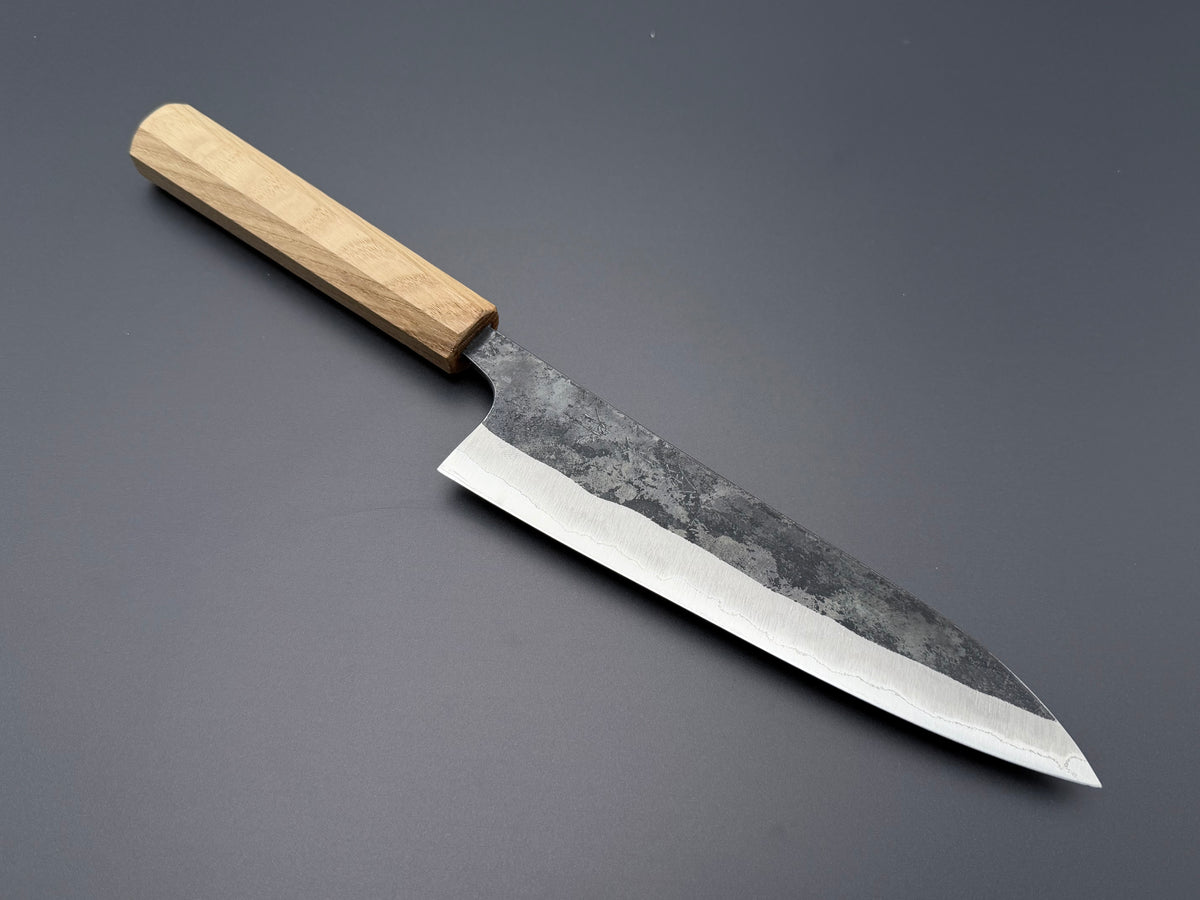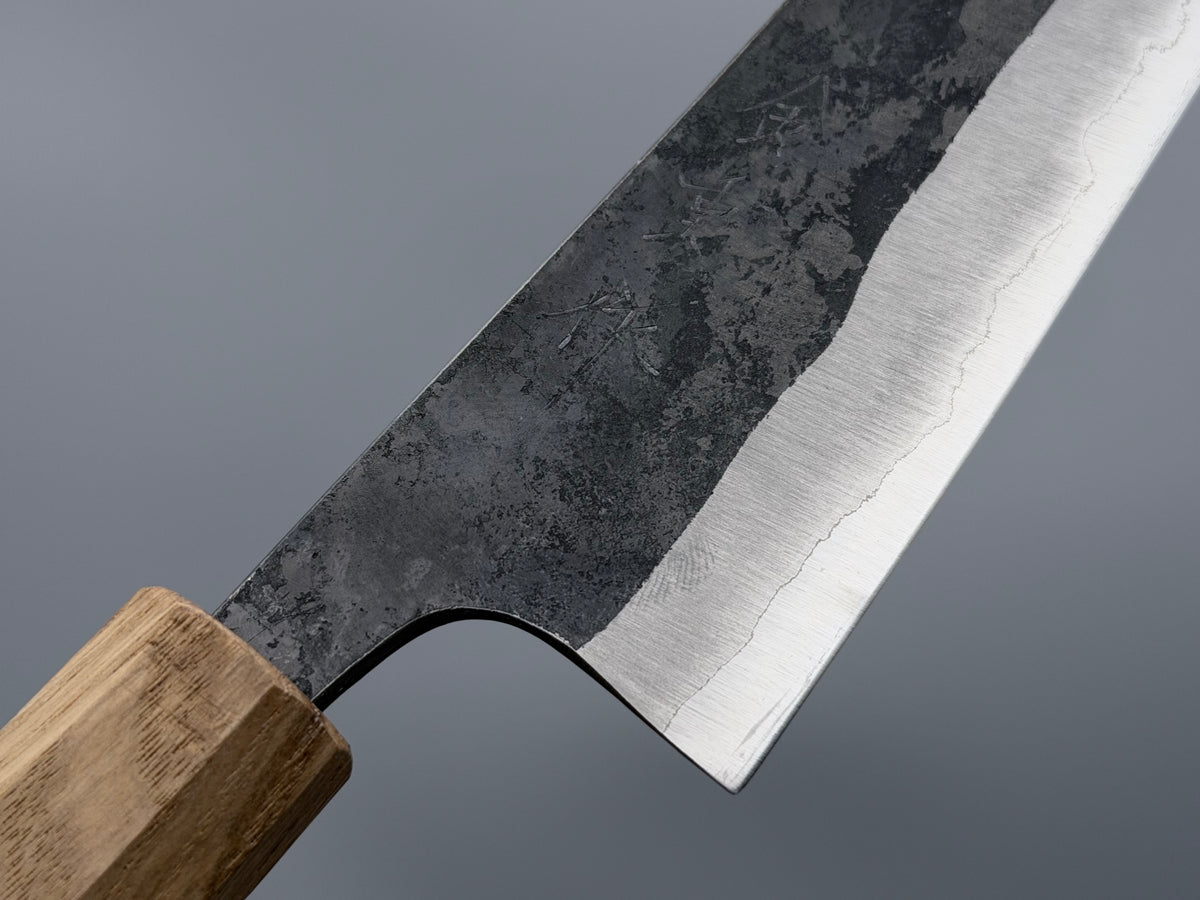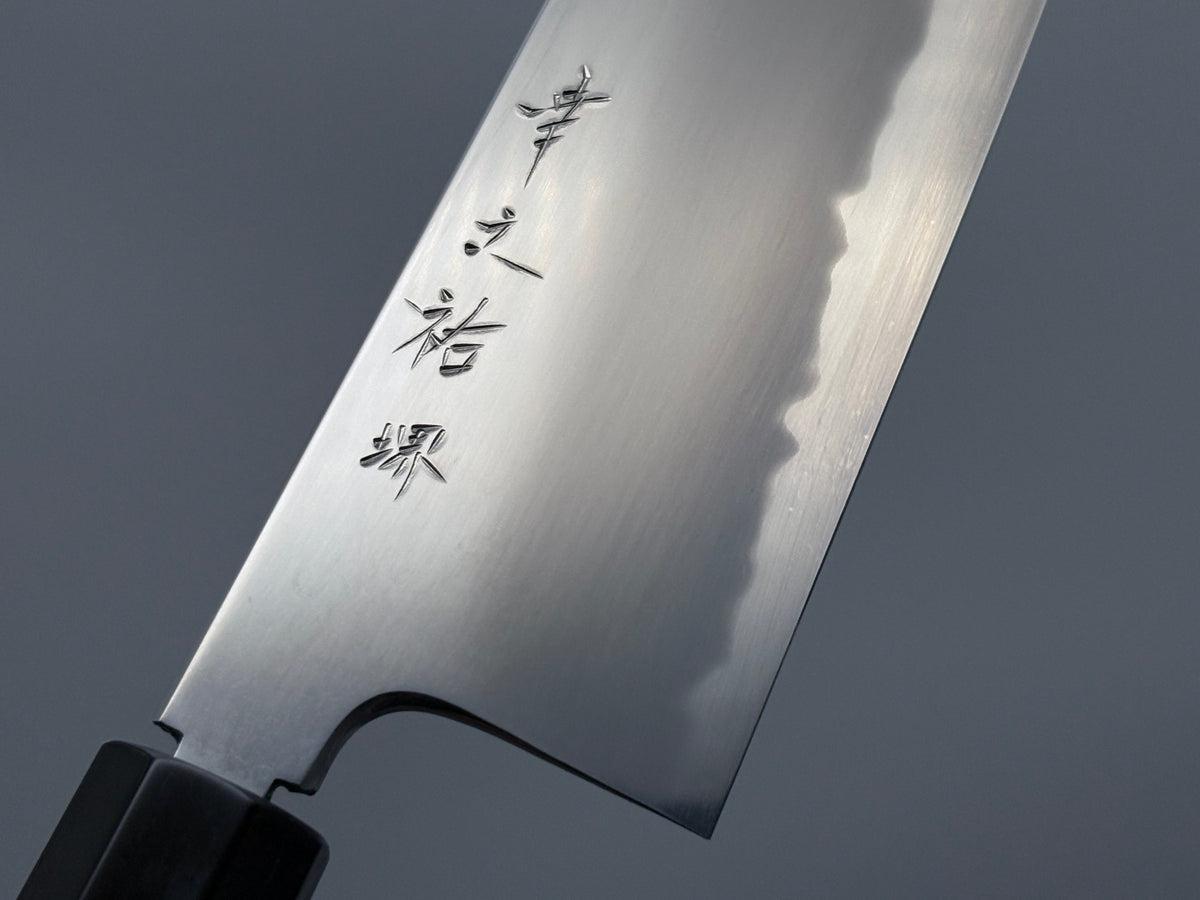

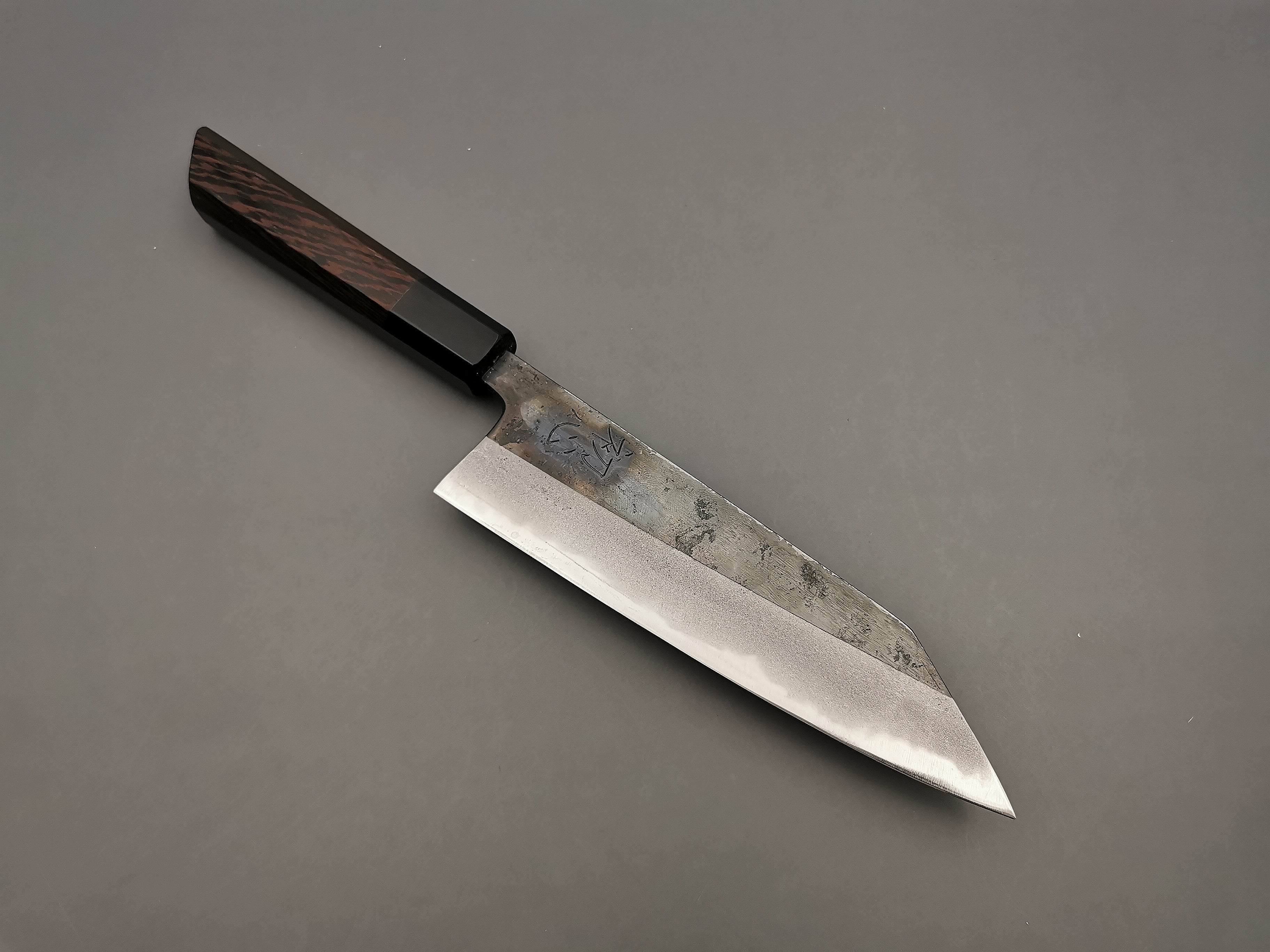
Aogami steel, or Blue Paper Steel, is a high-carbon steel alloy enhanced with chromium and tungsten for improved toughness, wear resistance, and edge retention, making it a popular choice for high-performance Japanese chef knives.
Its added alloys provide better durability and corrosion resistance compared to Shirogami steel, though it still requires maintenance to prevent rust.
Produced by Hitachi Metals, Aogami steel comes in three variants—Aogami #1, #2, and Super—each offering different balances of hardness, sharpness, and toughness. While all three excel in edge retention and durability, they require careful sharpening and handling to maintain their performance.
Aogami #1 steel has the highest carbon content of the Blue Steel variants, typically around 1.2–1.4%, providing excellent hardness and edge retention. The added chromium and tungsten enhance durability while maintaining a fine, sharp edge. Its hardness makes it somewhat brittle and more prone to chipping if mishandled, making it best suited for precise cutting tasks where sharpness is prioritized over toughness.
Aogami #2 steel is the most commonly used Blue Steel variant, with a carbon content around 1.0–1.2%. It offers a balanced combination of hardness, edge retention, toughness, and ease of sharpening. The added alloys improve durability without overly compromising sharpness, making it a versatile option for various kitchen tasks and appealing to both professionals and enthusiasts.
Aogami Super steel, also known as Super Blue, has the highest alloy content of the Blue Steel variants, with a carbon content around 1.4–1.5% and higher levels of chromium and tungsten. This composition provides exceptional hardness, edge retention, and wear resistance, making it highly prized for demanding cutting tasks. Despite its enhanced durability, it remains relatively easy to sharpen compared to stainless steels, though its high hardness can make it slightly more brittle than Aogami #2.