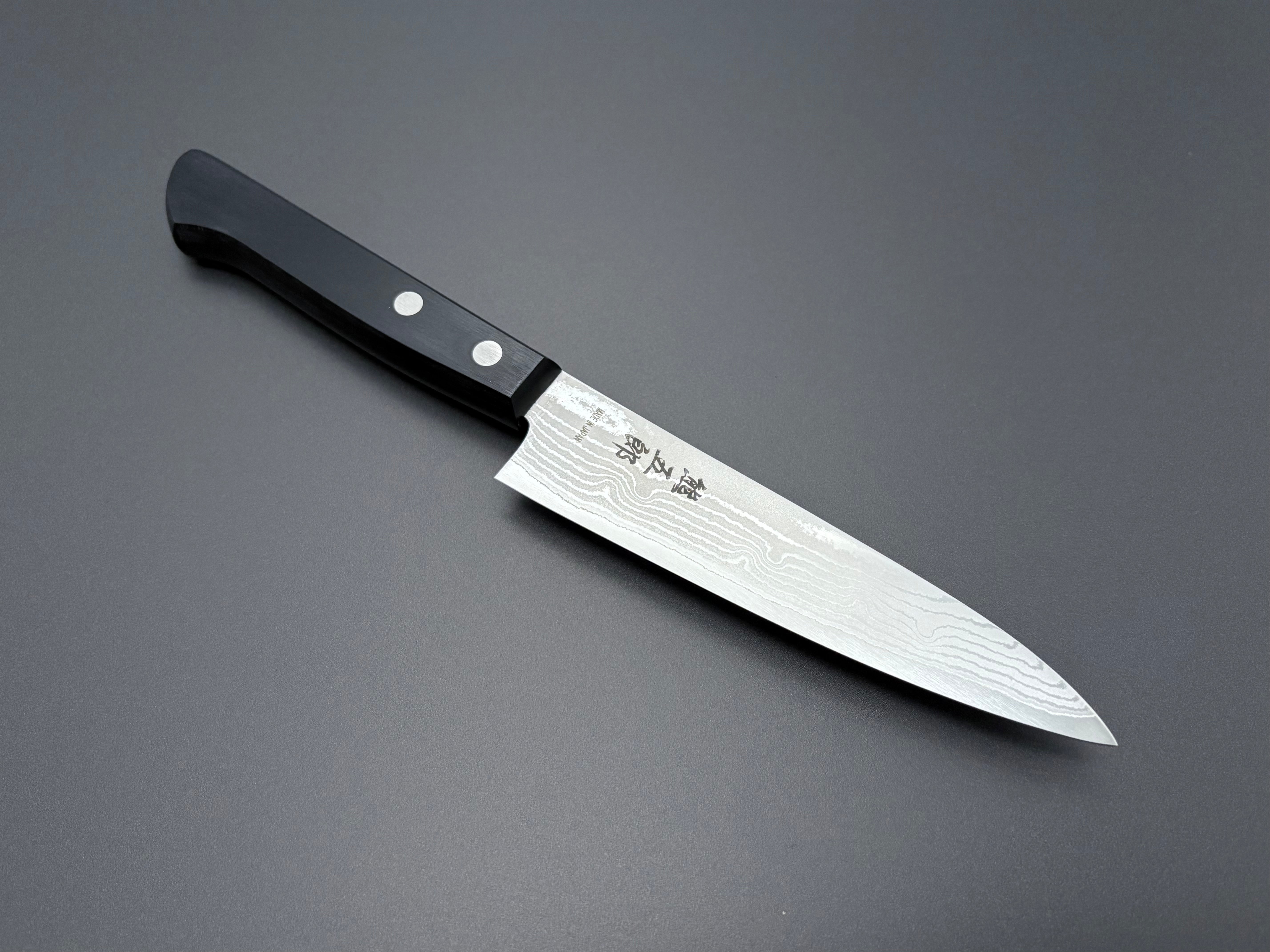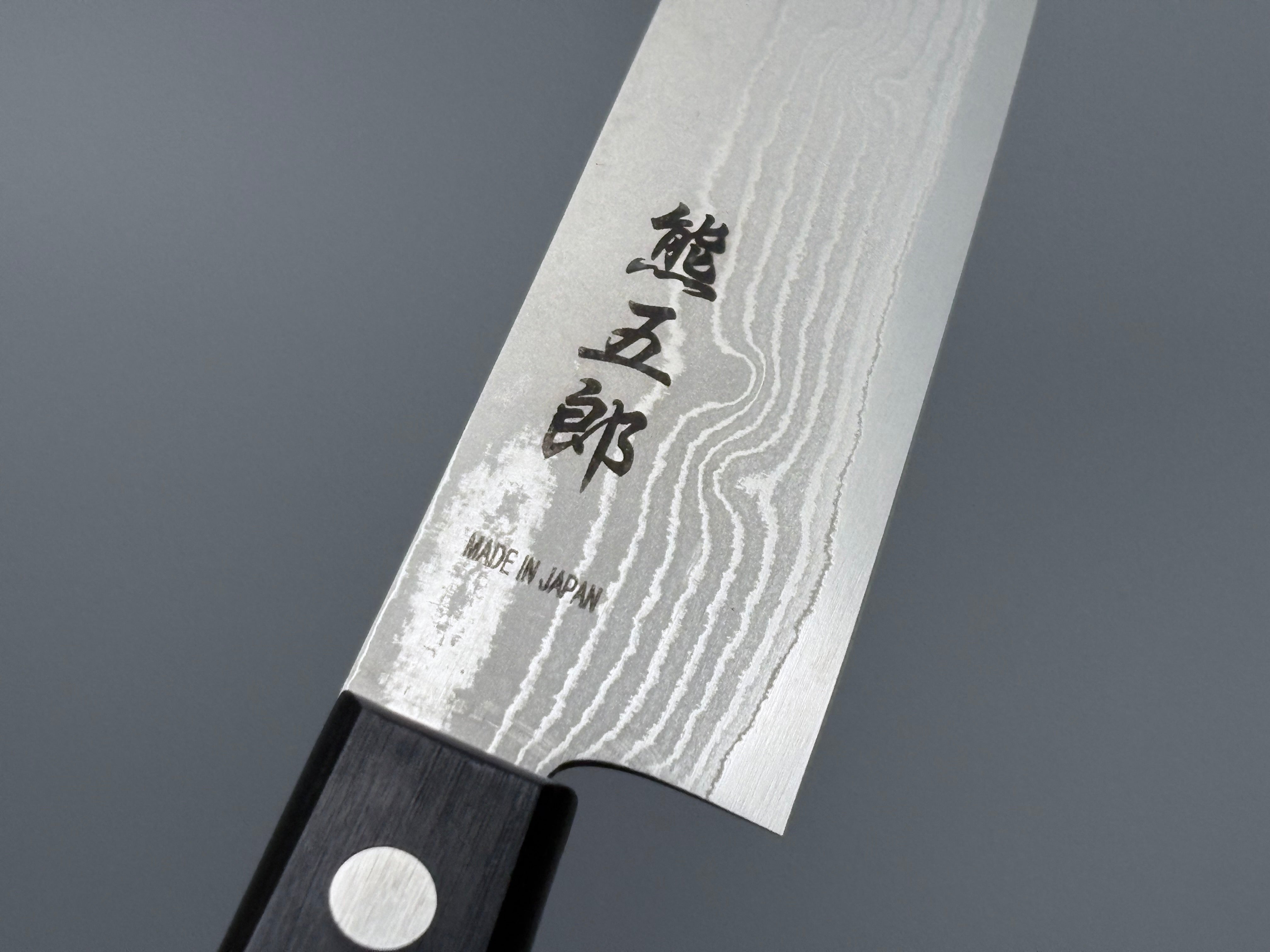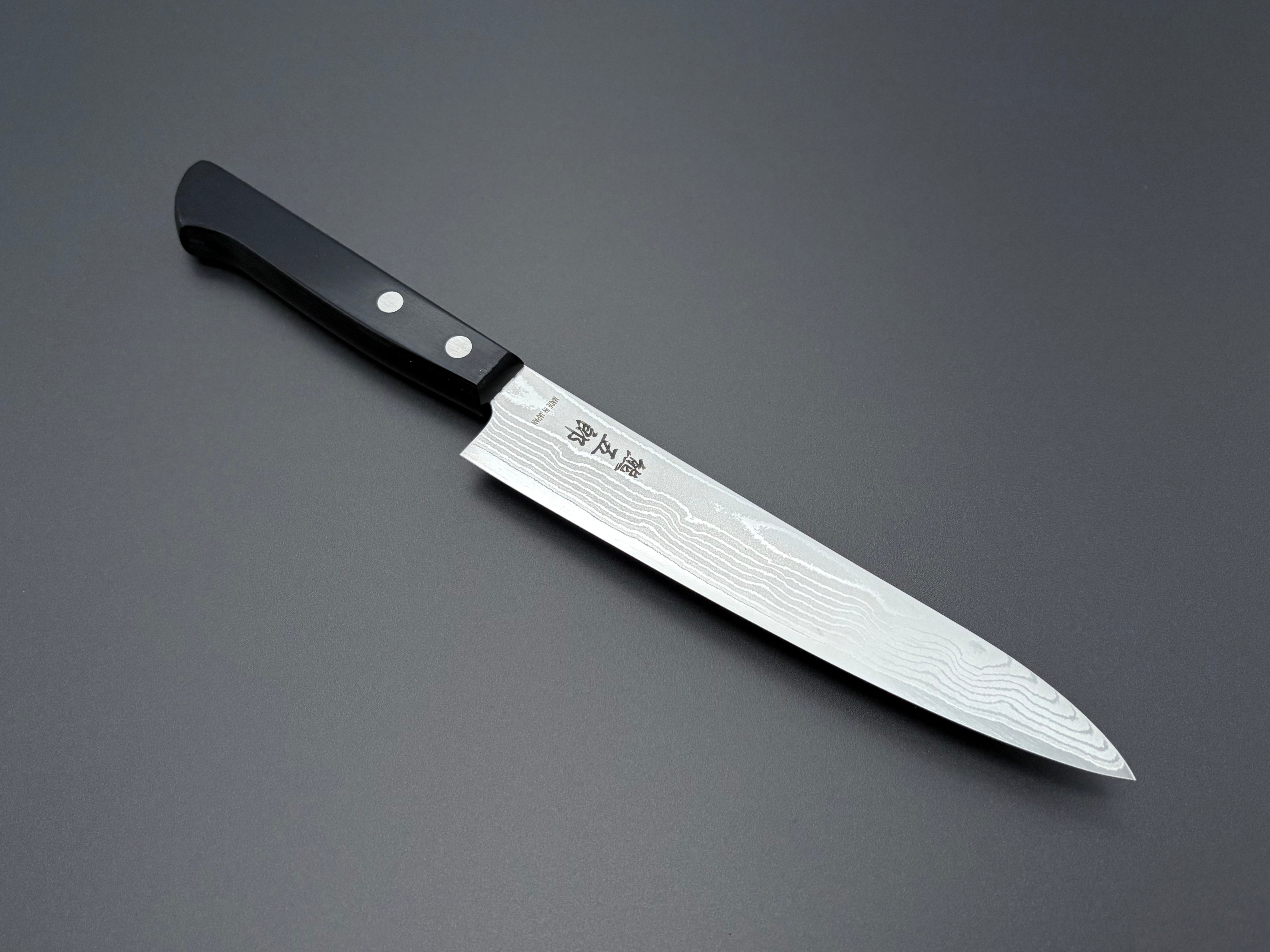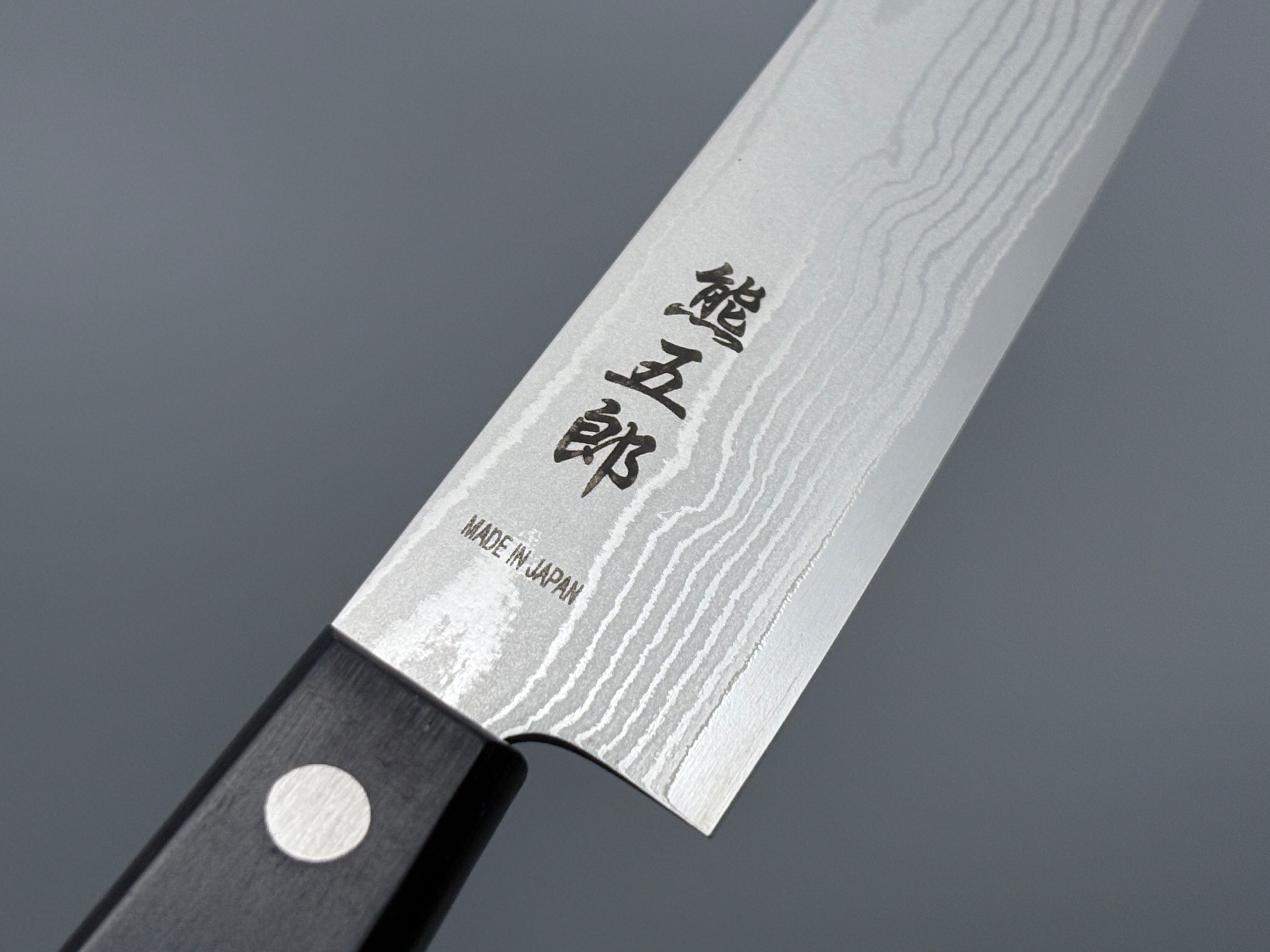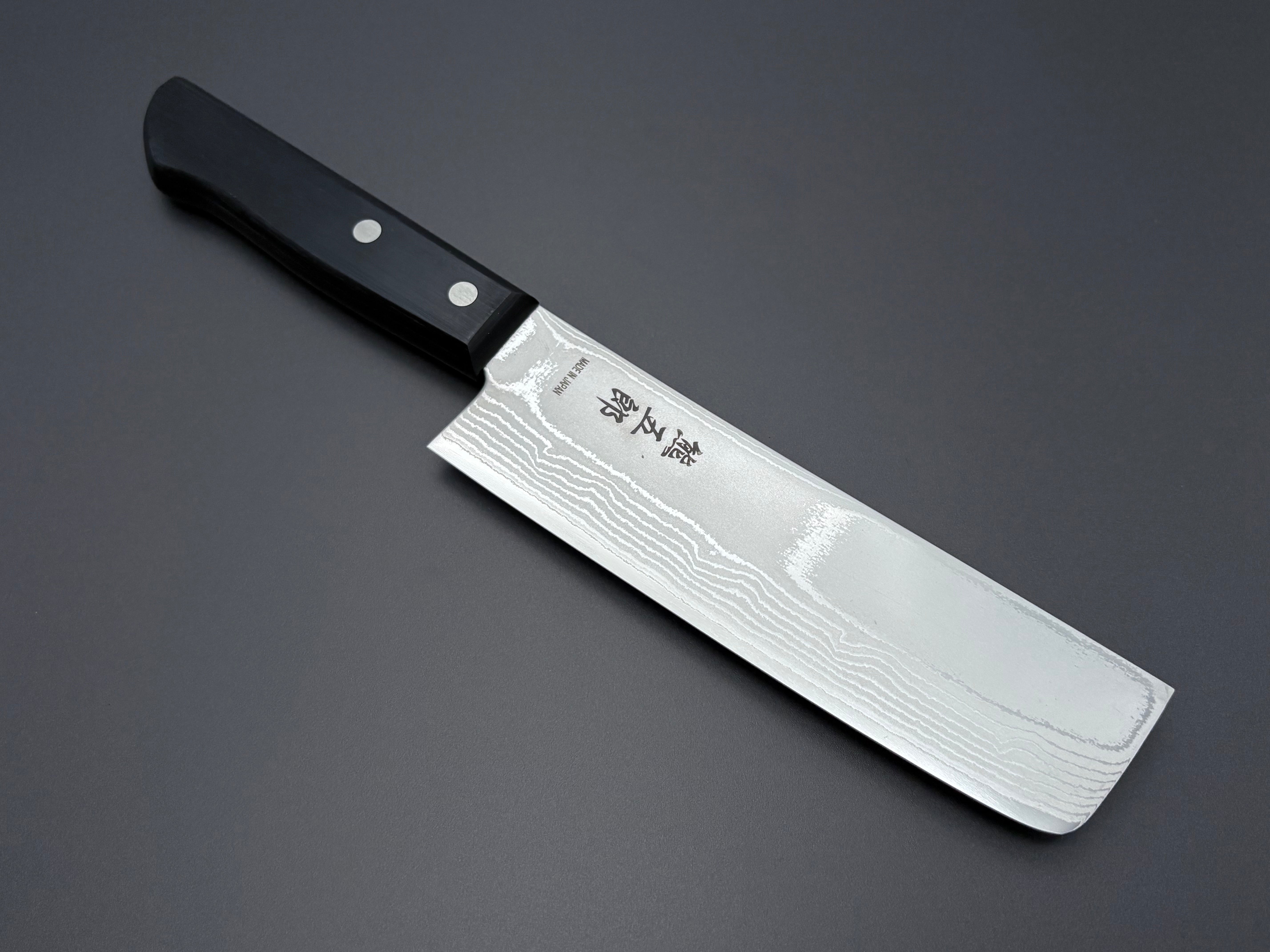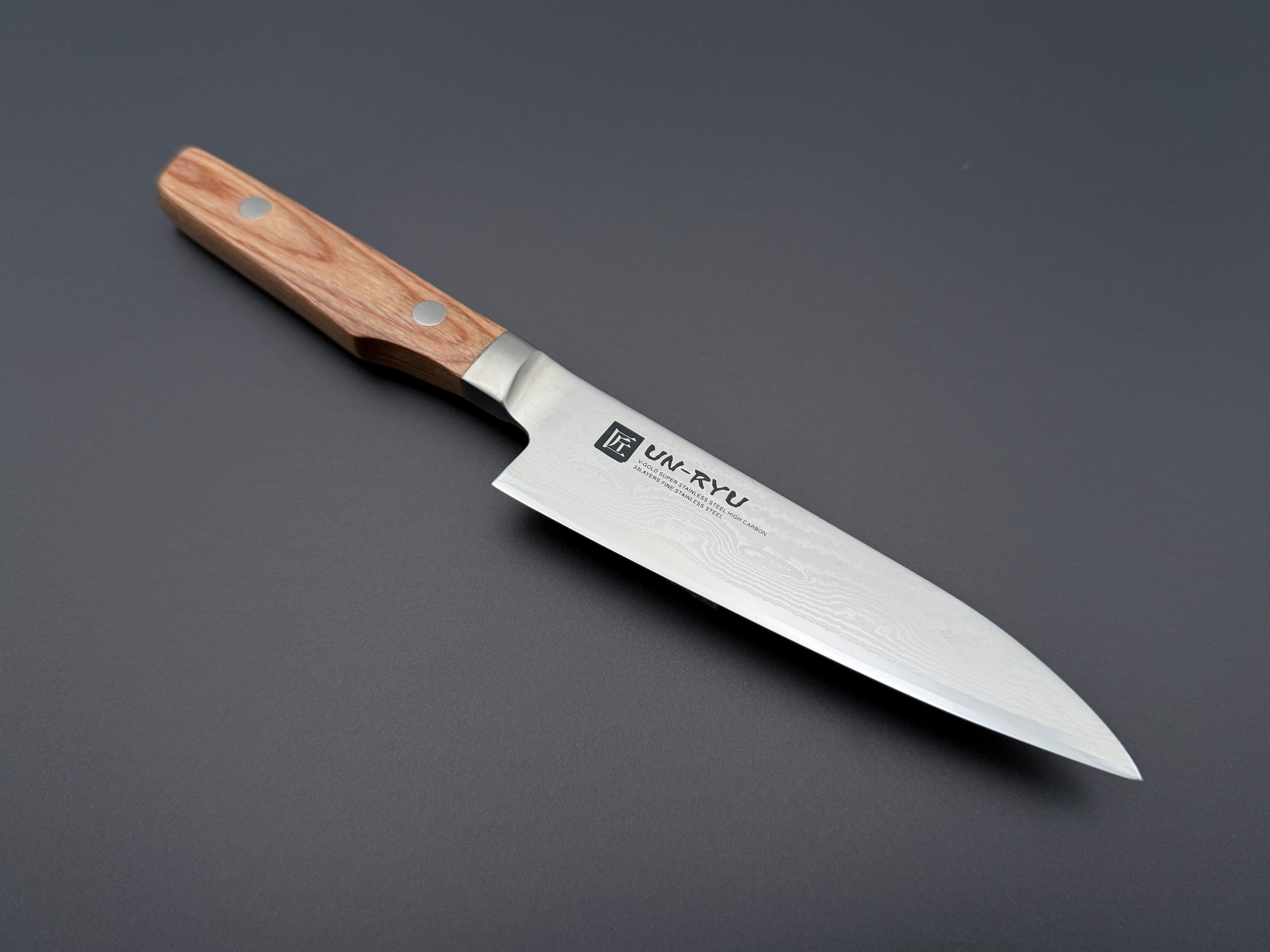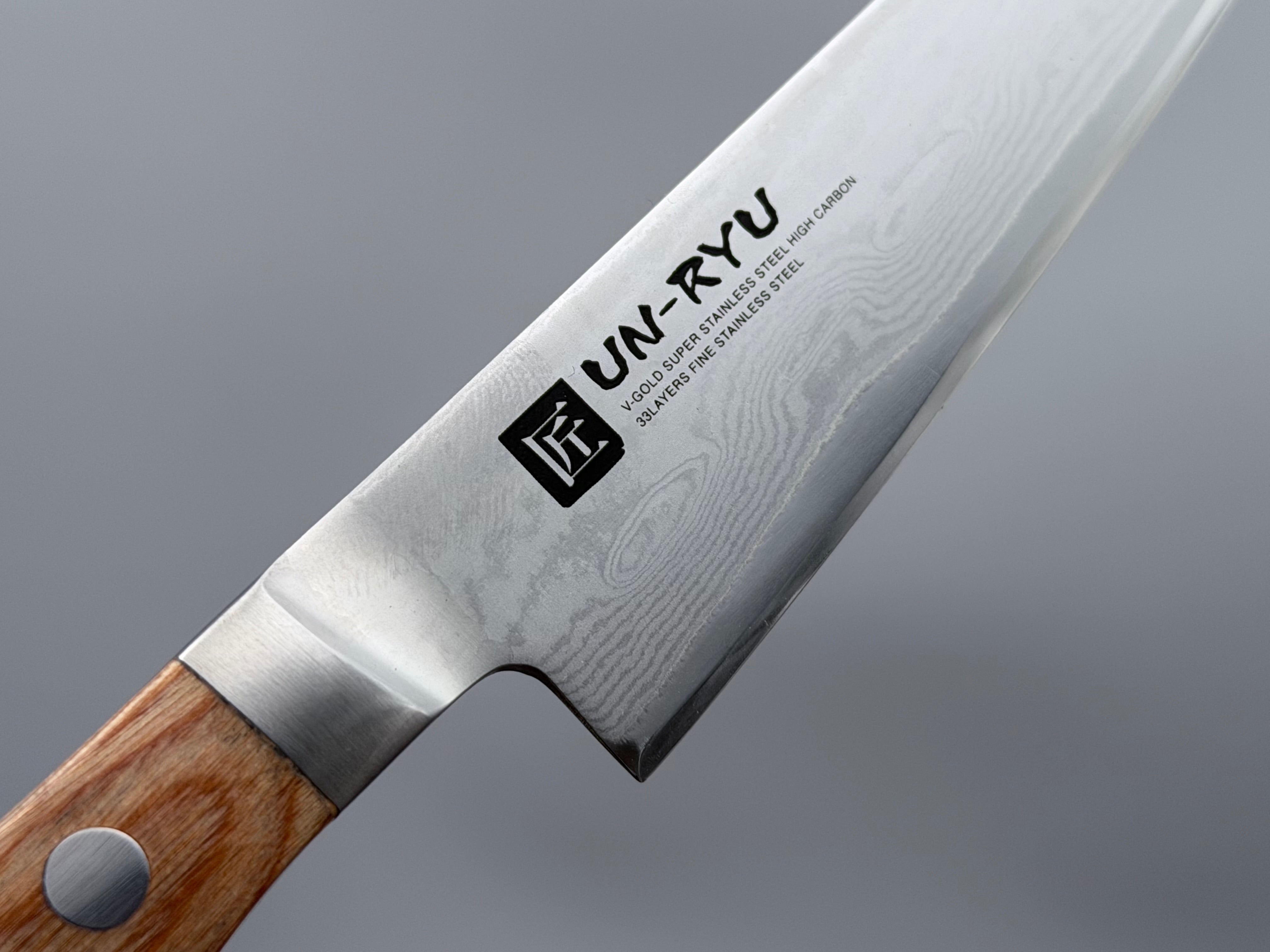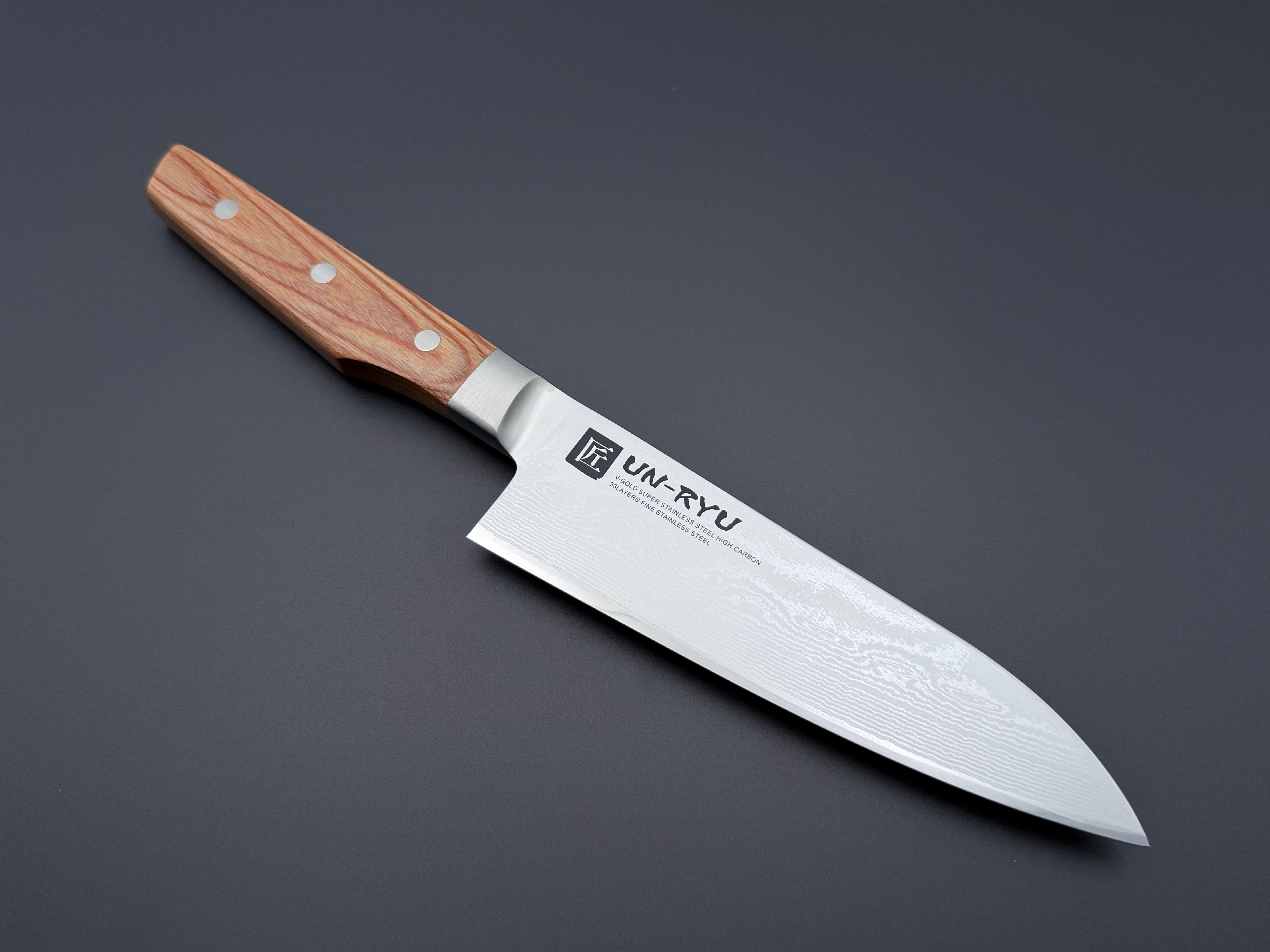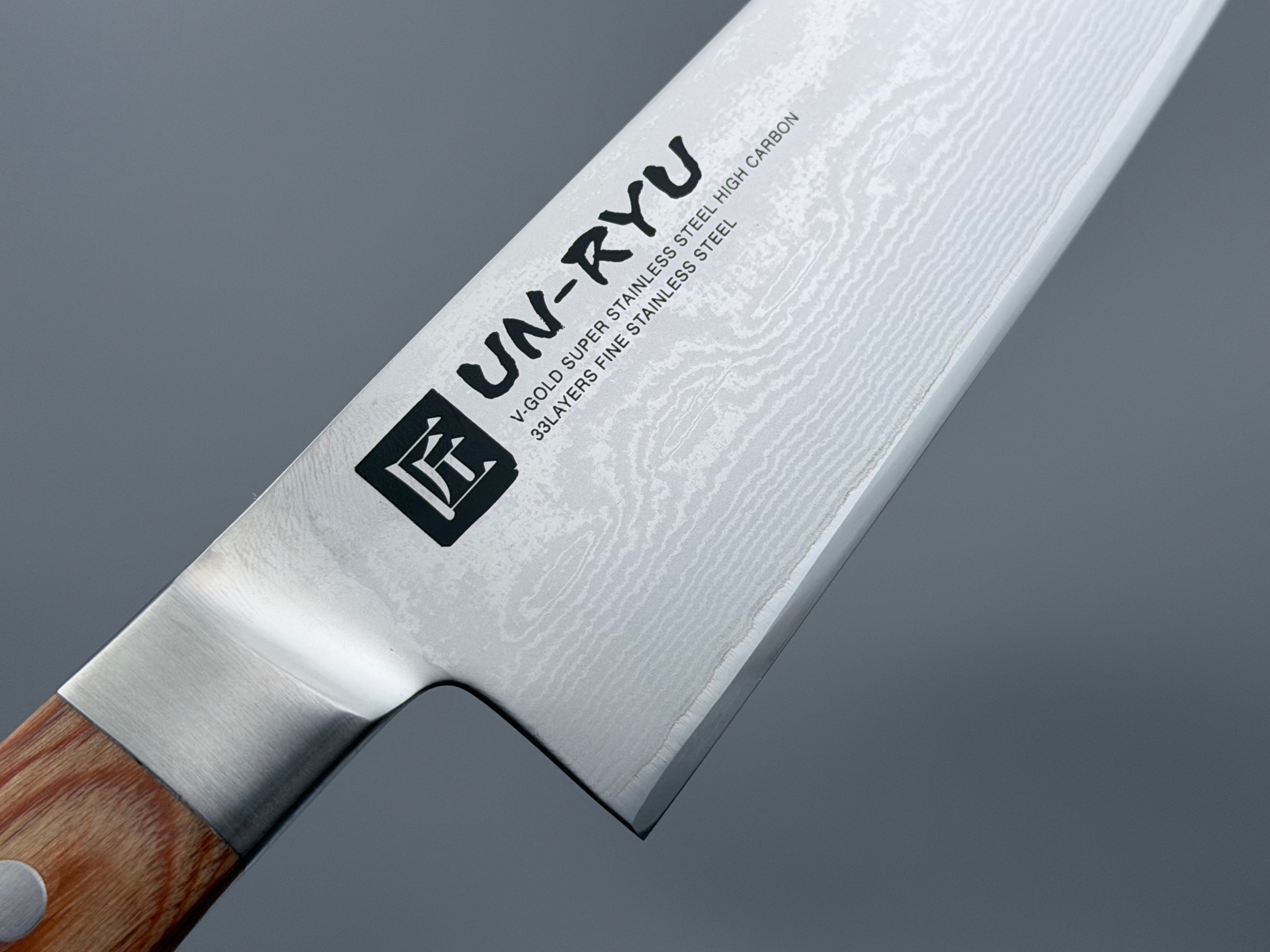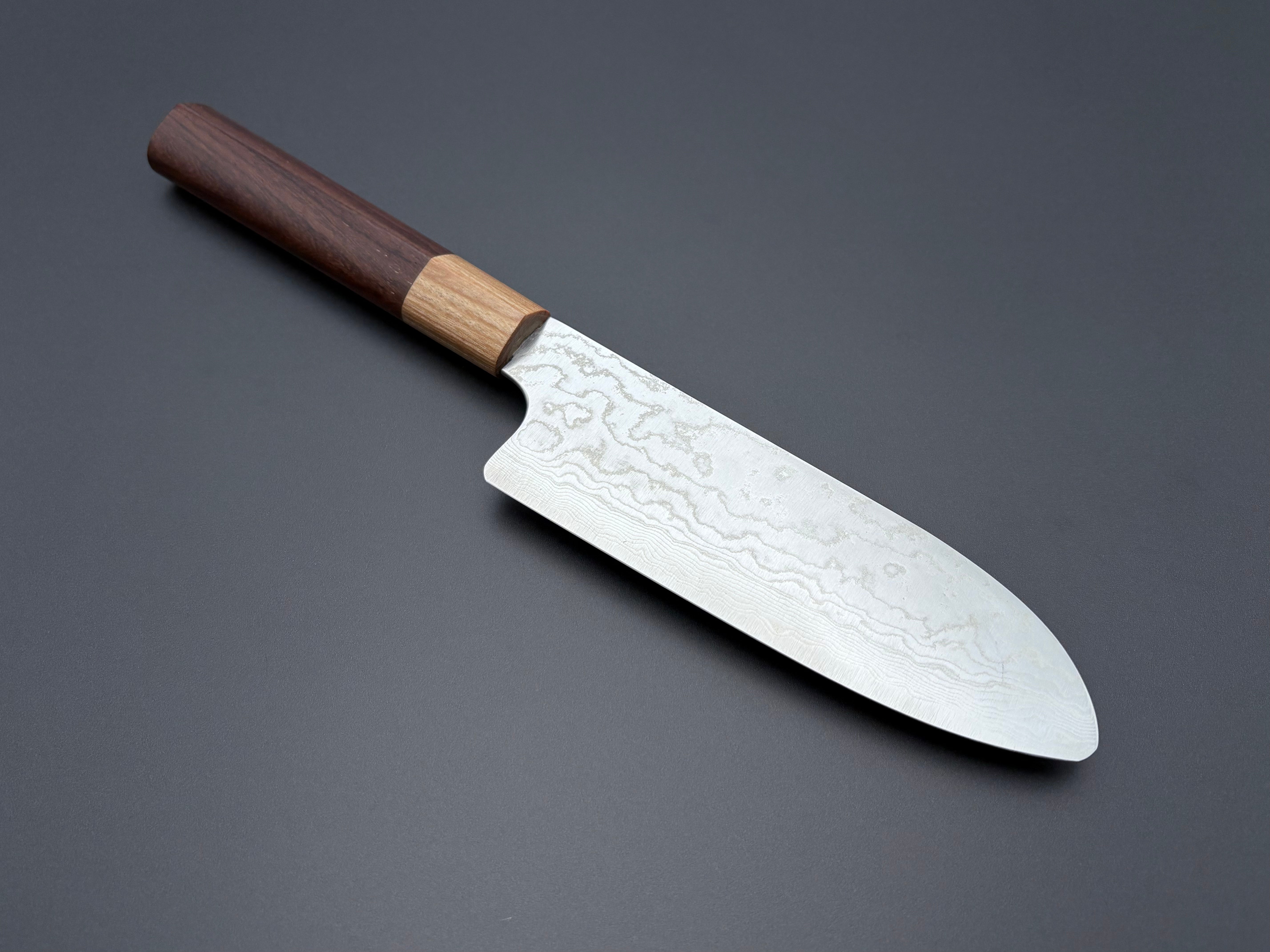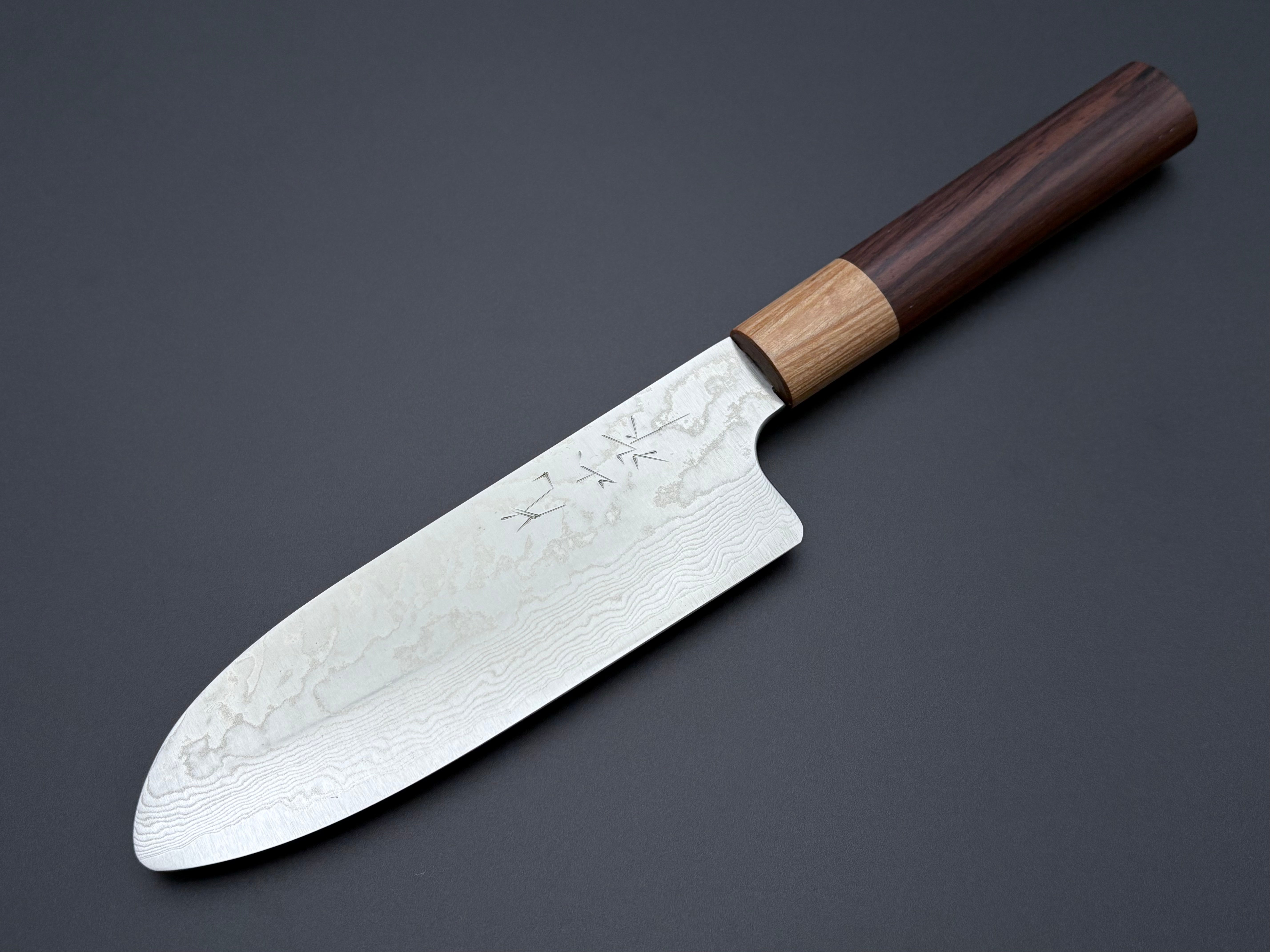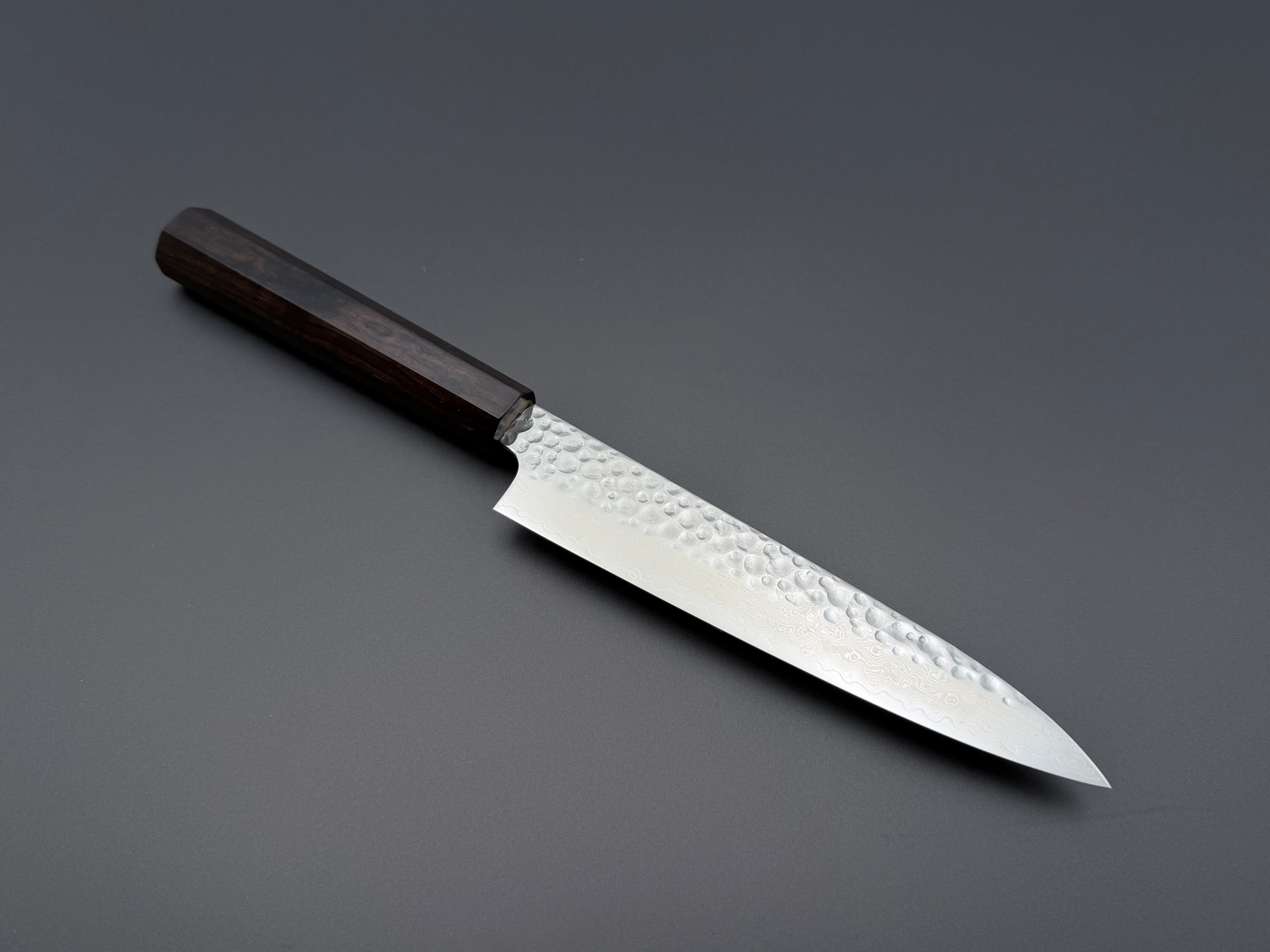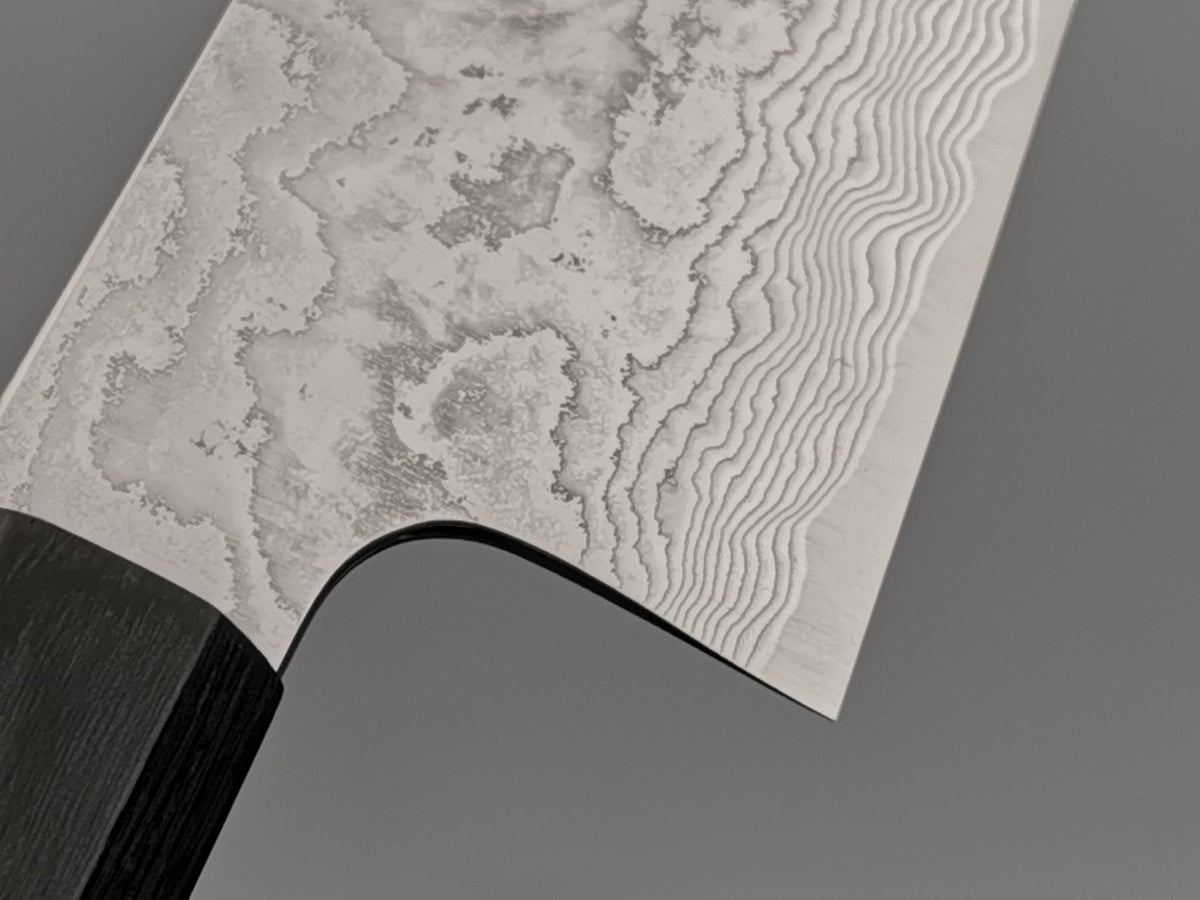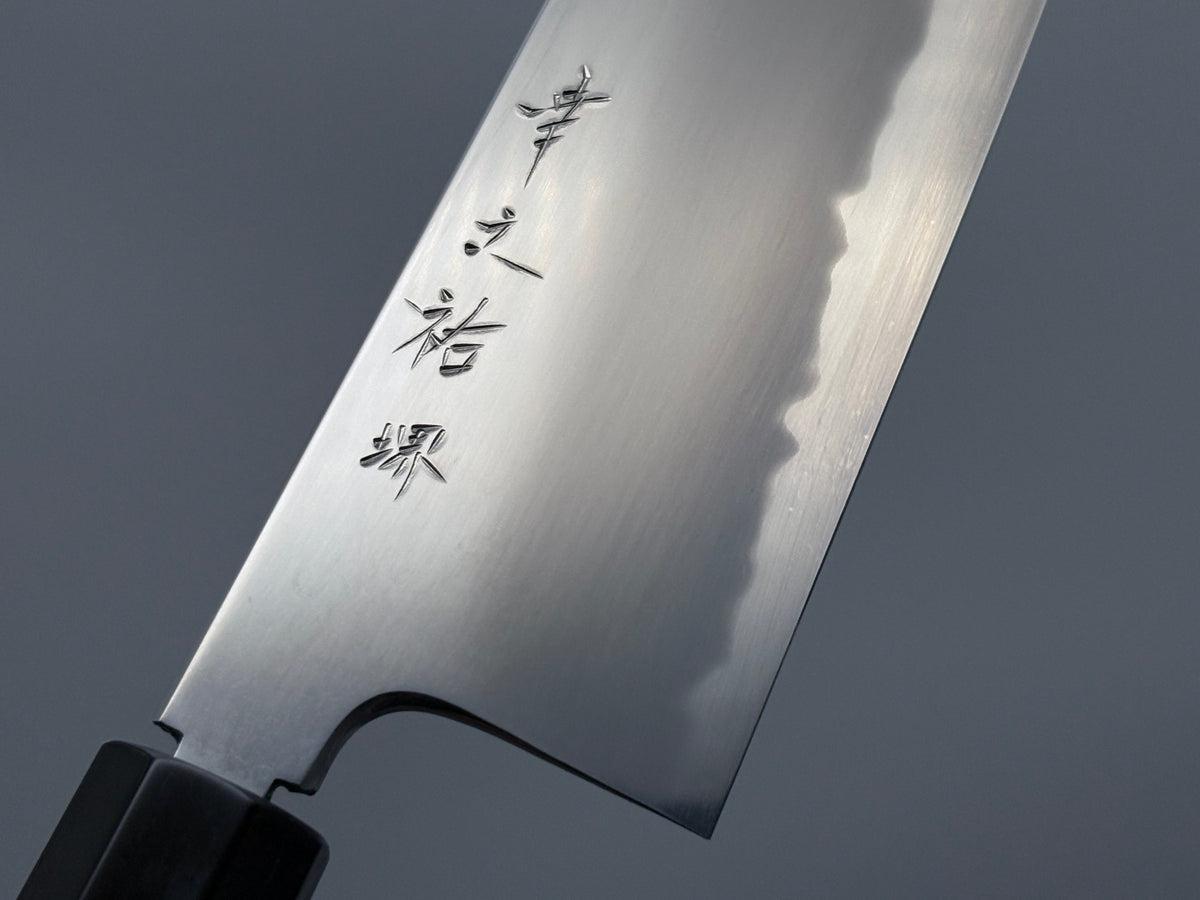

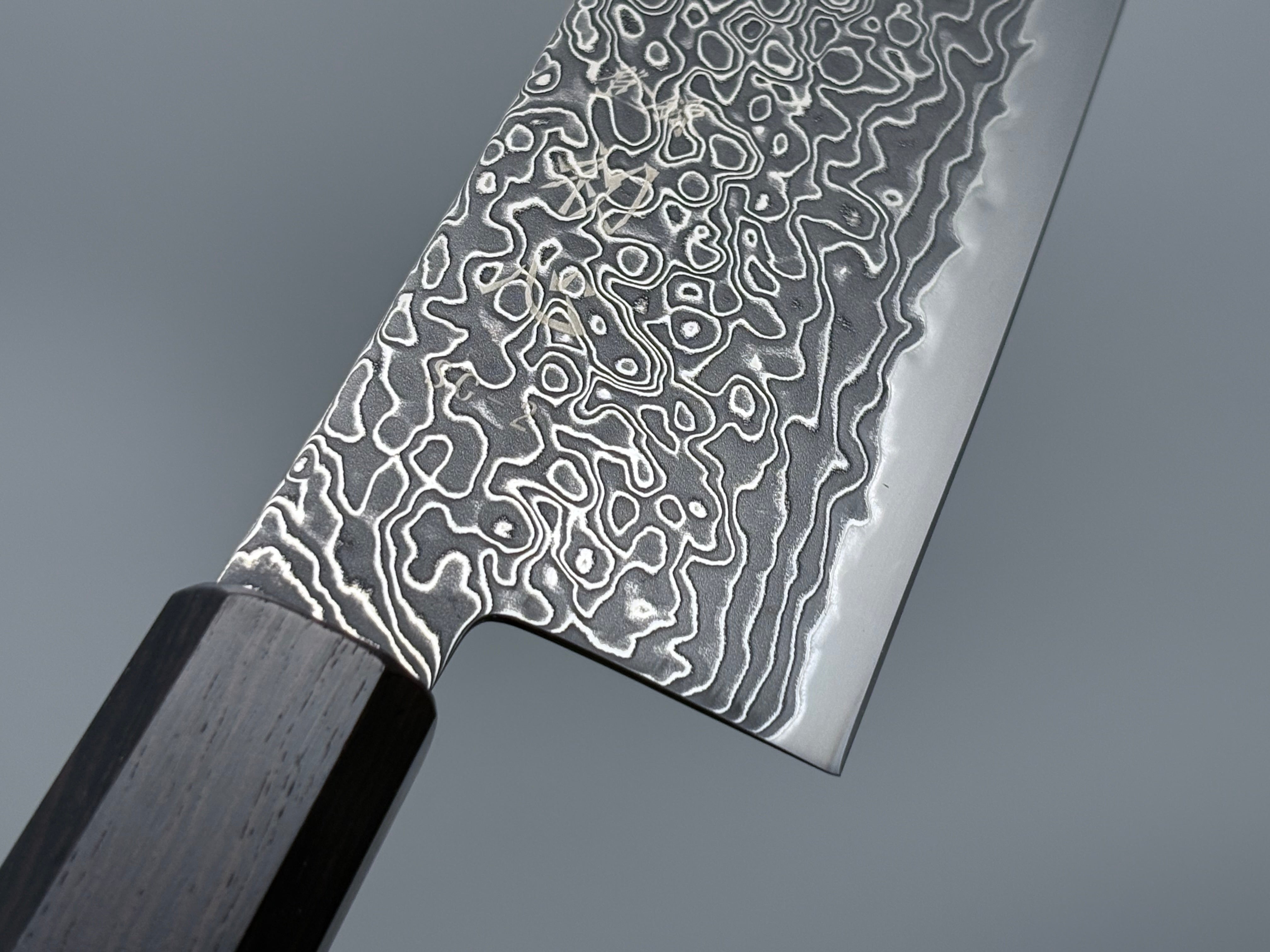
What is a damascus kitchen knife?
A damascus kitchen knife is made by layering two or more types of steel together and folding or welding them repeatedly to produce a blade with a distinctive wavy pattern on the surface. In Japanese kitchen knives, this process wraps a hard, high-carbon core steel in softer outer layers, protecting the core while keeping the edge sharp.
The result is a high-performance tool that also looks good. You can browse our full range of Japanese damascus chef knives to see the variety on offer.
How the layering process works
The cladding layers in a modern Japanese damascus knife are typically stainless or semi-stainless steels, chosen for toughness and ease of maintenance. The core is where the performance comes from: steels like SG2, VG10, Aogami Super, or Blue #2 are common choices, each with different levels of hardness and edge retention.

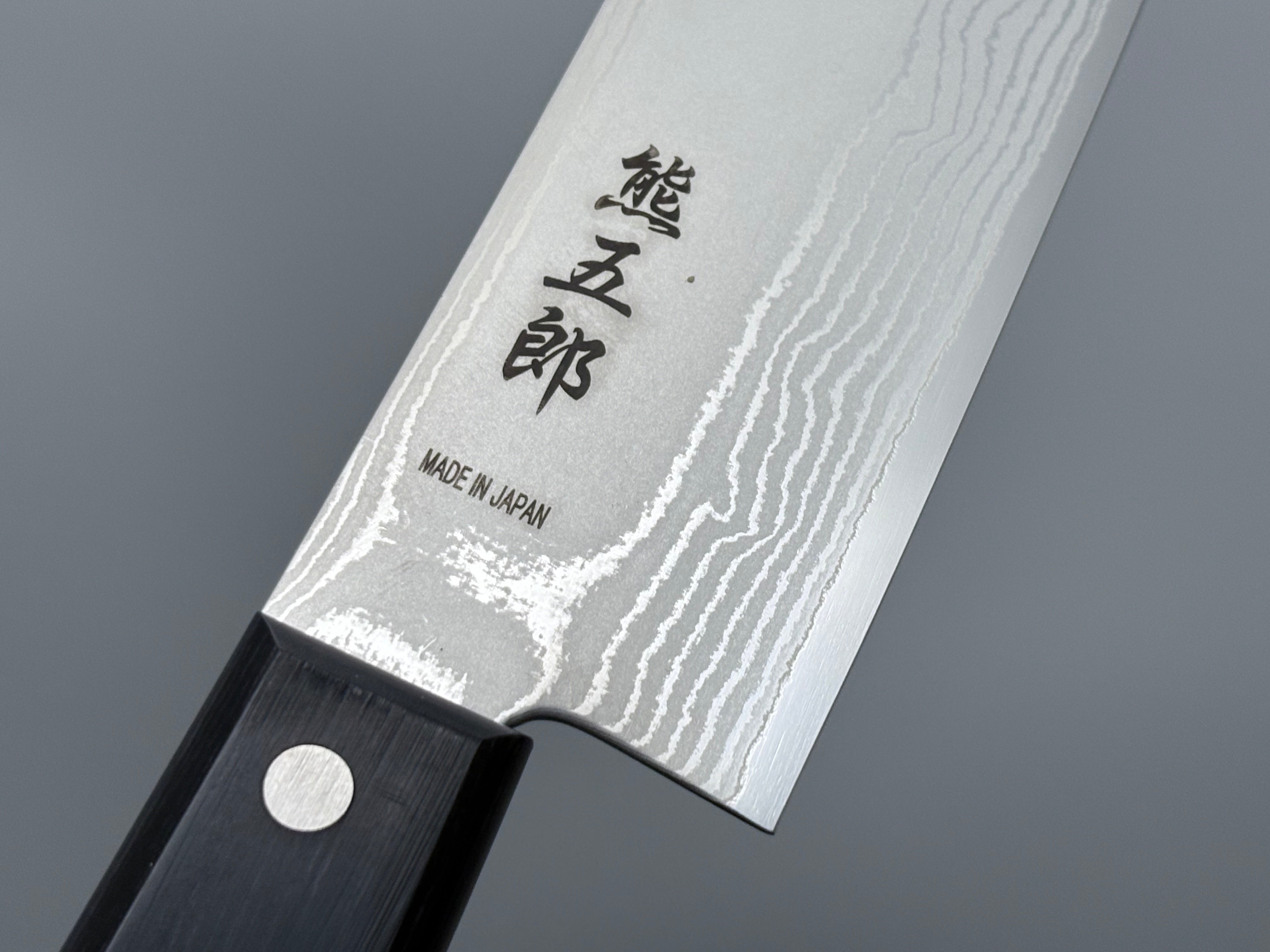
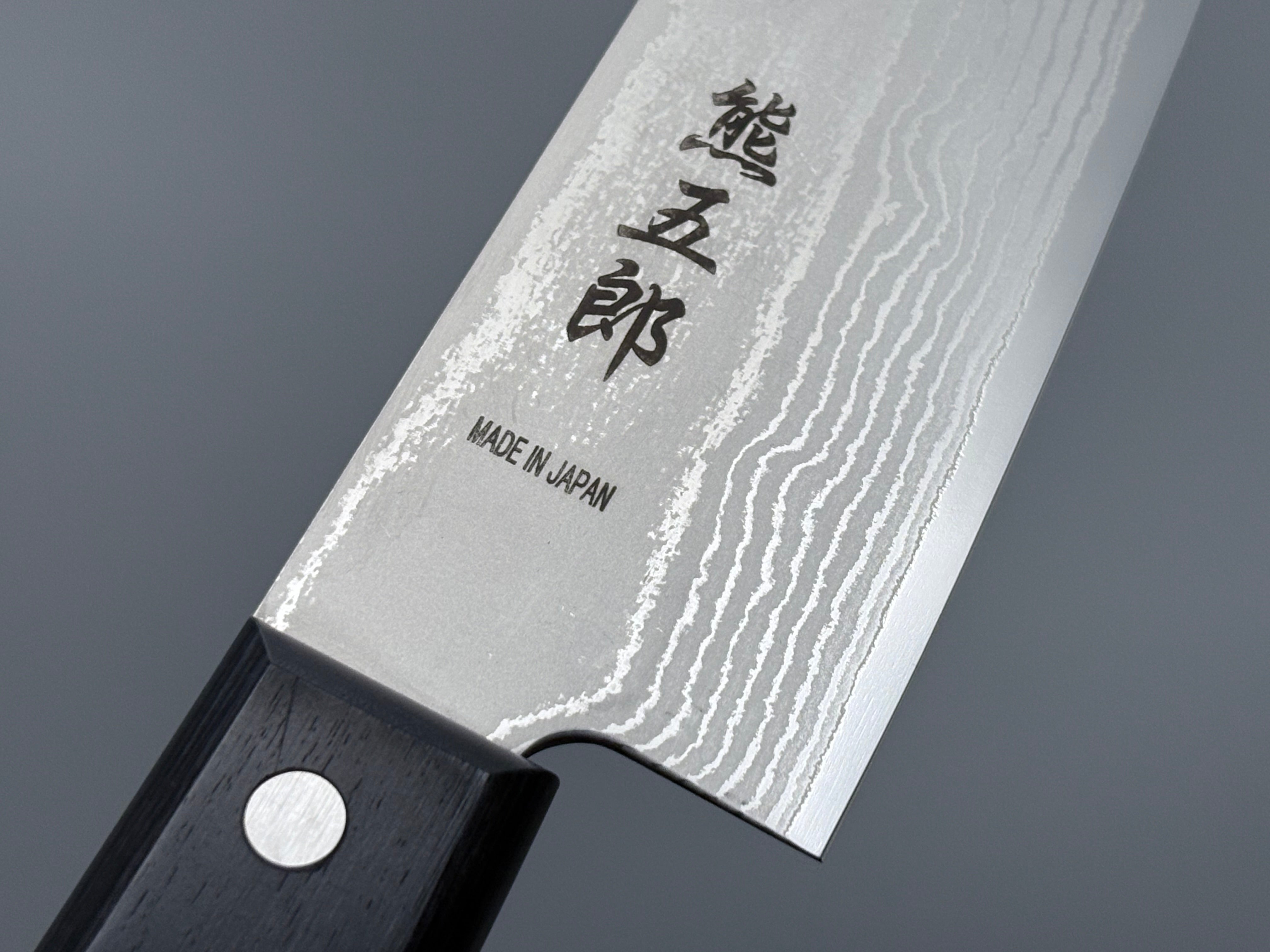
The damascus pattern appears when the blade is ground and etched, revealing the contrast between layers. It is not purely decorative. Softer cladding reduces the risk of chipping under lateral stress, which matters in daily kitchen use. Layer counts vary by maker, from 33 up to 100 or more, though layer count alone does not determine quality.
Hado's approach to the damascus kitchen knife
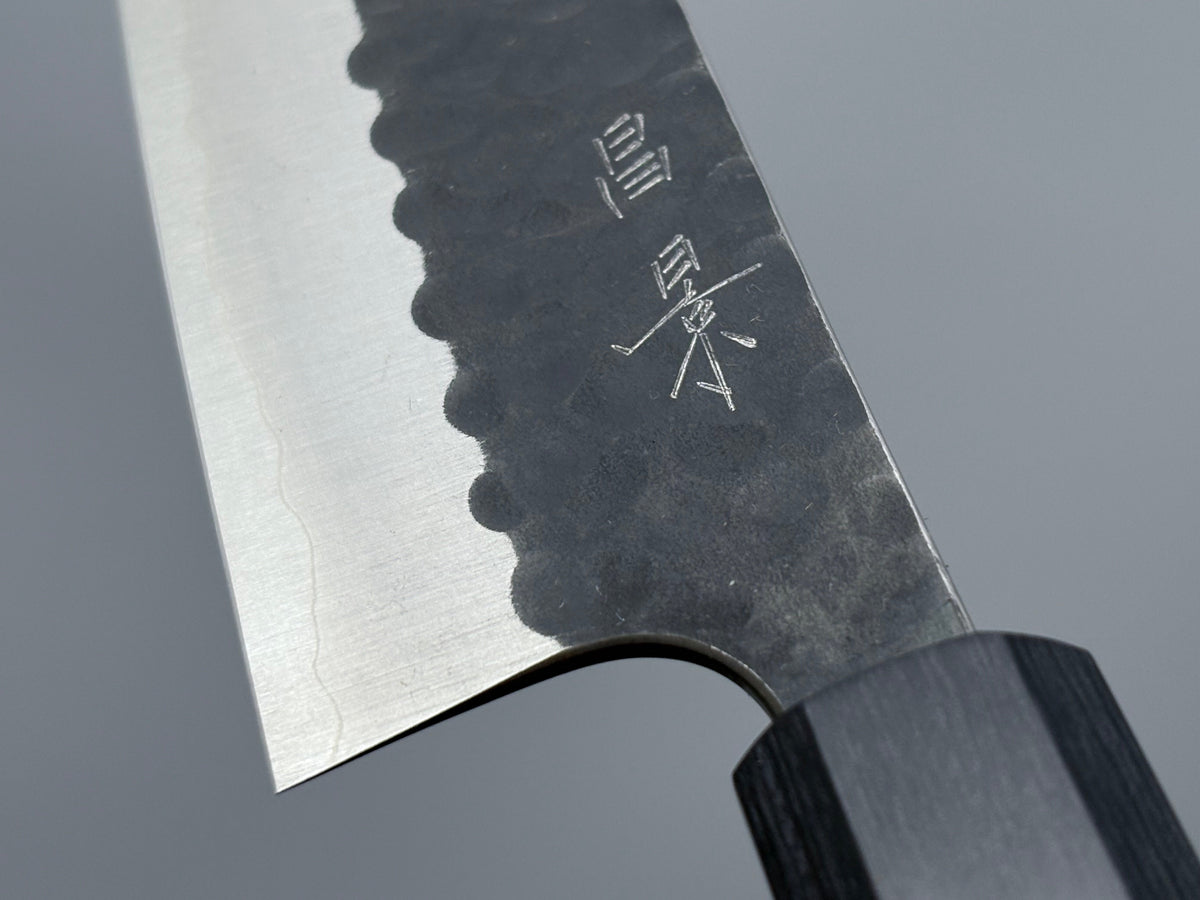
Hado Knife, based in Sakai City, Osaka, is one of the most considered makers we stock for layered blade work. Sakai has produced professional knives for centuries, and Hado brings that tradition into a contemporary range using premium steels including SG2 and Ginsan. Every blade is hand-sharpened and finished with attention to edge geometry and balance.

Their Hado Blue #1 Damascus range is a good example of what a well-made damascus knife can do, pairing reactive carbon steel sharpness with a clean, well-finished cladding. The handles are fitted with care, and the weight distribution reflects the kind of detail that separates a serious production knife from a generic one.
Choosing the right blade style and size
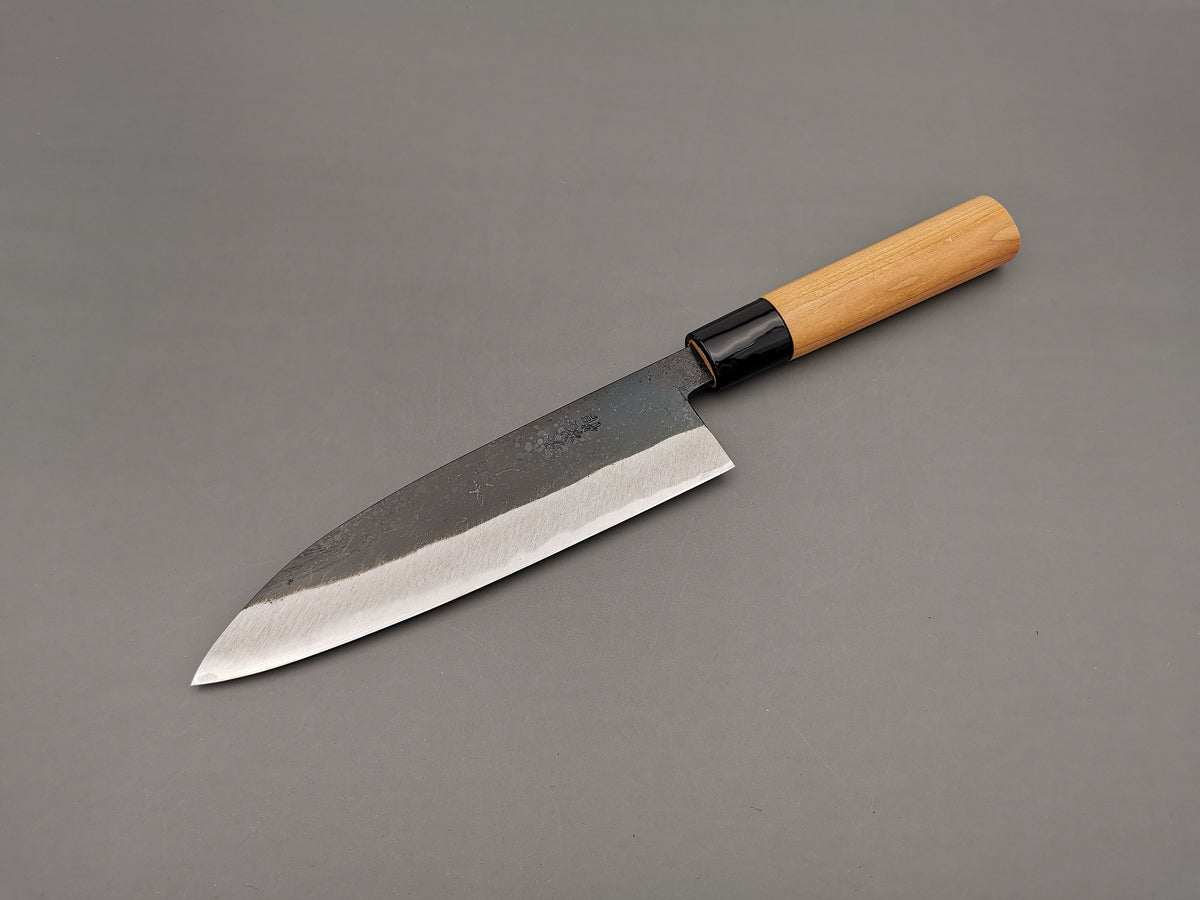
Shape and length matter as much as the steel. A gyuto is the Japanese equivalent of a chef's knife and the most practical option for most cooks. If you want something compact, knives in the 151 to 179mm range suit smaller kitchens or more controlled prep work. For slicing larger ingredients, a blade in the 210 to 240mm range gives you more reach and cleaner pull cuts. A nakiri is worth considering if vegetable prep takes up most of your time, since the flat profile suits push cuts well.
Caring for a damascus kitchen knife
Most Japanese damascus knives need a bit more attention than a standard stainless blade. Keep them dry after use, store them on a magnetic rack or in a blade guard, and sharpen on a whetstone rather than a honing rod. If the core steel is reactive, dry the blade immediately after cutting acidic foods. A well-maintained damascus knife will hold a superior edge far longer than most European alternatives.
- Never put a Japanese damascus knife in a dishwasher
- Use a wooden or plastic cutting board, not glass or stone
- Sharpen on a whetstone suited to the steel hardness
Find your damascus kitchen knife
Whether you are buying your first quality knife or adding to a collection, our range covers a wide spread of price points. Browse our full selection of Japanese damascus chef knives, or explore Japanese knives from £100 to £175 if you want high performance without stretching to a specialist piece.