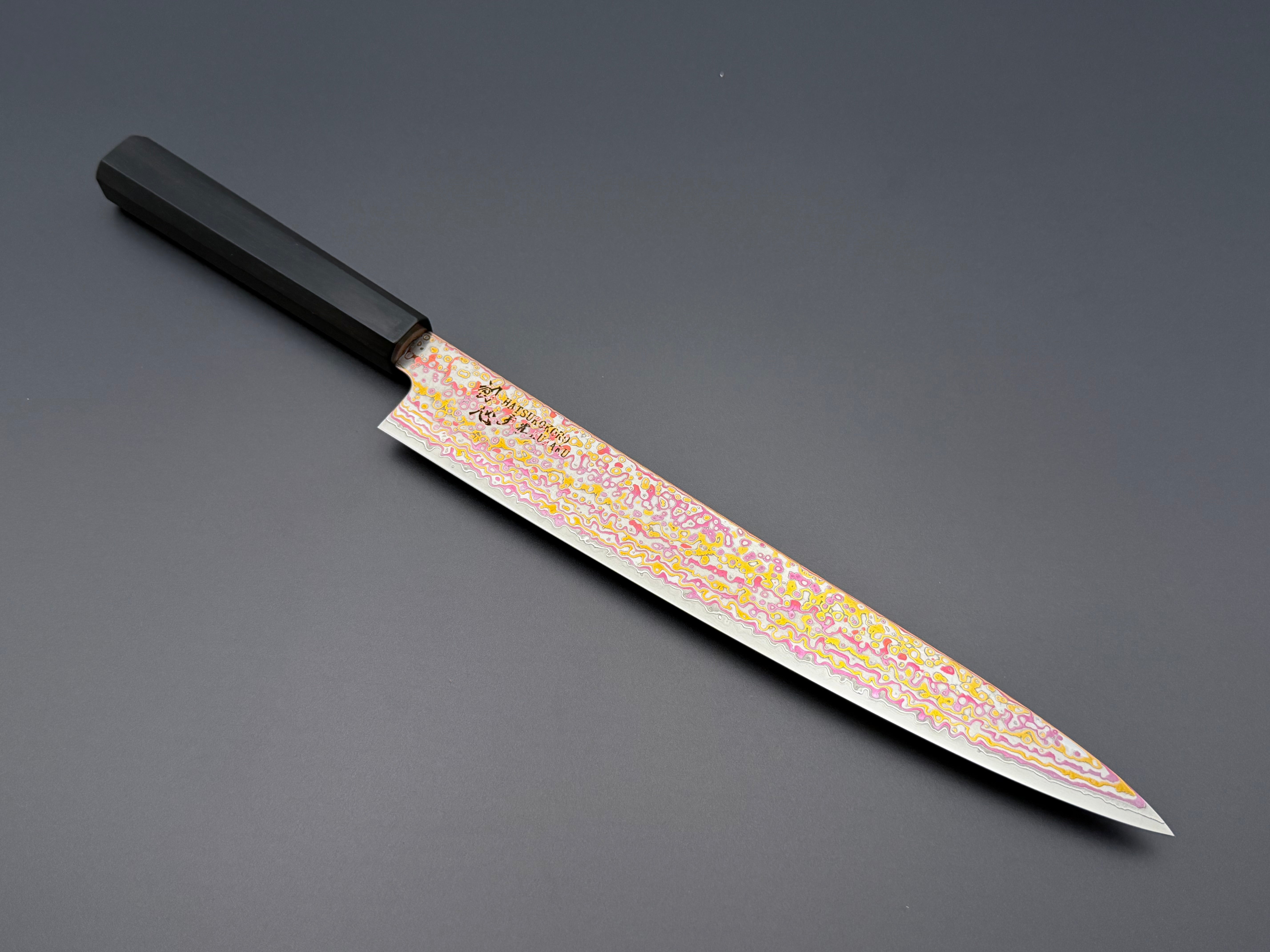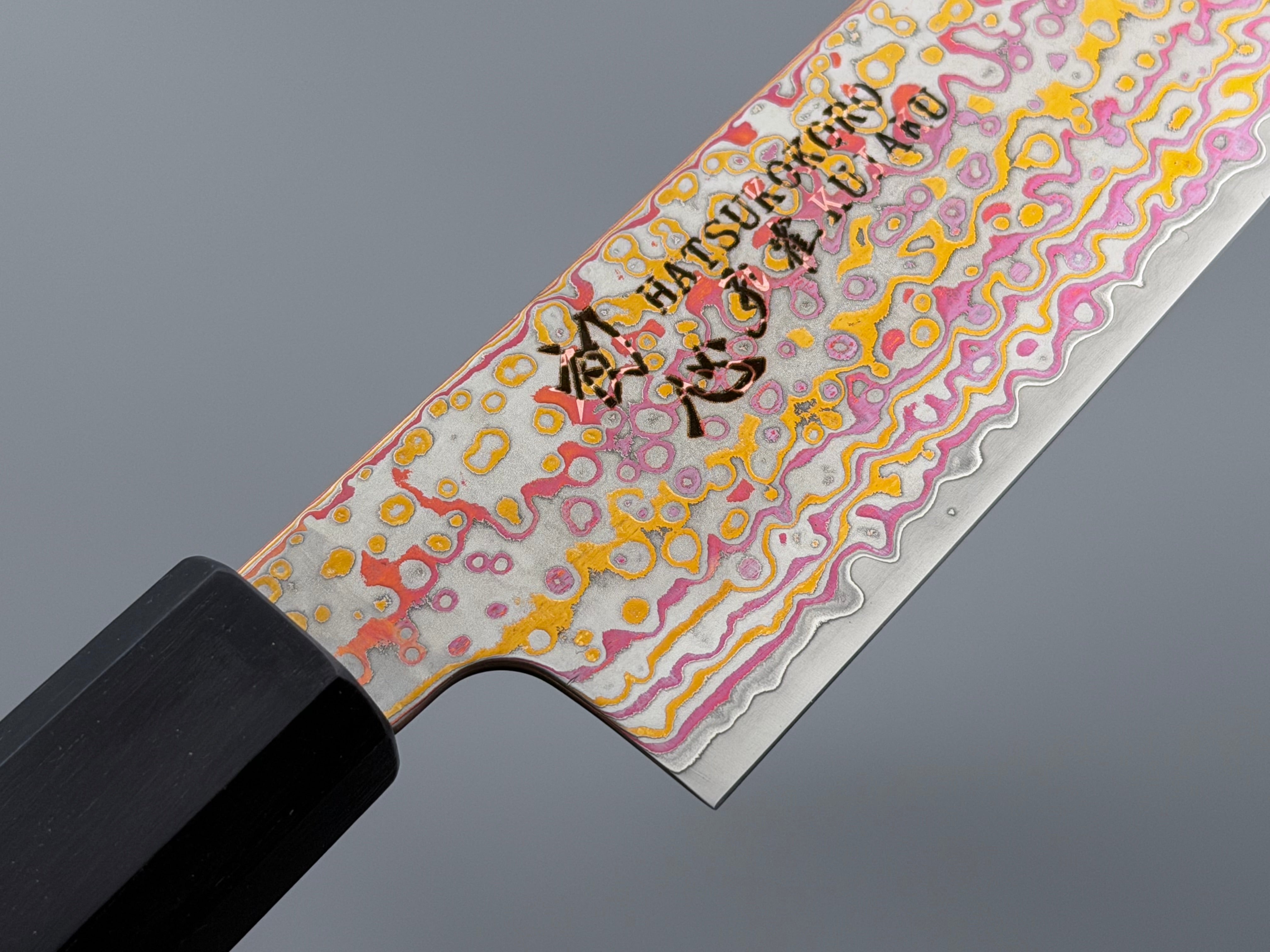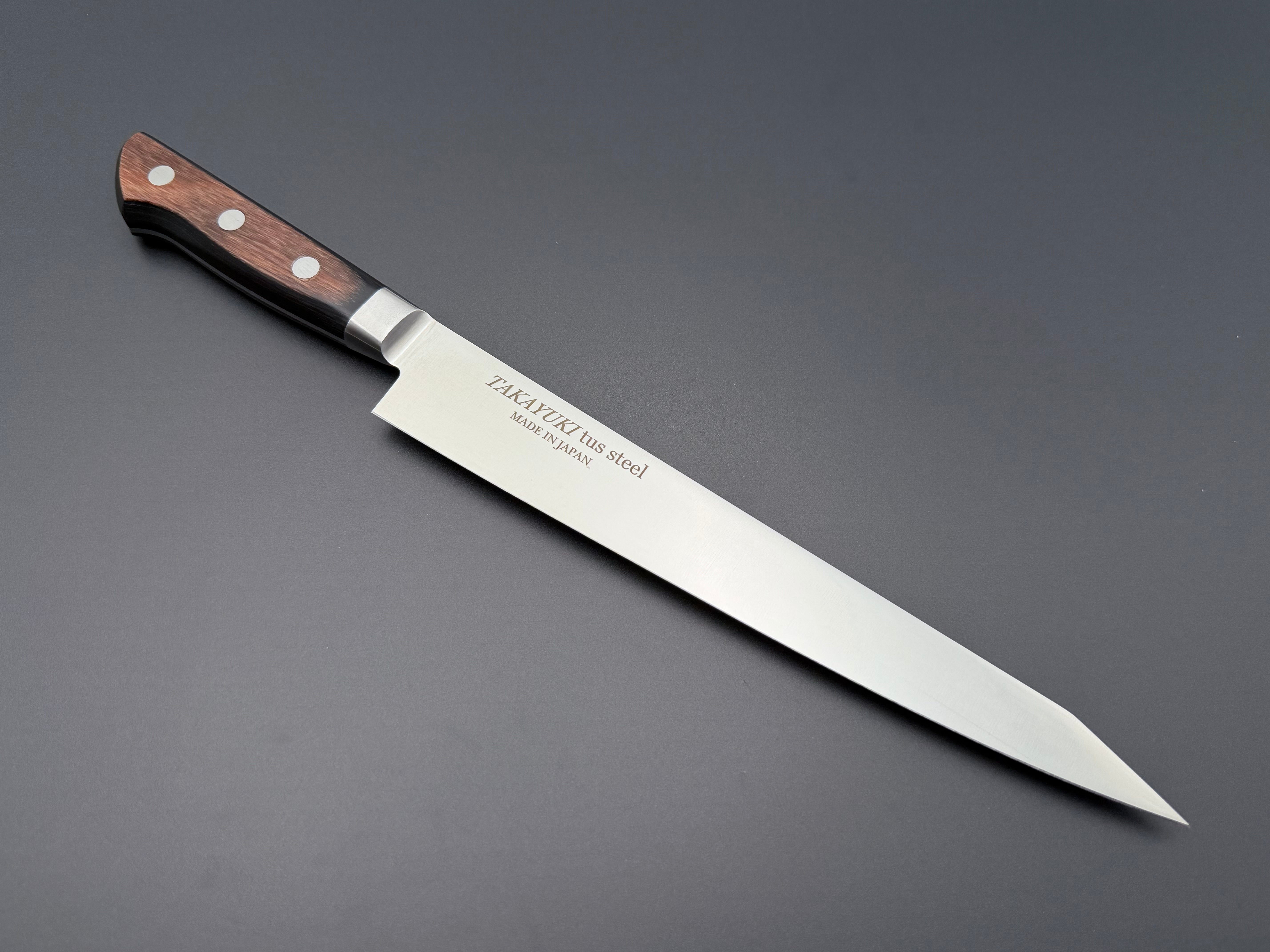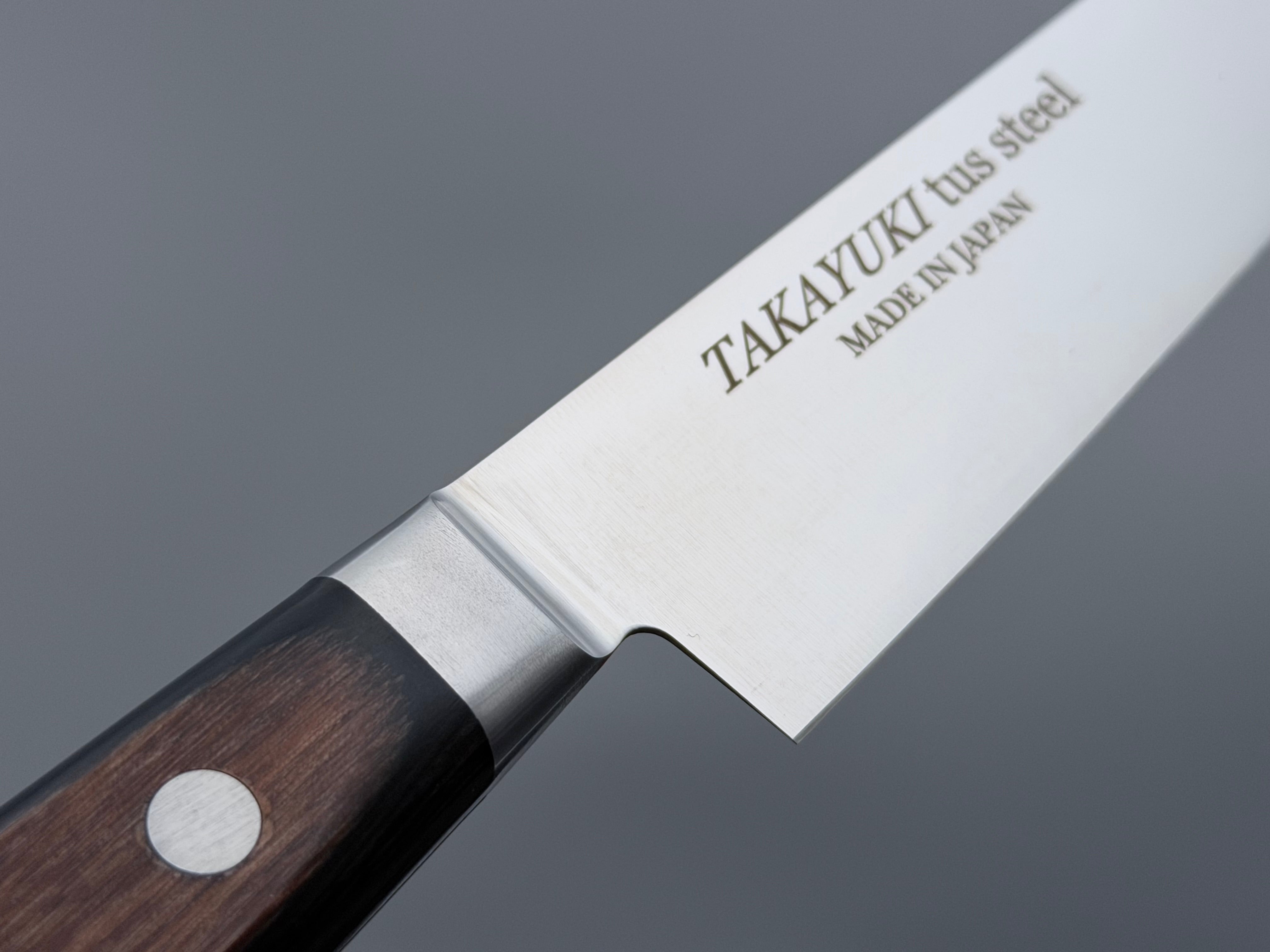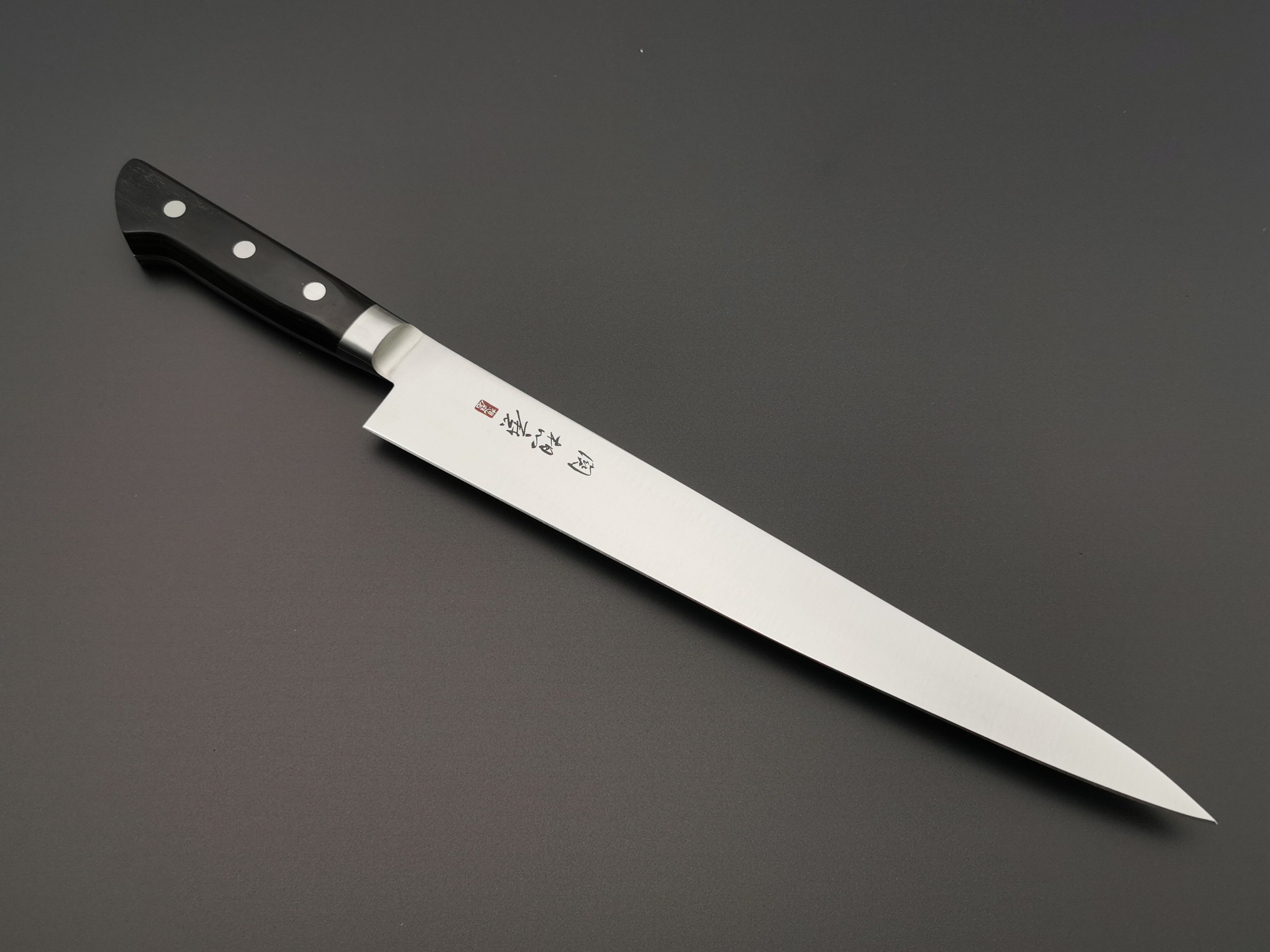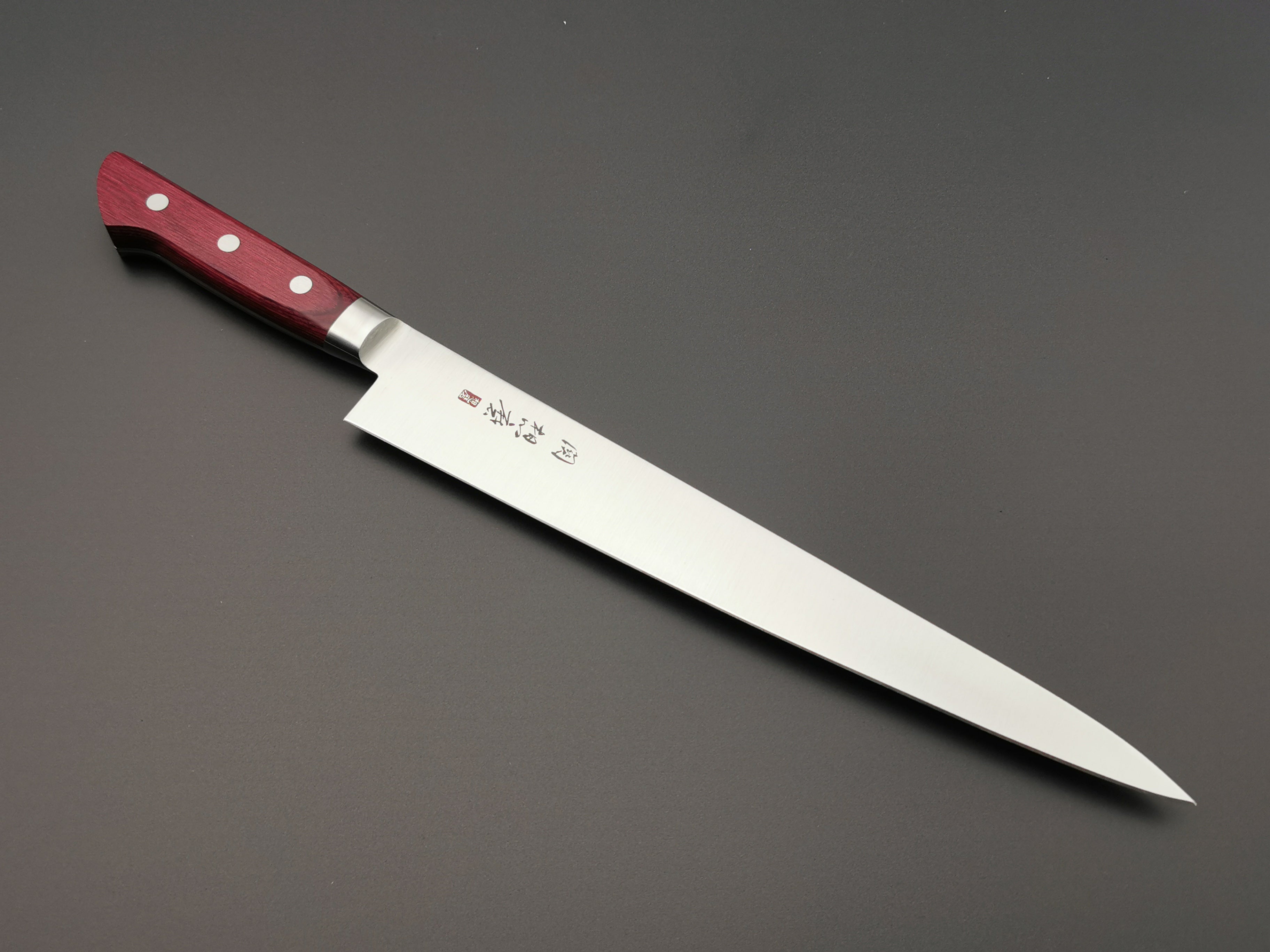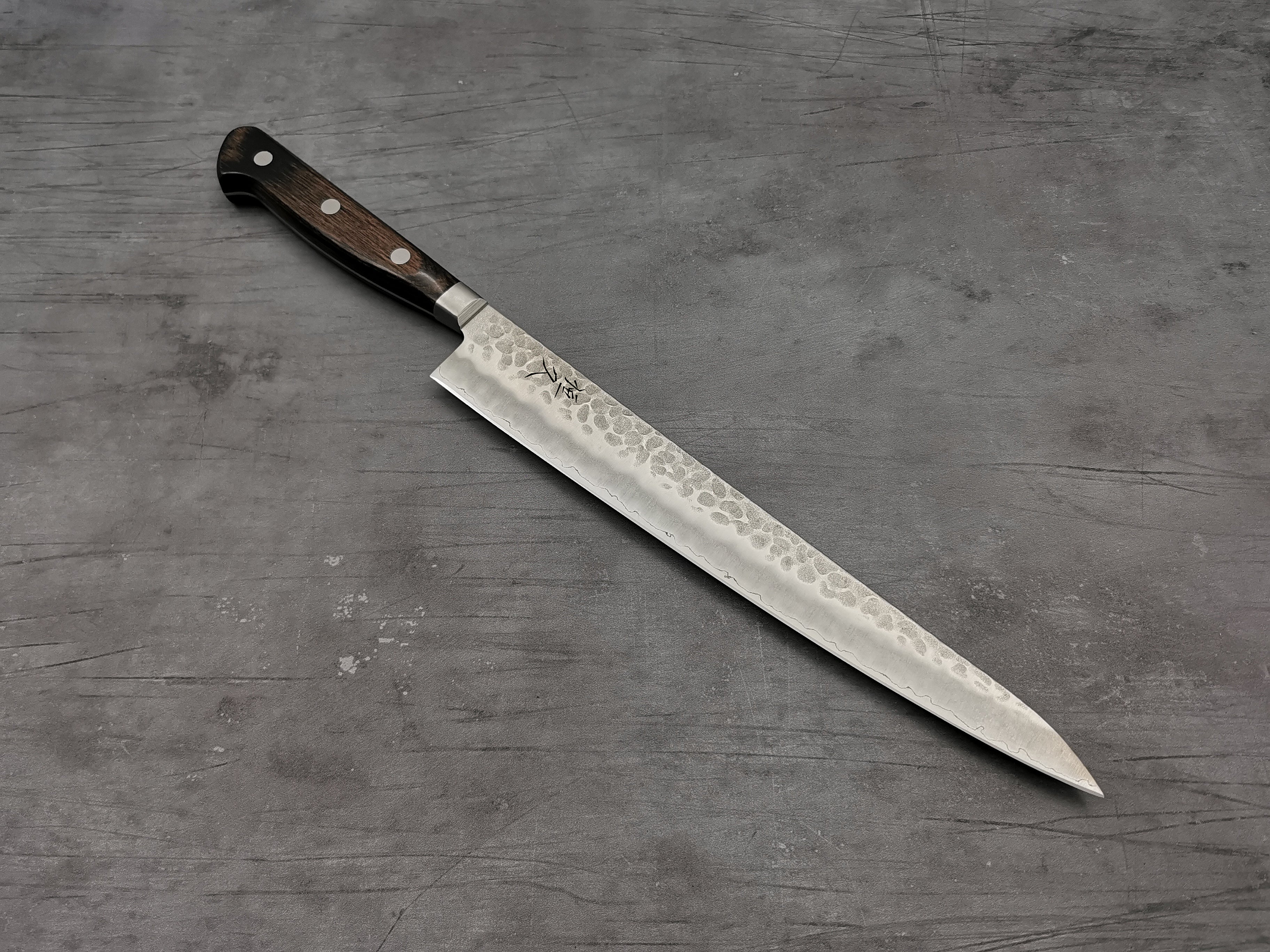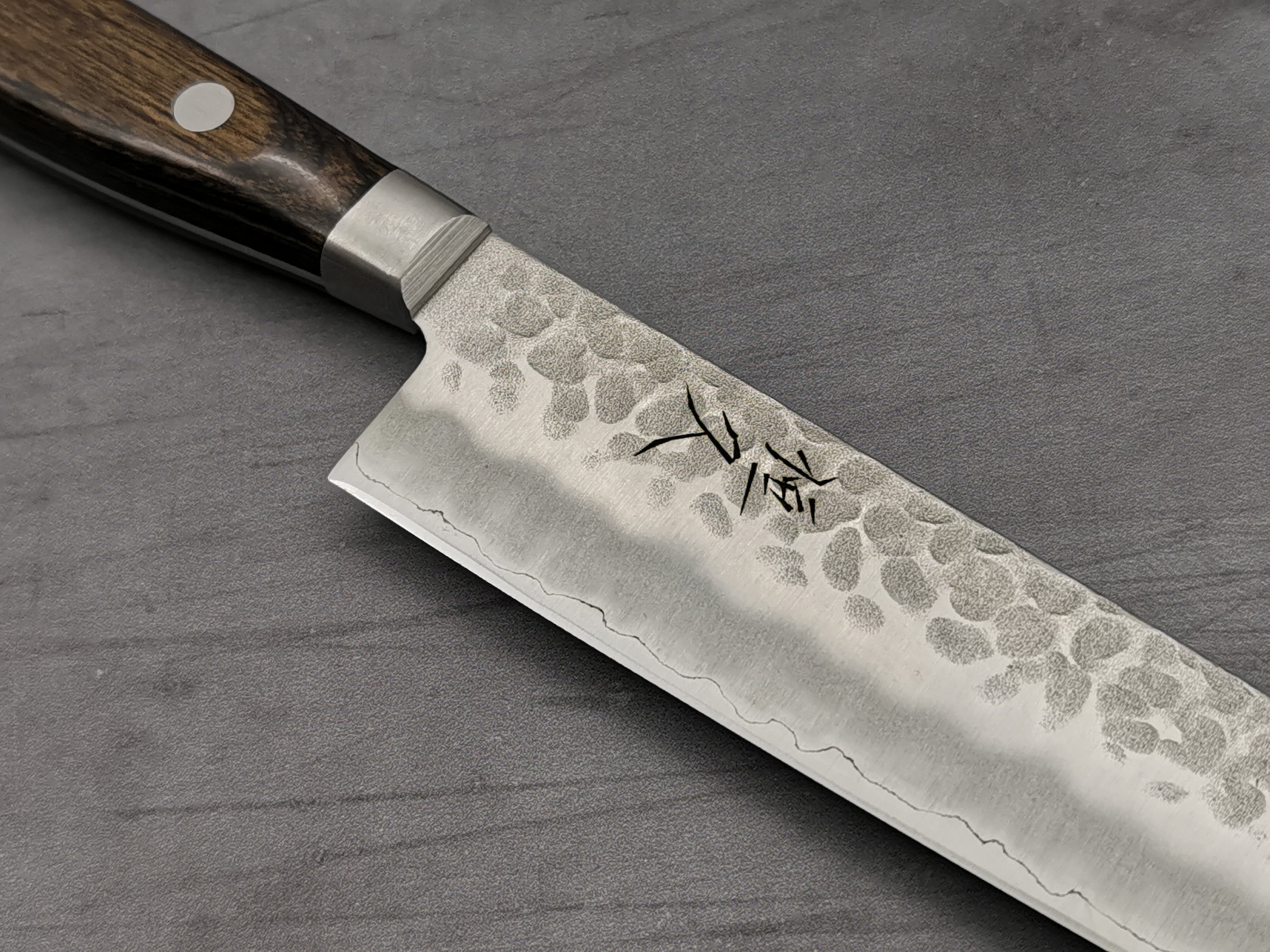

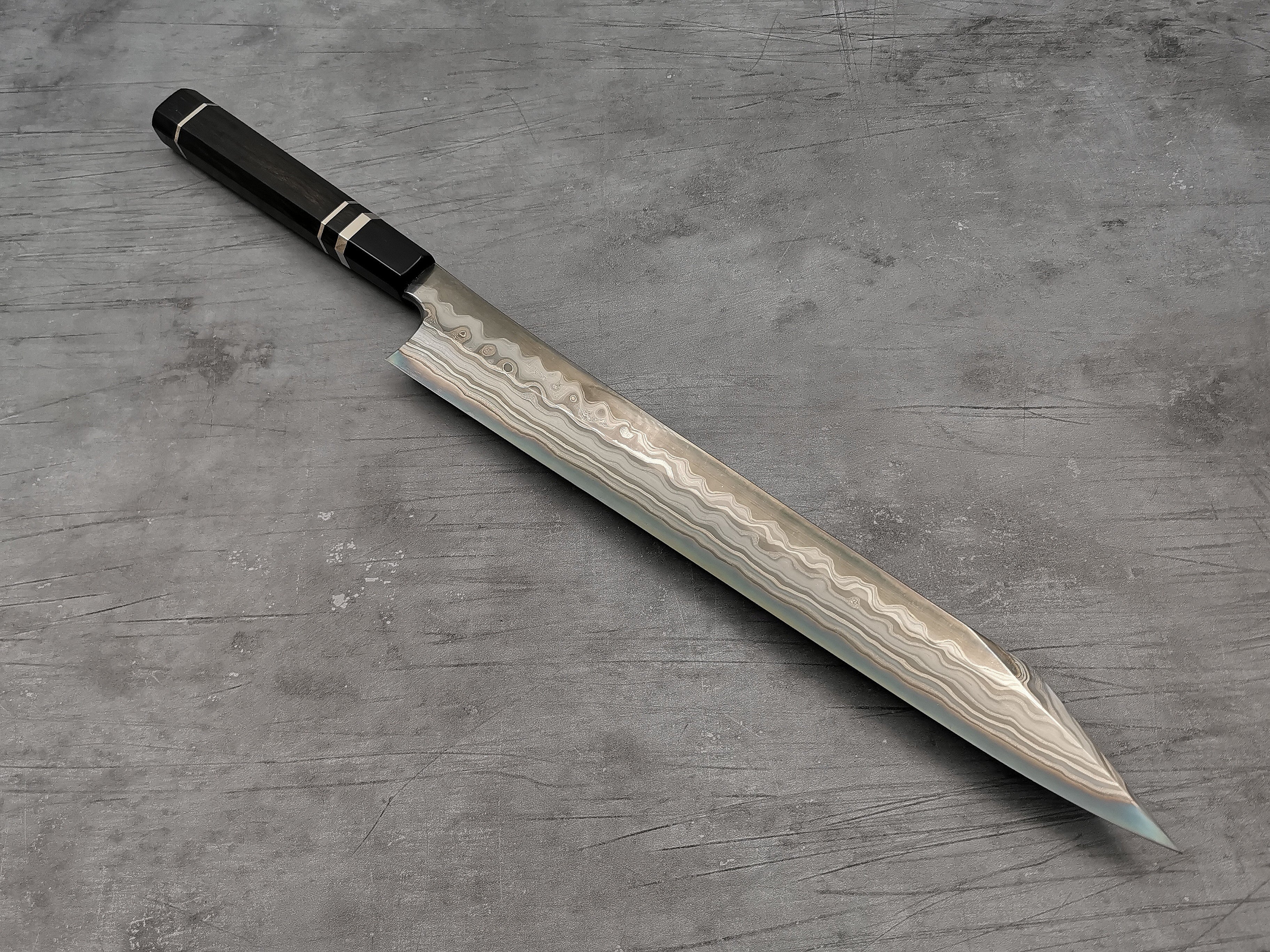
What is a yanagiba knife?
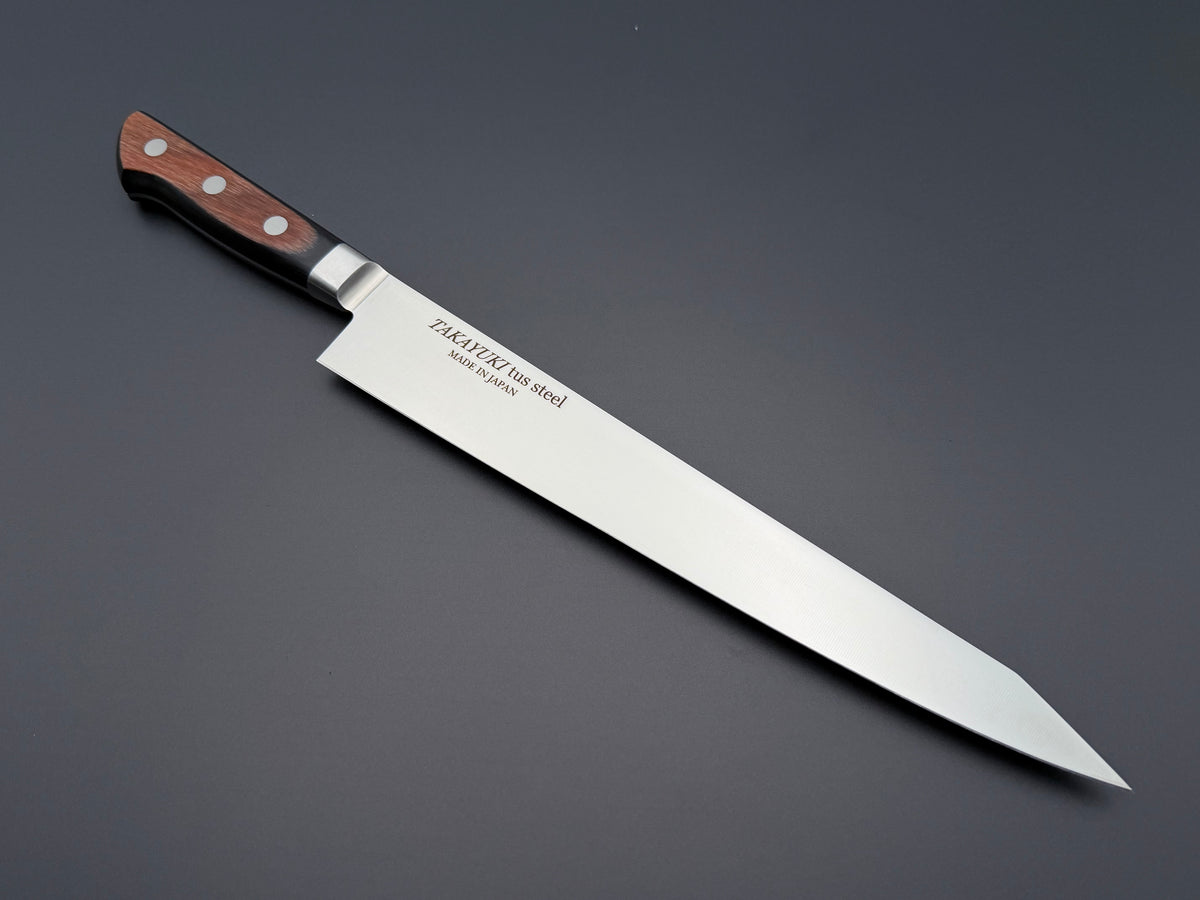
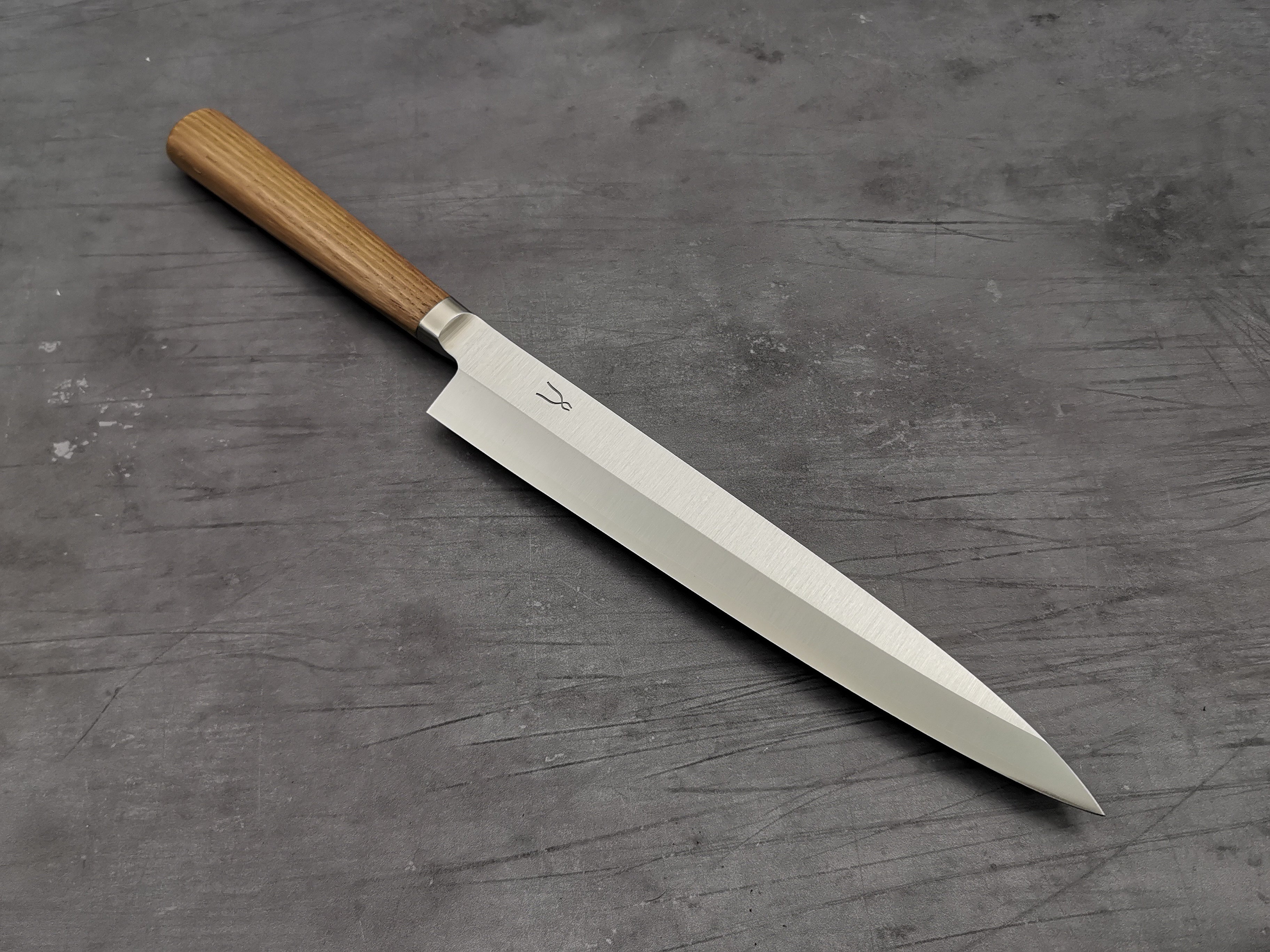
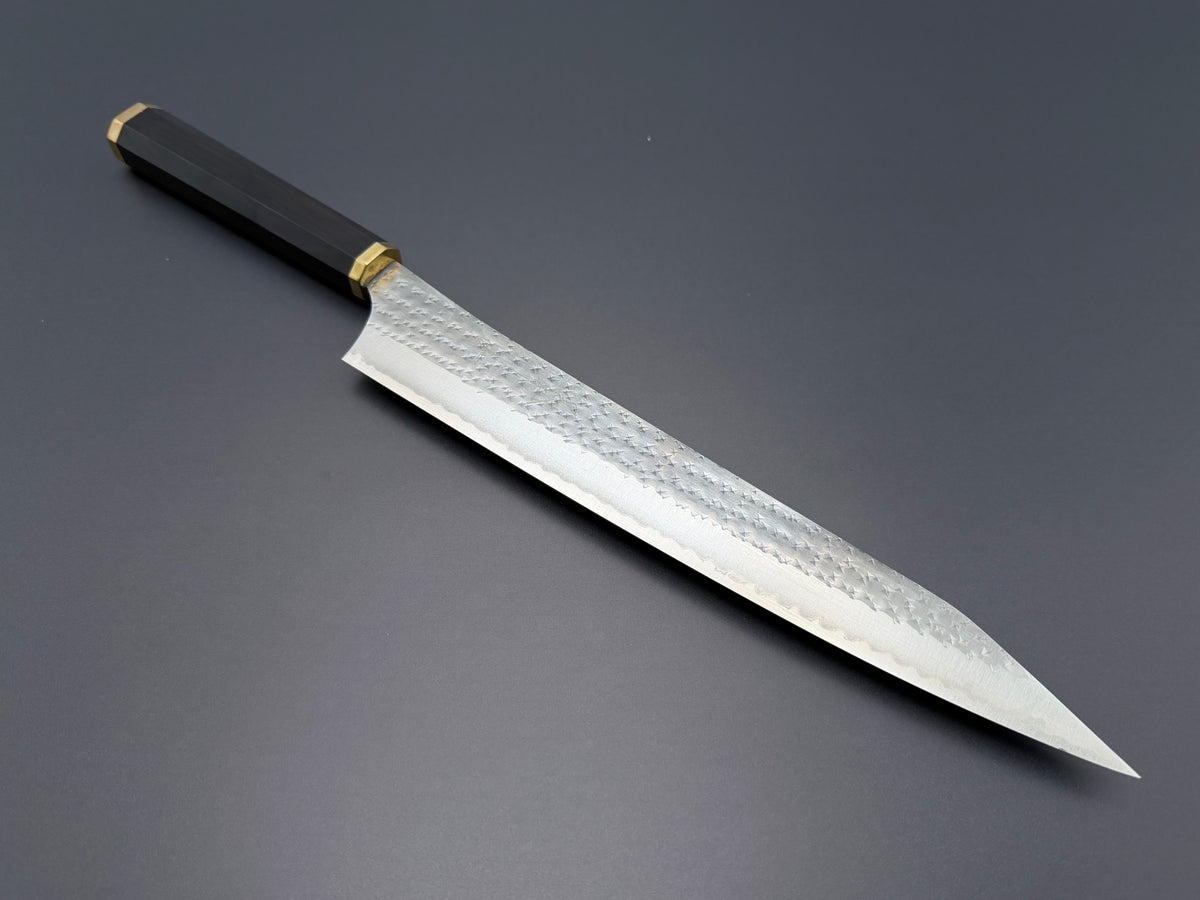
The yanagiba is one of the most recognisable tools in Japanese professional cookery. Long, slender and ground on a single bevel, it was designed specifically for slicing raw fish, the kind of precise, pull-cut work required when preparing sushi and sashimi. The name roughly translates as "willow leaf blade", a reference to its tapered profile.

How the single bevel design works
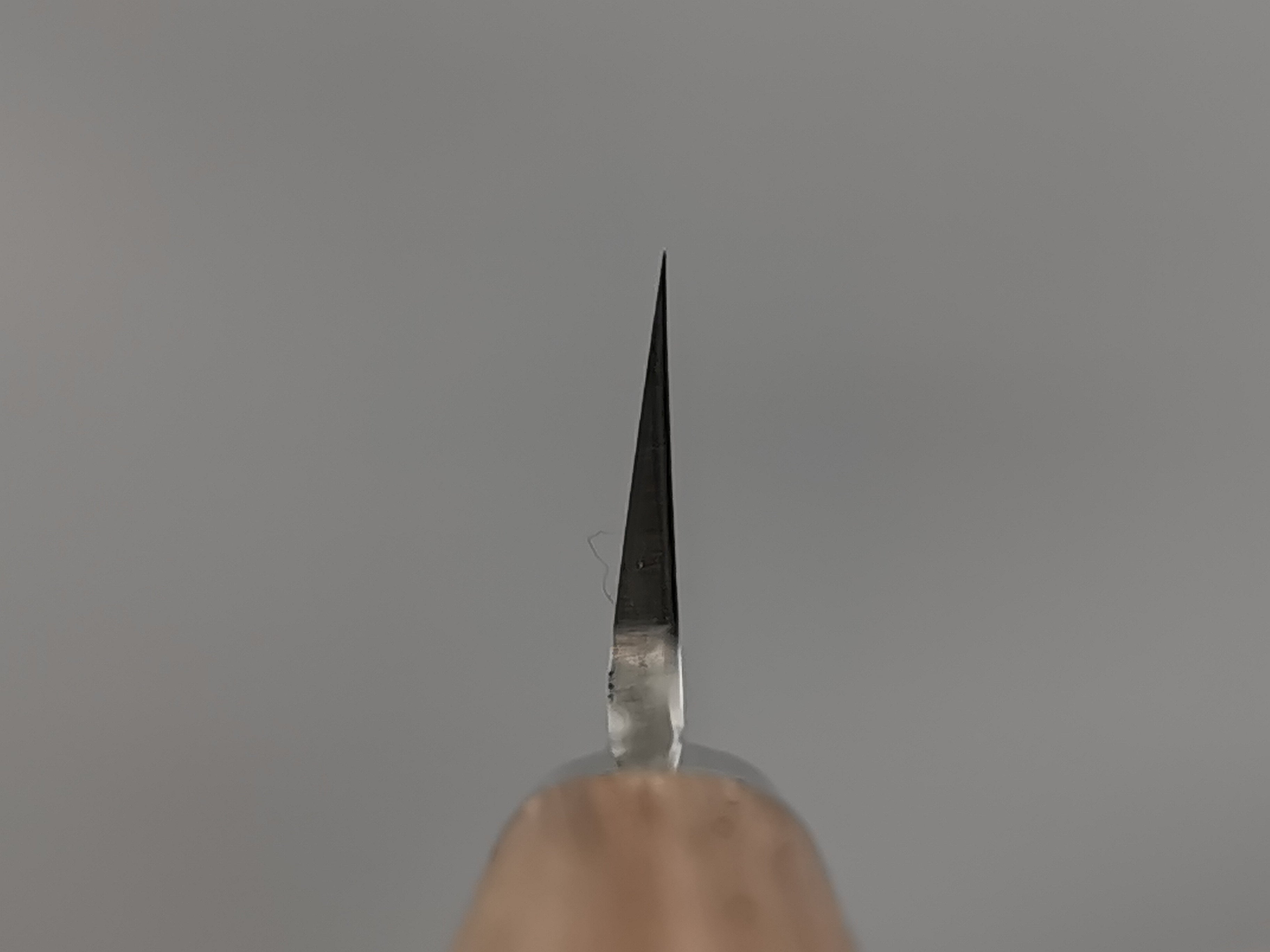
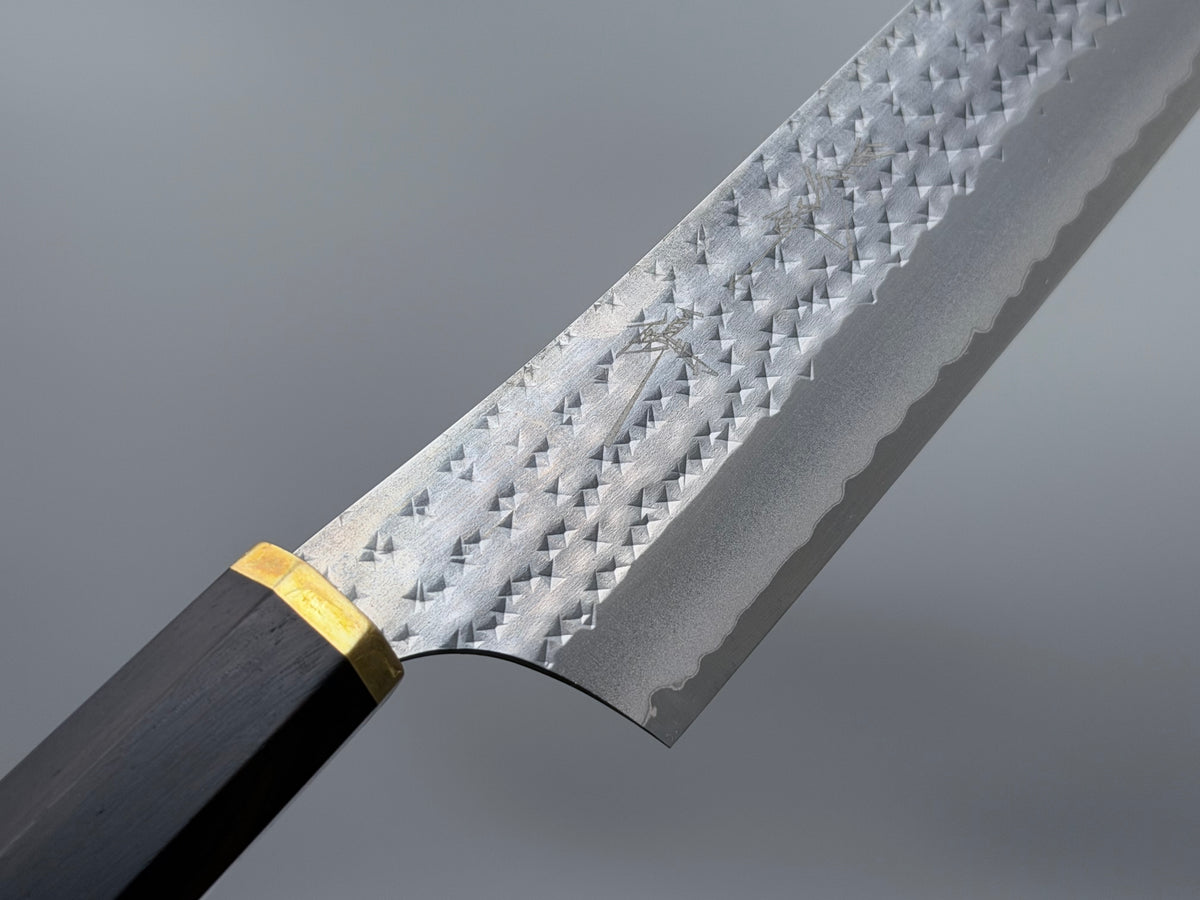
What separates the yanagiba from most Western slicing knives, and from its double-bevel Japanese cousin the sujihiki, is the asymmetrical grind. One face is ground at an angle to form the cutting edge; the other is flat, or very slightly hollow, to help food release cleanly.
Draw the blade through a piece of salmon or tuna in a single stroke and that geometry produces a cut surface that is smooth and visually clean. The single bevel reaches a finer apex than a symmetrical grind, and it guides each slice in a predictable direction, which matters when you are portioning fish to a consistent thickness for presentation.
Yanagiba versus sujihiki: which do you need?
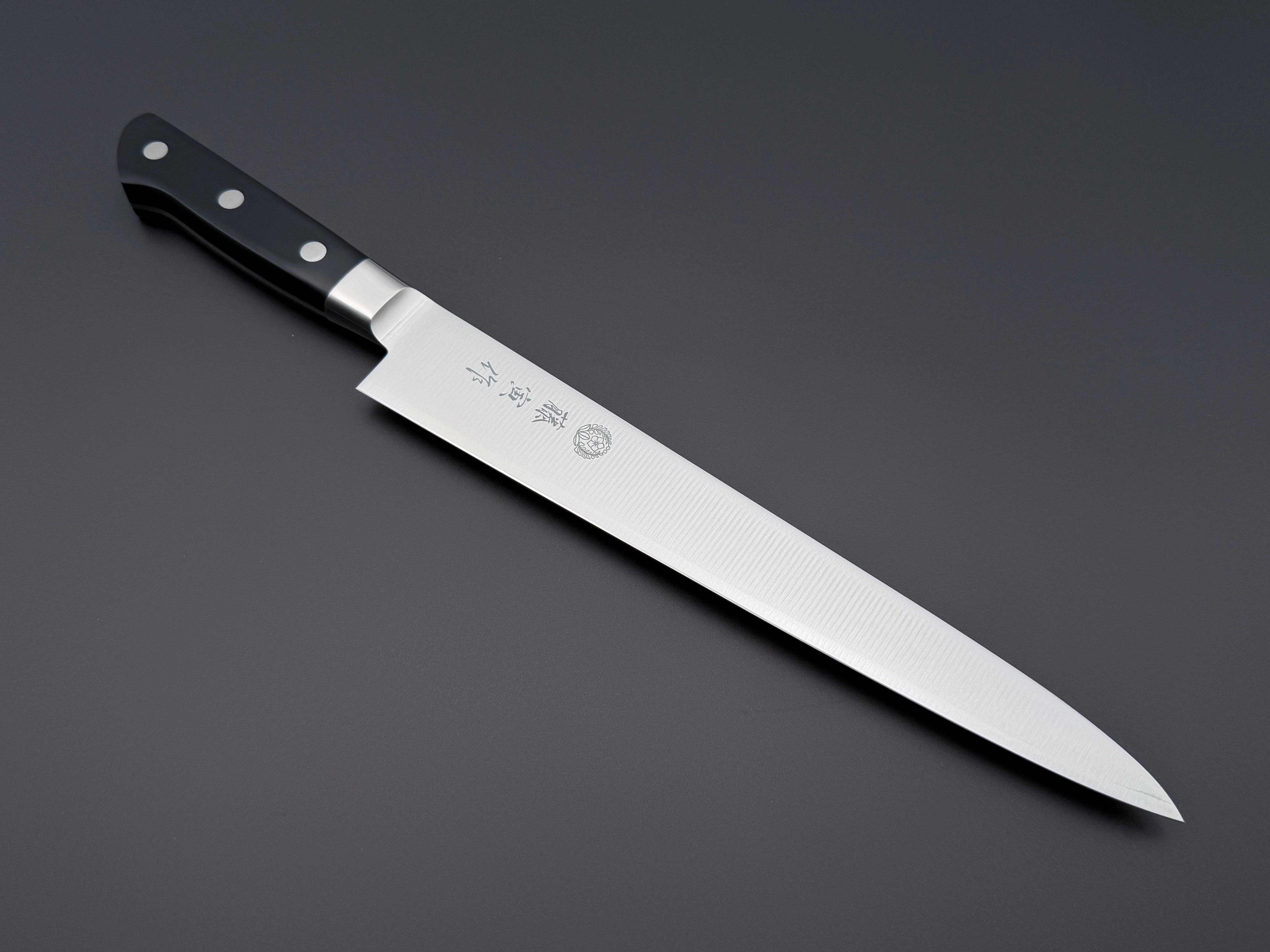
Both knives are built for slicing, but they serve different purposes. The yanagiba is typically thicker at the spine, heavier overall, and suited to the specific technique used in Japanese fish preparation. The sujihiki is double-bevelled and handles a wider range of slicing tasks, from carving roasted meat to portioning cured fish. If your cooking is focused on sushi and sashimi, the yanagiba is the natural choice. For general carving across different ingredients and cooking styles, a Japanese carving knife in the sujihiki style will prove more versatile and easier to maintain at home.
Choosing a yanagiba: length and steel
Yanagiba knives typically run between 210mm and 330mm. A blade in the 210 to 240mm range suits home cooks or those working in tighter spaces, while professionals often prefer something in the 241 to 299mm range for longer, uninterrupted strokes through larger fillets. Steel matters too. Carbon steels like Shirogami take an extremely fine edge but need attentive care to prevent oxidation. Stainless options such as Ginsan offer nearly comparable sharpness with greater resistance to moisture, which is useful in busy kitchens where thorough drying after each use is not always realistic.
Caring for a single bevel blade
Single bevel knives need sharpening on whetstones rather than honing rods, and the technique differs from double-bevel work. Only the bevelled face is sharpened at an angle; the flat back receives a few light passes to remove any burr. Taking your time at this stage makes a noticeable difference to the finished edge. Good knife care accessories, including appropriate stones and a strop, make a real difference to how long an edge holds between sessions.
Browse our full range of Japanese knives or go straight to the yanagiba collection to find the right blade for your kitchen.