
Understanding the Kurouchi Finish on Japanese Knives
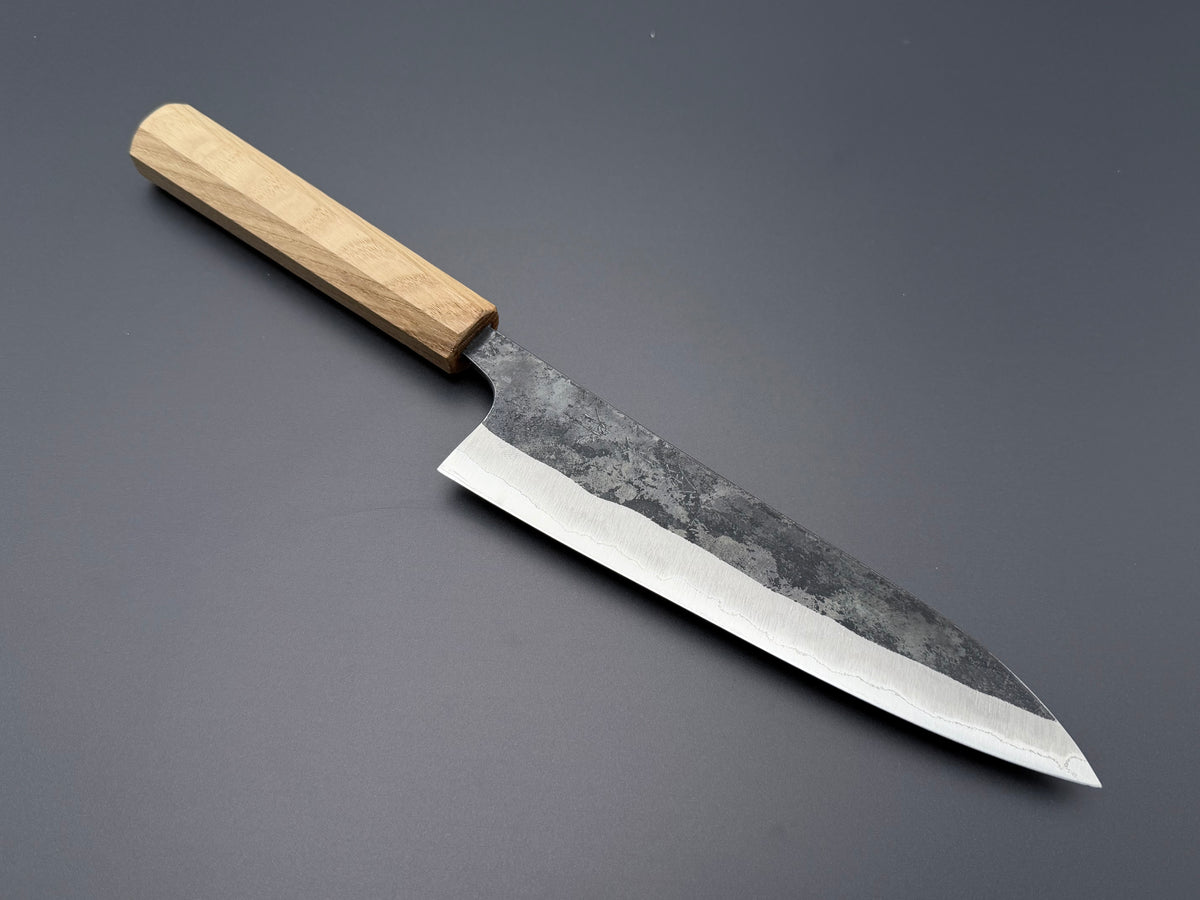
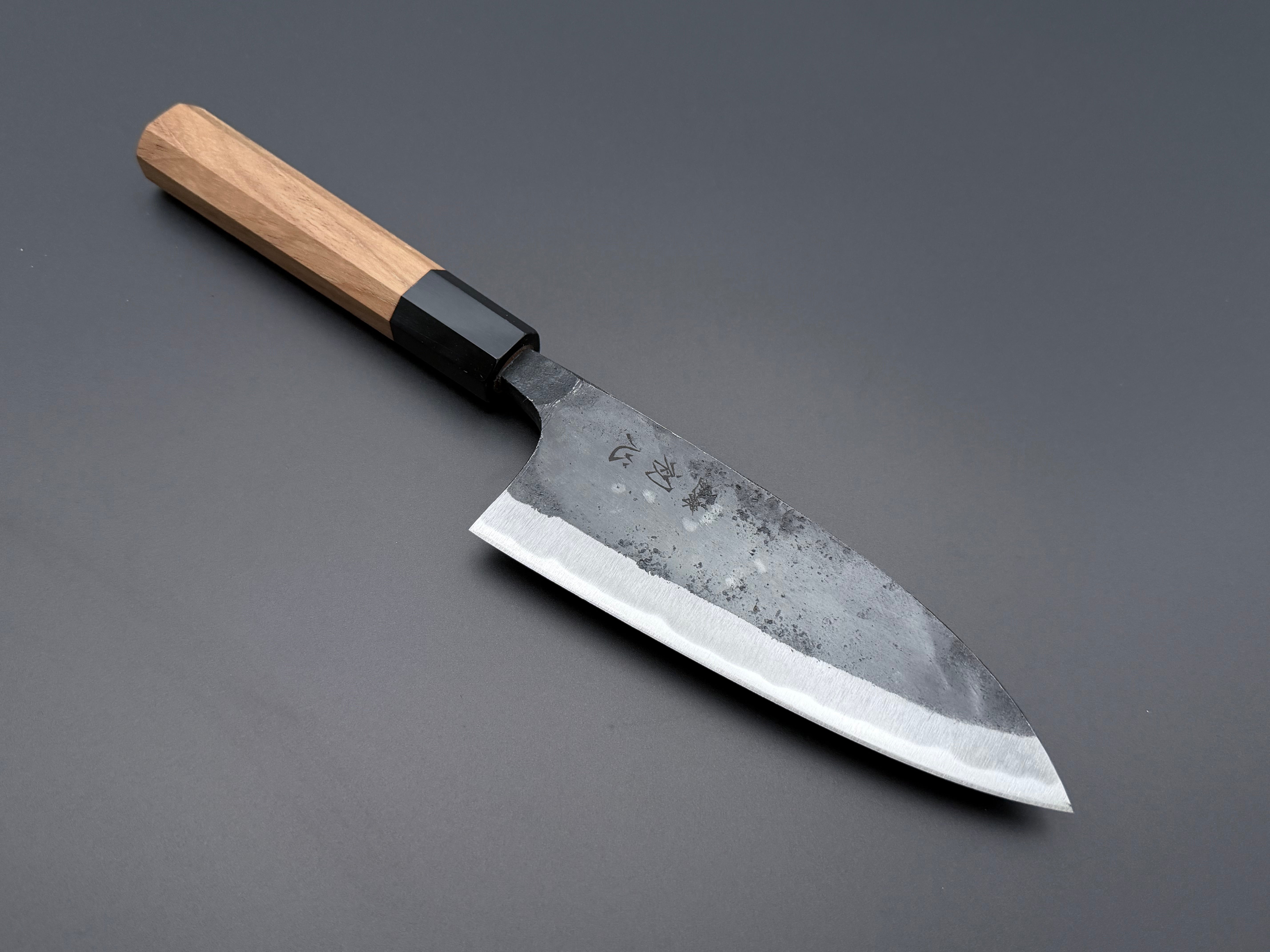
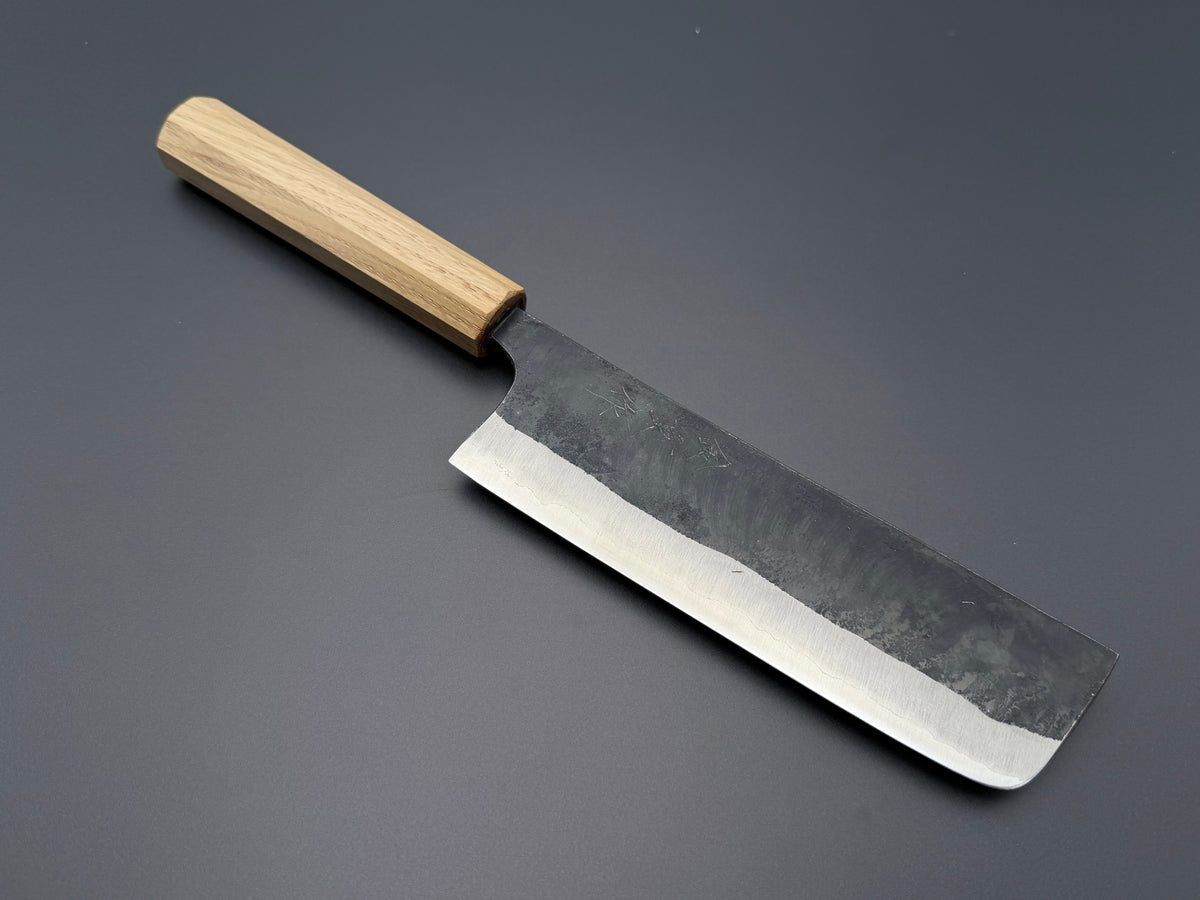
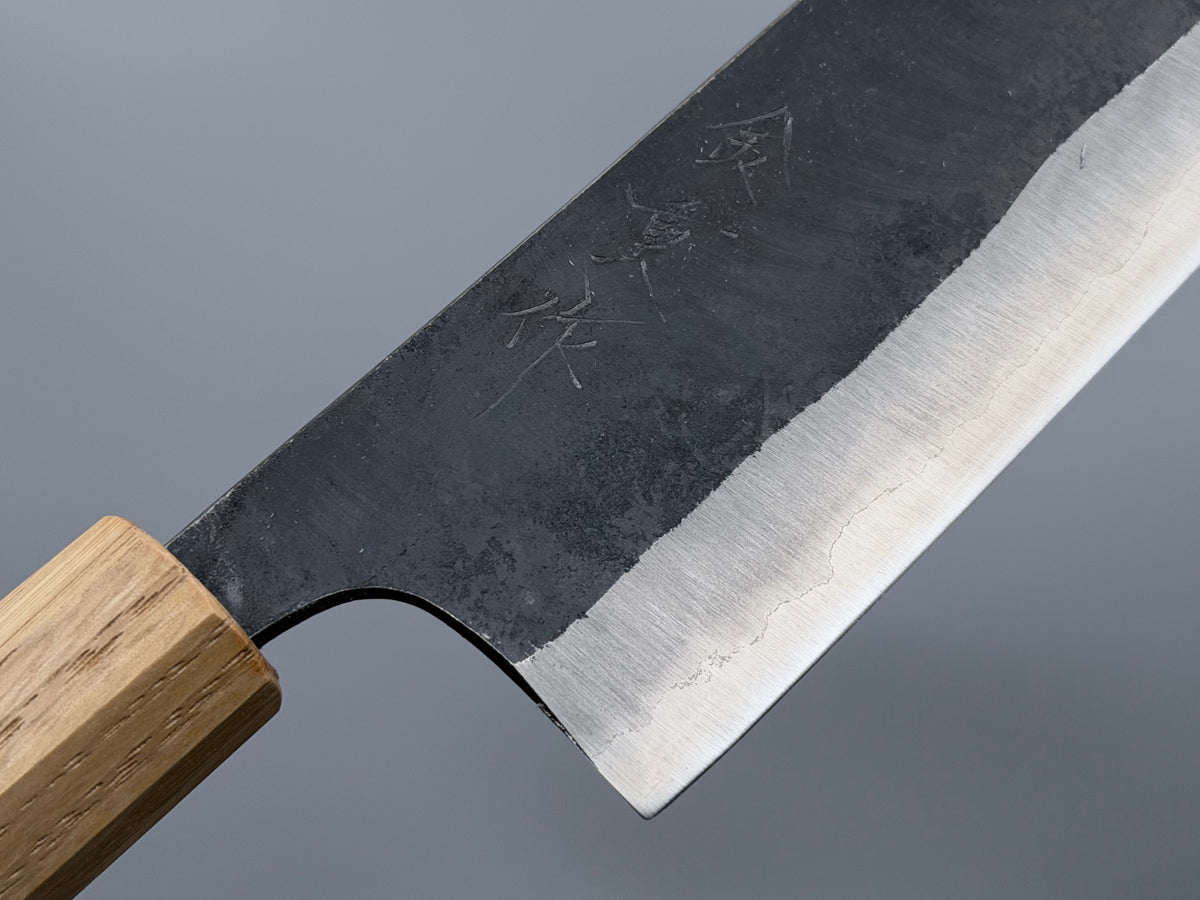
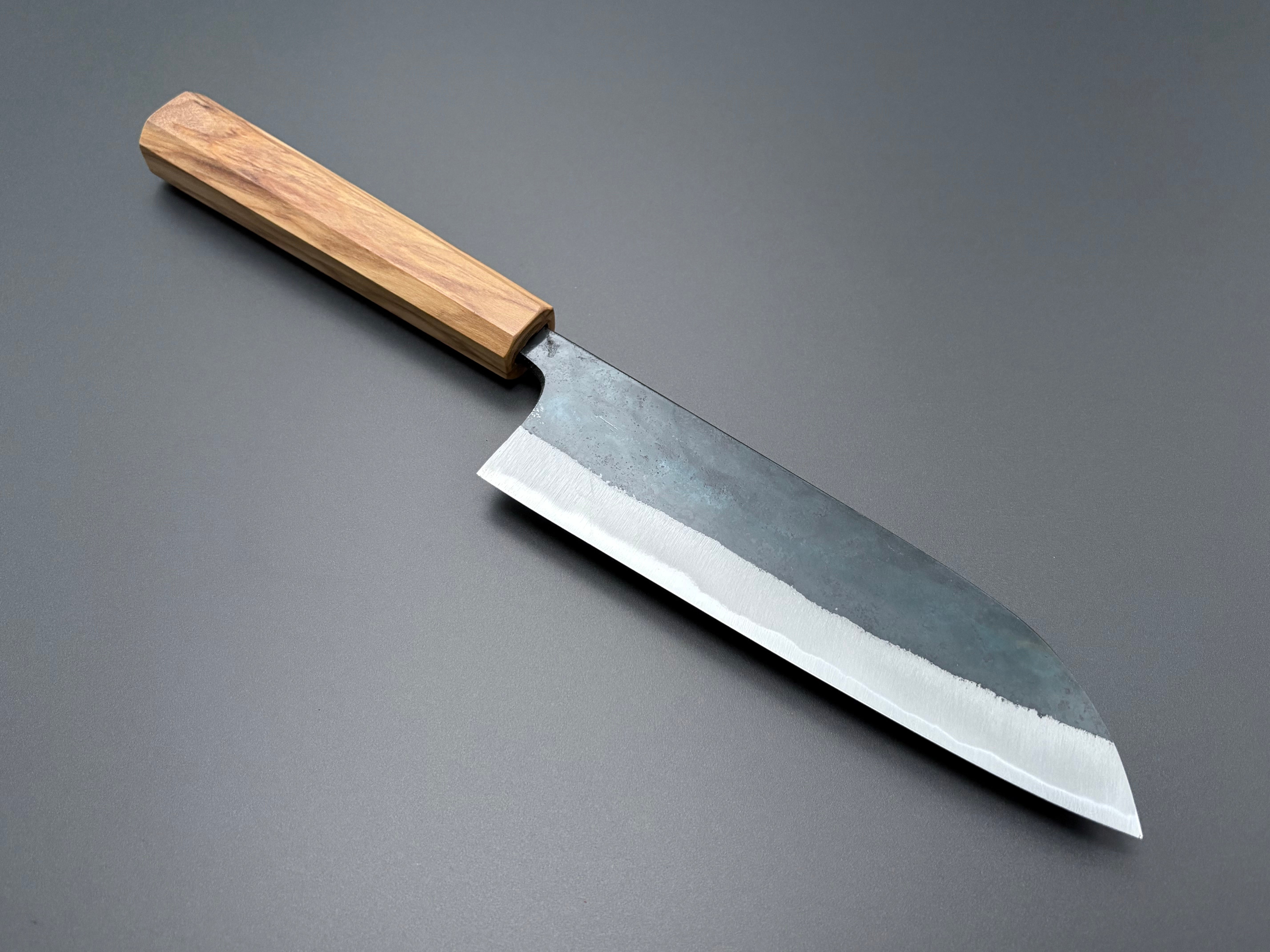
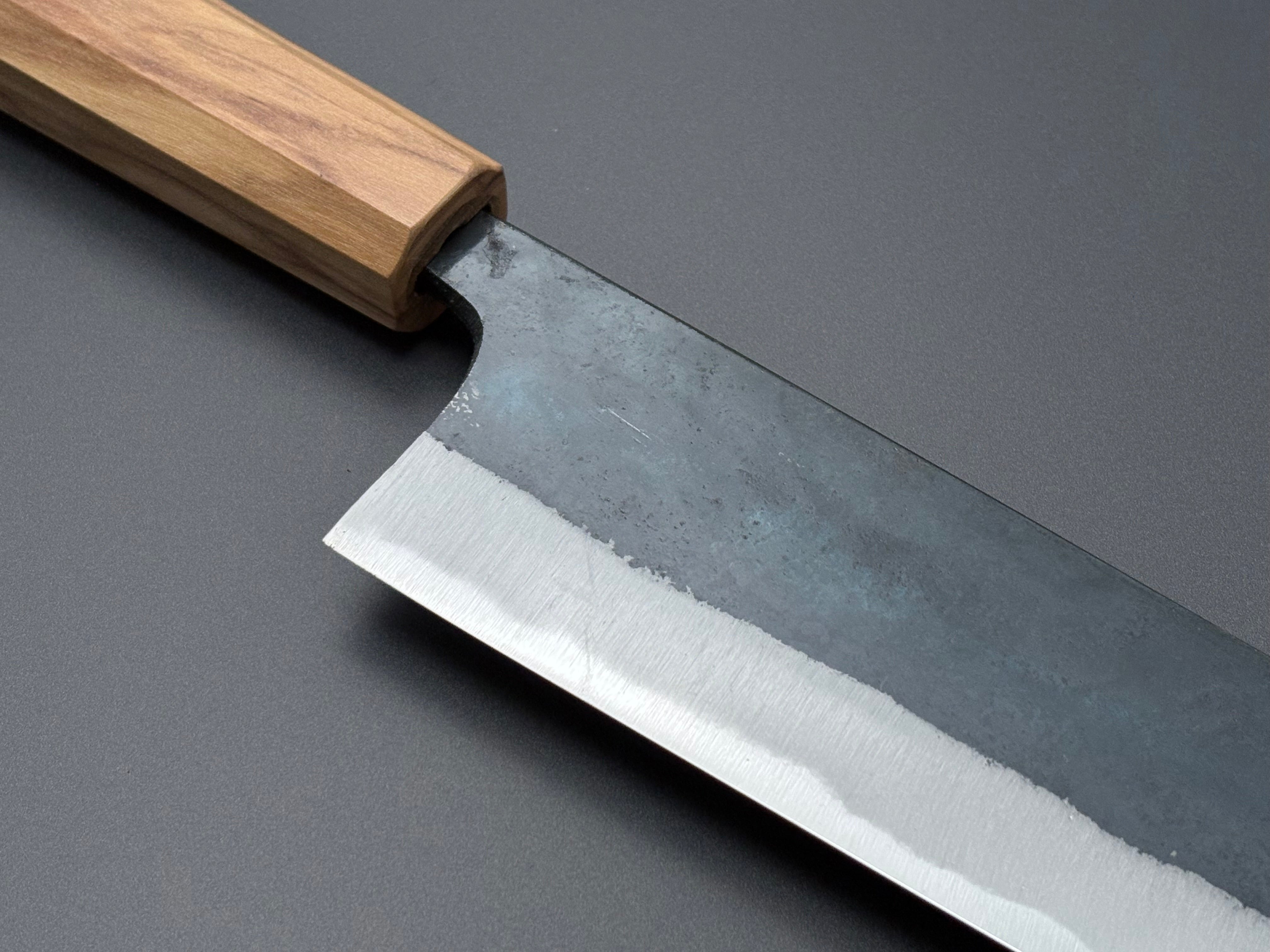
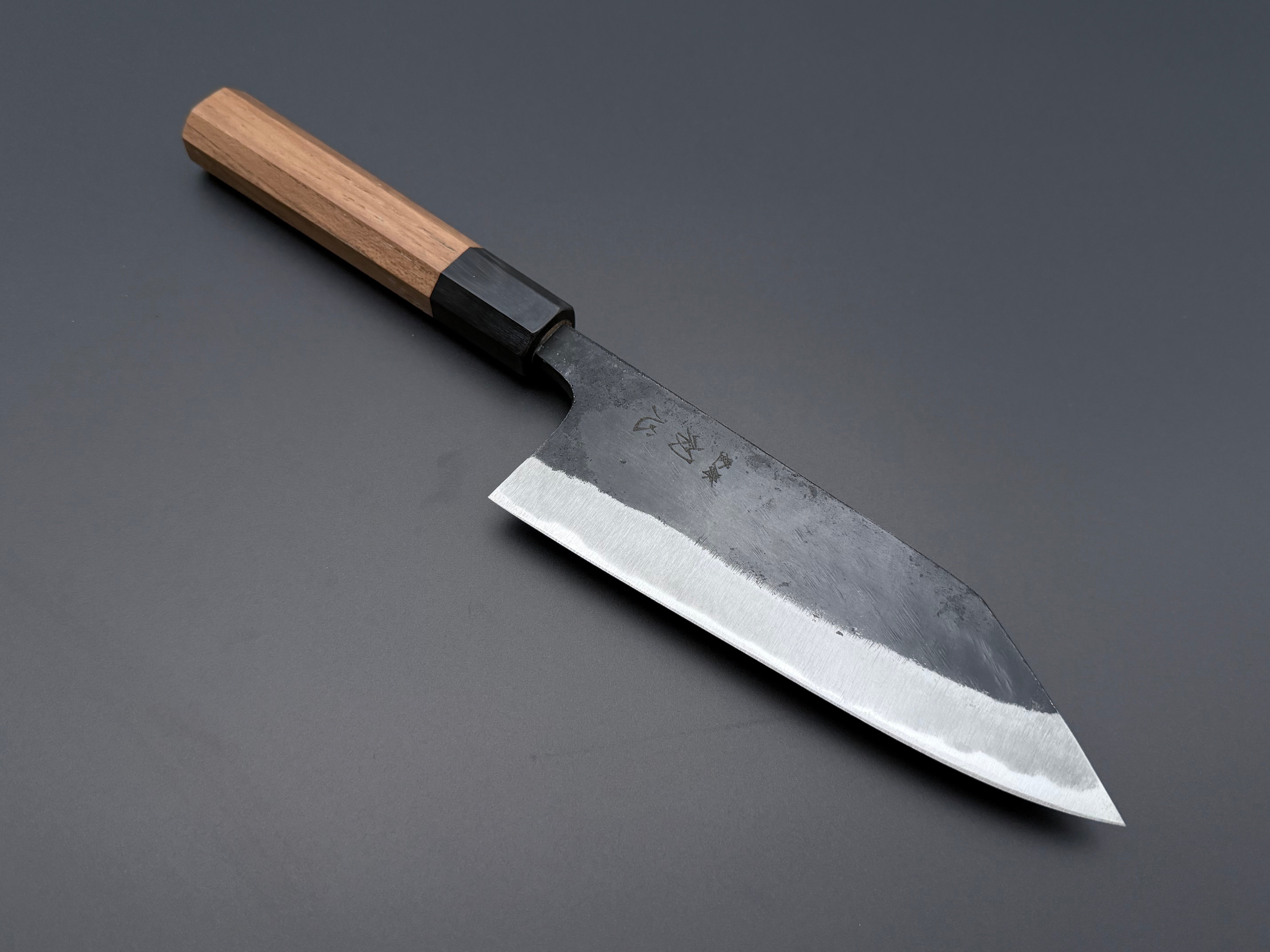
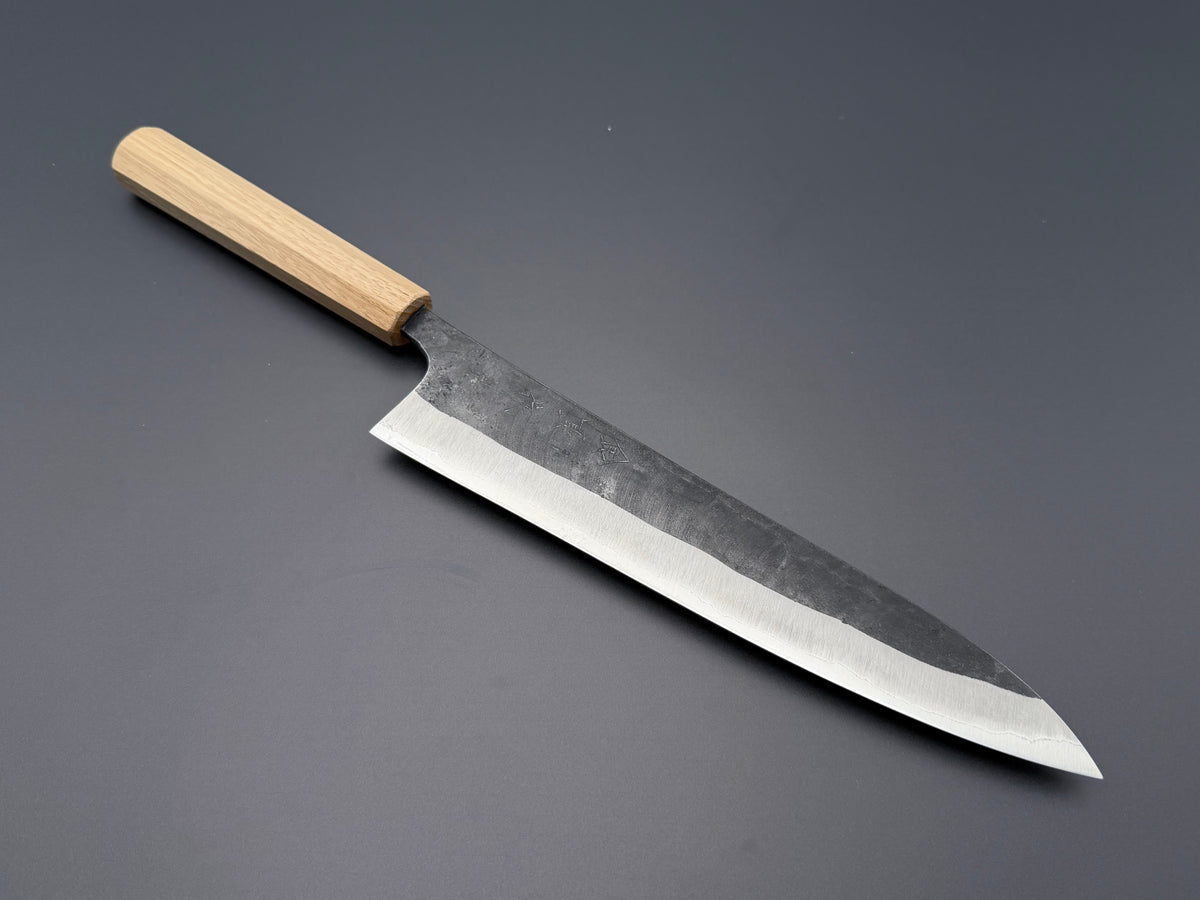
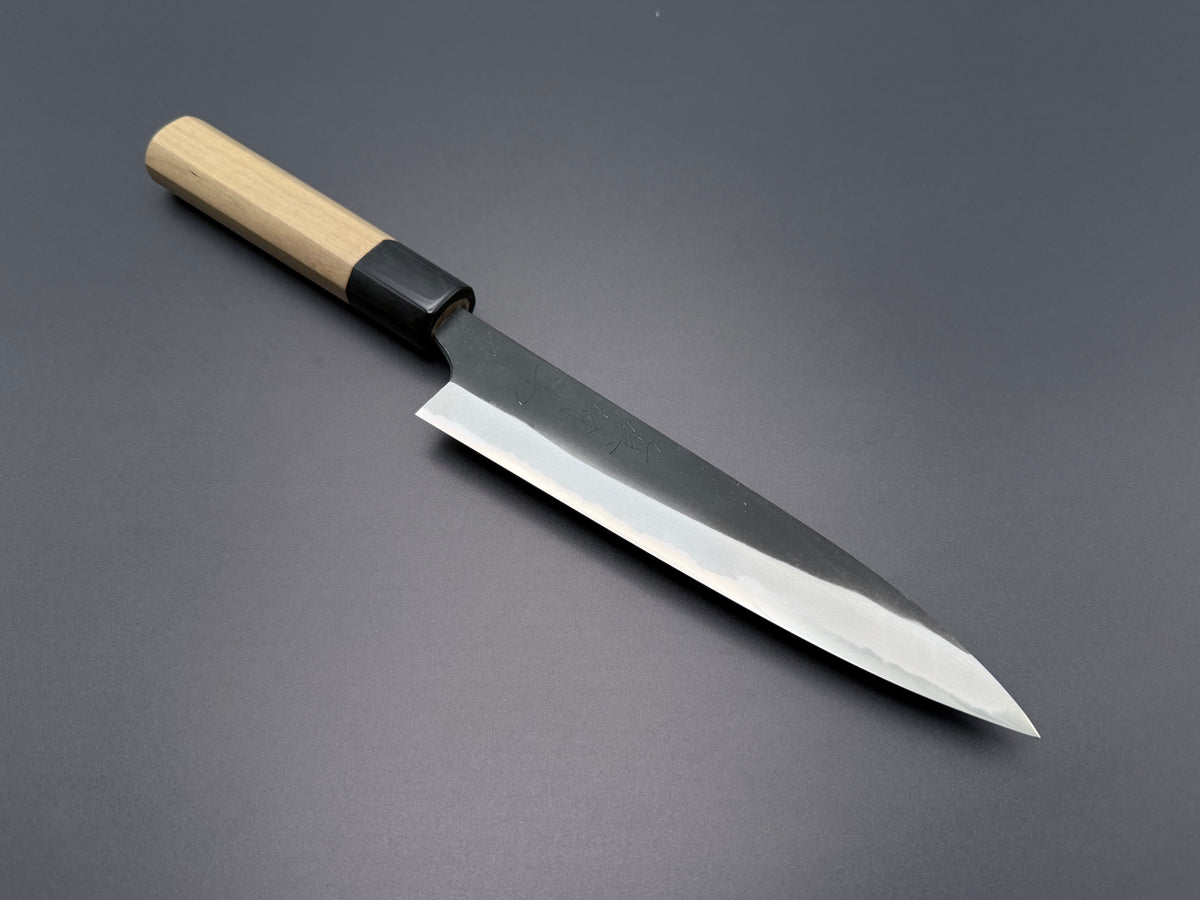
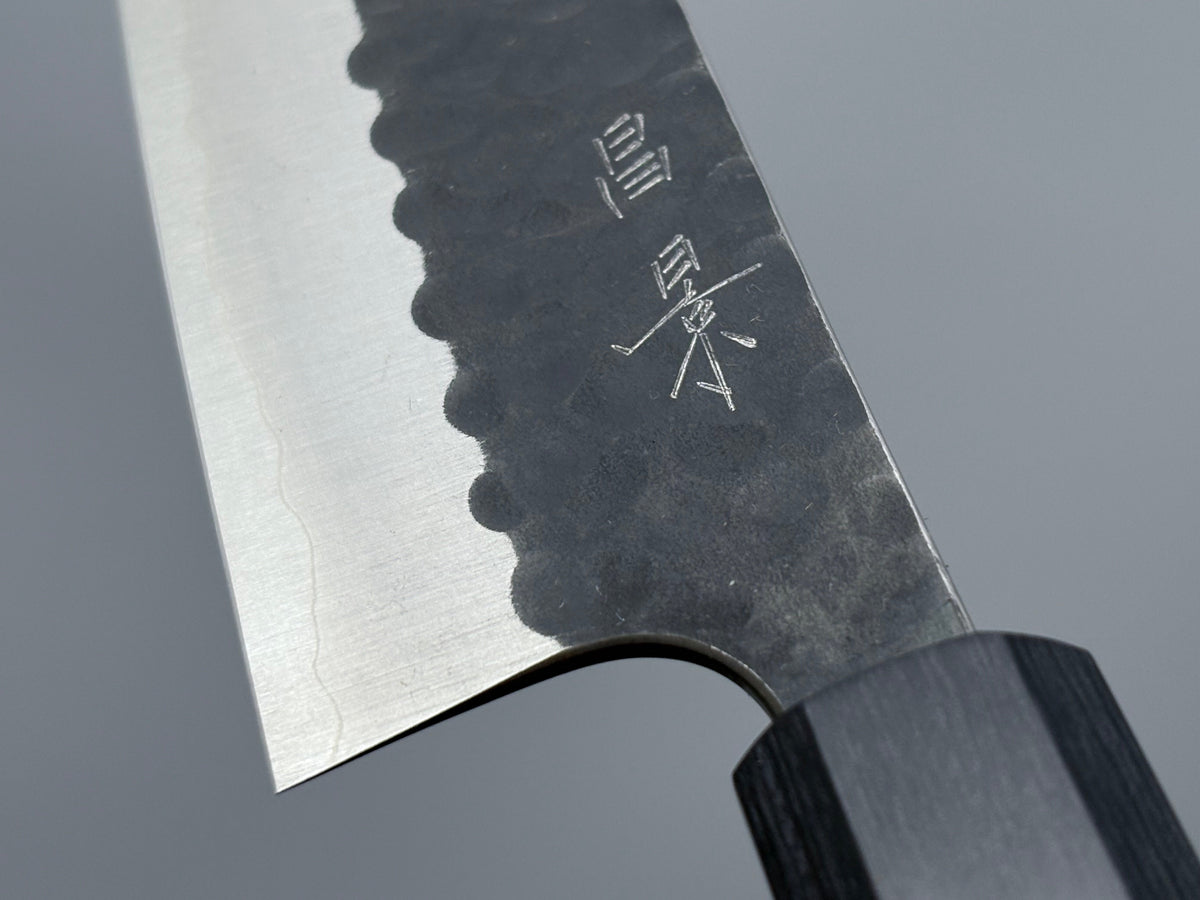
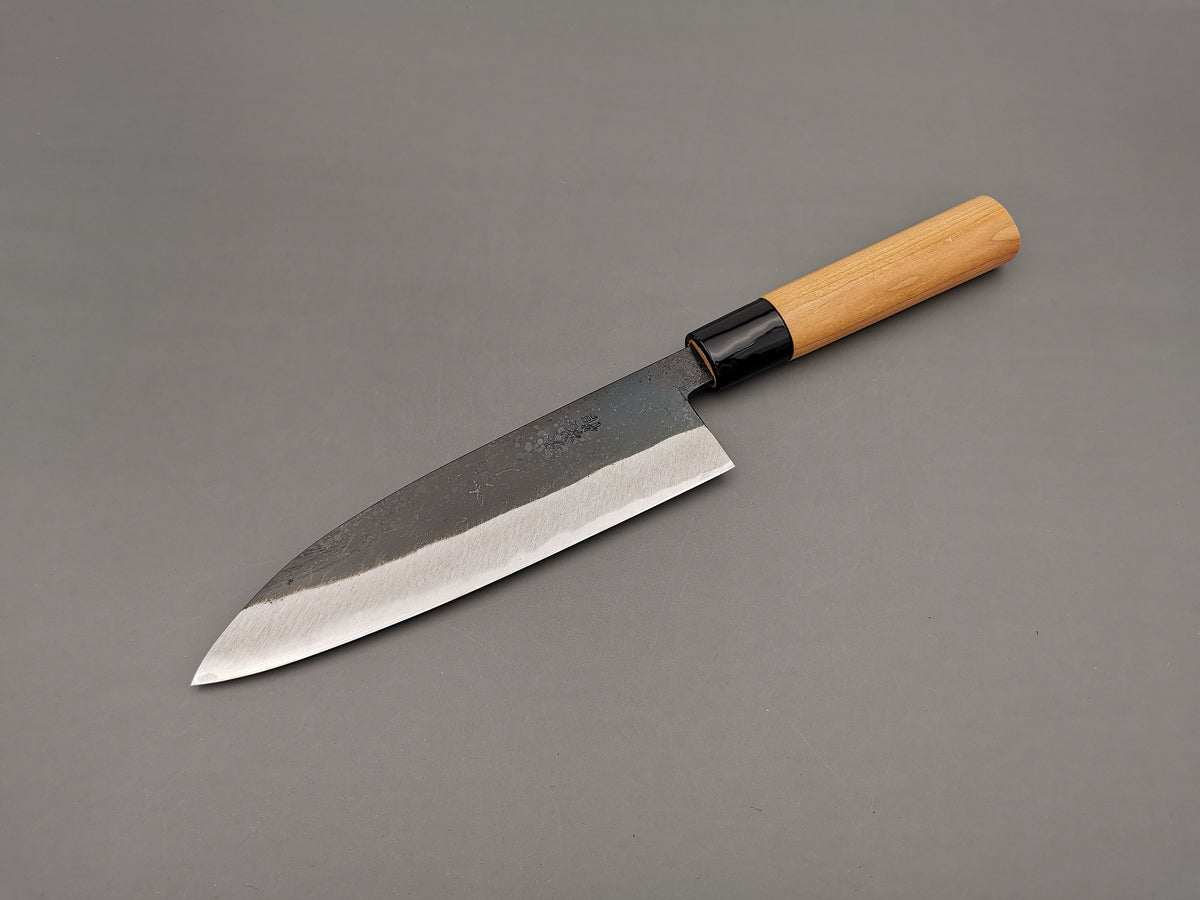
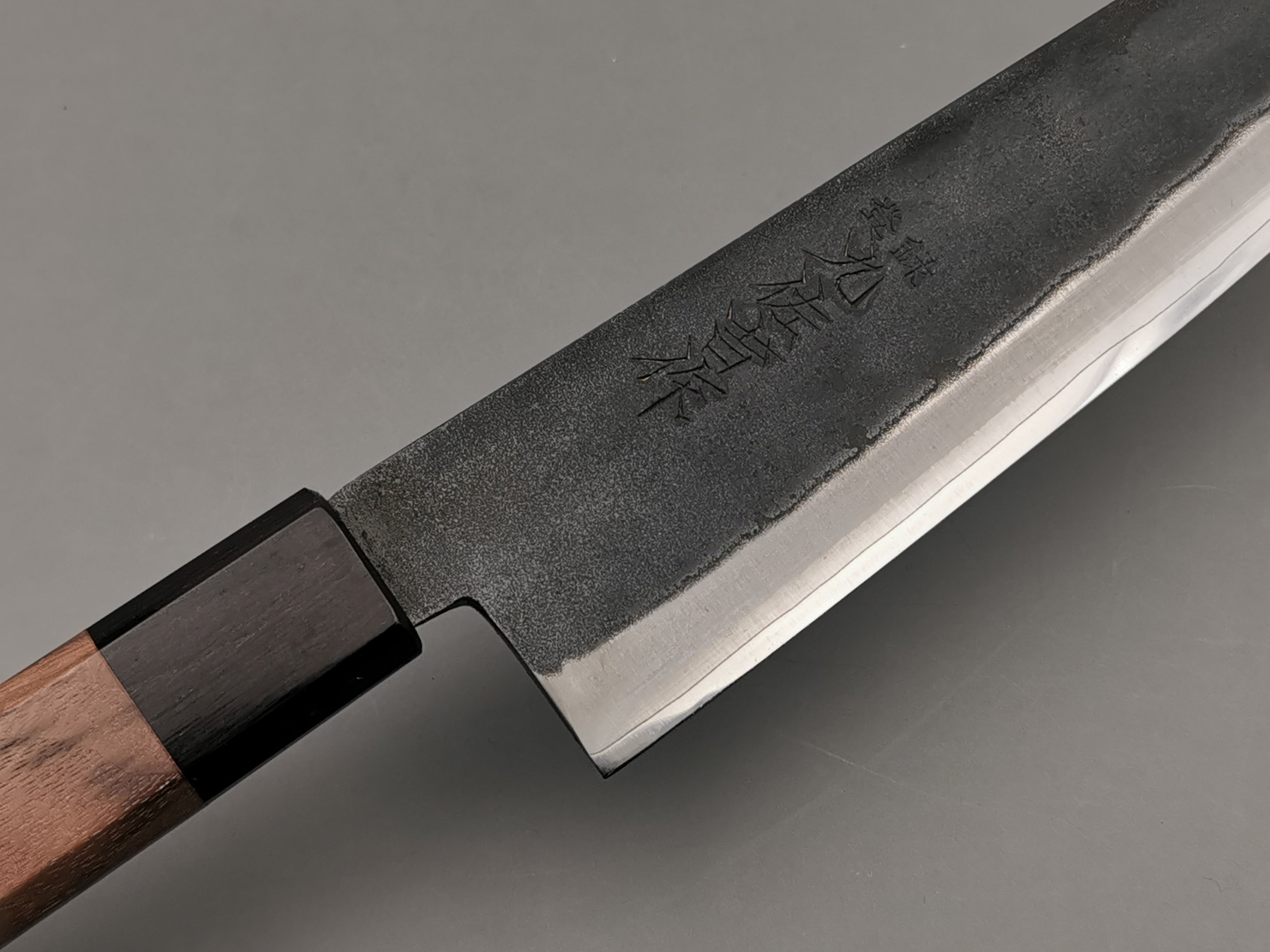
The kurouchi finish is a traditional and rustic blacksmith’s finish often seen on Japanese knives, particularly those made with high-carbon steel. The term kurouchi (黒打ち) translates to “black forged” and refers to the dark, oxidized layer that remains on the upper part of the blade after forging.
This layer is left intentionally, giving the knife a raw, handcrafted appearance that reflects the character and method of its maker.
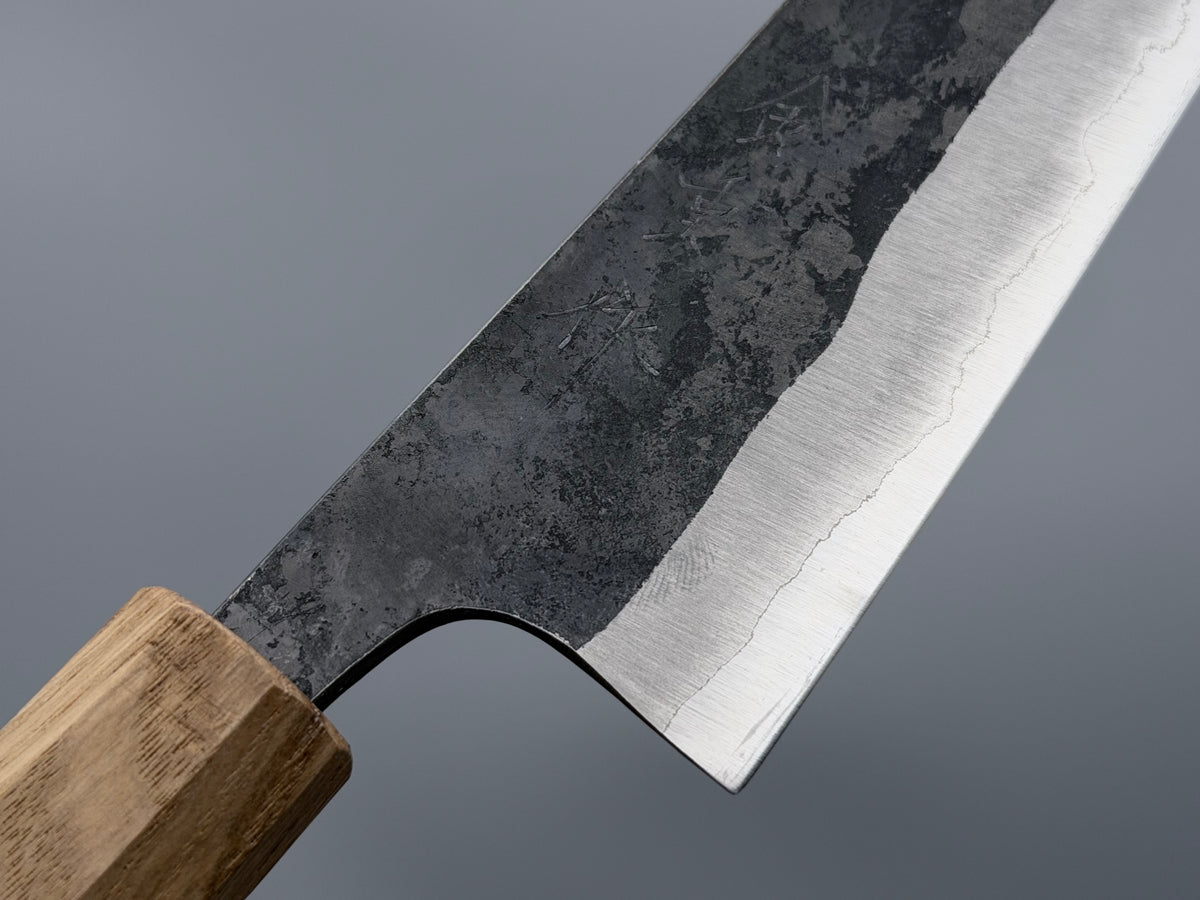
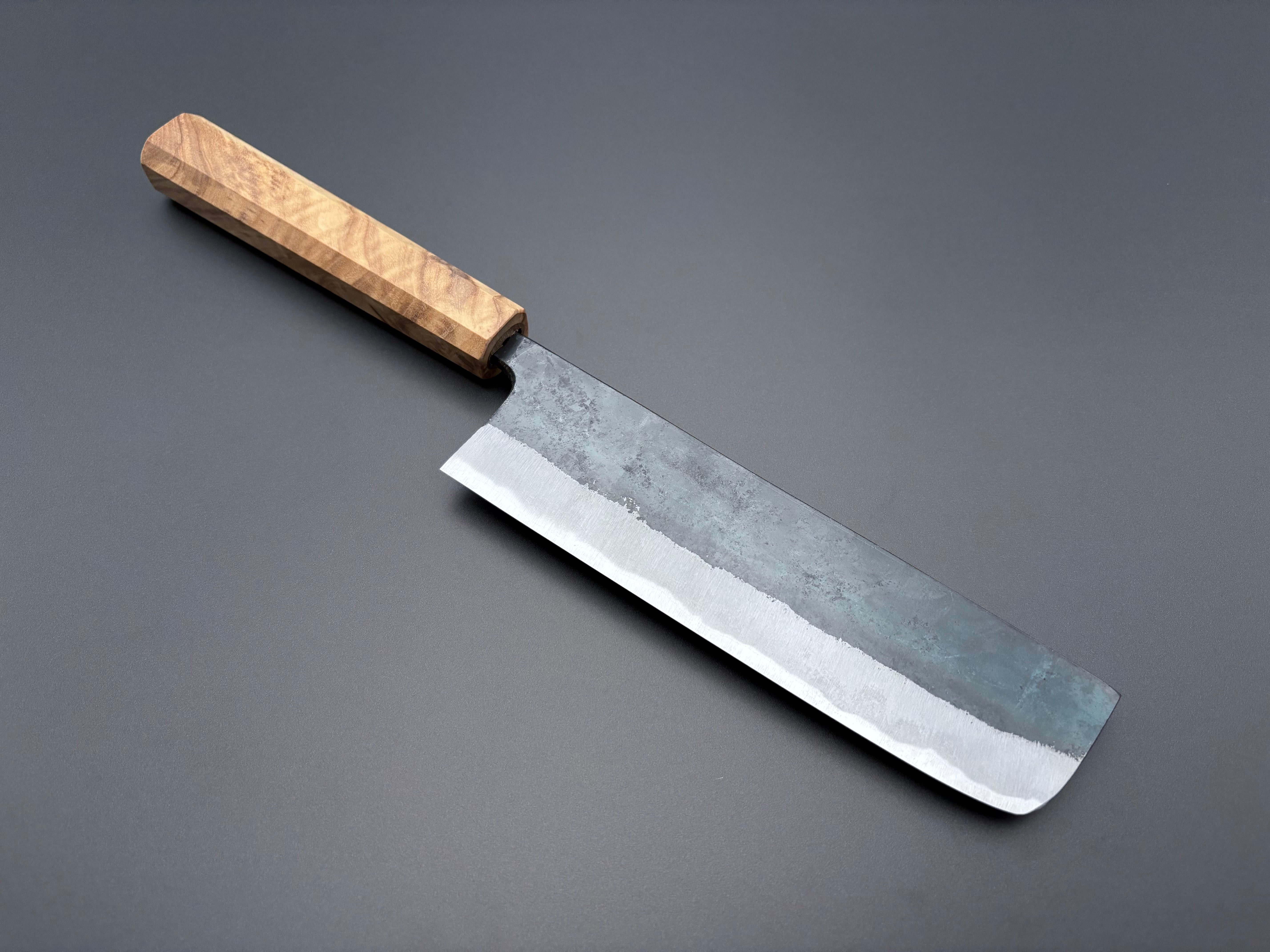
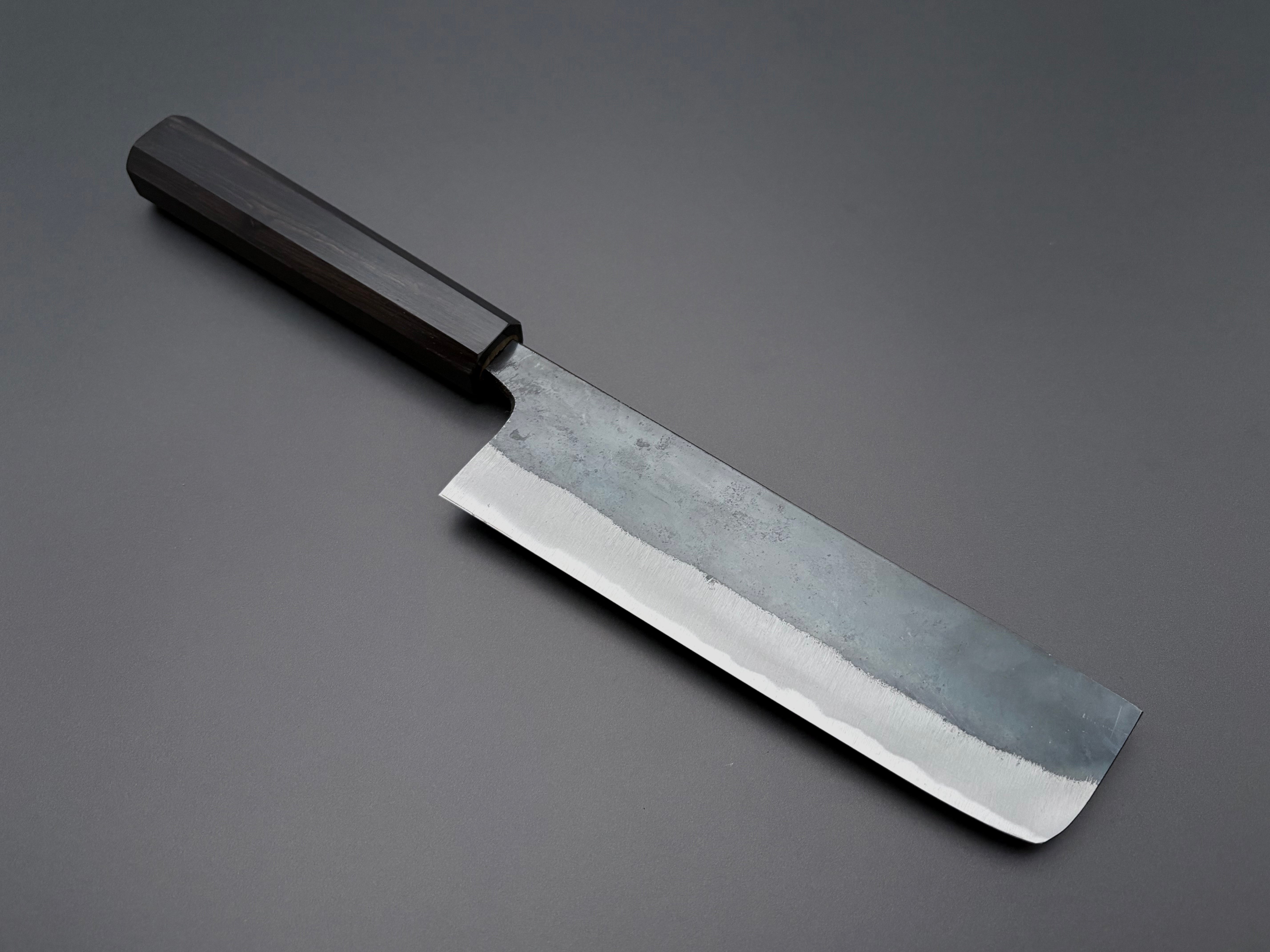
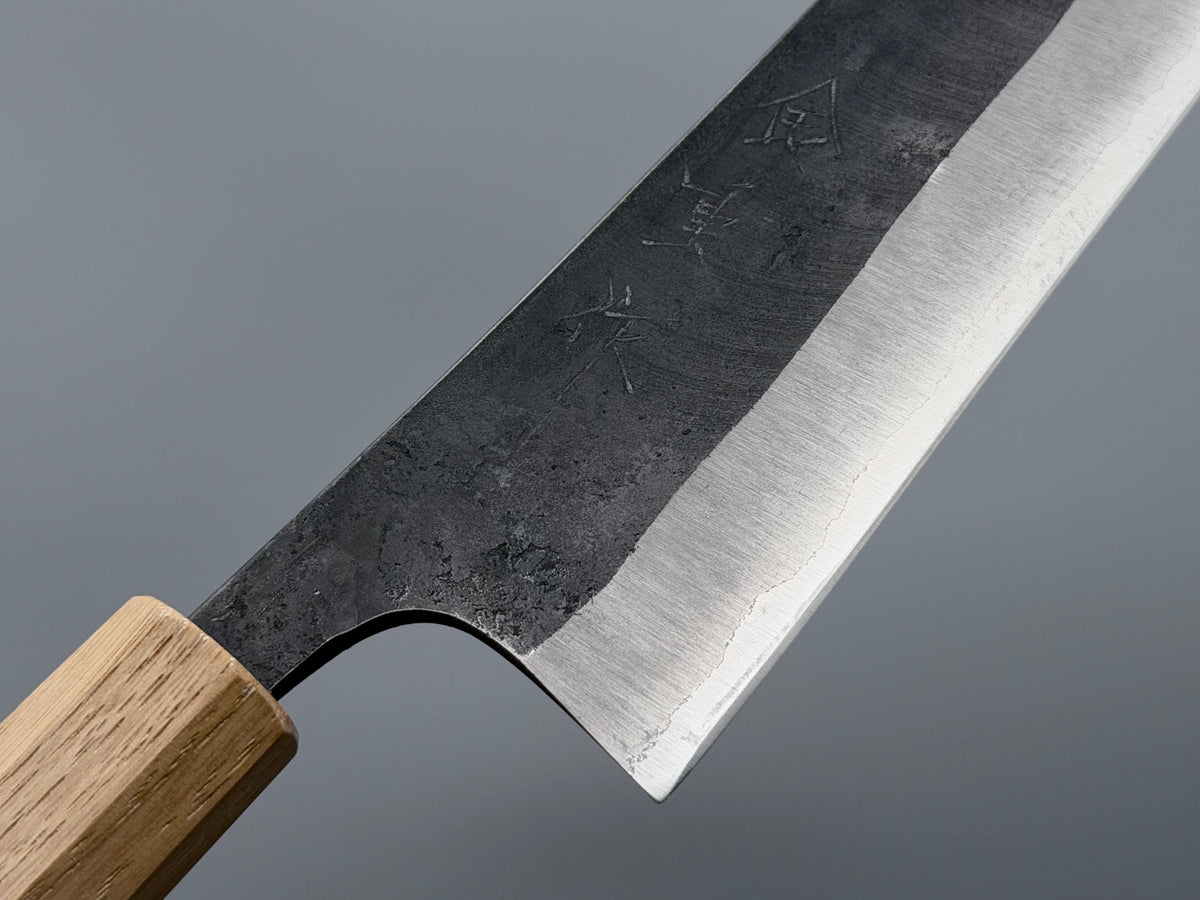
Kurouchi finishes are created during the heat treatment process. When the blade is forged and quenched, the surface oxidizes, forming a dark scale or patina. Instead of polishing the entire blade to a bright shine, the blacksmith leaves this layer intact above the cutting edge.
The result is a knife with a striking contrast between the polished edge and the dark upper portion of the blade.
Beyond its appearance, the kurouchi finish offers practical benefits. It provides a thin layer of protection against rust and corrosion, which is especially useful on reactive steels like Aogami or Shirogami. It can also be used as a means of keeping production times and costs down as the blacksmith can miss out the step of polishing the kurouchi finish from the blade.
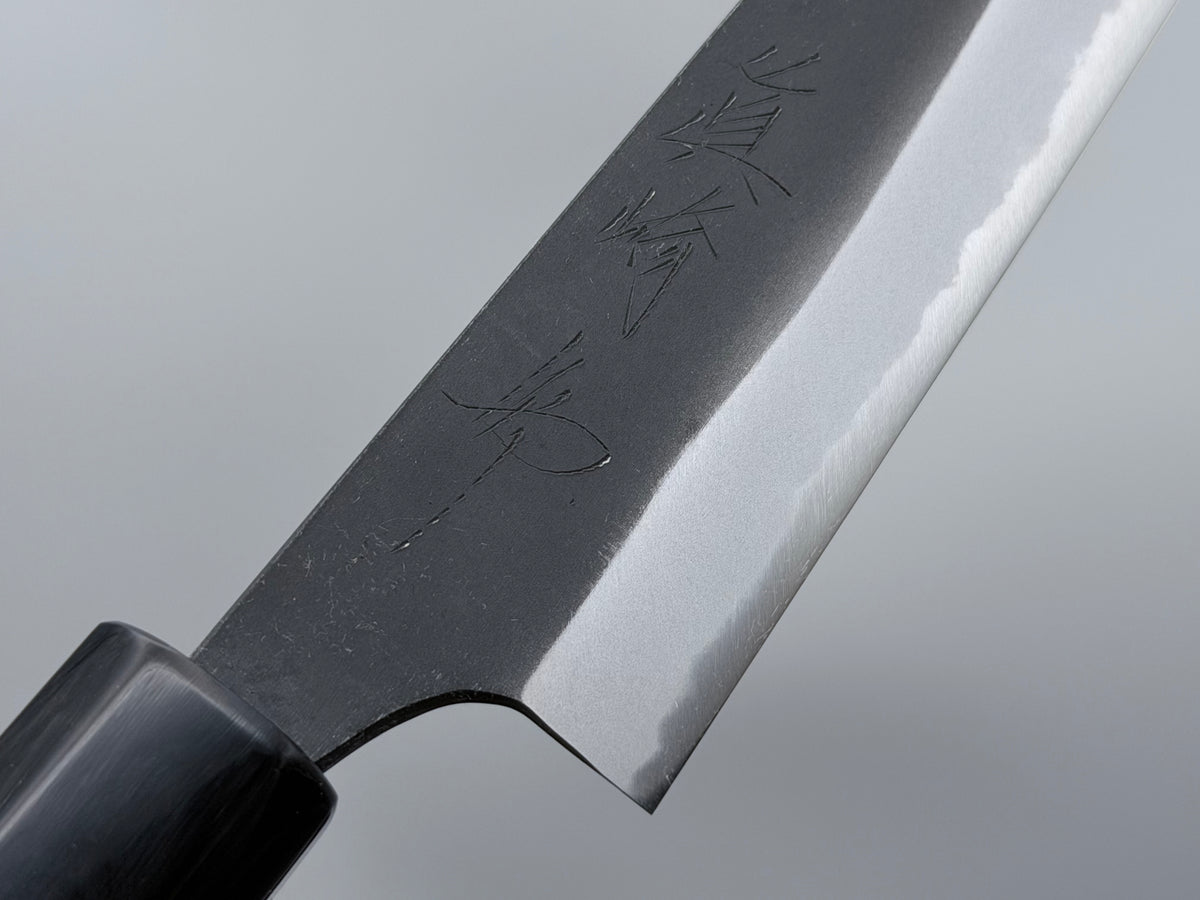
While not as durable as stainless cladding, this finish helps reduce maintenance slightly and can develop more patina with use over time. The look and texture of kurouchi finishes can vary depending on the blacksmith and steel used.
Some are rough and matte, others smoother and more refined. This variation gives each knife a unique personality and reflects the maker's style. Kurouchi finishes are popular among chefs who appreciate both traditional aesthetics and the practical benefits of raw carbon steel.