

Why the sharpening angle matters
Getting the angle right is one of the most useful things a knife owner can learn. Sharpen too shallow and the edge rolls quickly; too steep and the knife loses its slicing ability. Japanese knives are ground thinner and harder than Western ones, so the margin for error is smaller and the payoff for accuracy is greater.

Brands like Hado Knife, based in Sakai City, hand-sharpen every blade with close attention to edge geometry. Understanding what they have built into the knife helps you maintain it correctly at home. Learning this before you touch a whetstone will save you from undoing work that skilled craftspeople have spent years perfecting.
Typical angles for double-bevel Japanese knives
Most double-bevel Japanese chef knives leave the workshop at around 15 degrees per side, noticeably lower than the 20 to 25 degrees common on European knives. The lower angle produces a finer edge that glides through food with minimal resistance. Hard steels such as Aogami, SG2, and Ginsan hold these acute angles well because the steel is stiff enough to resist deformation under normal kitchen use.
Single-bevel knives and their geometry
Traditional single-bevel knives such as yanagiba and deba are sharpened on one side only, with the flat ura side receiving light lapping to remove burrs. The bevel side typically sits between 6 and 10 degrees, producing the asymmetric edge these knives are built for. If you own a single-bevel blade, study the existing bevel carefully before you begin and replicate it as closely as possible. Even a small deviation can affect how the knife releases food and tracks through a cut.
How to find and hold the correct angle
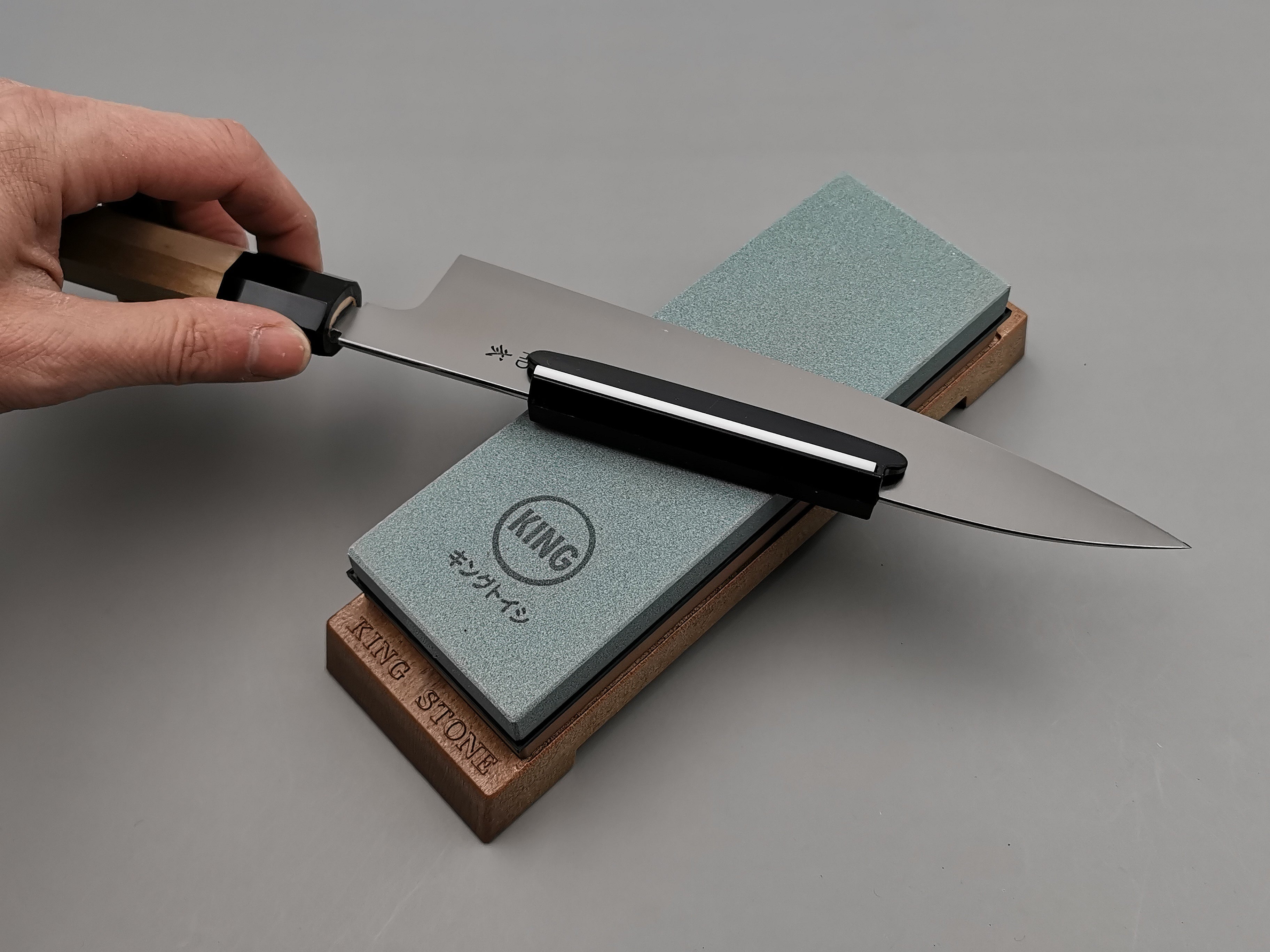
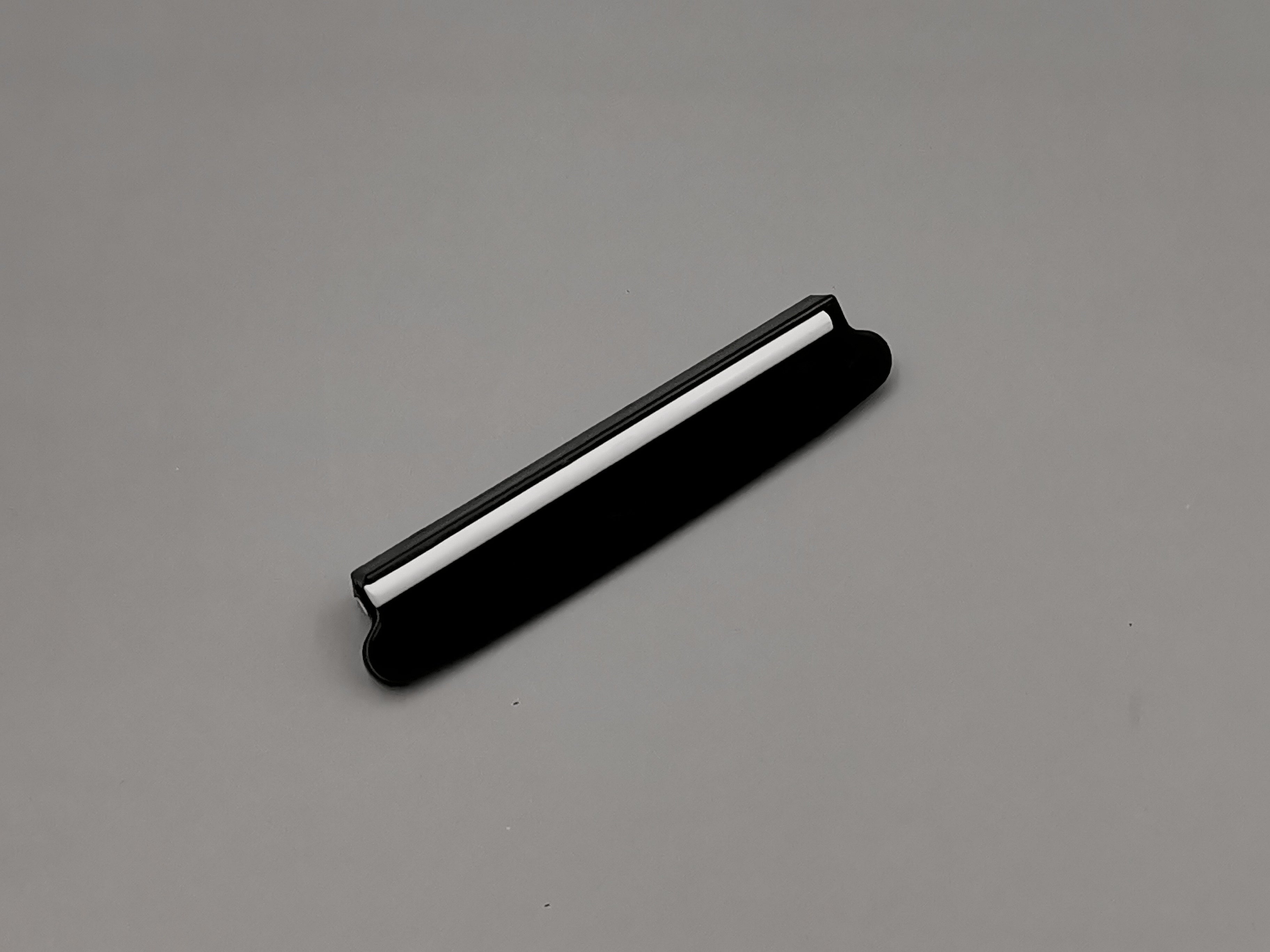
Place the blade flat on your whetstone, then raise the spine until a thin gap appears beneath it. For a 15-degree angle on a 50mm tall blade, the spine sits roughly 13mm off the stone. Keeping that spine height consistent through each stroke is what keeps the bevel flat and even. Many sharpeners use an angle guide when learning, and there is nothing wrong with that. Consistency matters far more than freehand technique.
For whetstones and other sharpening supplies, browse the best-selling accessories on our site, where you will find tools suited to maintaining the precise angle your blade requires.
Matching the angle to your steel
Softer stainless steels tolerate a slightly steeper angle and are more forgiving if your technique wavers. Harder carbon steels reward precision with exceptional sharpness but can chip if the angle is too acute for the task. Aogami steel knives and those made from R2 steel both work well at the lower end of the range, while entry-level stainless knives from our Japanese knives under £100 collection are more forgiving at 15 degrees. Knowing your steel type before you sharpen removes the guesswork.
Keep your knives performing at their best
Whether you are maintaining a workhorse gyuto or a delicate single-bevel slicer, the right angle preserves the edge the maker intended. Browse our full range of Japanese knives and accessories to find a blade and the sharpening tools to match it.