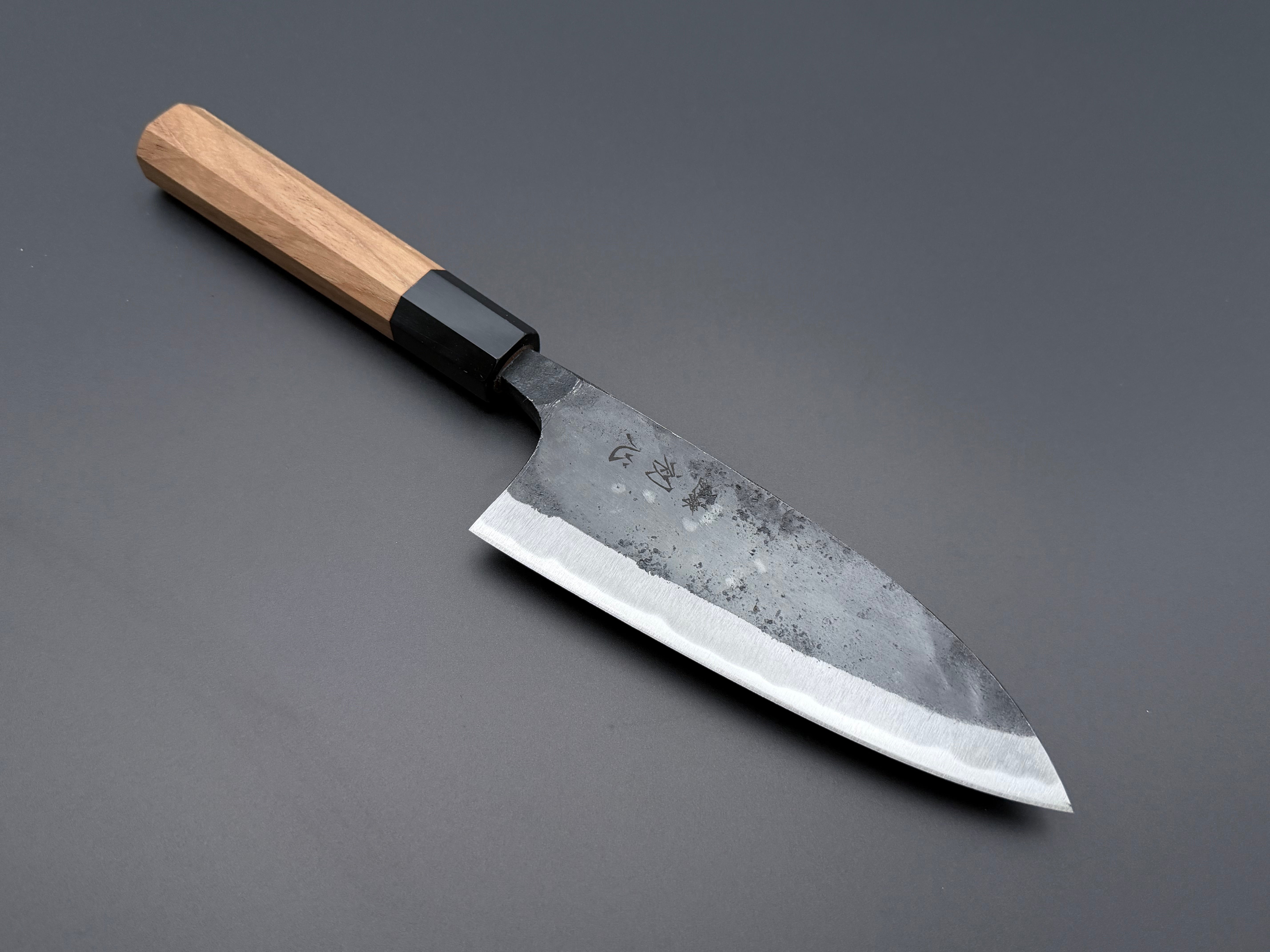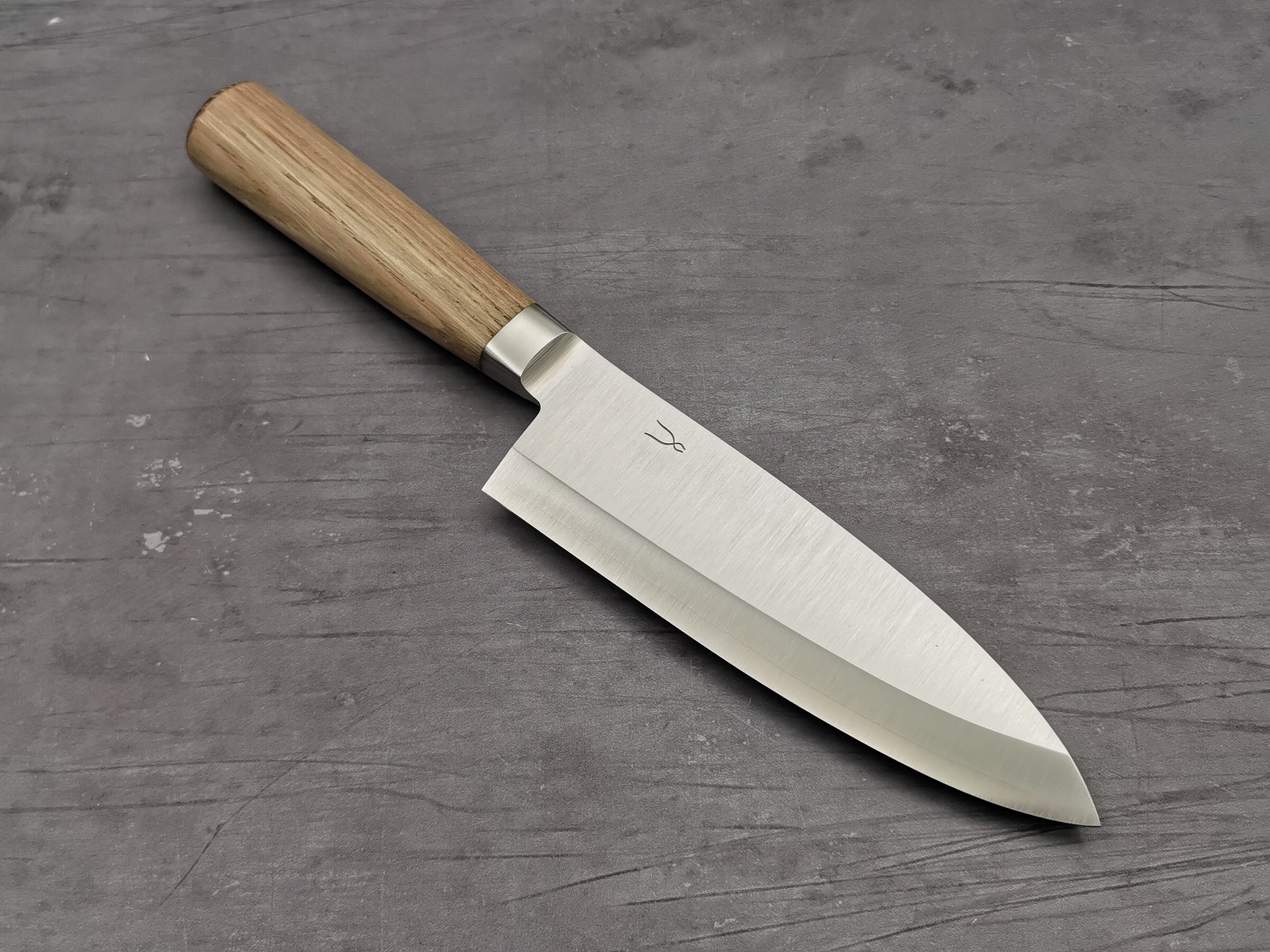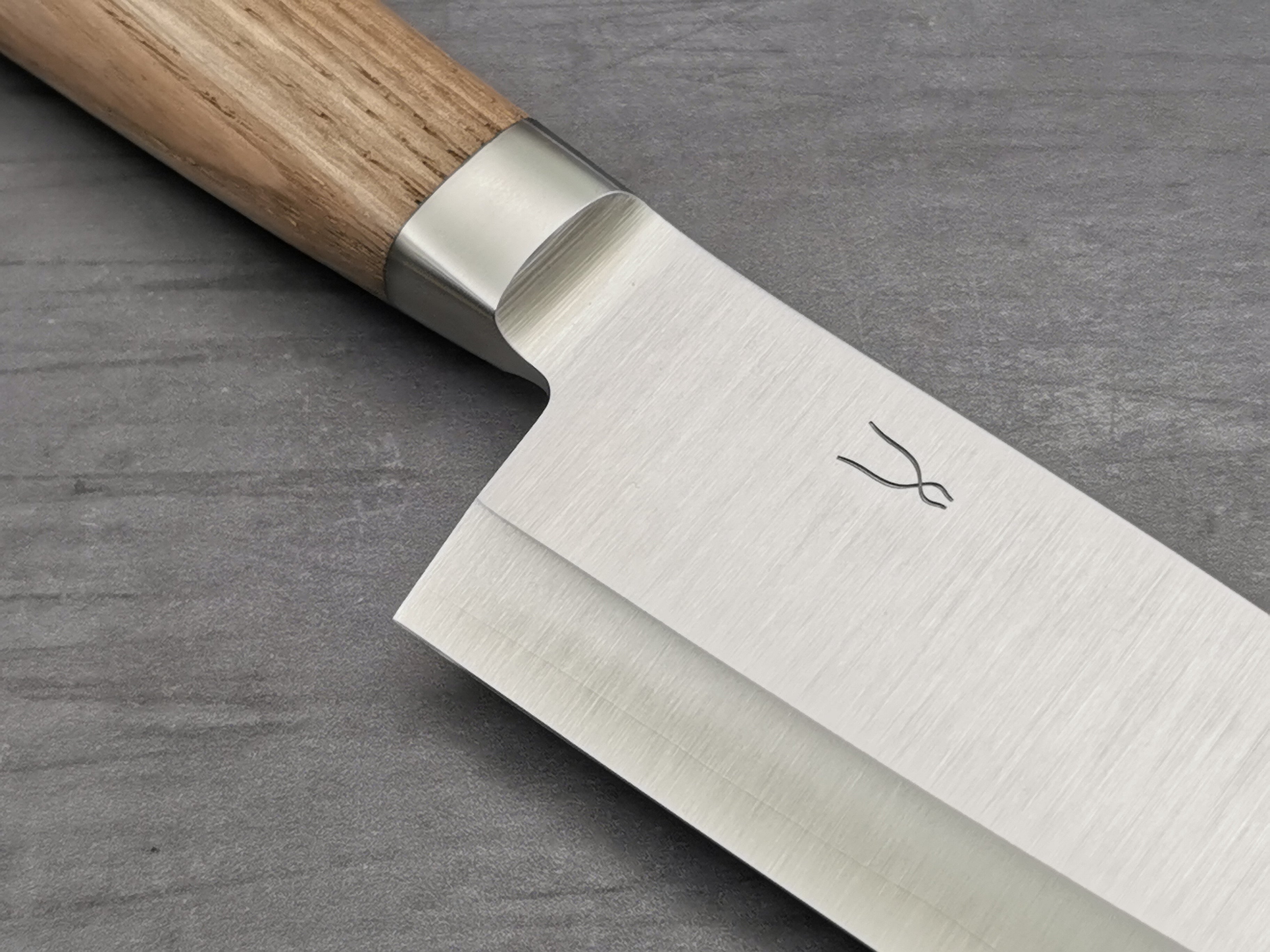

The honesuki knife explained
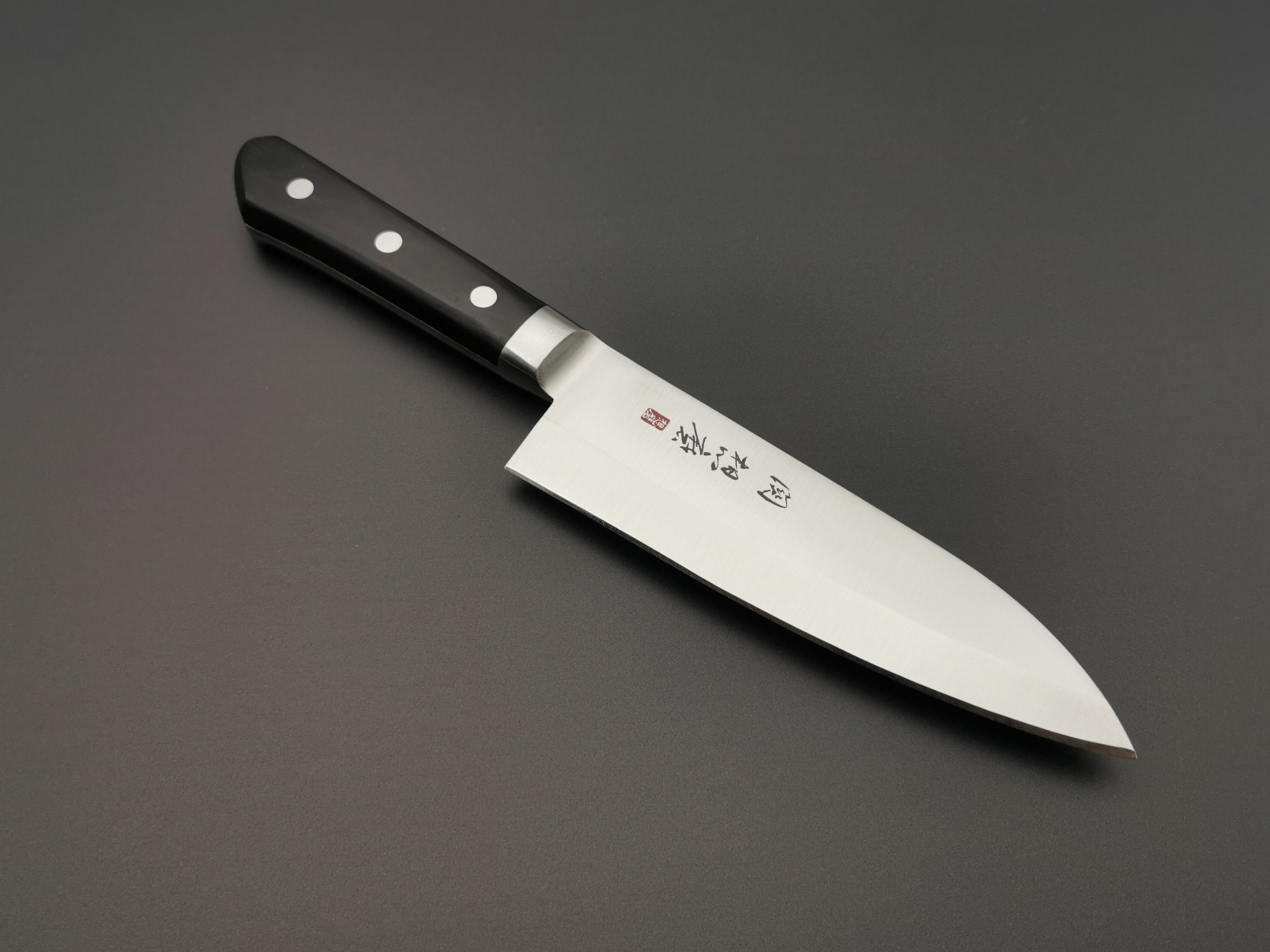
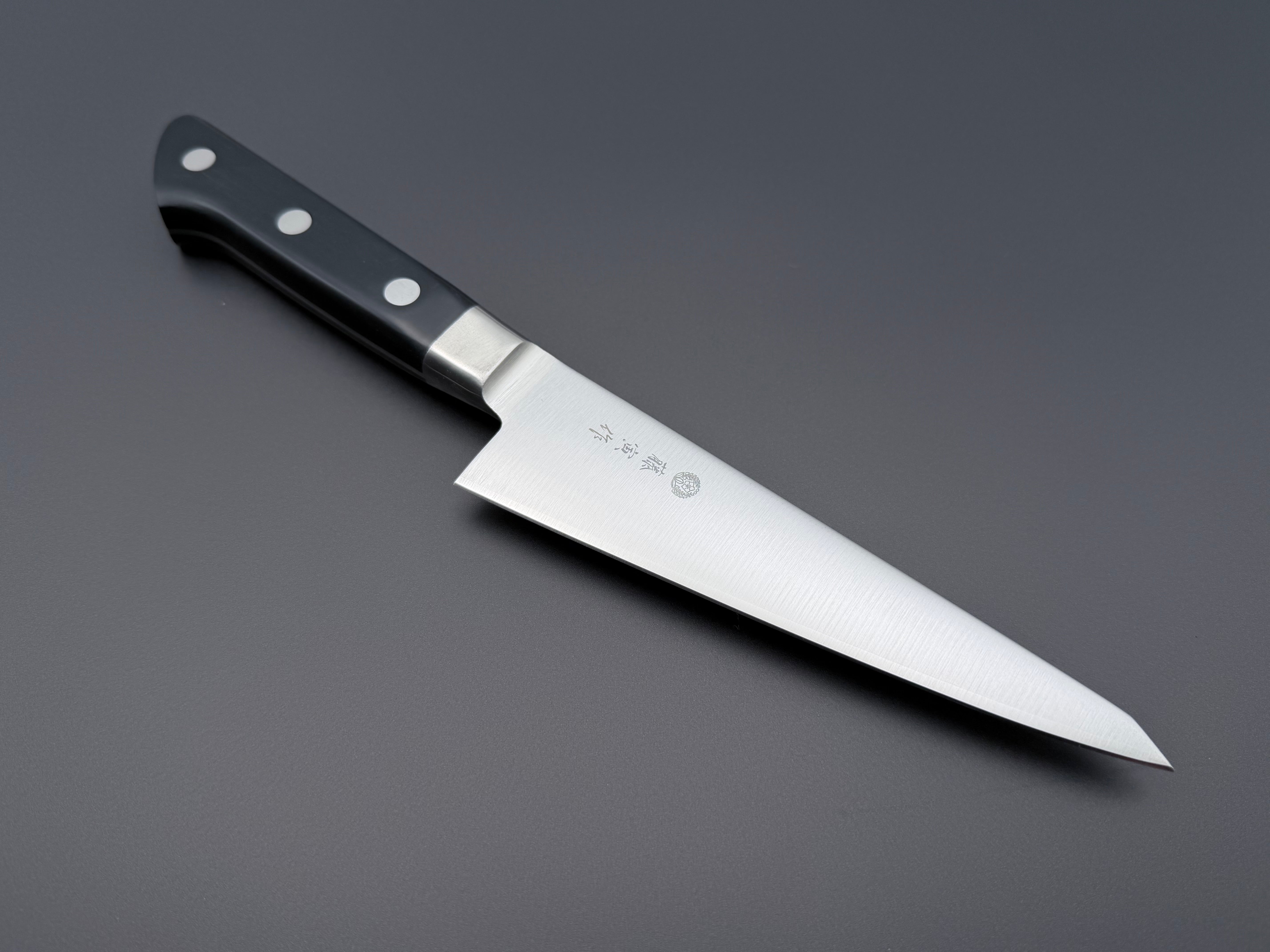
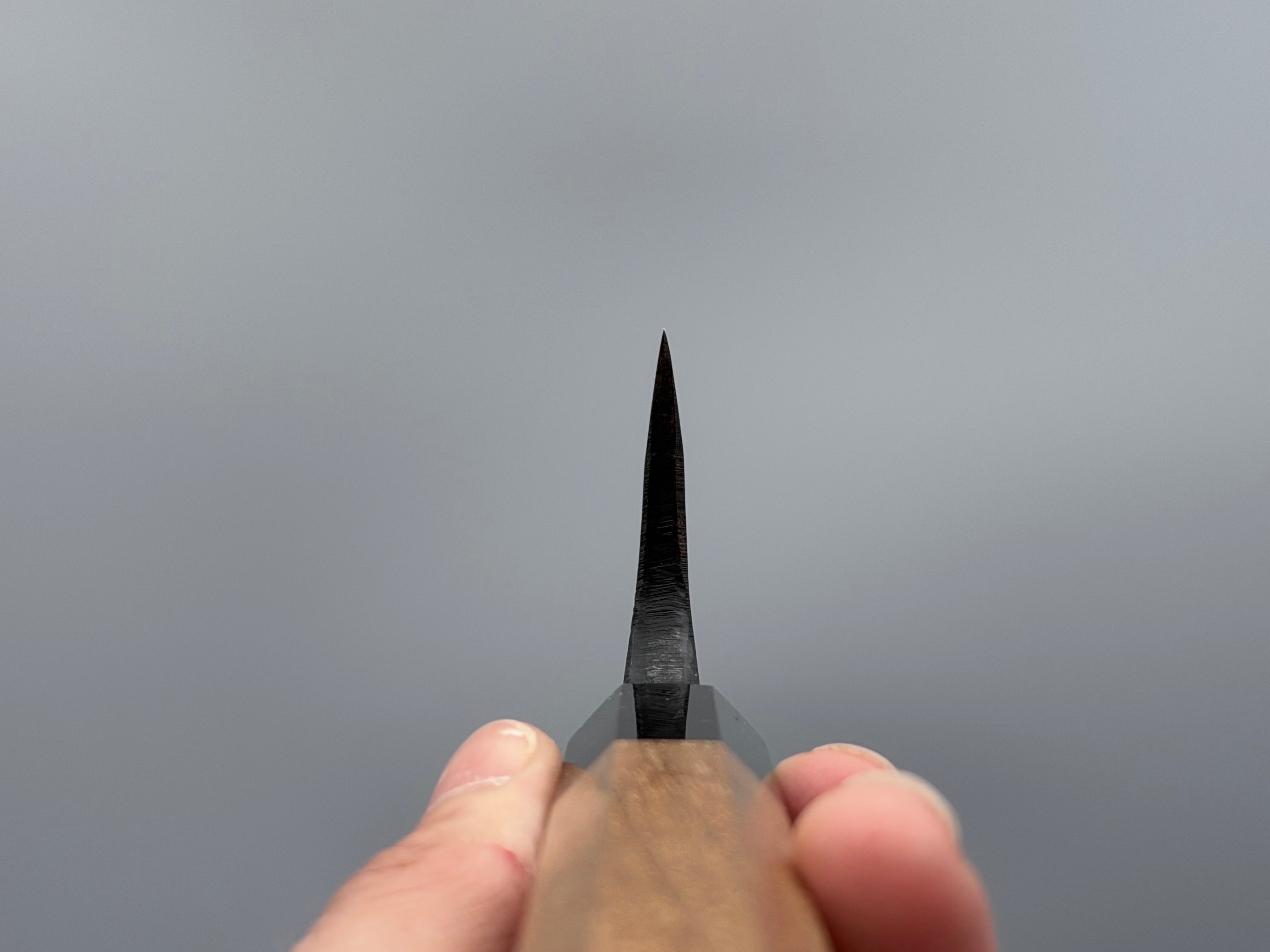
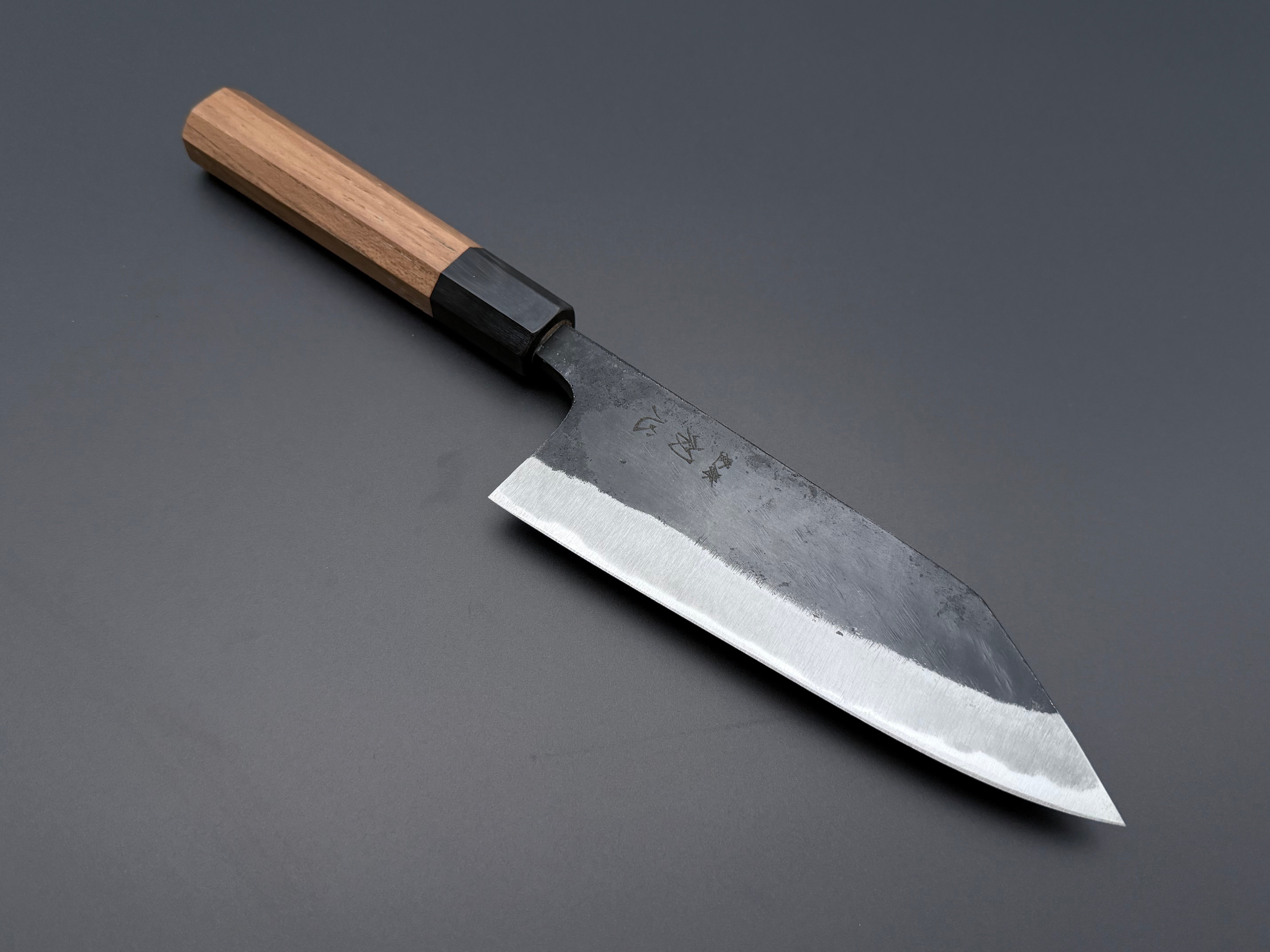
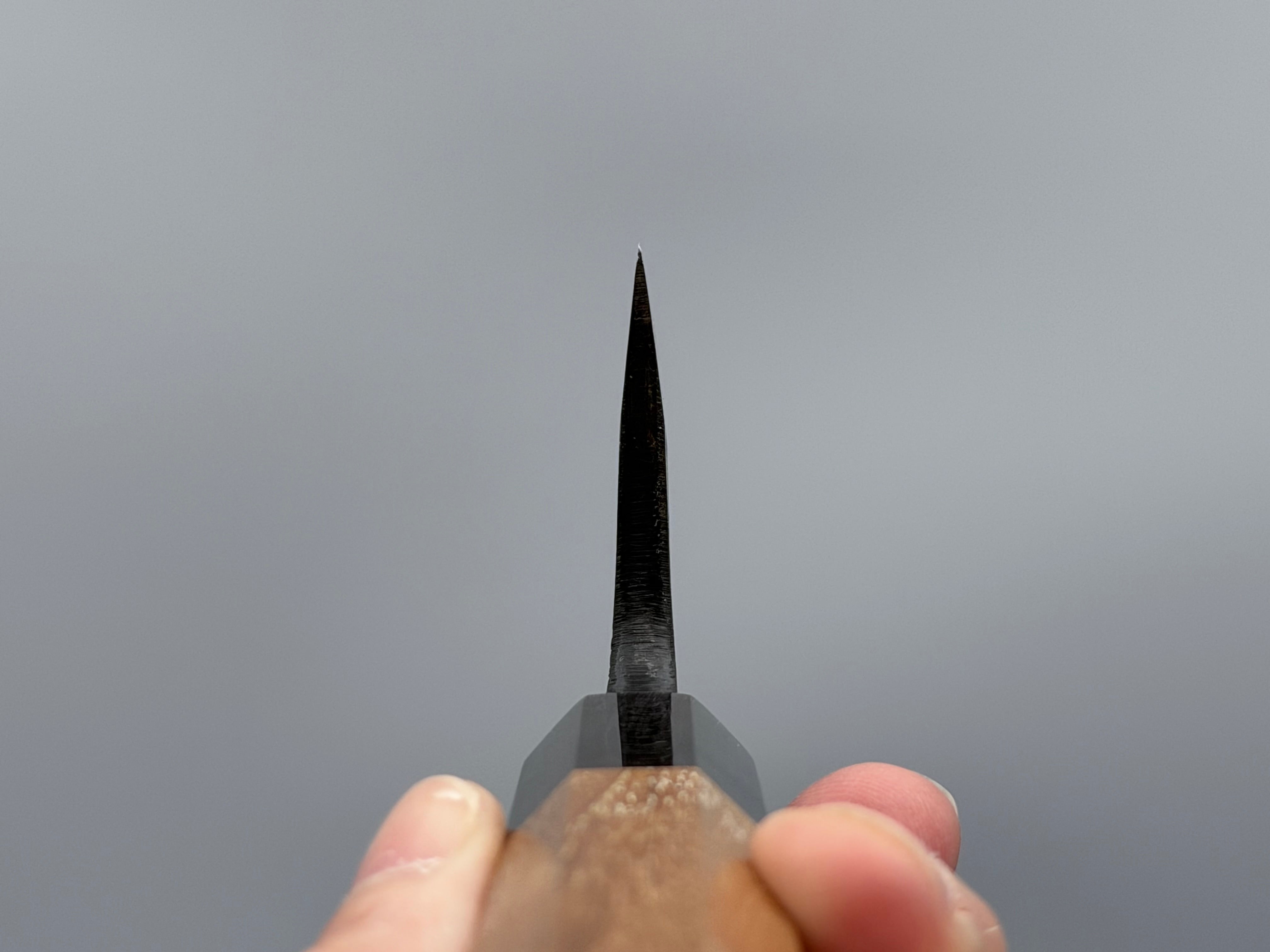
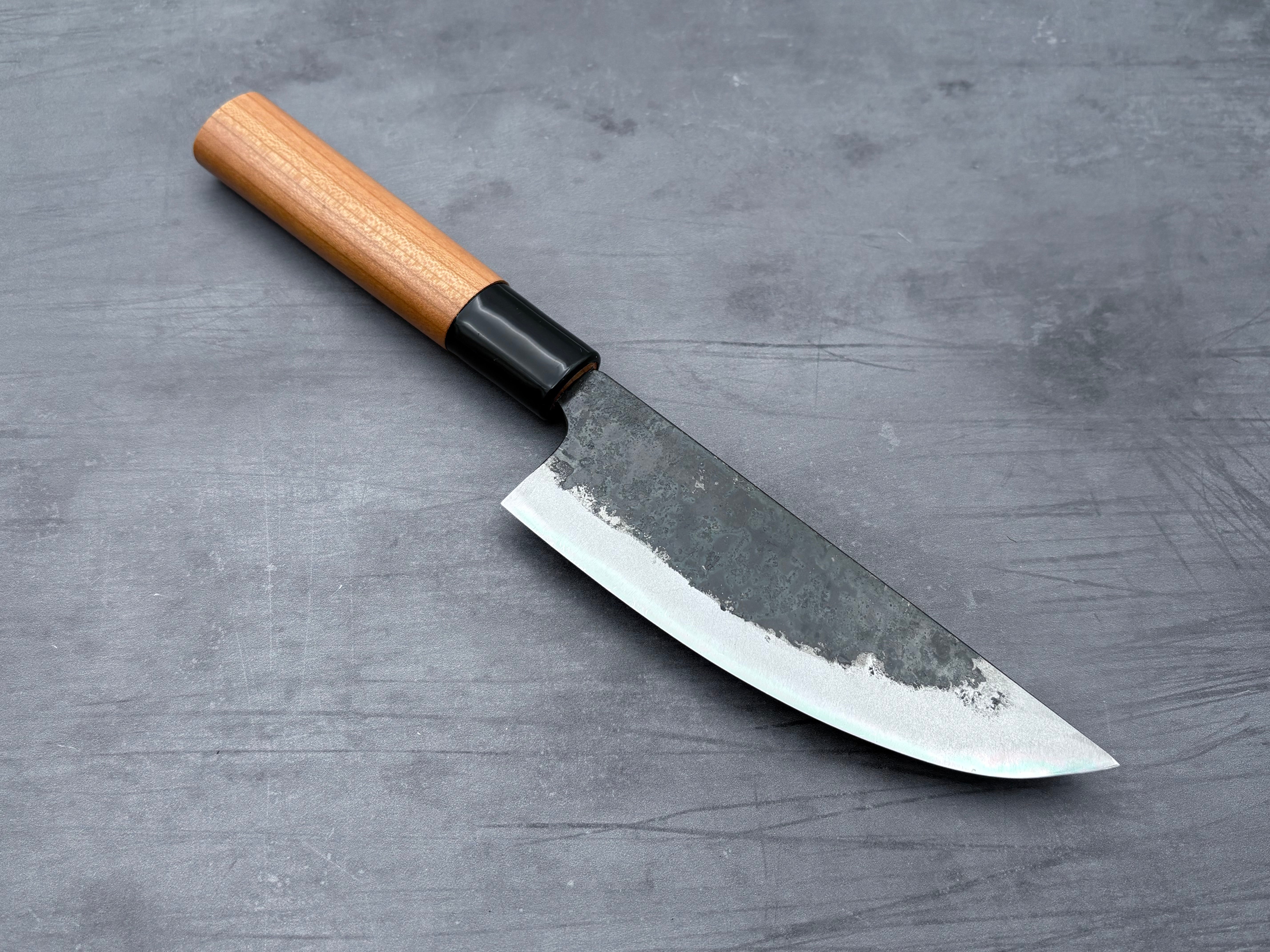
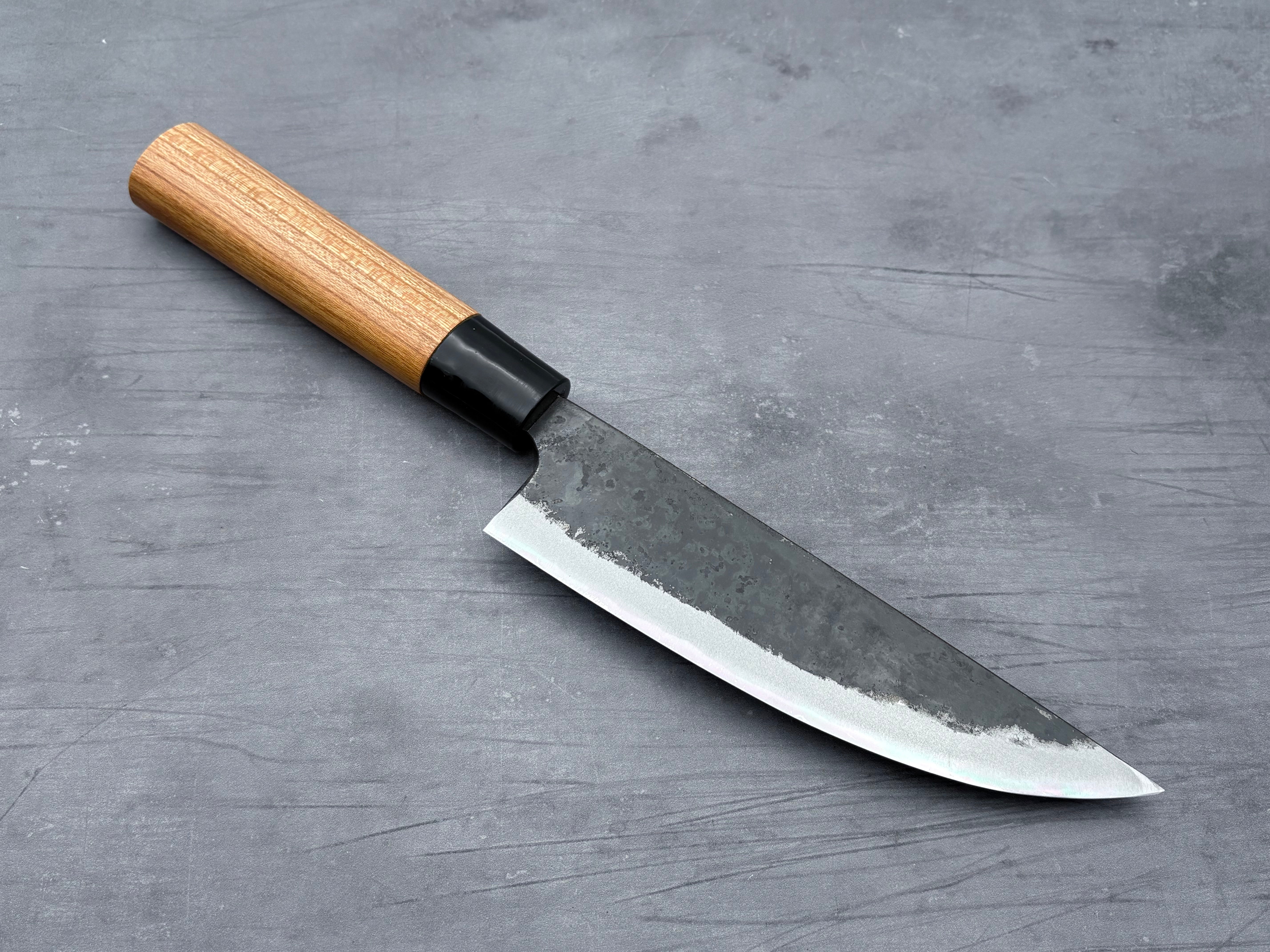
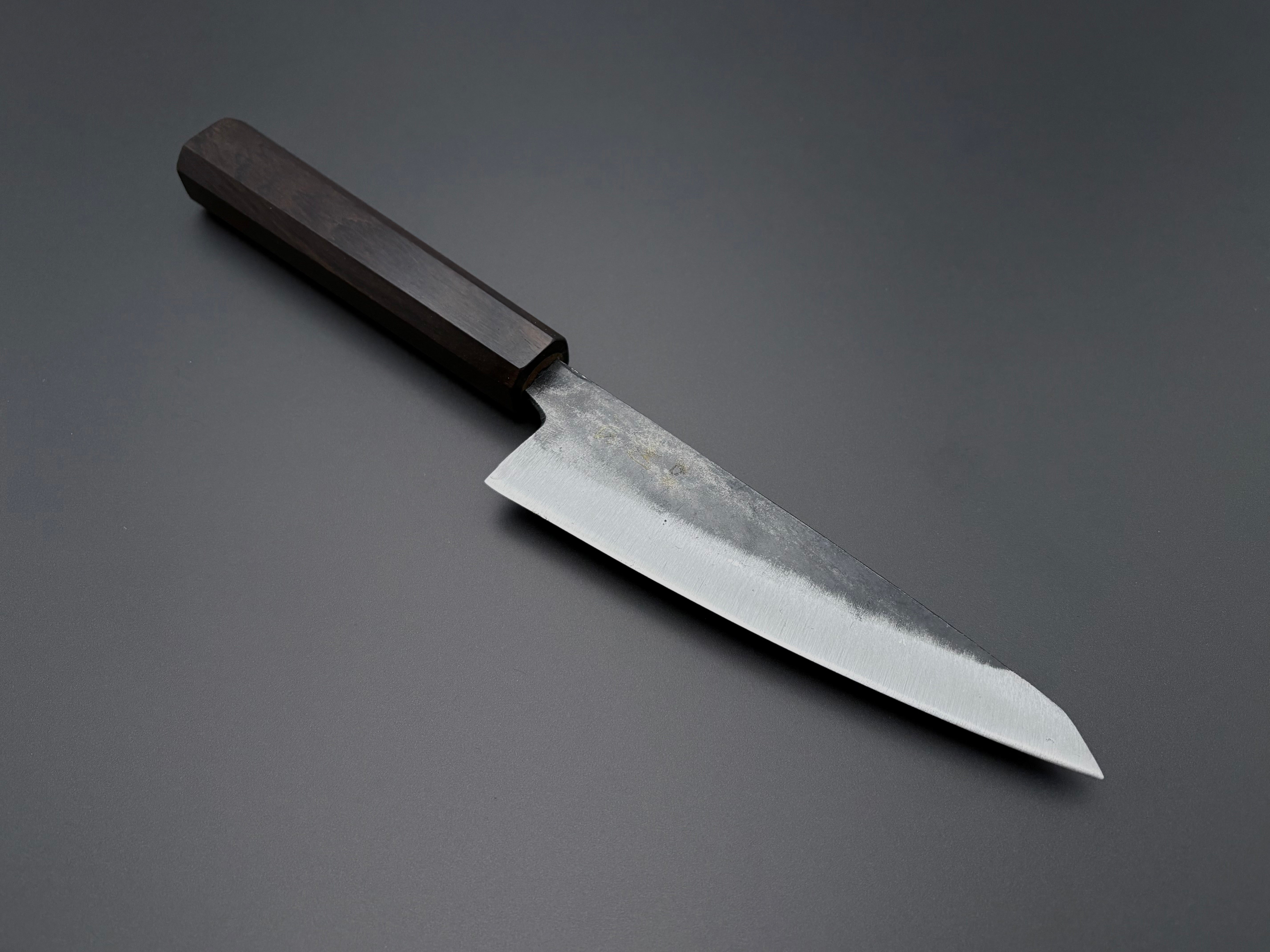
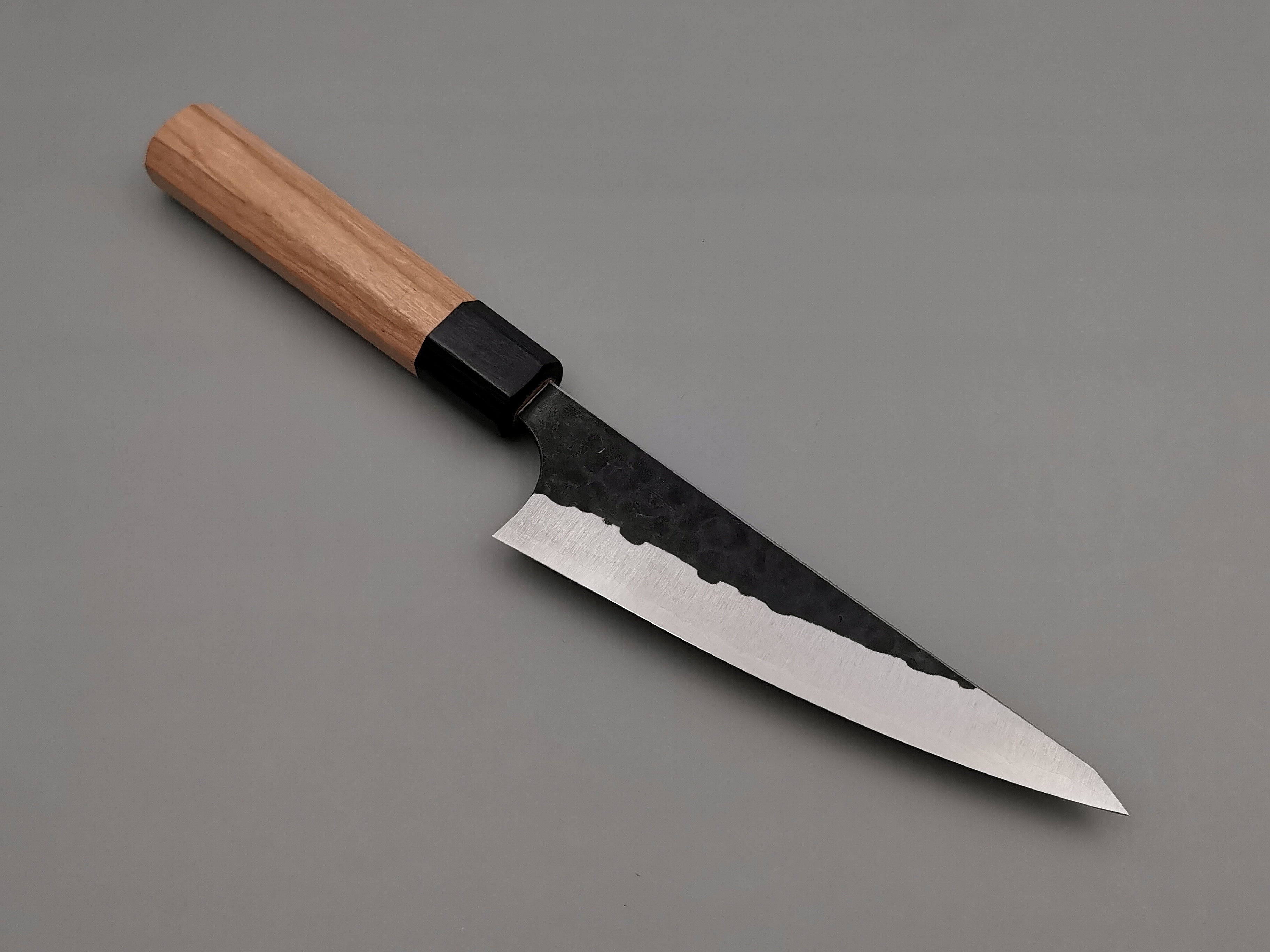
A honesuki is a Japanese boning knife built for breaking down poultry. The name translates roughly to "bone handling," and the blade reflects that purpose directly. Where a Western boning knife tends to be narrow and flexible, the honesuki has a stiff, triangular blade with a sharp point that lets you work around joints, through cartilage, and along bone with real control.
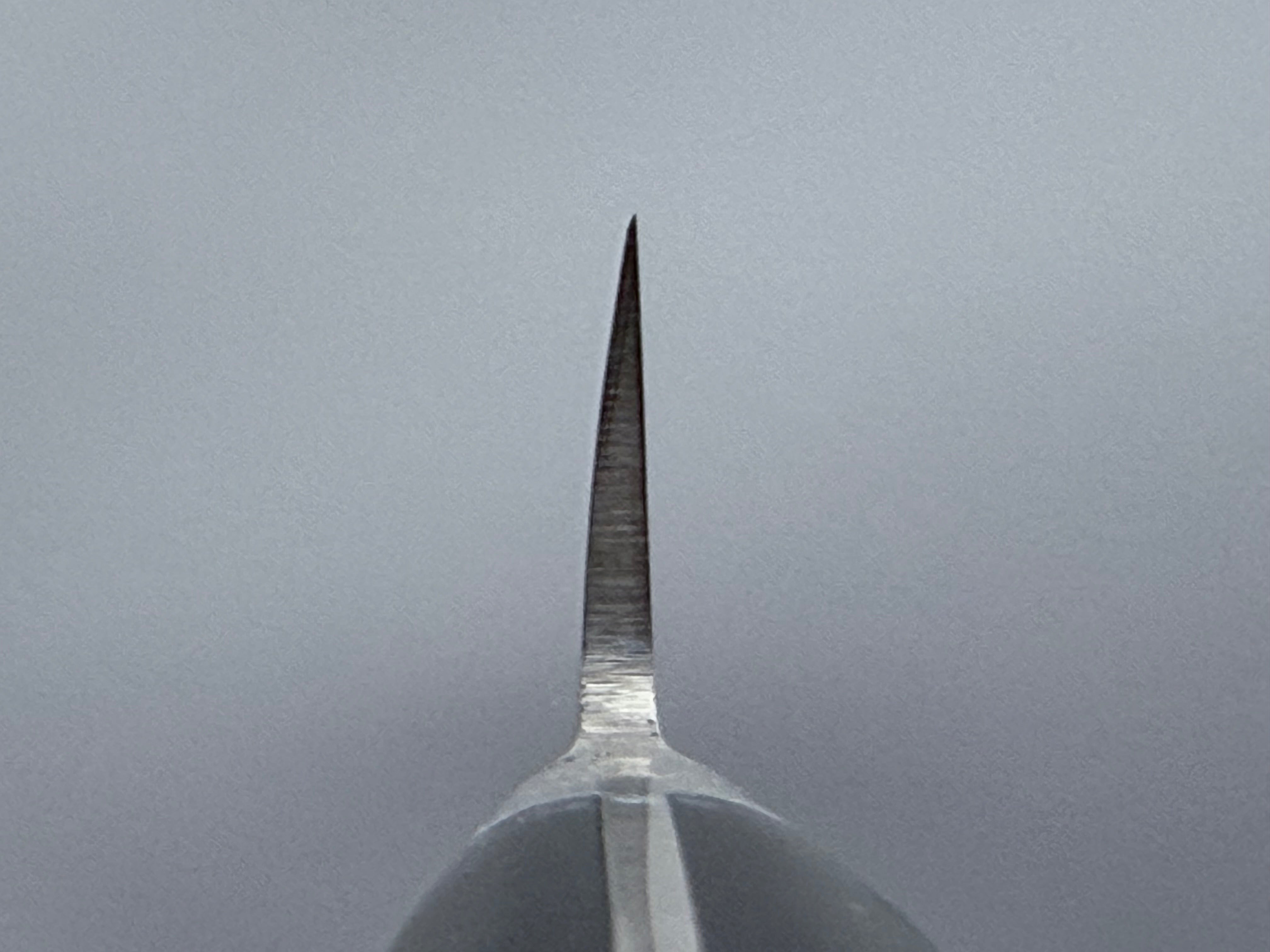
The rigidity is the point. You steer the blade deliberately rather than letting the steel flex into a gap. That precision is what makes it so effective once you know how to use it.

Most honesuki knives are double-bevelled, though single-bevel versions exist for those who want a more traditional Japanese finish. Blades typically run between 145mm and 165mm, long enough to work across a whole chicken without the bulk of a larger knife.
How it differs from other Japanese boning knives
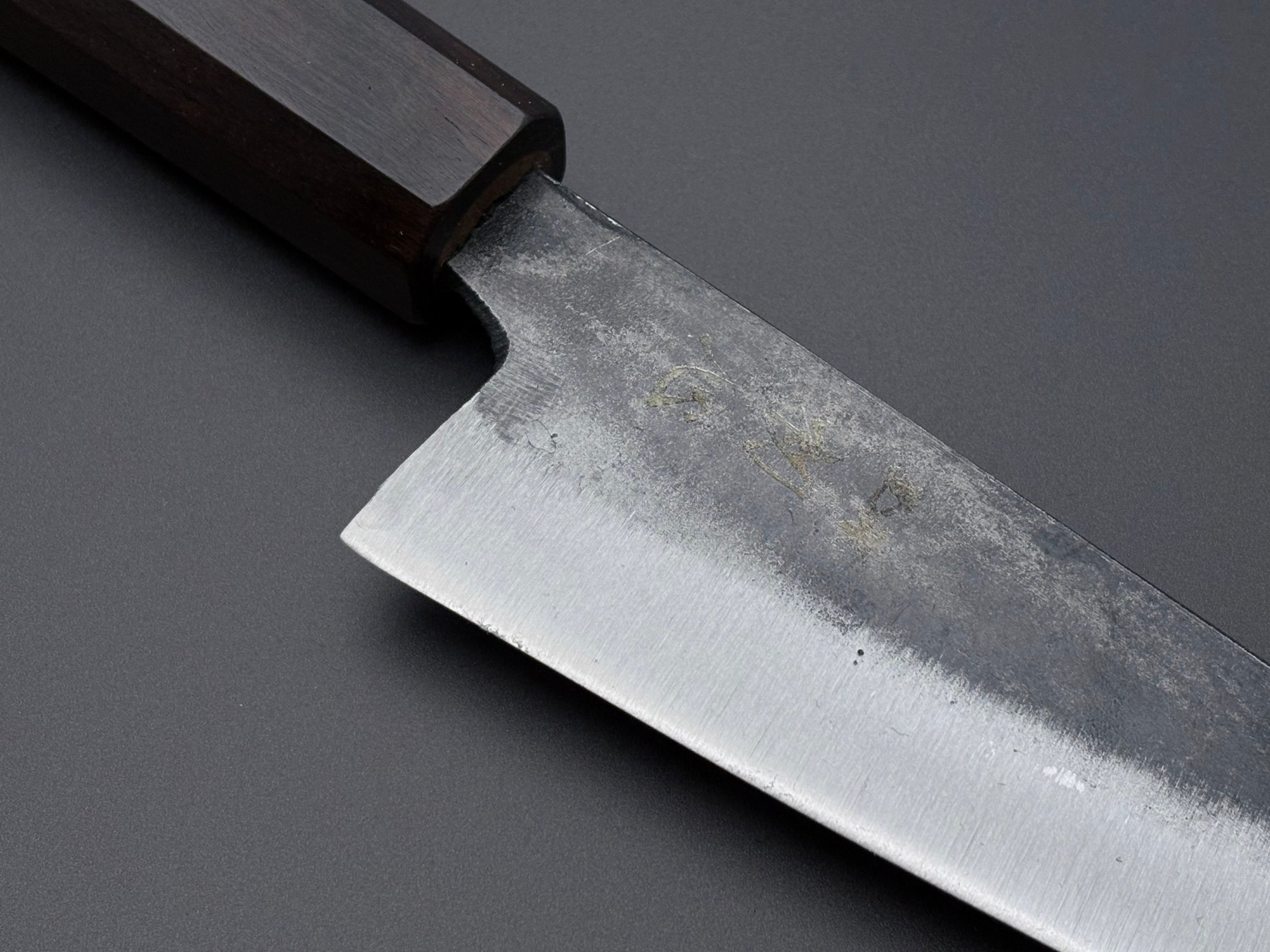
The honesuki sits within the wider Japanese boning and butchery range, but it has a distinct character. The spine is thick enough to handle pressure against bone, while the edge tapers to a fine point that can navigate tight spaces. The heel has enough width to apply downward force when you need it, whether you are separating a thigh joint or pulling out a wishbone cleanly. Some cooks also use it as a general utility knife given its compact, easy-to-manoeuvre size.
What steels work well in a honesuki
Because the honesuki handles tough work, steel choice matters. You will find honesuki knives forged from both high-carbon and stainless options across our range. Common choices include:
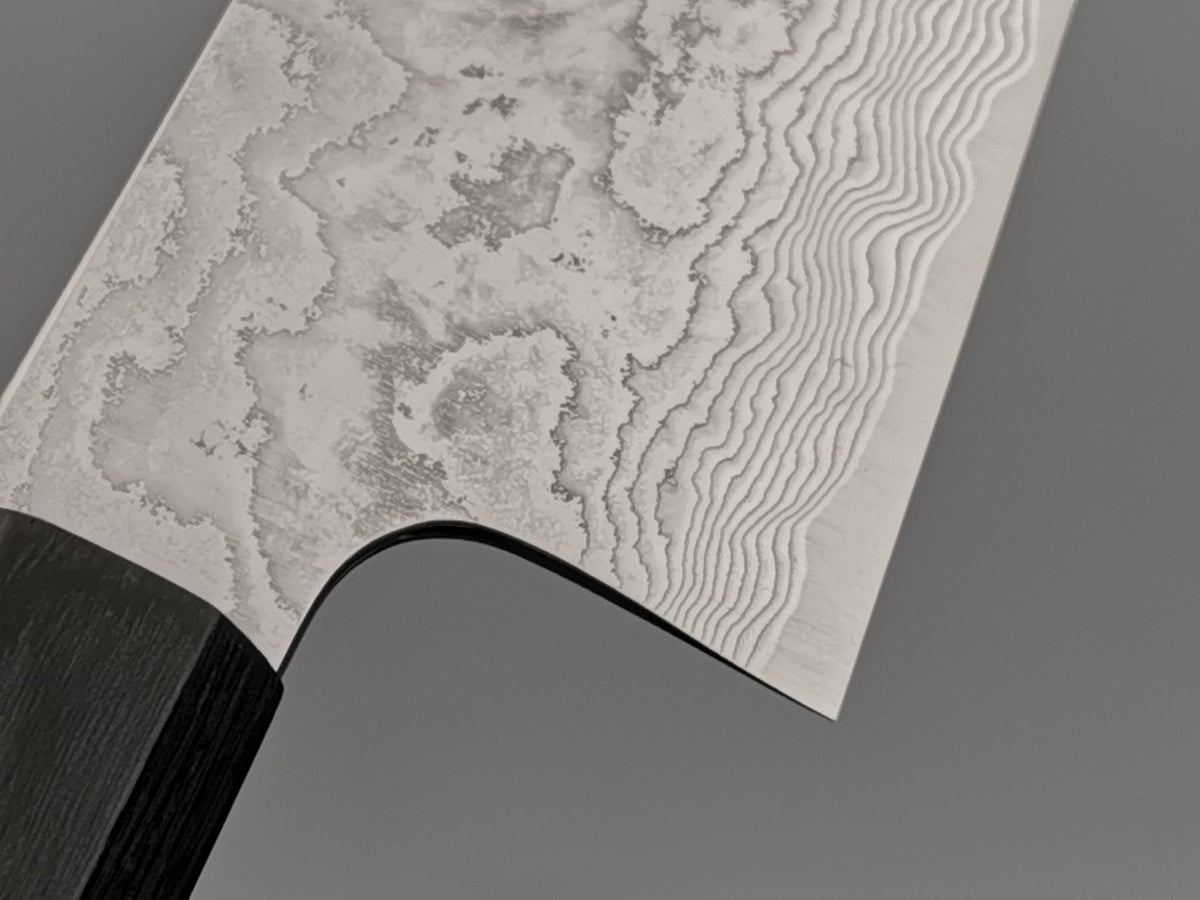
- Stainless steels like Ginsan Silver 3, which holds a keen edge and resists corrosion well in a busy kitchen
- High-carbon options such as Aogami Blue 2, which can reach exceptional sharpness but needs more care around moisture
- Semi-stainless and tool steels for a balance between edge retention and everyday practicality
Who should buy a honesuki knife
If you regularly prepare whole birds, a honesuki will change how you work. The stiffness, tip geometry, and a well-ground edge make it far more efficient than reaching for a chef's knife. Professional cooks have used this style for generations in Japanese kitchens, and home cooks who break down their own poultry will find it equally useful. It also pairs well with a gyuto, handling the detailed jointing work that a longer blade is poorly suited for.
Find the right honesuki knife for your kitchen
Browse our full honesuki knife collection to see current stock from makers including Hatsukokoro, Konosuke, Masakage, and others. Whether you want stainless or carbon, a plain finish or something more refined, there is a honesuki here to suit how you cook.